

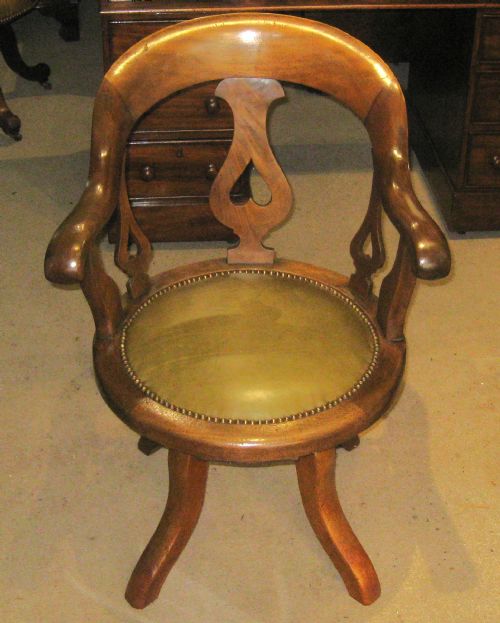
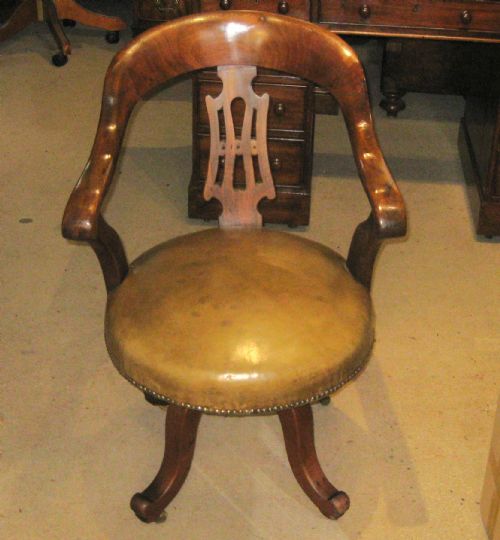
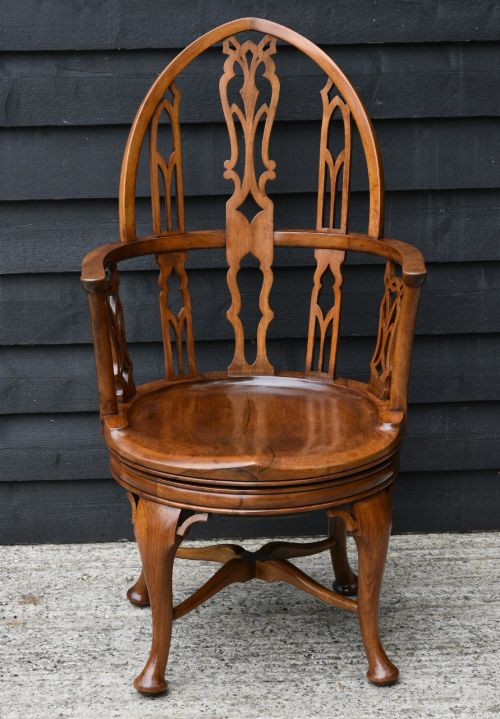
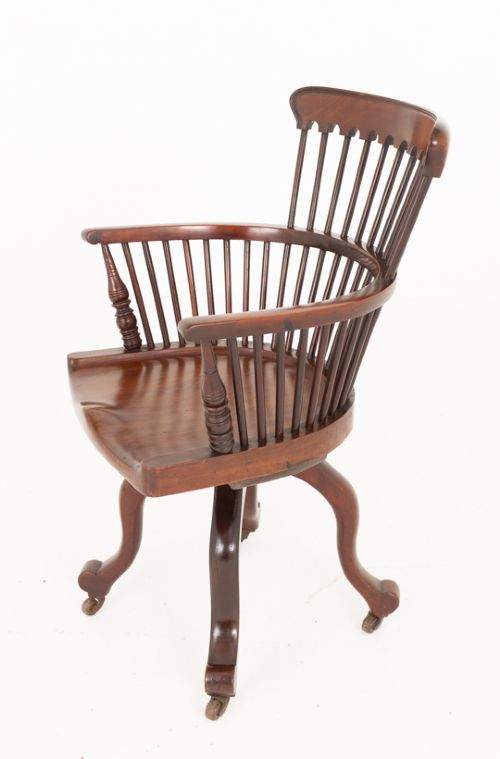
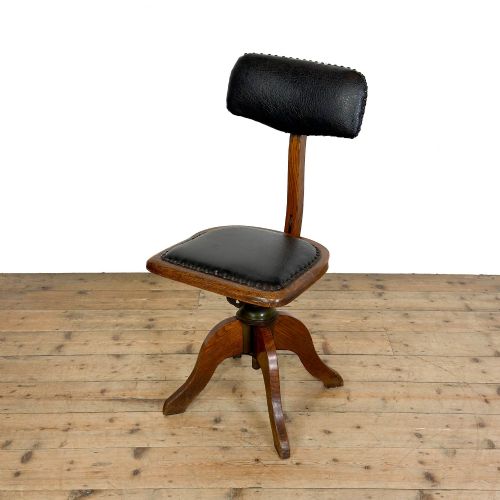
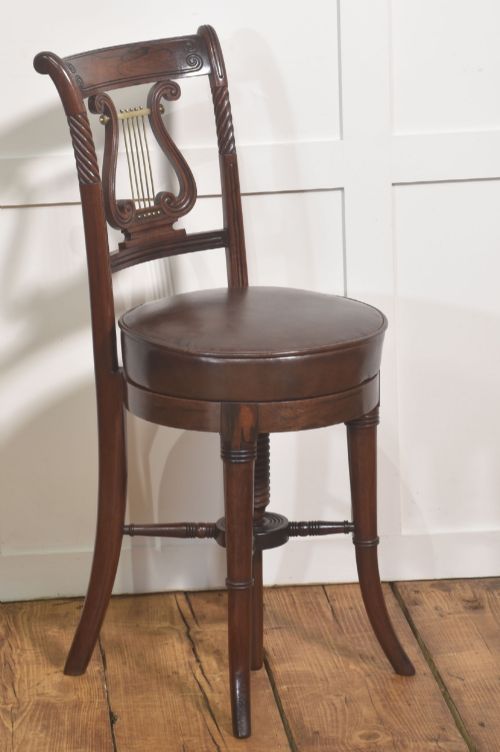
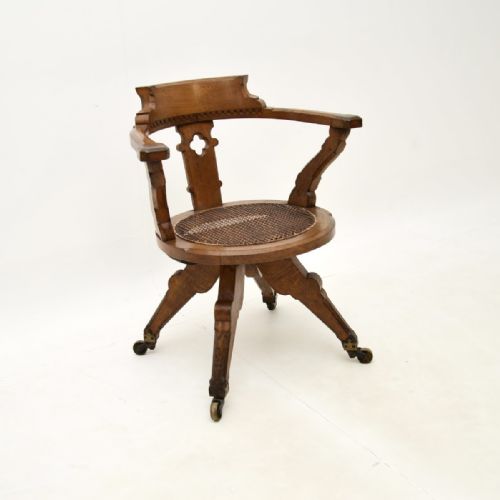
Antique Swivel Desk Chair
An antique swivel desk chair brings functional mechanical movement and traditional timber character to a working space.

Antique Swivel Desk Chair
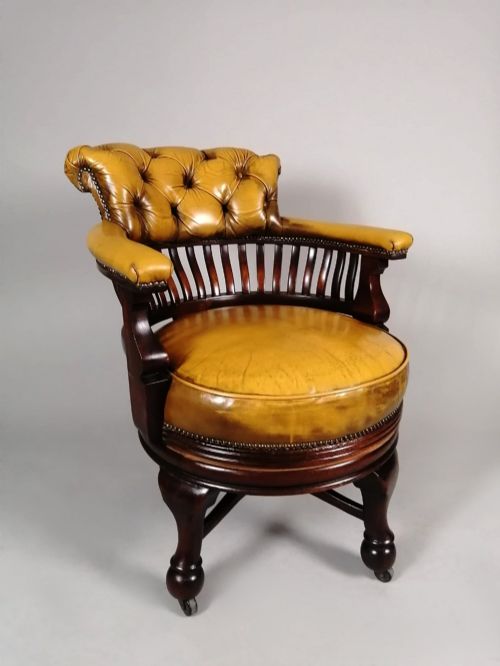
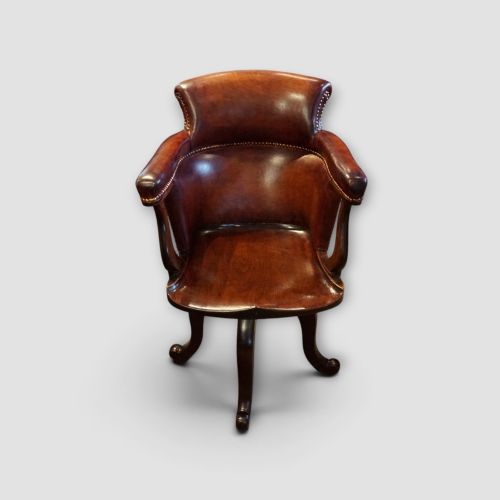
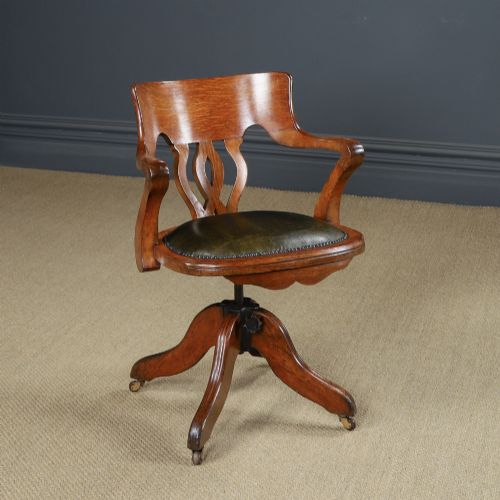
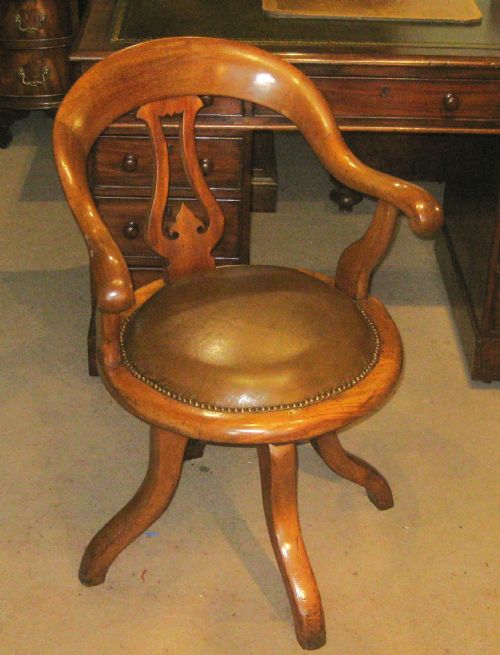
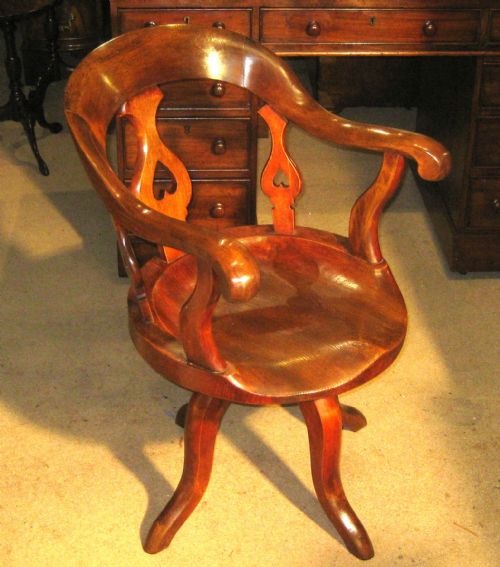
An antique swivel desk chair combines a rotating seat mechanism with traditional framing from the Victorian, Edwardian, and early twentieth-century periods. These seating pieces were designed for offices, studies, and maritime use, offering mobility alongside fixed wooden or upholstered structures.
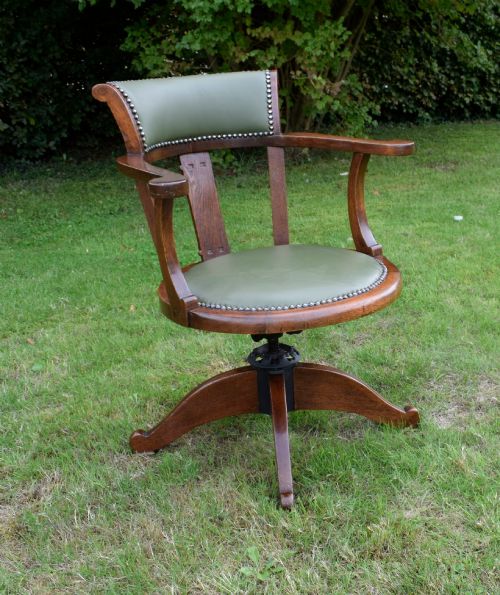
The most common examples encountered on this page date from the late nineteenth century to the 1920s, constructed predominantly in oak, mahogany, and walnut. Forms range from executive armchairs with leather seat pads to simpler industrial workshop seating featuring cast iron and wood.
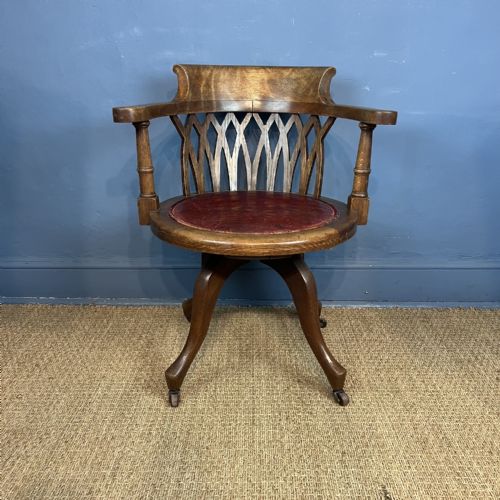
Makers utilised various stylistic influences, including Gothic Revival and Aesthetic Movement details, alongside utilitarian designs such as ship's chairs and machinist's seats. Buyers find both standard revolving models and those equipped with rise-and-tilt mechanisms.

Materials and construction methods
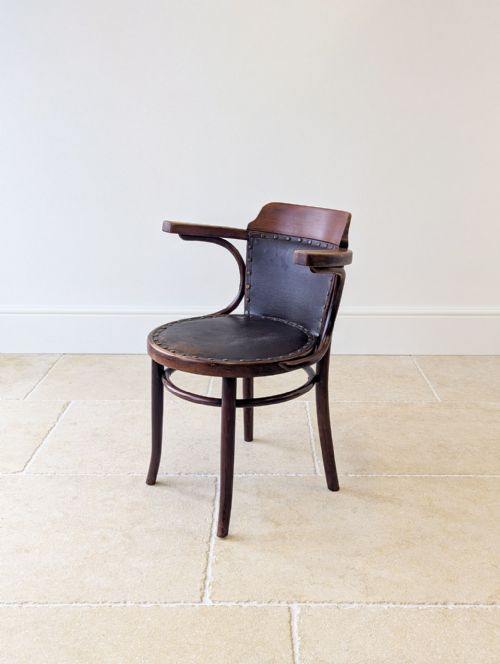
Timbers such as solid oak, mahogany, walnut, and beech form the primary structural framework of these chairs, shaped through turning, bending, and carving. Many pieces integrate bentwood or heavily carved elements alongside inset leather or hide seat pads.
Mechanical rotation relies on central iron and brass spindles, sometimes paired with cast iron undercarriages and swivel-and-tilt apparatuses. Industrial variations incorporate exposed metal hardware and castors to facilitate movement in working environments.
Antique Swivel Desk Chair Retail Price Guide 2026
Typical asking prices for swivel desk chair among the pieces listed under this phrase on Sellingantiques today, from the lower quarter to the upper quarter. They describe what is for sale here now, not the wider market.
Several examples originated as ship's chairs, built heavy to keep dignitaries steady when the furniture met rolling seas.
Distinguishing quality in revolving seating
Quality rests in the robustness of the timber framing and the engineering of the revolving mechanism. Superior examples maintain smooth rotational movement without excessive play in the spindle, supported by solid joint construction rather than replacement parts.
Finer pieces display select grain patterns in golden mahogany or quarter-sawn oak, complemented by detailed carving or original leather upholstery secured with brass studs. Utility-focused workshop chairs derive their merit from intact industrial iron components and honest patination.
S&H Jewell·P & O·Singer·Evertaut
The Antique Swivel Desk Chair Glossary
- Revolving
- A seating function allowing the top portion of the chair to turn full circle on a central pivot. This mechanism enables movement between different areas of a desk workspace.
- Swivel and tilt
- A mechanical system permitting the user to rotate the seat while also leaning backward against a tensioned spring. It provides adjustable comfort during long periods at a desk.
- Bentwood
- Wood softened through steaming or boiling and pressed into curved structural forms. This technique created resilient, flowing frames seen in seating from the late Victorian and Edwardian eras.
- Rise and fall
- An adjustable height mechanism operated by a threaded screw or mechanical column. It allows the seat level to be raised or lowered to suit the user.
- Quarter-sawn oak
- Timber cut radially from the tree log to produce distinctive medullary ray figuring. This method yielded stable, decorative boards frequently used in quality office furniture.
Antique Swivel Desk Chair: Frequently Asked Questions
How do I choose between oak and mahogany swivel chairs?
Oak chairs often present a robust, figured grain suited to traditional or Arts and Crafts interiors, frequently appearing in Edwardian office designs.
Mahogany alternatives generally offer a warmer, smoother reddish tone associated with formal Victorian libraries and executive studies.
Did all period desk chairs have wheels?
Many revolving office chairs incorporated cast iron or brass castors to allow easy movement across floorboards between desk returns.
Simpler models, including certain ship's chairs and side chairs, relied on fixed bases where mobility was restricted by confined spaces.
How do tilt mechanisms work on these chairs?
The mechanism typically employs an under-seat iron spring assembly that permits a controlled backward tilt while maintaining stability.
Adjustment levers or bolts allowed the user to set the tension according to their preference.
Are industrial swivel chairs different from office models?
Industrial workshop and machinist chairs emphasise utilitarian iron and steel components over upholstered comfort, often featuring wooden saddle seats.
Standard office desk chairs prioritise padded leather armrests and polished timber frames designed for administrative environments.