

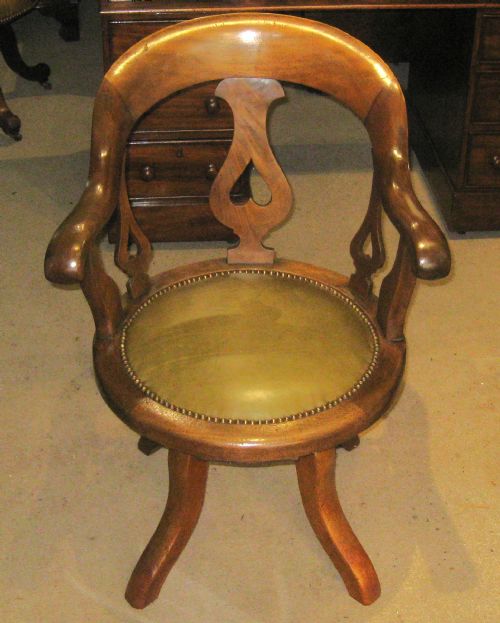
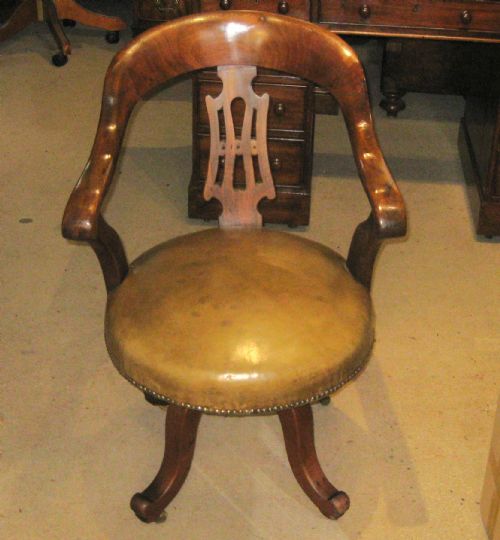
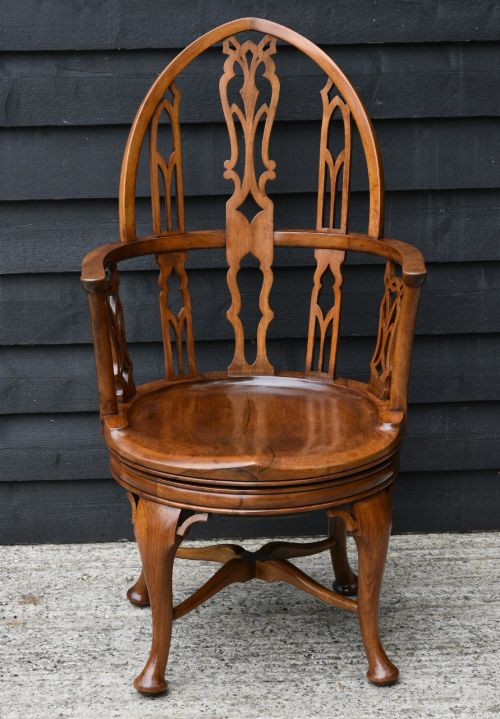
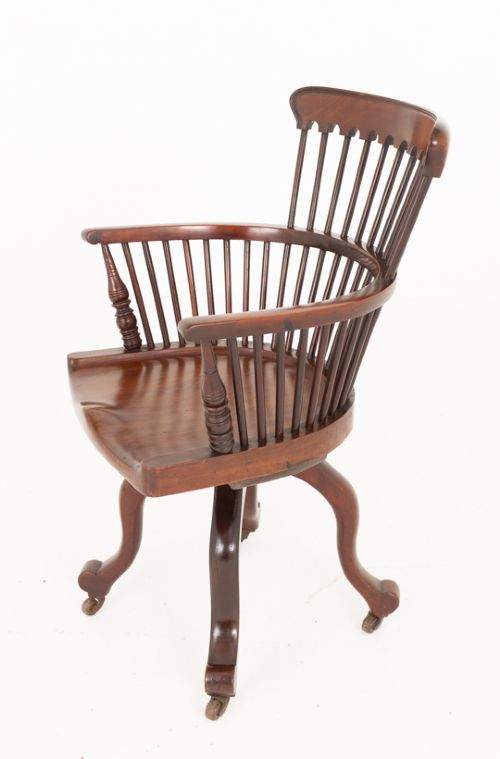
Antique Swivel Armchair
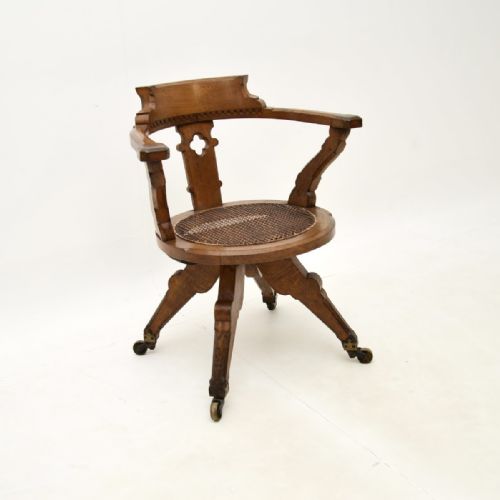
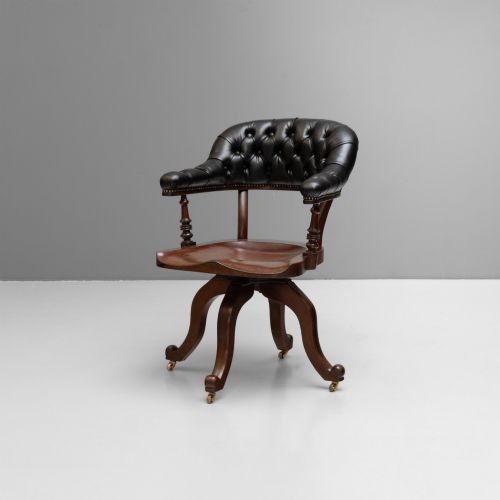
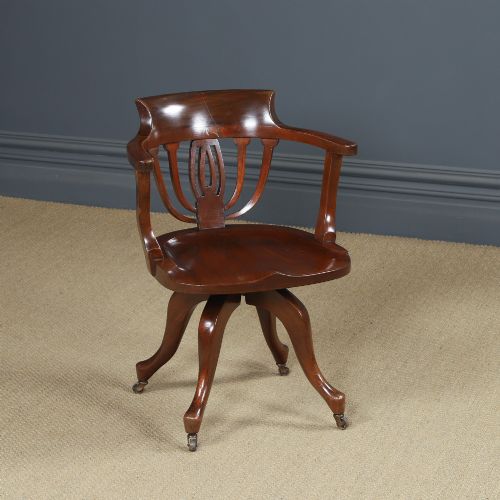
An antique swivel armchair brings functional mobility to the study, combining period timber work with mechanical height adjustment and revolving seats.
Antique Swivel Armchair
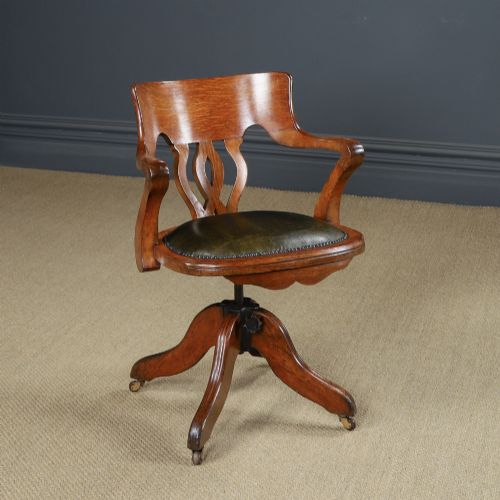
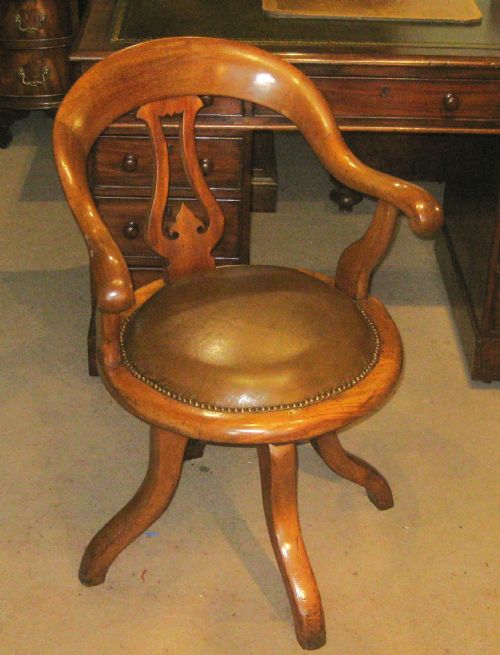
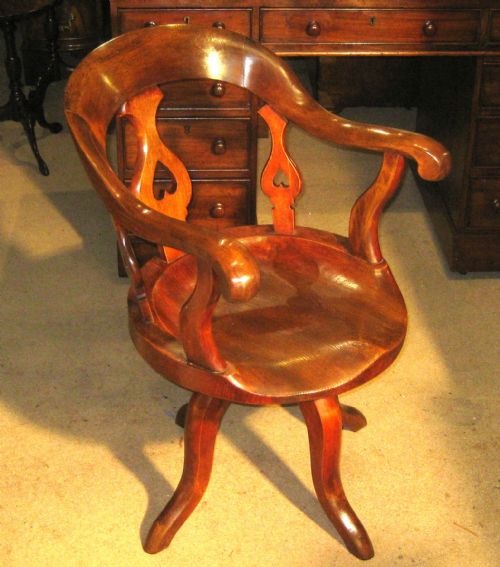
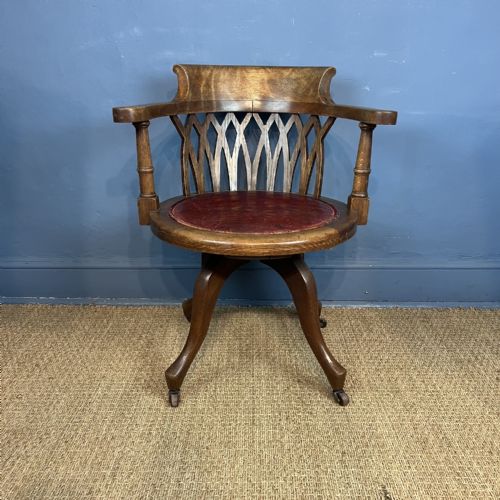
When you search for an antique swivel armchair, you encounter seating designed for offices, libraries, ships, and desks from the late nineteenth and early twentieth centuries. These pieces appear primarily as revolving desk chairs, office chairs, and captains chairs intended for working environments.
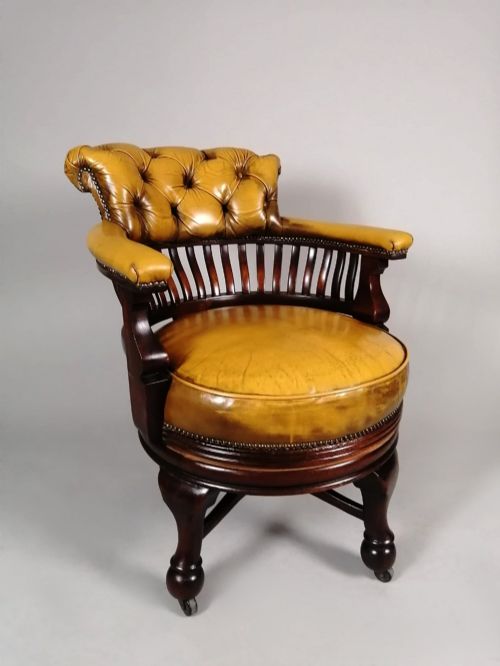
The versions most commonly met on this page date from the Victorian and Edwardian periods, stretching from the 1870s into the 1920s. They take the form of heavy timber armchairs fitted with mechanical undercarriages that permit turning and tilting.
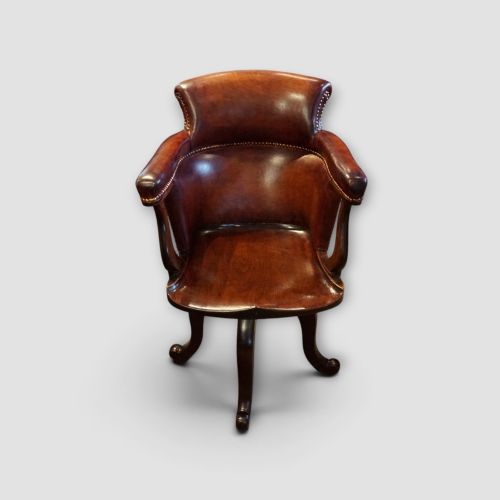
Makers adapted traditional seating frames for professional utility, resulting in forms that balance domestic comfort with mechanical function. Oak and mahogany predominate, often paired with inset leather upholstery for daily clerical or executive use.

Materials and Construction
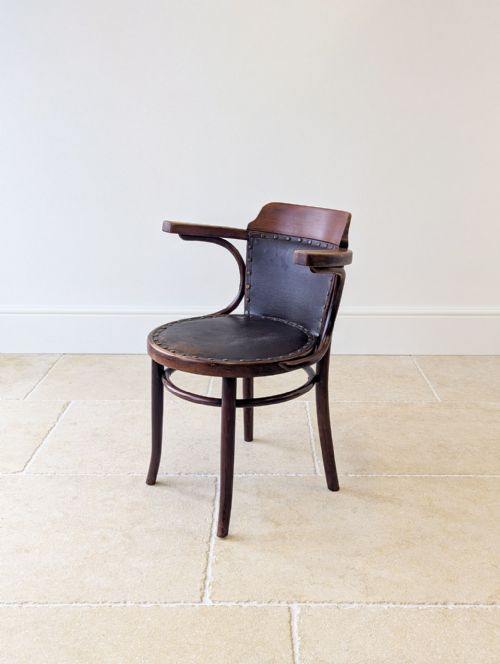
Timbers such as oak, mahogany, and walnut form the structural frames of these armchairs, shaped through turning, carving, and steam-bending as seen in bentwood variants. Woods are selected for density and strength to withstand the continuous movement of a revolving mechanism.
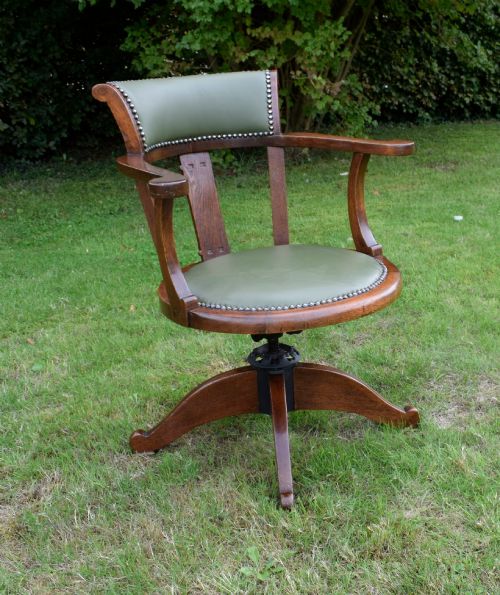
Mechanical actions rely on iron, cast iron, and brass components concealed beneath the seat or exposed in the central spindle and adjusting screws. These metal swivel and tilt mechanisms allow the upper chair body to rotate independently of the base.
Upholstery incorporates leather, hide, and occasionally cane or bergere panels inset into wooden seat frames. Buttoning and brass studding frequently secure the leather coverings to the padding of the backrests and seats.
Antique Swivel Armchair Retail Price Guide 2026
Typical asking prices for swivel armchair among the pieces listed under this phrase on Sellingantiques today, from the lower quarter to the upper quarter. They describe what is for sale here now, not the wider market.
Materials recorded in the archive include distressed leather, brass hardware, and woven bergere cane panels.
Defining Quality
The sophistication of the revolving and tilting mechanism distinguishes standard utility seating from finer library and office armchairs. Substantial cast iron and brass engineering provides smoother rotation and more reliable height adjustment than basic hardware.
Timber selection and cabinetwork set the baseline for visual merit, separating plain beech and standard oak frames from figured golden mahogany, rich walnut, and heavily carved Gothic or Aesthetic Movement examples. Joinery details, such as steam-bent backrails and robust spindle connections, determine structural integrity.
Upholstery finish and secondary materials influence the overall character of the piece. Thick, supple leather with patinated surfaces and traditional studding indicates a higher grade of original specification than thin modern replacements.
S&H Jewell·Thonet
The Antique Swivel Armchair Glossary
- Revolving desk chair
- A seating form fitted with a central spindle and undercarriage that allows the occupant to turn through a full circle without moving the base.
- Ships chair
- A specialised swivel armchair weighted or anchored for stability on maritime vessels, often featuring robust oak and iron construction.
- Bergere
- A traditional French-style upholstered armchair featuring woven cane panels inset into the wooden frame, occasionally adapted for swivel office use.
- Bentwood
- Timber subjected to steam heating and physical pressure to curve it into rounded structural components, famously utilised by makers like Thonet.
- Captains armchair
- A sturdy wooden chair with a continuous curved armrail supported by spindles, frequently mounted onto a revolving pedestal base for office use.
- Aesthetic Movement
- A late nineteenth-century design style emphasising visual beauty and artistic craftsmanship over historical revivalism.
Antique Swivel Armchair: Frequently Asked Questions
How do I adjust the height on an antique swivel armchair?
Most antique swivel armchairs adjust via a central wooden screw column or a threaded iron spindle located beneath the seat. Turning the chair body clockwise or anticlockwise raises or lowers the seating position.
Heavier mechanisms from the Edwardian period onward may incorporate iron or brass locking levers to secure the height and control the tilt tension.
Were these chairs used only in offices?
While primarily designed for counting houses, administrative offices, and home libraries, these revolving armchairs also served on maritime vessels as ships chairs. Their stable base and mobility suited any space requiring seated desk work.
Captains and ship officers utilised them to remain seated securely during rolling movements at sea.
How do I distinguish a Victorian swivel chair from an Edwardian one?
Victorian examples tend to utilise rich timbers like golden mahogany and walnut, frequently featuring heavy carving, Gothic Revival motifs, or Aesthetic Movement styling. They date from the 1870s through the 1890s and often have substantial wooden frames.
Edwardian versions, produced after 1900, frequently employ oak and simpler lines, sometimes incorporating bentwood techniques or standardised tilting mechanisms for office comfort.
Can I use an antique swivel armchair at a modern desk?
These chairs function well with modern desks provided the seat height aligns with the desktop clearance. Nineteenth-century desk heights were occasionally lower than contemporary standards, so checking the adjustable range is recommended.
The castors and revolving base offer the same mobility expected from modern office seating while retaining period character.