

Captains Swivel Chair
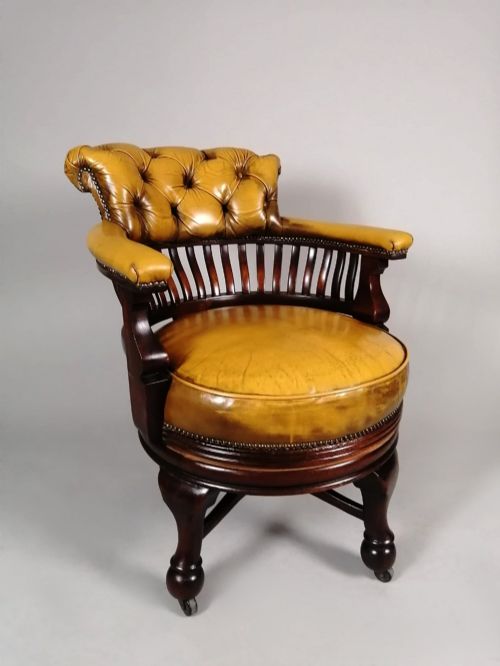
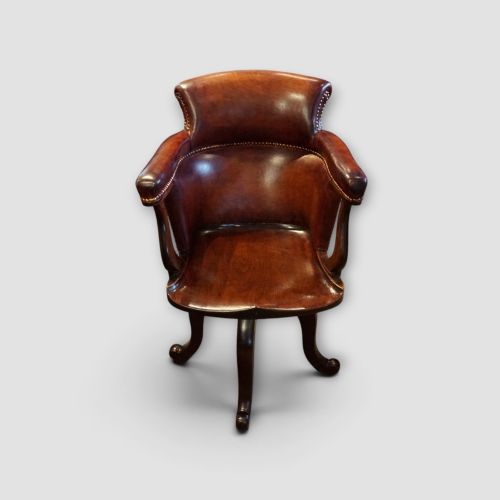
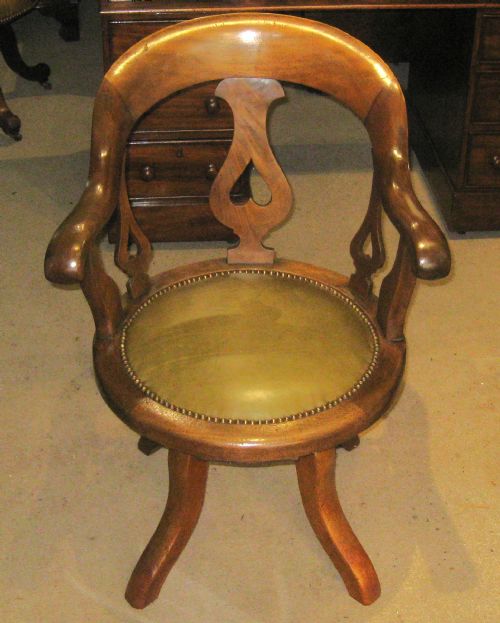
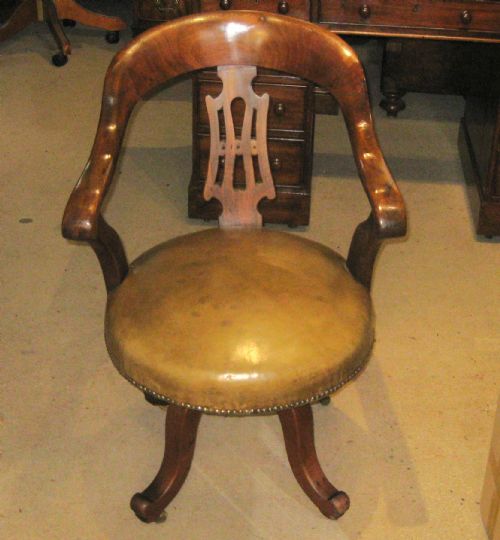
Captains swivel chairs are sturdy working seats built for studies and offices, offering robust support and smooth movement from Victorian times onward.
Captains Swivel Chair
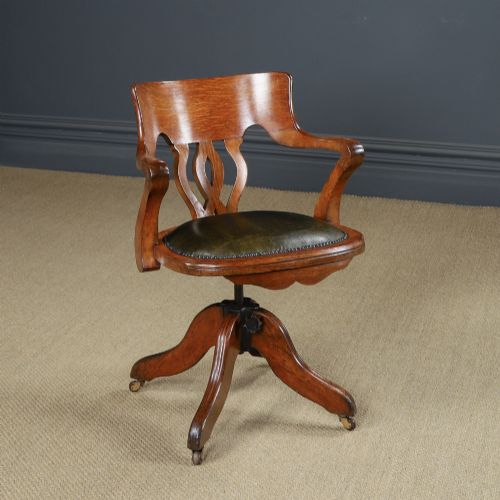
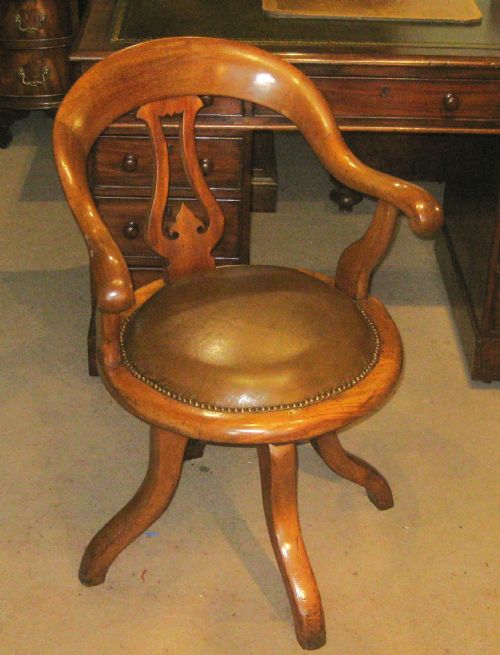
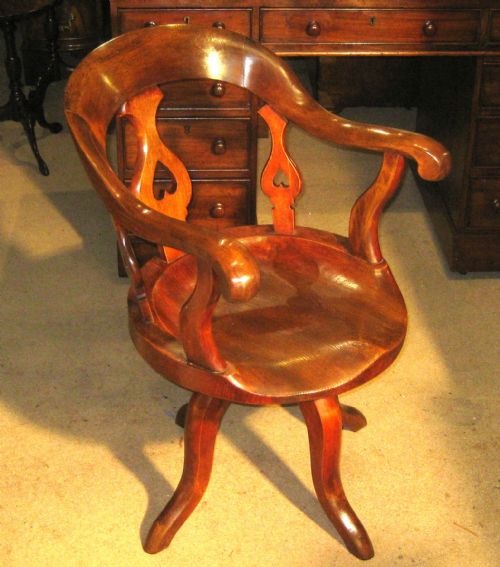
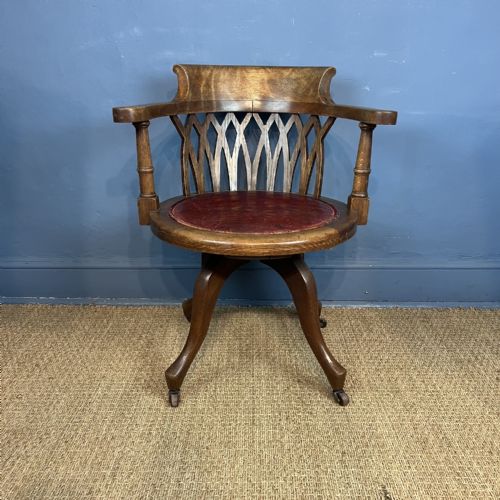
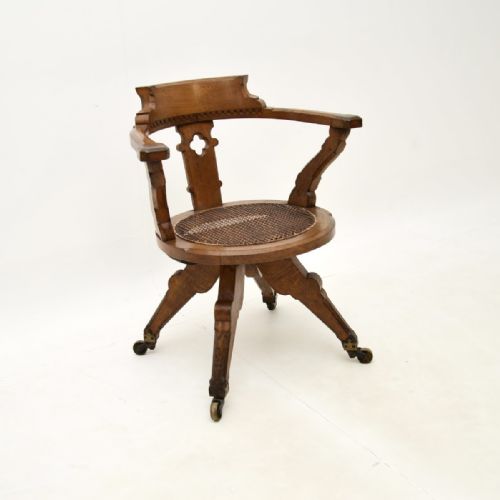
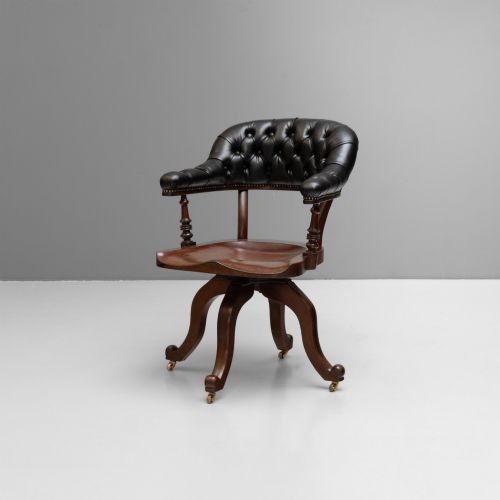
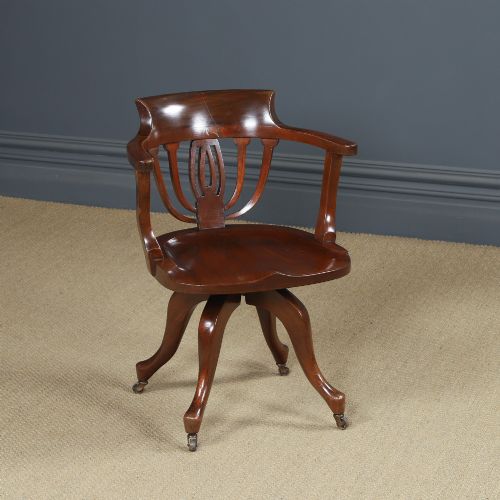
When you search for captains swivel chair, you are looking at practical office and desk armchairs designed for long hours of writing or administration. The pieces on this page span from the late nineteenth century through the Edwardian era and into the early twentieth century.
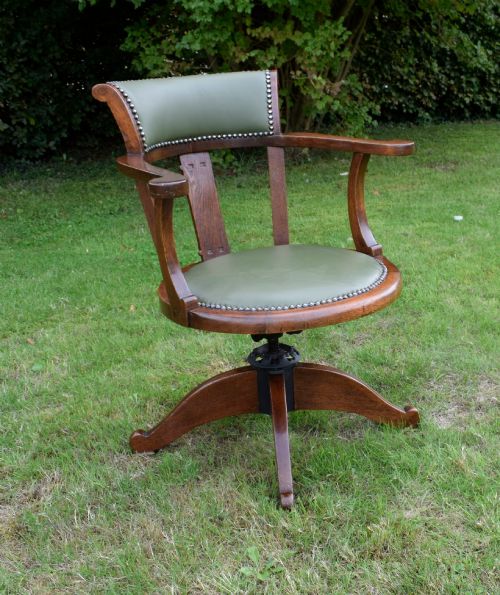
Mahogany and oak are the most common timbers you will meet here, often fitted with leather or hide seats. You will find revolving desk chairs, office armchairs, and ship chairs built for stability and rotation.
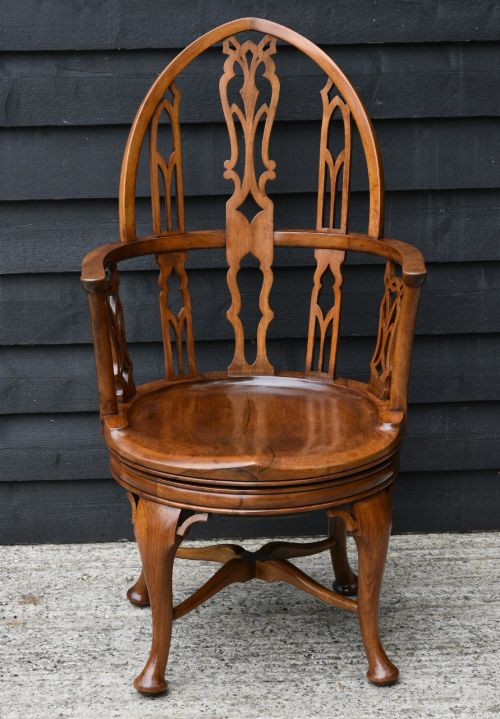
Victorian and Edwardian examples dominate the selection, showing styles from plain utilitarian forms to Gothic Revival or Aesthetic Movement pieces. Many include tilt mechanisms and adjustable heights for practical seating.
How they were made
Cabinetmakers built these chairs using durable timbers like mahogany, oak, and walnut, frequently pairing them with cast iron and brass for the swivel and tilt mechanisms. Leather and tan hide upholstery were stretched over padded seats and secured with tacks.
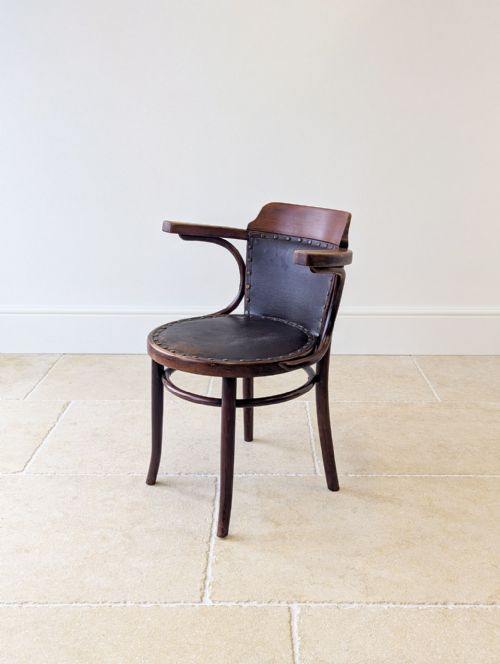
Bentwood techniques appear in specific pieces, allowing curved wooden frames that provided spring and flexibility. Joinery relied on sturdy dowels, mortise and tenon joints, and heavy central iron spindles to support continuous rotation.
Captains Swivel Chair Retail Price Guide 2026
Typical asking prices for captains swivel chair among the pieces listed under this phrase on Sellingantiques today, from the lower quarter to the upper quarter. They describe what is for sale here now, not the wider market.
Some nineteenth-century ship chairs feature weighted cast iron bases designed to keep captains upright through rolling ocean swells.
What varies in quality
The sophistication of the timber carving and the weight of the underlying metal mechanism dictate the distinction between ordinary and superior pieces. Heavier cast iron fittings and dense, well-figured mahogany or walnut indicate higher grade manufacture.
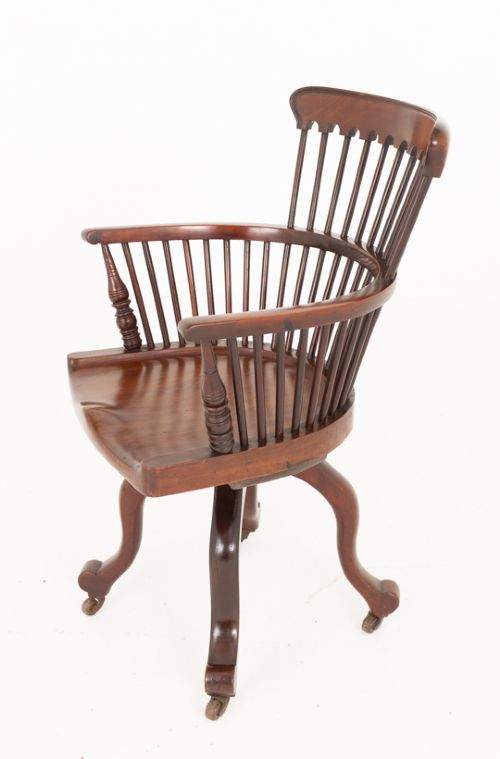
The execution of the joinery and the quality of the leather upholstery separate standard office seating from exceptional library and boardroom chairs. Subtle details like shaped armrests, turned spindles, and integrated tilt actions show greater workshop ambition.
S&H Jewell
The Captains Swivel Chair Glossary
- Swivel
- A mechanism allowing the chair to rotate fully on a central vertical axis. This lets the user turn between different parts of a desk without moving the base.
- Bentwood
- Wood steamed and bent into curved structural shapes. This technique creates smooth, continuous lines without heavy joints.
- Gothic Revival
- A design style drawing on medieval architectural motifs. Chairs in this style often display pointed arches, heavy tracery, and formal carving.
- Aesthetic Movement
- A late nineteenth-century style prioritising visual beauty over narrative meaning. Pieces show refined lines and subtle decorative restraint.
- Bergere
- An enclosed armchair with woven cane panels on the back and sides. It provides a lighter appearance while retaining structural support.
Captains Swivel Chair: Frequently Asked Questions
How do I adjust the height?
Most period swivel chairs operate on a threaded central screw column beneath the seat. Turning the chair body clockwise or anticlockwise raises or lowers the seating position.
Some Edwardian variants introduced mechanical tilt and height levers connected to iron undercarriages. Checking the underside reveals the specific spindle or screw mechanism in use.
Were these used on ships?
Certain examples designated as ship chairs or P&O chairs were built for marine use, featuring heavier weighted bases or bolted fittings to prevent sliding in rough seas.
Standard office and library models share similar timber frames but lack marine stabilization hardware. Both types served administrative roles where stability during movement mattered.
How do I care for the leather?
Leather and hide seats require occasional feeding with appropriate wax or conditioner to prevent drying and cracking. Keeping them away from direct heat sources preserves the natural hide.
Original distressed leather benefits from gentle cleaning rather than heavy restoration to retain its period character.
How do I distinguish Victorian from Edwardian?
Victorian chairs often utilise dense mahogany or walnut with darker finishes and heavier carved details. They lean towards formal presence and robust joinery.
Edwardian pieces frequently feature lighter oak, simpler lines, and sometimes bentwood elements reflecting changing domestic tastes towards practicality and airiness.