
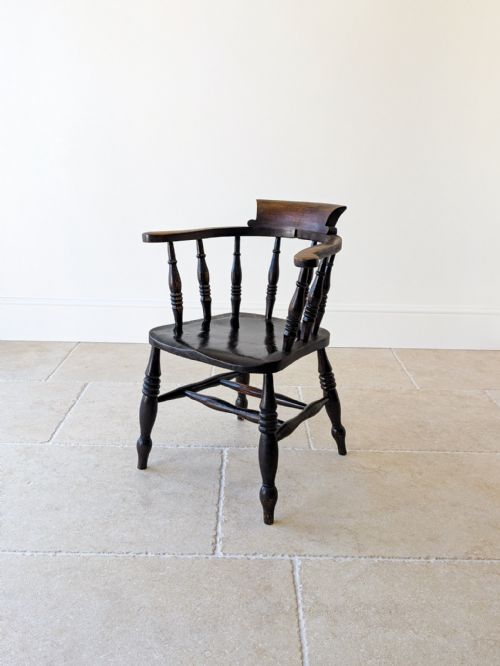

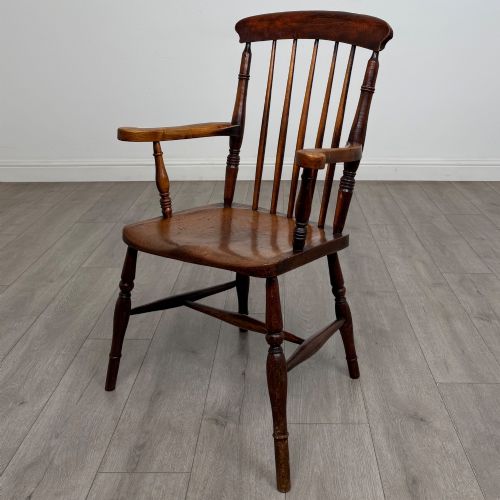
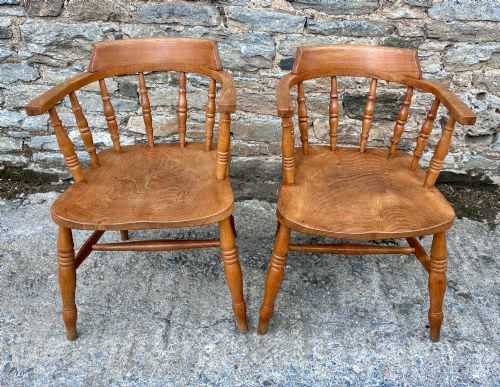
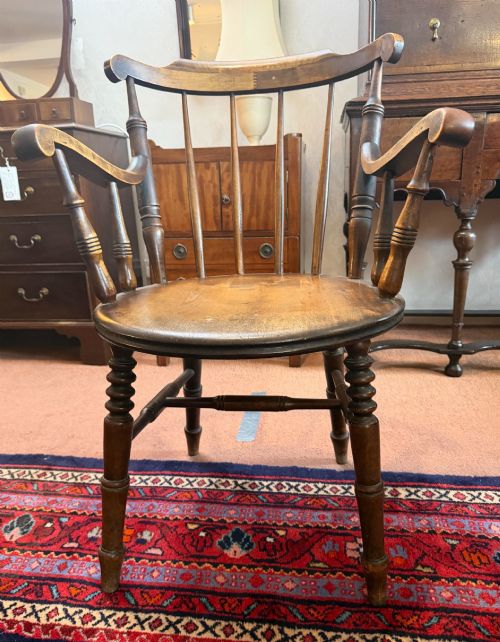
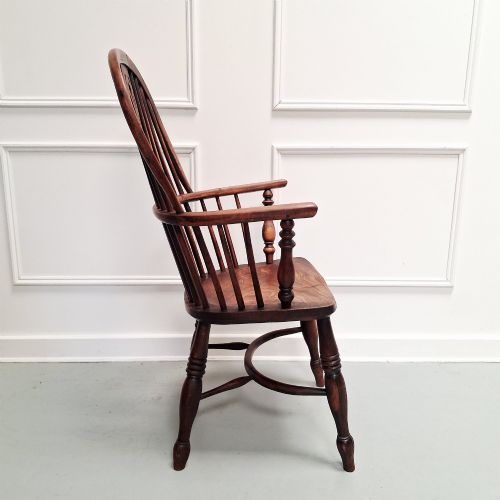
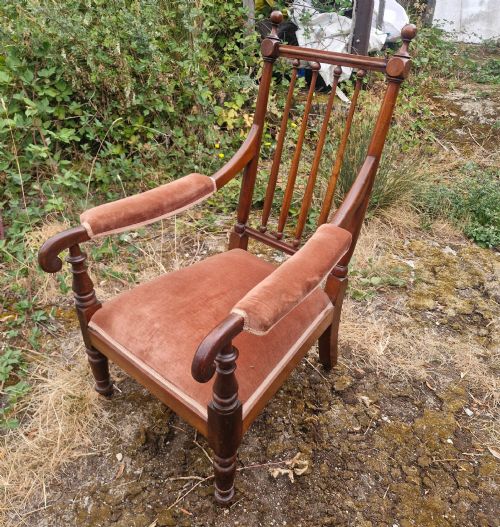
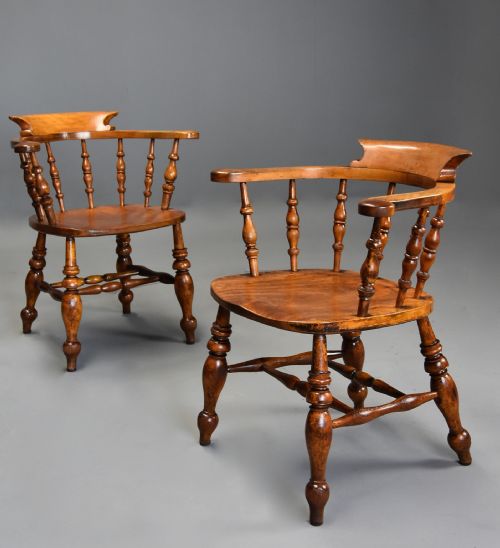
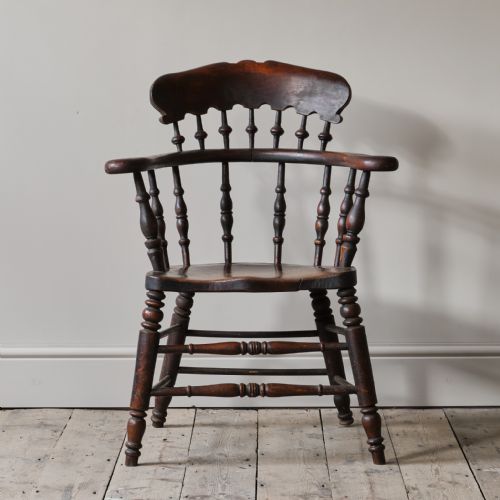
Turned Spindle Desk Chair
A turned spindle desk chair delivers sturdy task seating through turned wooden uprights, offering honest Victorian and Edwardian utility for a home study.
What these turned spindle desk chairs are
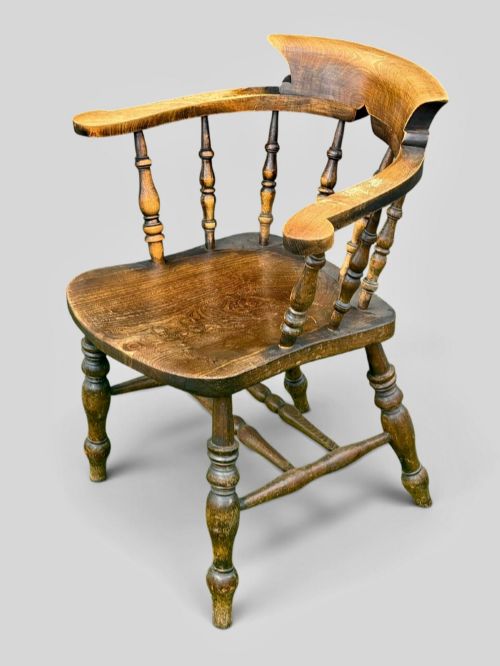
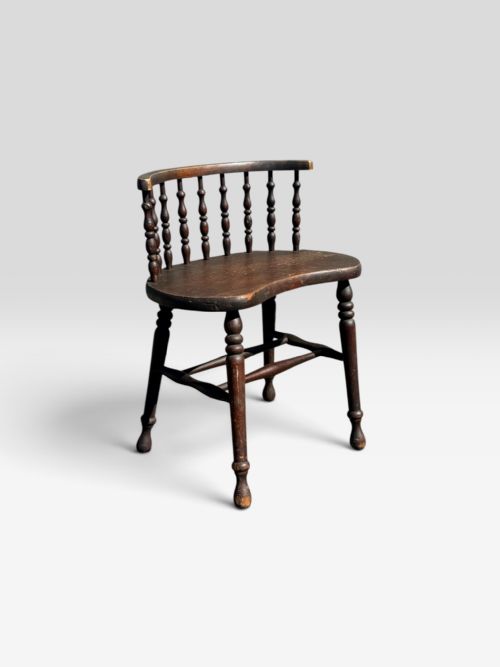
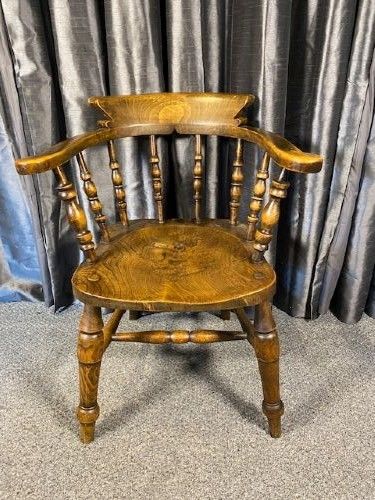
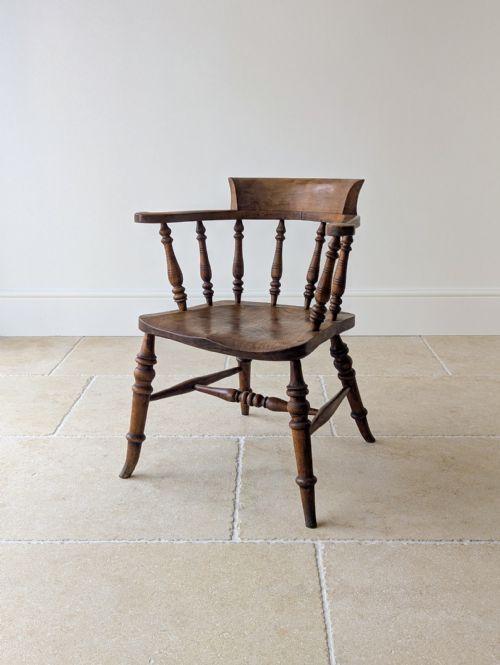
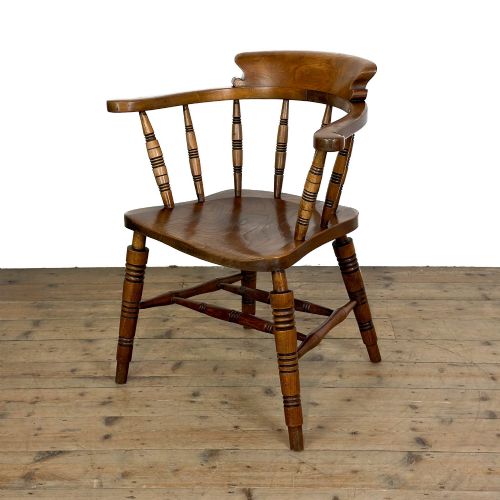
A turned spindle desk chair combines traditional seating forms with functional workspace utility, appearing mainly as captain's chairs, smokers' bows, and revolving armchairs. These pieces emerge from the Victorian and Edwardian eras, spanning dates from eighteen seventy to nineteen hundred.
The most common versions met on this page are elm and ash or beech Captain's chairs, alongside oak swivel designs. Makers adapted domestic Windsor and smoker's bow forms into sturdy office seating by mounting them on swivel mechanisms or heavy timber bases.
How they were made
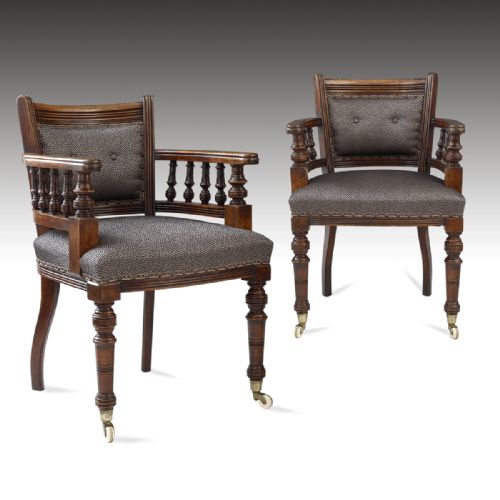
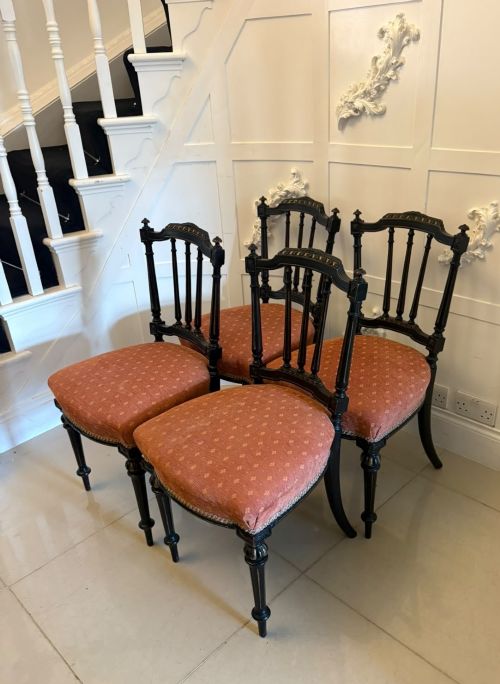
Craftsmen utilised solid native timbers including elm, beech, oak, ash, and walnut to build these functional seats. Turned wooden spindles form the characteristic backs and supports, joined securely to shaped wooden seats or upholstered pads.
Metal components such as brass fittings and cast iron mechanisms appear on swiveling models, paired with leather or tan hide upholstery. Joinery relied on traditional turning, steam-bending, and mortise-and-tenon construction to withstand daily office use.
Retail Price Guide 2026
Typical UK retail prices for turned spindle desk chair, calculated from the Sellingantiques database of over a million retail prices indexed since 2003. This retail price guide relies exclusively on Sellingantiques data; no external sources or auction records are used, so the figures do not describe the wider market.
Victorian office workers clearly valued a sturdy spin, as iron swivel mechanisms often outlast the wooden seats they support.
What varies in quality
The distinction between standard examples and superior pieces rests on timber selection and mechanical complexity. Solid walnut or figured oak construction with working swivel ironwork commands greater interest than simpler elm and beech variations.
Refinement in the turning of spindles and the comfort of the saddle-shaped wooden seats dictate the overall execution. Original leather upholstery and intact brass swivel actions elevate an ordinary office chair into a superior artefact.
The Turned Spindle Desk Chair Glossary
- Captain's chair
- A low-backed wooden armchair with a continuous curved rail supported by turned spindles above the seat. This form evolved from traditional Windsor seating to provide comfortable office support.
- Smoker's bow
- A sturdy wooden armchair featuring a low spindle back and a deep saddle seat, closely related to the Captain's chair. These pieces served domestic and commercial desk spaces alike.
- Swiveling office chair
- A desk seat mounted on a central pivot mechanism allowing rotation, often combined with cast iron hardware. This innovation emerged during the Victorian period for commercial utility.
- Aesthetic Movement
- A nineteenth-century design style emphasising visual beauty over narrative function, utilising rich dark timbers like walnut. Pieces from this movement display clean lines and refined proportions.
- Victorian Gothic Revival
- A nineteenth-century revival style incorporating medieval architectural motifs into furniture design. Solid oak desks and chairs from this movement often feature pointed arches and heavy proportions.
Frequently Asked Questions
What is a turned spindle desk chair?
A turned spindle desk chair is a nineteenth or early twentieth century office seat featuring vertical wooden spindles along the backrest. These chairs draw heavily on traditional Windsor and captain's chair forms.
They provide sturdy, practical seating designed for administrative work, utilising durable native timbers such as elm, ash, and oak.
How do I date a wooden desk chair?
Dating relies on examining the timber species, construction methods, and hardware integration. Victorian examples often feature solid elm or oak with turned wooden undercarriages.
Later Victorian and Edwardian pieces frequently incorporate cast iron swivel mechanisms and leather or tan hide upholstery for enhanced workplace comfort.
Were these chairs used in homes or offices?
These seating forms served dual purposes in both domestic studies and commercial counting houses. Captain's chairs and smokers' bows provided comfortable seating for writing desks.
Revolving desk armchairs with iron mechanisms were specifically engineered for extended administrative tasks in professional environments.
How do I care for antique office chairs?
Maintenance involves regular dusting with a dry cloth and occasional application of appropriate timber wax to nourish dry hardwood. Leather and hide seats benefit from specialised conditioning balms.
Protecting the wood and metal swivel components from excessive moisture and direct heat sources preserves the structural integrity of the chair.