
Victorian Smokers Bow
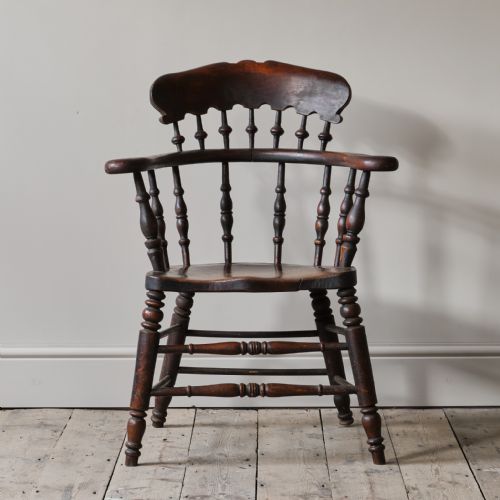
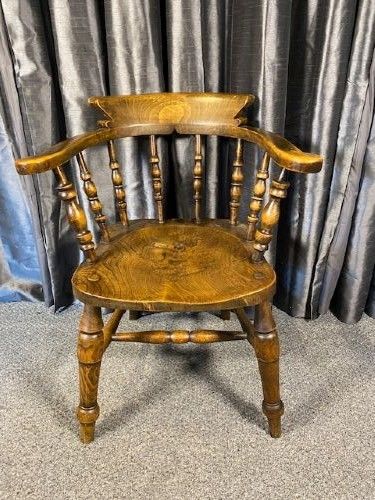
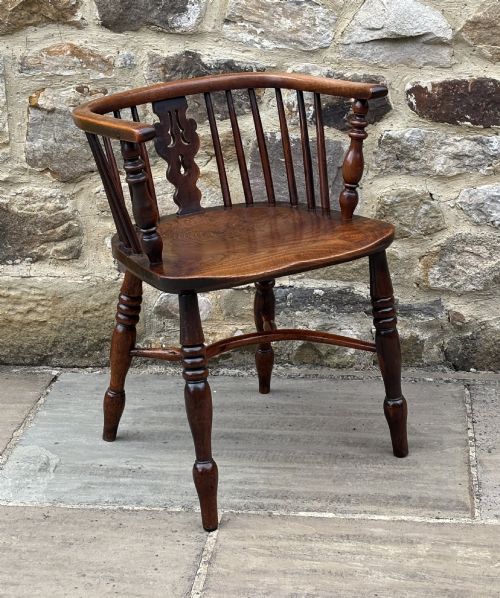
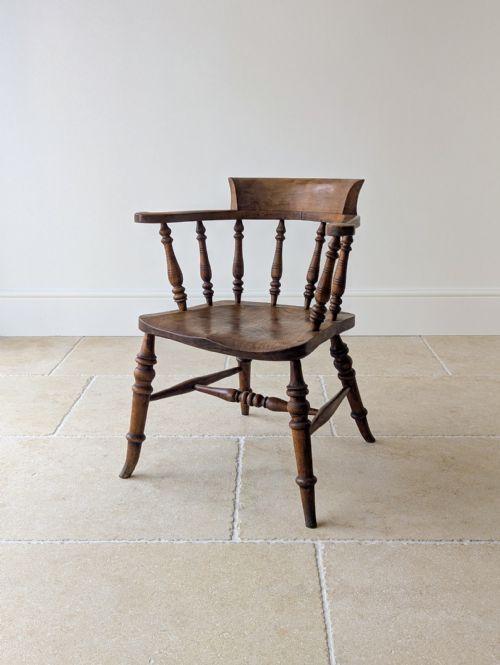
These Victorian smokers bow armchairs offer sturdy seating, combining nineteenth-century vernacular design with comfortable curved armrests for daily use.
What They Are
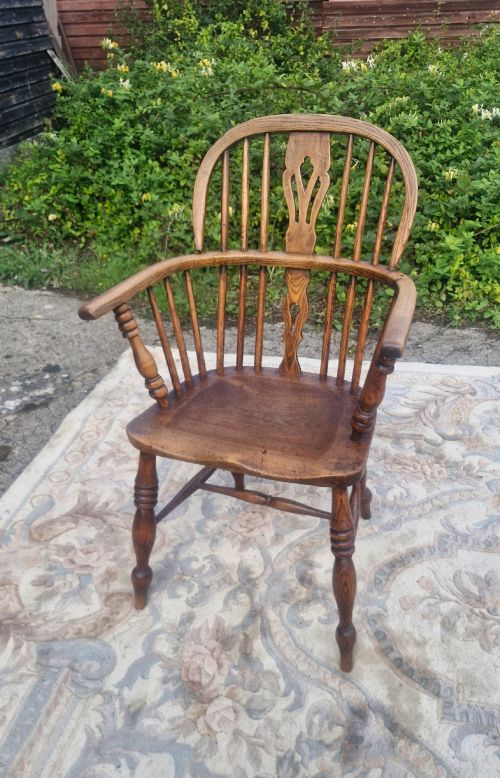
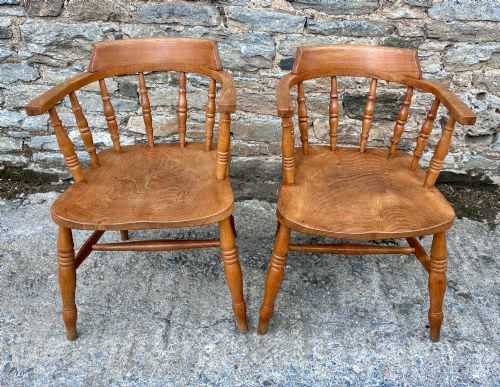
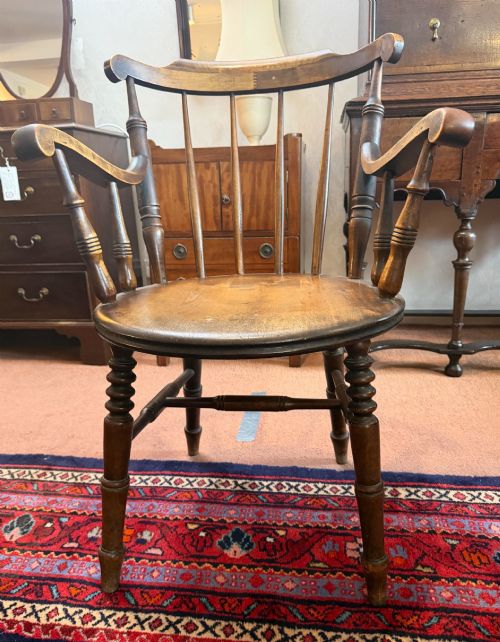
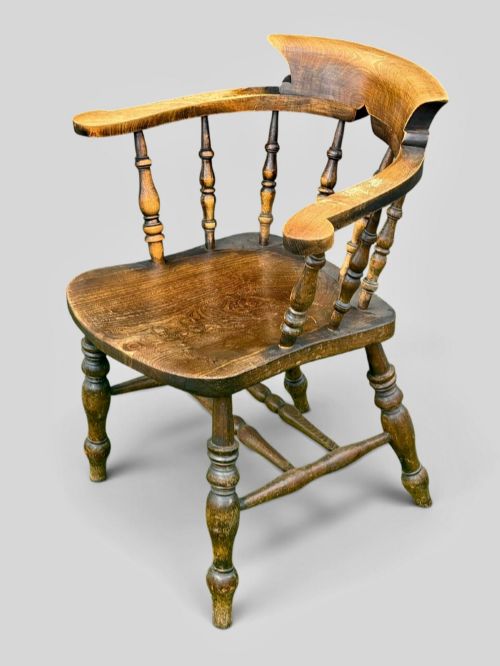
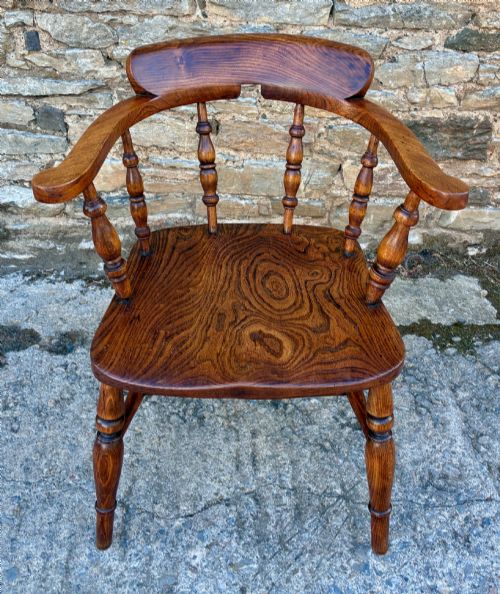
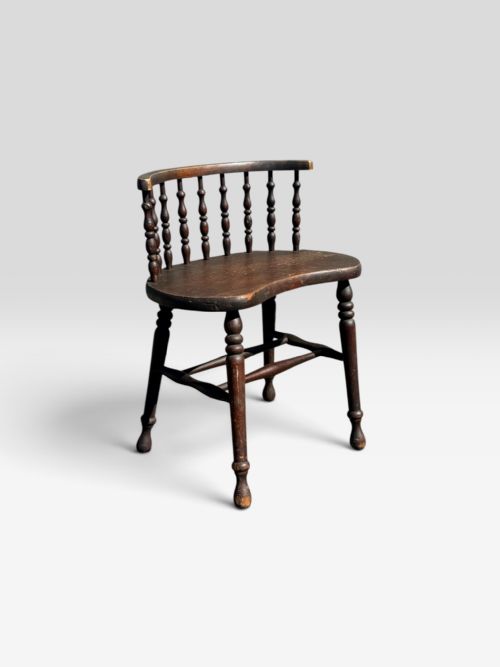
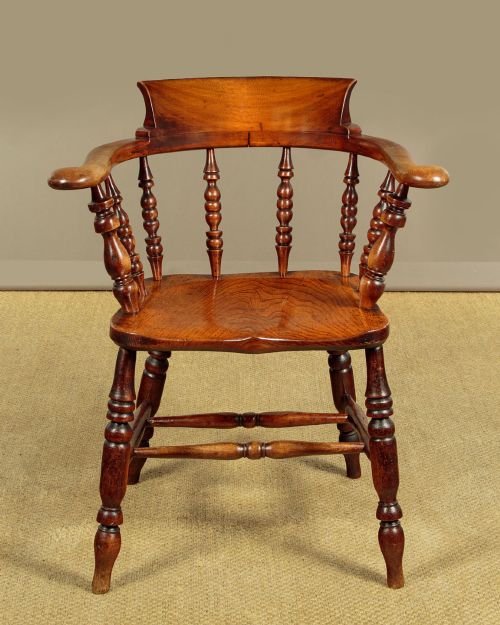
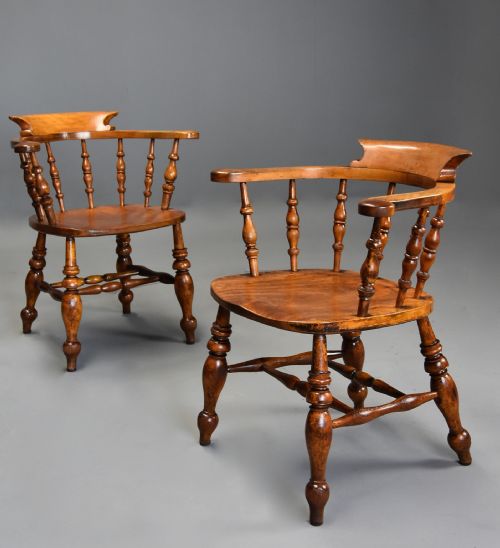
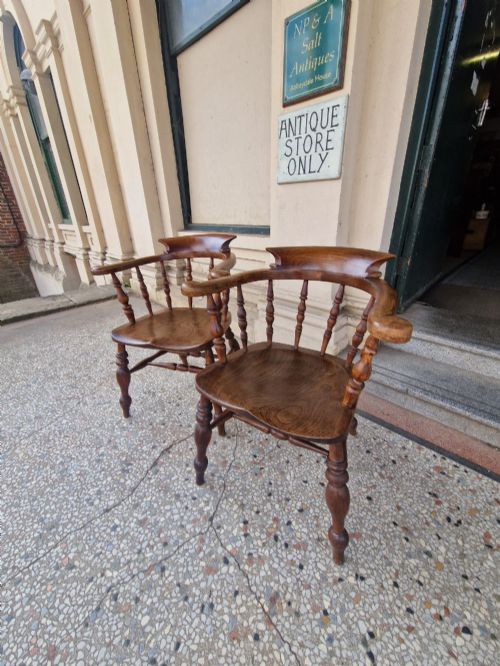
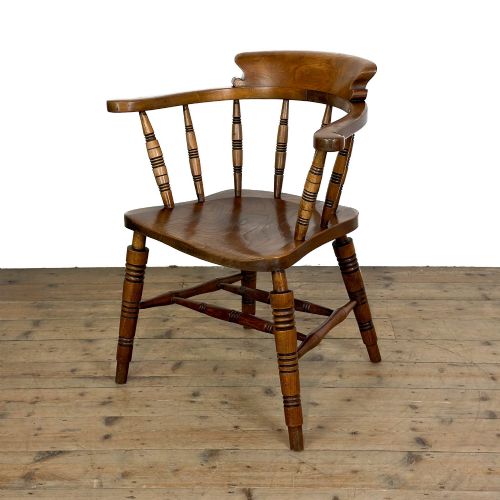
A victorian smokers bow is a robust Windsor-style armchair featuring a continuous curved back rail supported by turned spindles. These seating pieces function primarily as desk armchairs, carver chairs, or general elbow chairs within nineteenth-century domestic settings.
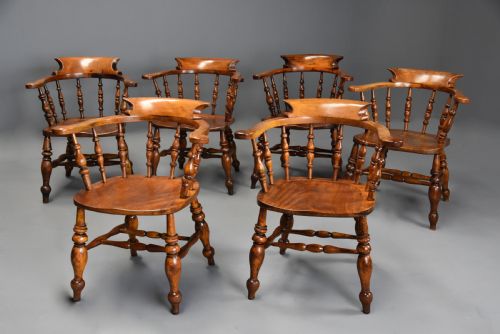
The versions met most often on this page date from the nineteenth century, including specific years such as 1870, 1880, and 1900. They appear in configurations ranging from single desk armchairs to pairs and sets of four.
Makers produced these armchairs in regional English workshops, notably utilising local timbers to supply country houses, offices, and studies.
How They Were Made
Craftsmen built these chairs using mixed timbers, frequently pairing solid elm for the shaped seats with ash, beech, oak, satin birch, or metal for the framework. Elm provided a tough, interlocking grain suitable for saddle seats, while ash and beech offered flexible strength for steam-bent bow rails.
Construction methods rely on traditional Windsor framing, where turned legs and back spindles fit directly into thick plank seats using wedged tenon joints. Carpenters shaped the characteristic low bow back from a single piece of timber or laminated sections, securing the arm supports with sturdy dowels.
Retail Price Guide 2026
Typical UK retail prices for victorian smokers bow, calculated from the Sellingantiques database of over a million retail prices indexed since 2003. This retail price guide relies exclusively on Sellingantiques data; no external sources or auction records are used, so the figures do not describe the wider market.
Many of these sturdy elm seats still show the distinct hollows worn by nineteenth-century elbows resting on the curved wooden arms.
What Varies in Quality
Quality rests heavily on the choice and figure of the timber, distinguishing standard beech-framed examples from those utilising highly figured elm or satin birch. Grain movement across the solid seat slab and rich natural patination elevate individual pieces.
Structural proportions and the grace of the turned spindles separate utilitarian seating from finer regional cabinet-maker output. A well-balanced bow back and crisp joinery indicate superior construction originating from established production centres like High Wycombe.
Glenister High Wycombe
The Victorian Smokers Bow Glossary
- Smokers bow
- A low-backed Windsor armchair developed in the nineteenth century, often used at a desk or in a smoking room.
- Windsor chair
- A chair built with a solid wooden seat into which the legs and back spindles are driven directly.
- Bulls eye
- A decorative circular turn or motif sometimes found on the arms or back terminals of these chairs.
- Carver chair
- An armchair, typically larger than dining chairs, used at the head of a table or as an occasional seat.
- Saddle seat
- A wooden seat base scooped and shaped by hand for ergonomic comfort.
Frequently Asked Questions
Are smokers bow chairs comfortable?
These armchairs provide solid support through their wide, scooped wooden seats and curved low backs. They serve well as practical desk chairs or fireside seating.
Users often add small cushions for extended sitting, though the original design relies on ergonomic wooden contours.
Where were these chairs used?
Nineteenth-century households placed these armchairs in studies, libraries, and smoking rooms. Their sturdy construction also suited commercial offices and country house settings.
Today they function flexibly around dining tables, writing desks, or as standalone hallway pieces.
How do I date a smokers bow?
Dating relies on timber selection, turning styles, and structural wear observed across nineteenth-century examples. Mid-century pieces often display heavier elm seats and simpler ash turnings.
Later Victorian versions from around 1880 to 1900 sometimes incorporate birch or lighter framing methods.
What is the difference between a captains chair and a smokers bow?
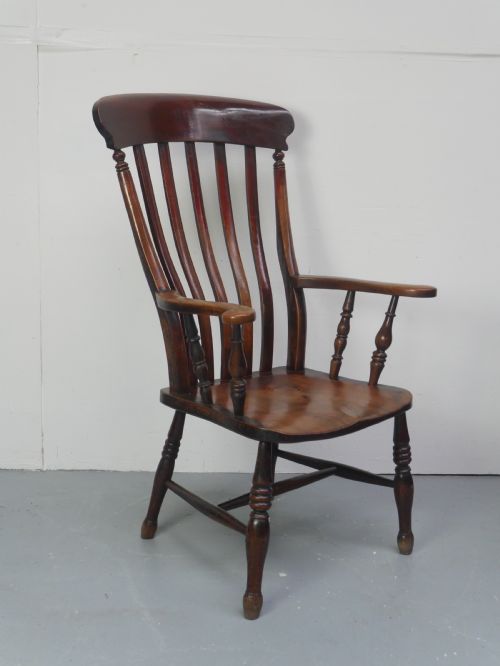
The terms often overlap in nineteenth-century vernacular furniture, describing low-backed wooden armchairs with similar Windsor origins. Smokers bows specifically highlight the rounded, continuous bow rail supporting the arms.
Both types share solid plank seats and turned spindle supports designed for heavy daily use.