

19th Century Captains Chair
When you search for a 19th century captains chair, you are looking for sturdy seating built for studies and ships.
What the pieces are
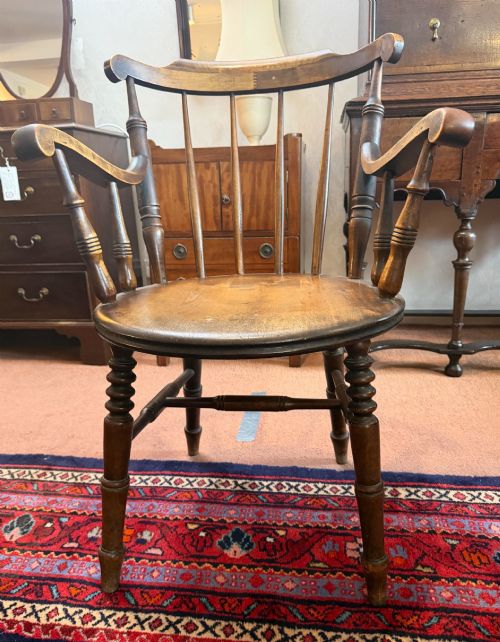
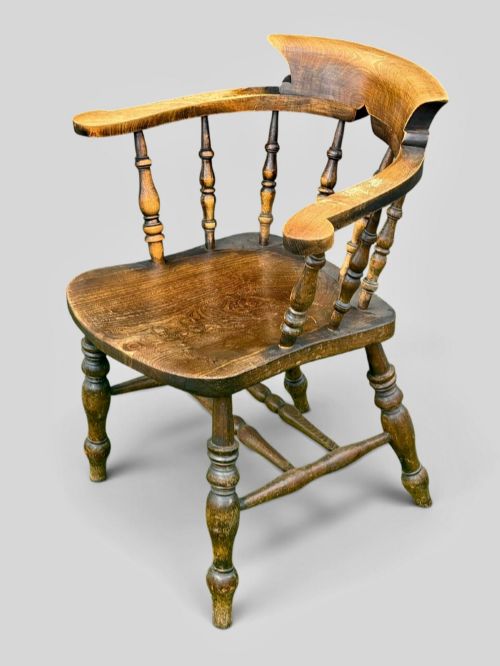
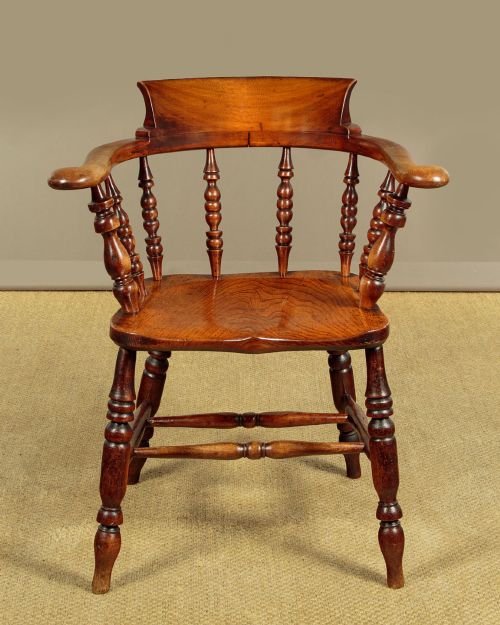
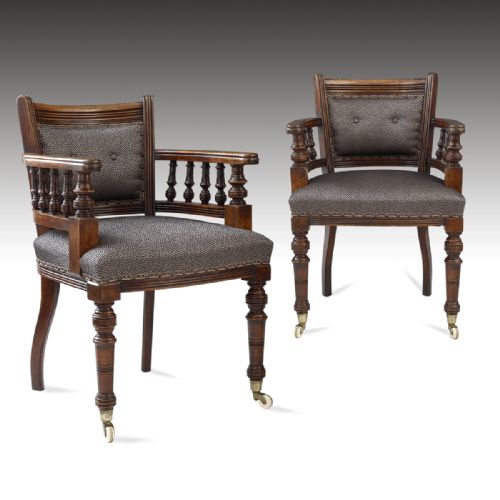
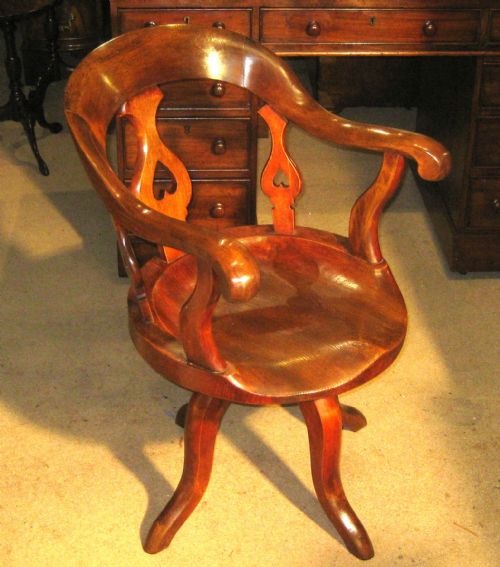
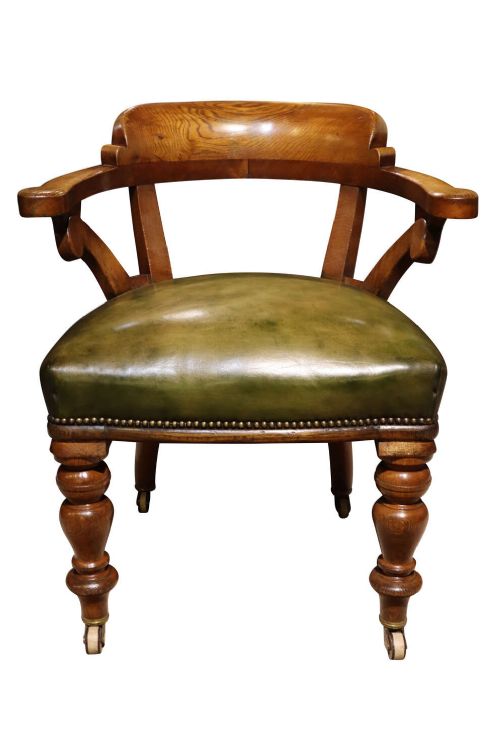
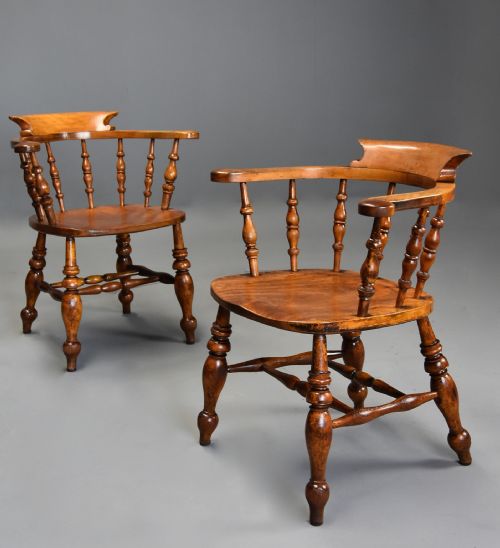
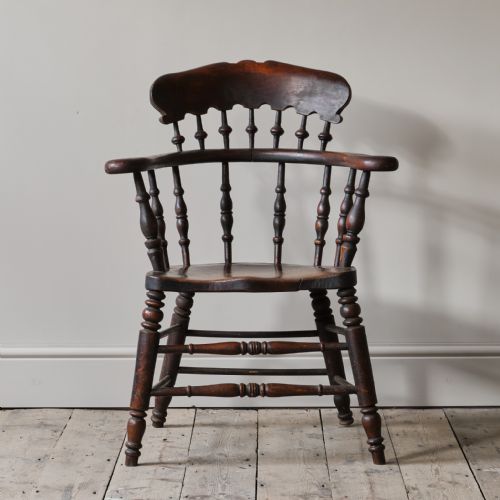
A 19th century captains chair is a robust armchair designed for desks and offices, frequently referenced in connection with smokers bows and Windsor forms. You will most often find examples dating from the Victorian period, appearing singly or in pairs.
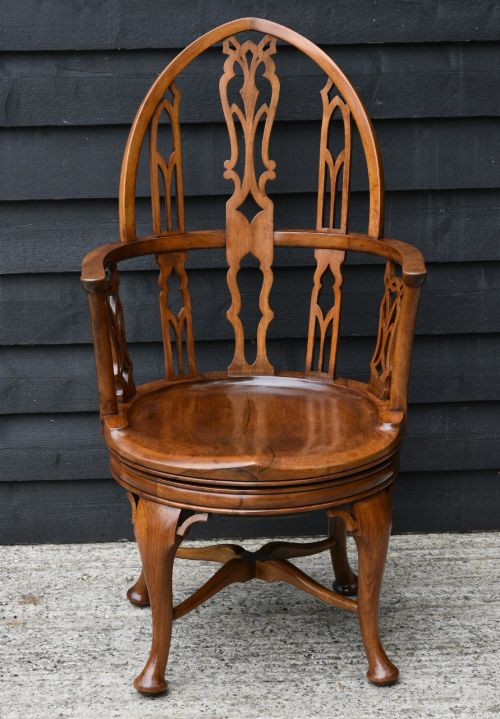
The evidence shows these armchairs serving primarily as desk chairs or elbow chairs, with some featuring swivel mechanisms. They combine low, wraparound backrests with solid timber seats.
Origins on this page span the 19th century, with specific dates clustering around 1880 and 1900. Forms range from simple country dining chairs to revolving office seats.
How they were made
Makers constructed these chairs from a variety of native and imported timbers, pairing elm and beech, or ash and elm, alongside mahogany, yew wood, birch, fruitwood, walnut, and oak. Solid hardwood seats receive turned spindles and curved wooden backs.
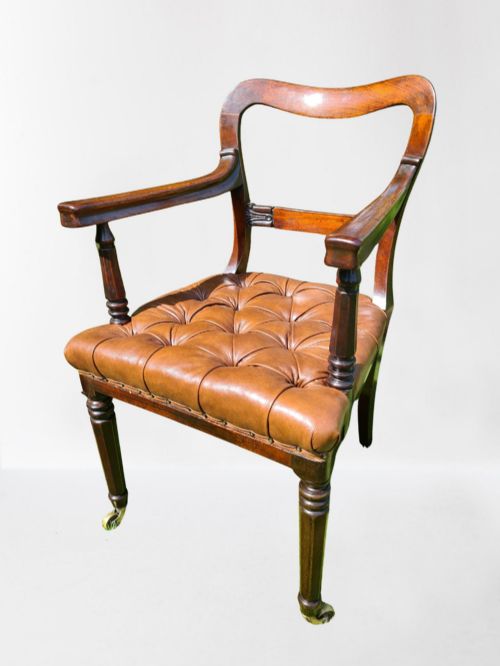
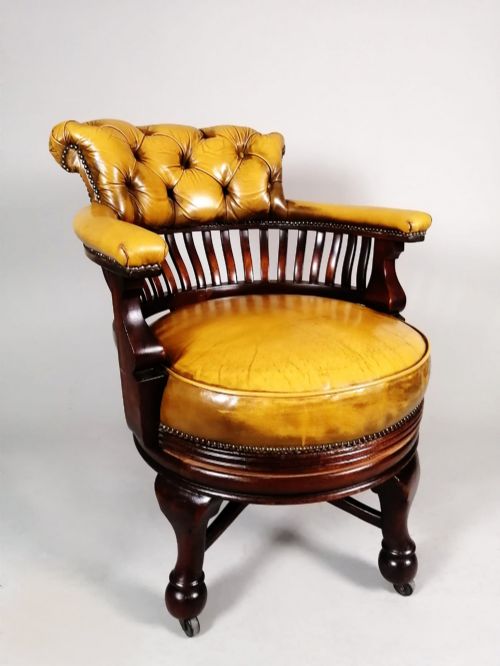
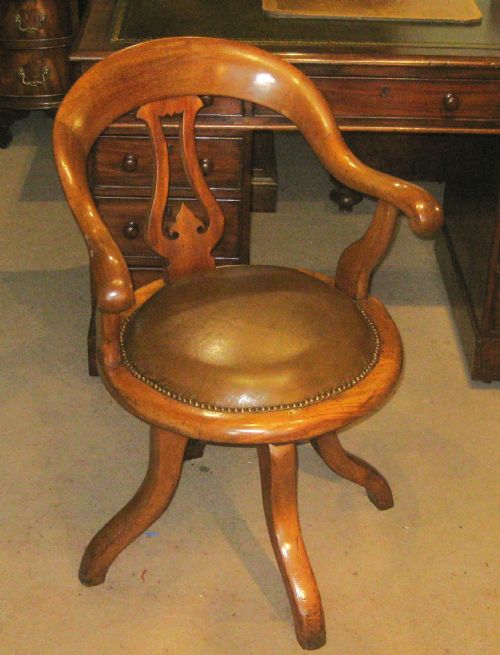
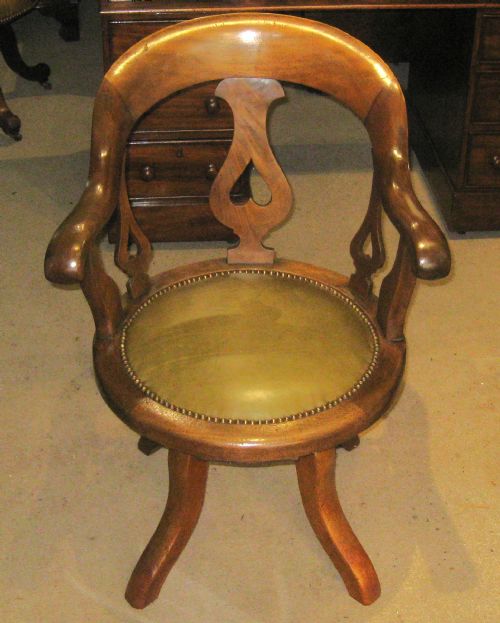
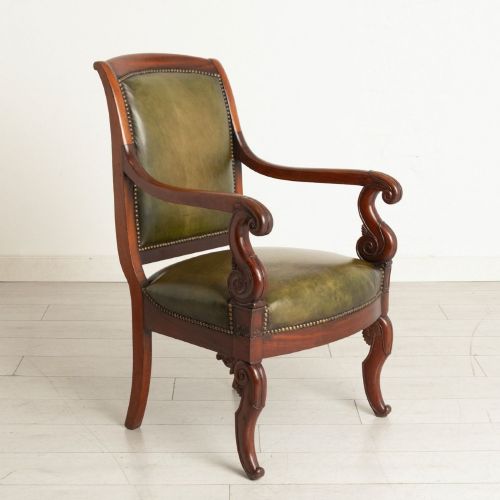
Many examples incorporate leather upholstery on the seat or back, sometimes secured with brass details. Swivel mechanisms utilise iron and wood to allow rotation for desk use.
Retail Price Guide 2026
Typical UK retail prices for 19th century captains chair, calculated from the Sellingantiques database of over a million retail prices indexed since 2003. This retail price guide relies exclusively on Sellingantiques data; no external sources or auction records are used, so the figures do not describe the wider market.
Some captains evidently required a spin, as several 19th century examples arrive equipped with original revolving swivel mechanisms.
What varies in quality
The choice of timber creates distinct visual tiers, where standard beech and elm country builds contrast against richly figured mahogany, walnut, or dense yew wood. Finer grain patterns and mature patination elevate the visual weight of the piece.
Construction complexity also separates simple spindle-back elbow chairs from revolving swivel office armchairs with leather upholstery. Sets of chairs demonstrate greater uniformity in turning and timber selection than single pieces.
The 19th Century Captains Chair Glossary
- Smoker's bow
- A low-backed Windsor-style armchair with a continuous curved rail forming the arms and back. This form shares many characteristics with the captains chair.
- Windsor chair
- A chair built with a solid wooden seat into which the legs and back spindles are directly inserted. This method provides robust structural integrity.
- Elbow chair
- An armchair designed with short arms intended to support the elbows rather than run the full length. These frequently serve at desks and dining tables.
- Patina
- The surface sheen and colour depth developed by timber over decades of use and handling. A rich patina indicates age and natural wear.
Frequently Asked Questions
Are these chairs comfortable for a modern desk?
Most examples feature low, supportive wooden backs and contoured solid seats designed for sitting at a writing table.
Revolving versions and upholstered leather models offer additional movement and padding for extended desk work.
How do I distinguish a smoker's bow from a captains chair?
The terms often overlap in 19th century vernacular, but both describe sturdy low-back wooden armchairs.
Captains chairs more frequently feature in office and desk contexts with heavy turned supports.
Can I find matching sets of these chairs?
Listings occasionally include pairs, sets of four, or sets of six dining and desk chairs.
Single chairs and pairs remain the most common configuration found on the market.
What materials are most common?
Elm, beech, and ash dominate the country vernacular versions, often used together in a single chair.
Mahogany and walnut appear in more formal library or office desk configurations.