
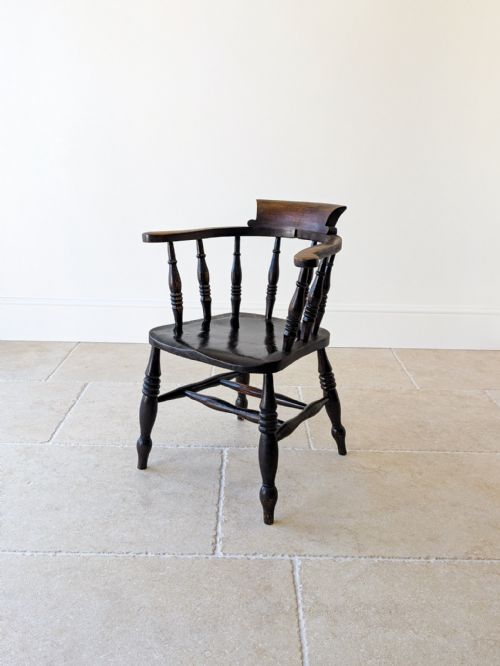
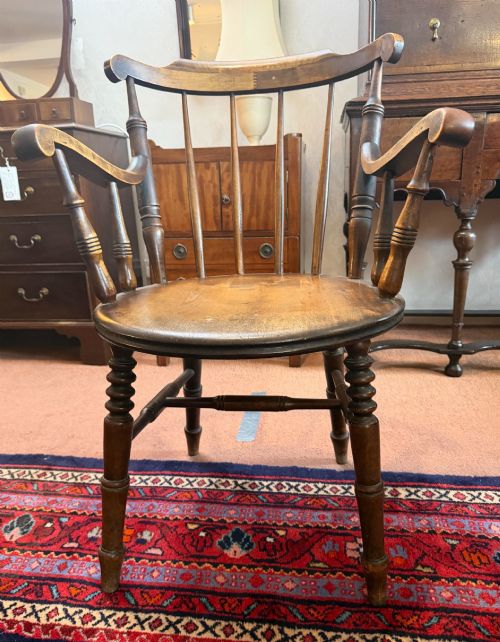
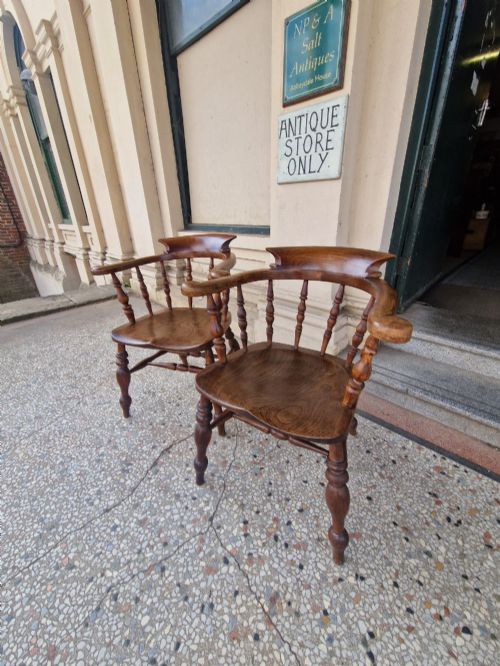
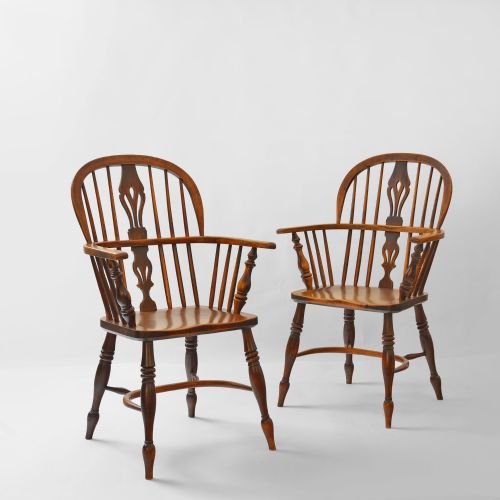


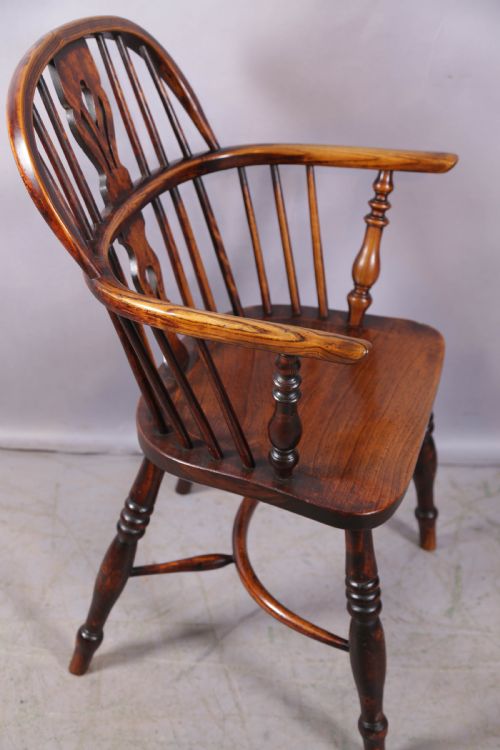


Ash Captains Chair
An ash captains chair is a sturdy vernacular seat built for daily office or parlour use.
Ash Captains Chair
An ash captains chair is a robust form of seating found across nineteenth-century English and Scottish vernacular traditions. These armchairs typically combine a tough turned spindle structure with a deep saddle-moulded seat.
The version you meet most frequently on this page pairs an ash frame with an elm seat, often classified within Victorian country styles. They appear singly or in matched pairs and sets, serving desk, dining and library roles.
Makers shaped these pieces for enduring utility, using low backs and broad arms to fit beneath writing desks and office tables. The forms bridge standard Windsor designs and heavier smokers bows.
How they were made
Cabinet makers and rural turners constructed these chairs using green woodworking techniques, turning upright spindles on a lathe and bending green timber into horseshoe armrails. They selected ash for flexible steam-bent parts and sturdy legs.
Seats were carved from solid blocks of timber, predominantly elm, which resisted splitting when subjected to downward pressure. Additional species like beech, alder and iron appear in structural joints and hardware to reinforce high-stress areas.
Some nineteenth-century makers built these chairs with revolving swivel bases so clerks could spin between opposing desks.
What varies in quality
The grade of an ash captains chair depends on the depth and comfort of the sculpted seat and the crispness of the spindle turnings. Better examples retain clean lines in the horseshoe armrail without excessive repair or replacement stretchers.
Makers' stamps or regional attribution markings elevate specific pieces above anonymous workshop production. The cohesion of timber selection, such as tightly figured elm grain paired with straight-grained ash, signals superior execution.
Fred Walker
The Ash Captains Chair Glossary
- Smokers bow
- A low-backed armchair with a rounded continuous arm rail, closely related to the captains chair. These comfortable seats became popular in nineteenth-century offices and smoking rooms.
- Comb back
- A Windsor chair design where central spindles extend upward through a crest rail, resembling the teeth of a comb. This variation provides extra upper back support.
- Low back
- A seating configuration where the armrail sits beneath the user's waist height, allowing the arms to rest naturally while working at a desk. This format defines many nineteenth-century office chairs.
- Vernacular
- Objects designed by regional craftsmen for practical utility rather than formal academic styles. These pieces utilise local timbers such as ash, elm and beech.
- Windsor
- A chair built with a solid wooden seat into which the legs, back spindles and arm posts are wedged directly. Traditional versions employ varied woods for structural strength.
Ash Captains Chair: Frequently Asked Questions
How were they used historically?
These chairs served primarily as functional seating at writing desks, office tables and in smoking rooms. Their low backs allowed users to move freely while working.
Over time they transitioned into domestic dining and library spaces. Their durable build suited heavy daily use in commercial and residential settings alike.
How do I live with one?
An ash captains chair integrates easily into modern workspaces and dining rooms as a desk or feature chair. Its neutral wood tones complement both contemporary and traditional interiors.
Maintain the timber by keeping it away from direct heat sources and applying occasional wax polish to nourish the dry grain. The solid construction handles everyday sitting without issue.
How do I tell periods apart?
Nineteenth-century examples often display hand-turned components and thick elm saddle seats shaped by adze and scorper. Mid-Victorian versions tend to have heavier proportions and darker patination.
Later pieces from around nineteen hundred or the interwar period may incorporate machine-turned spindles and swivelling iron mechanisms. Examining the joinery and tool marks reveals the era of manufacture.