


Vintage Desk Chair Wood
A vintage desk chair wood selection brings together sturdy elm, mahogany and beech forms designed for working at nineteenth and twentieth century writing tables.
Vintage Desk Chair Wood
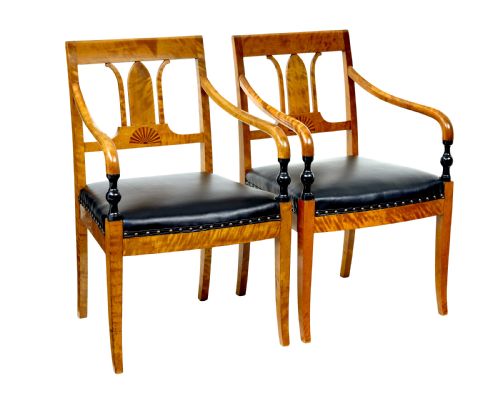
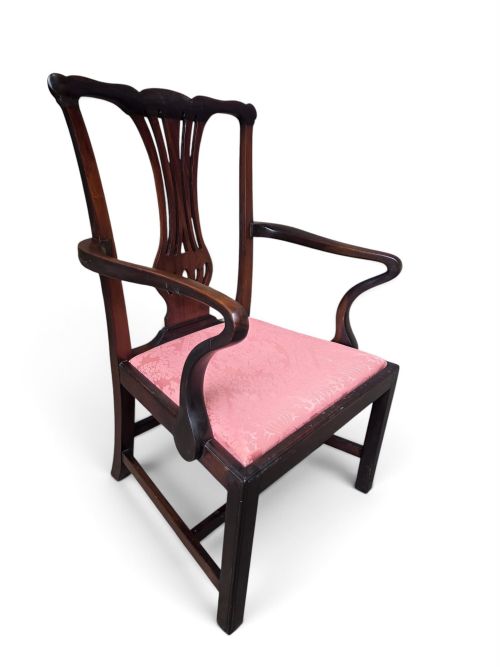
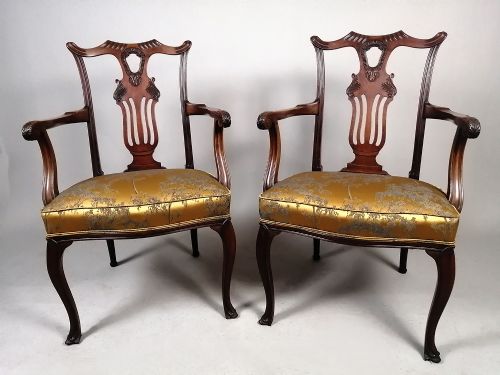
A vintage desk chair wood selection encompasses practical nineteenth and twentieth century seating designed for working at a table or bureau, drawing from various regional and revival traditions. Buyers searching for a vintage desk chair wood option encounter everything from utilitarian Captains chairs to refined mahogany armchairs with upholstered or wood seats.
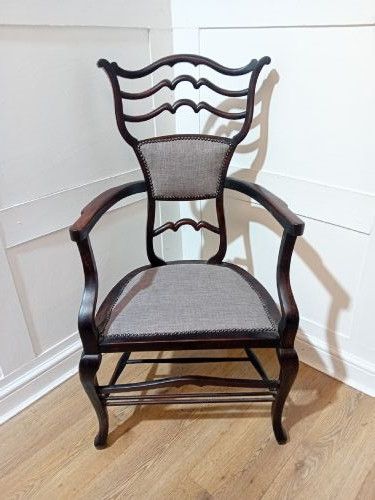
The material palette spans durable native timbers like elm, ash, and yew alongside polished mahogany and beech, reflecting both rustic country craftsmanship and formal urban cabinet making. Pieces range from unpretentious Windsor construction to late Victorian office seating and Edwardian bentwood forms.
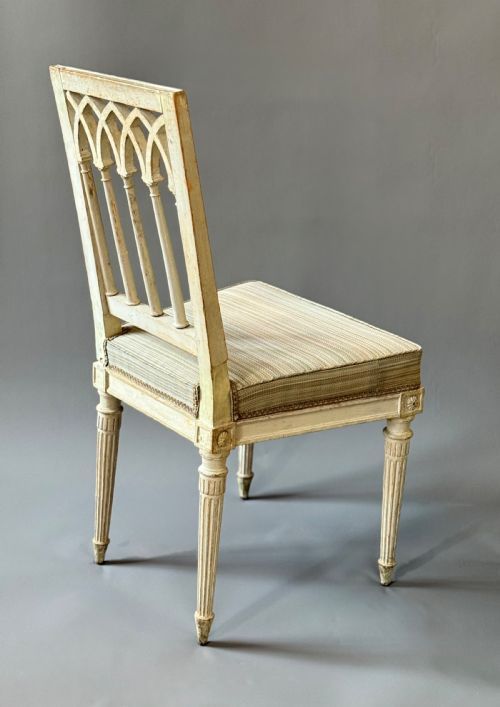
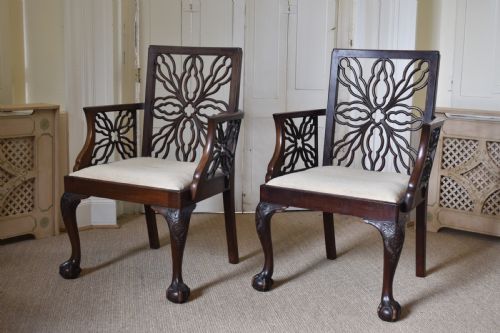
Victorian and Edwardian examples predominate, frequently combining traditional turnings with ergonomic proportions suited to daily study. Regional vernacular designs sit alongside revival styles such as Chippendale and Gothic, offering distinct silhouettes for domestic workspaces.
How they were made
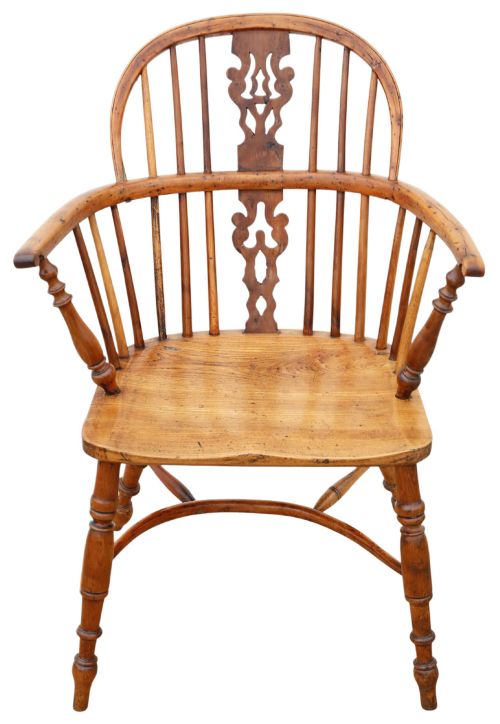
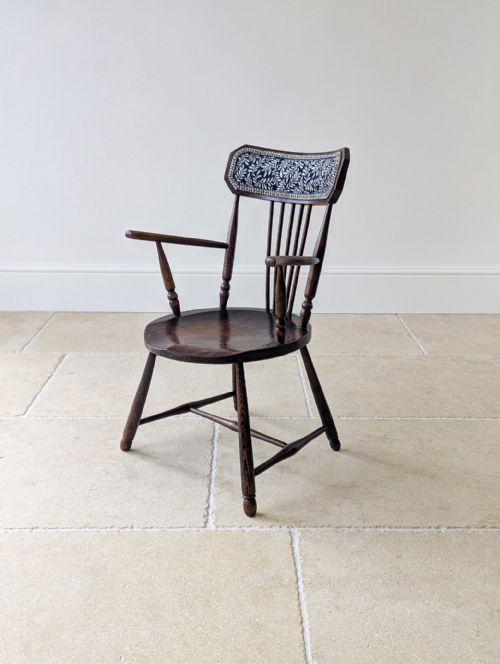
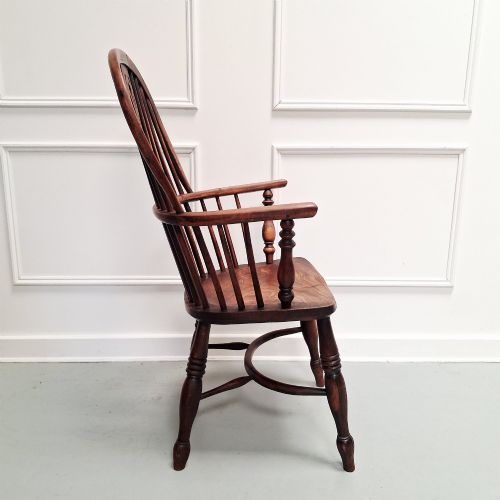
Construction relies heavily on traditional timber combinations, pairing resilient elm or ash seats with bent or turned beech and yew components for structural strength. Windsor forms utilise socketed spindles and hooped backs locked into solid wooden saddles without metal fasteners.
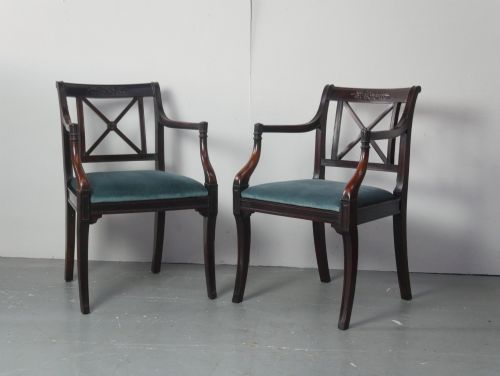
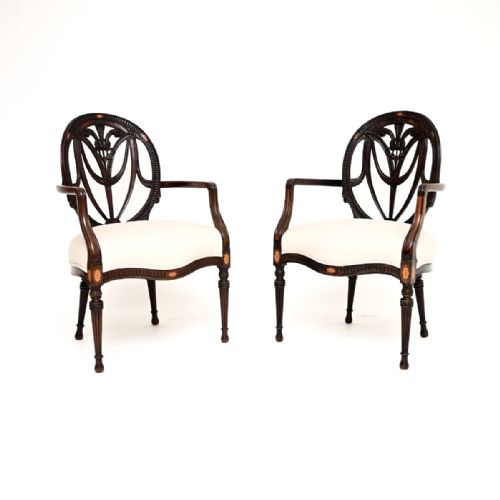
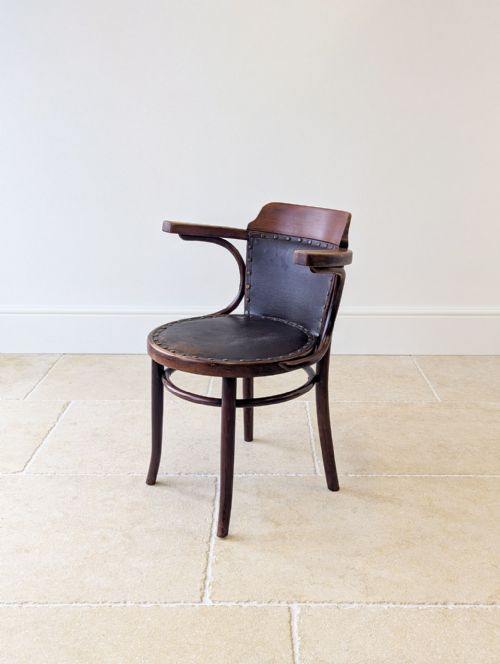
Mahogany and satinwood pieces employ skilled cabinet making techniques including frame and panel joinery, carved splats, and occasional inlay or veneer work. Steam bending shapes flexible beech and birch elements into continuous curves for comfortable armrests and backs.
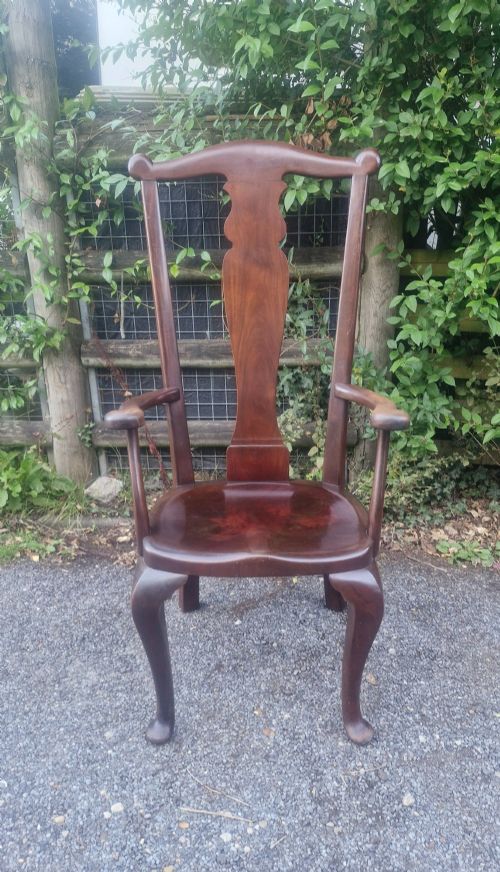
Listings feature eighteenth to twentieth century forms including Windsor, tub, and Captains chairs constructed from mahogany, elm, and yew wood.
What varies in quality
Quality rests in the selection of timber grain, the tightness of joint construction, and the integrity of the original timber components over centuries of use. Superior examples display thoughtful wood matching, particularly in contrasting elm seats and yew bow backs on Windsor forms.
Refinement of carving and turning distinguishes standard utility workshop output from finer cabinet maker productions. Well proportioned arm support, sturdy underframing, and uncompromised structural joins separate durable working chairs from lesser altered pieces.
J Spencer·Alfred Allen of Birmingham·Gabbitass Worksop maker
The Vintage Desk Chair Wood Glossary
- Windsor chair
- A wooden chair built with a heavy solid timber seat into which the legs and back spindles are directly dowelled. This sturdy construction method originated in rural workshops and evolved into various regional hoop-back and comb-back forms.
- Carver elbow-chair
- An armchair featuring wooden arms, often designed to sit at the head of a table or function as a desk chair. These pieces typically incorporate shaped armrests supported by turned spindles.
- Bentwood
- Wood shaped into curved forms by applying steam and pressure. This technique allows makers to create light, resilient frames without traditional mortise and tenon joinery.
- Vernacular
- Objects built according to local traditions and practical utility rather than formal academic design rules. These pieces prioritise function and regional materials over fashionable ornamentation.
Vintage Desk Chair Wood: Frequently Asked Questions
What is a Captains chair?
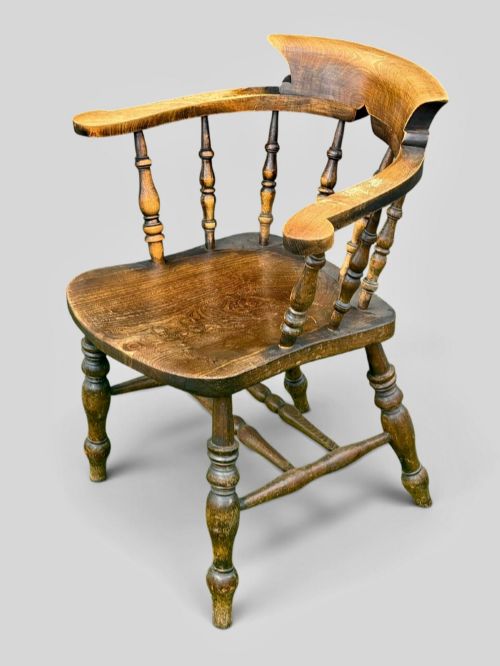
A Captains chair is a low-back wooden armchair featuring a continuous curved armrest supported by small spindles above a saddle-shaped seat. These sturdy seats provide comfortable support during long hours of writing or administrative work.
Originally designed for domestic studies and office use during the nineteenth century, they pair solid elm or beech frames with ergonomic proportions. Their robust build makes them enduringly practical for modern desk use.
Are these chairs comfortable for daily use?
These chairs are generally designed with contoured wooden seats and supportive high or low backrests suited for prolonged sitting at a desk. Many nineteenth-century examples incorporate ergonomic curves shaped directly into the solid timber.
While lacking modern adjustable mechanisms, their traditional proportions accommodate natural posture. Adding a loose pad can further enhance comfort during daily administrative tasks.
How do I care for wooden desk chairs?
Maintain wooden desk chairs by applying natural beeswax periodically to nourish the timber grain and preserve the surface finish. Avoid placing them near direct heat sources or in fluctuating humidity to prevent wood splitting.
Regular dusting with a soft dry cloth prevents dirt accumulation in carved details and turned joints. Treat leather or cane inserts with appropriate specialist conditioners when necessary.