
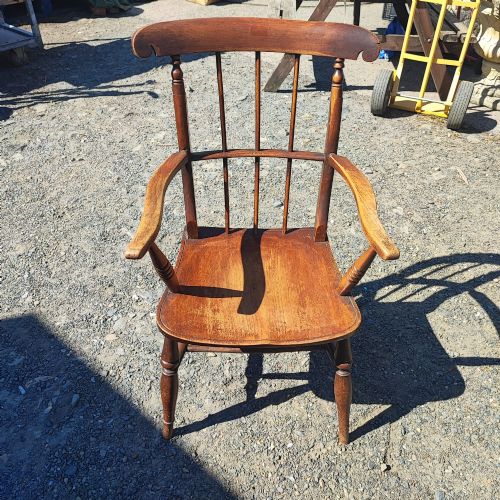
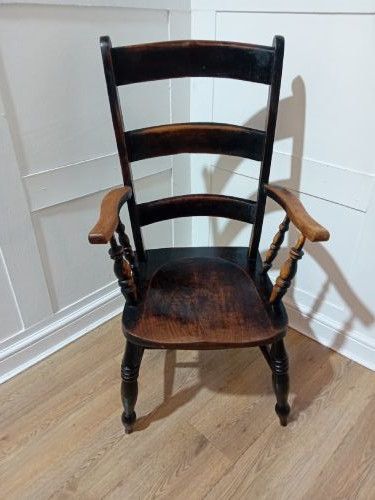

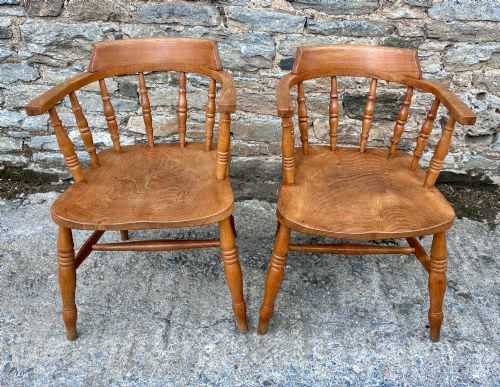
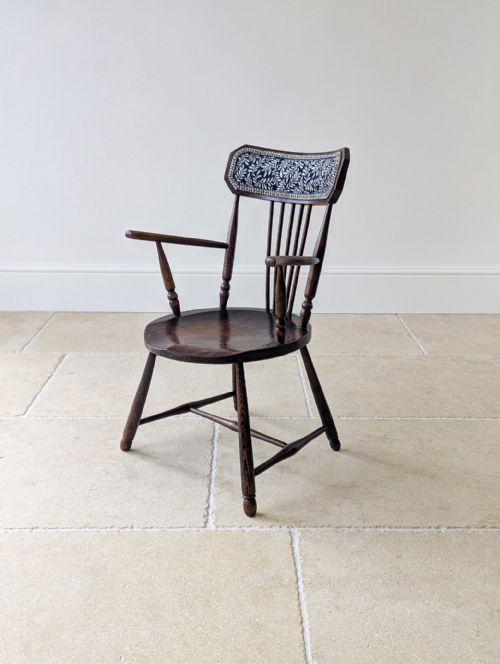
Elm Seat Armchair
An elm seat armchair brings rustic warmth to a room, offering robust construction and deep historical character shaped by regional English vernacular traditions.
Elm Seat Armchair
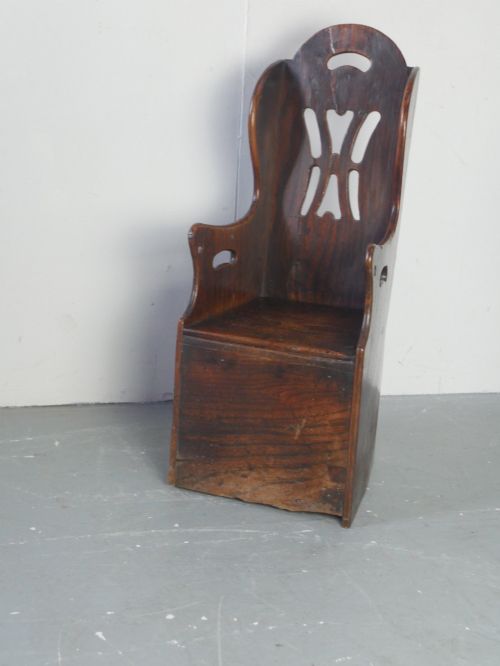
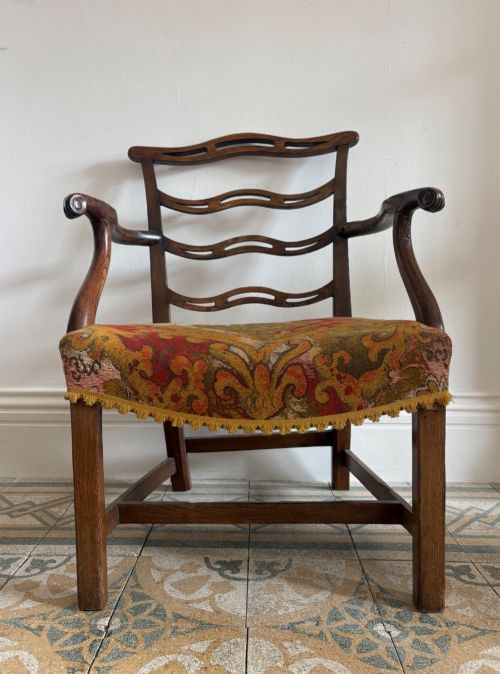
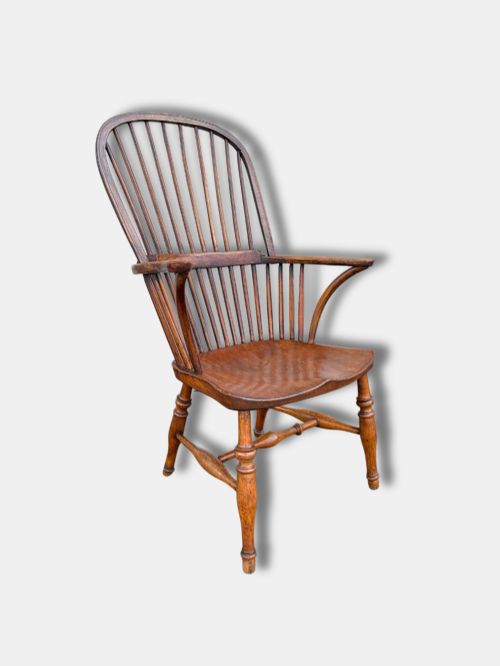
When searching for an elm seat armchair, a buyer encounters domestic seating rooted in English country traditions, spanning the Georgian, Victorian, and later eras. These pieces include sturdy Windsor forms, ladderbacks, and low fireside chairs designed for daily utility in farmhouses and provincial homes.
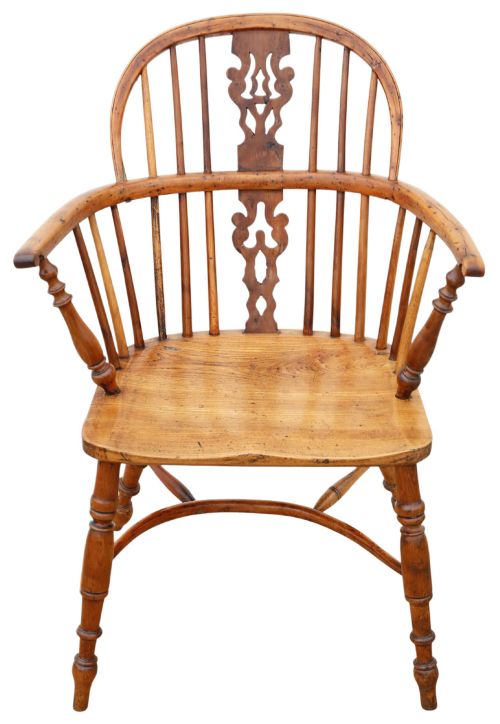
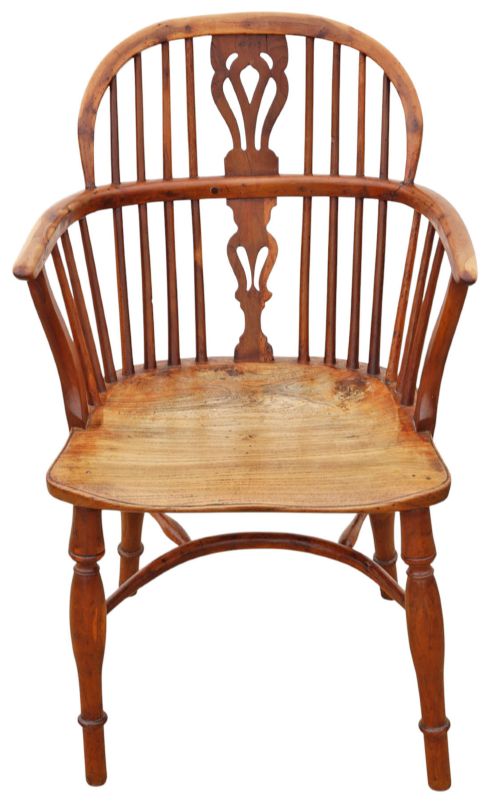
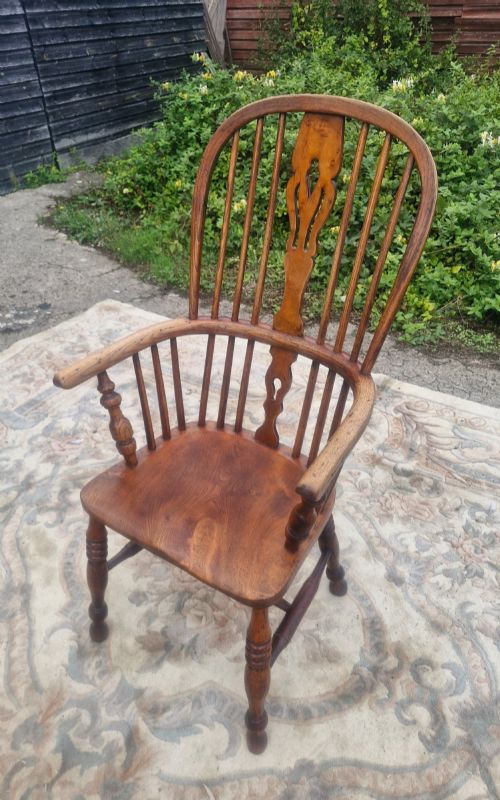
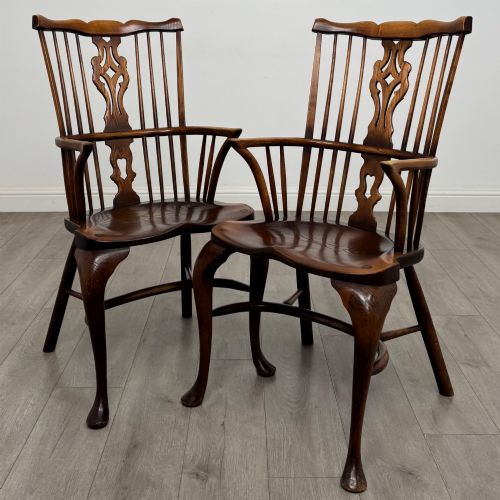
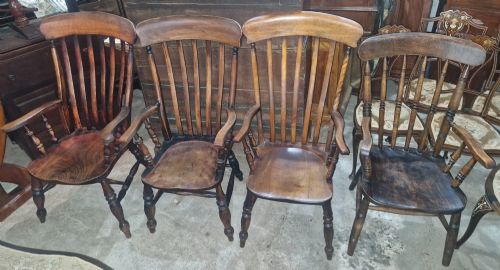
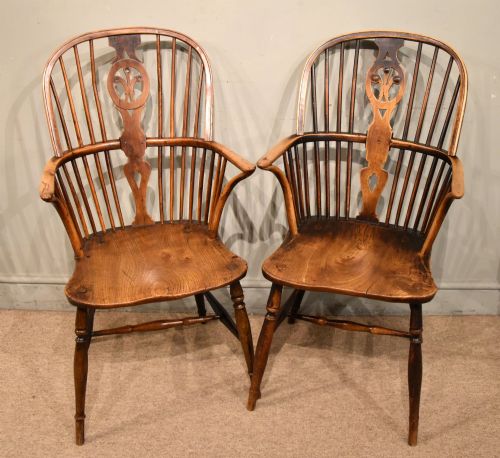
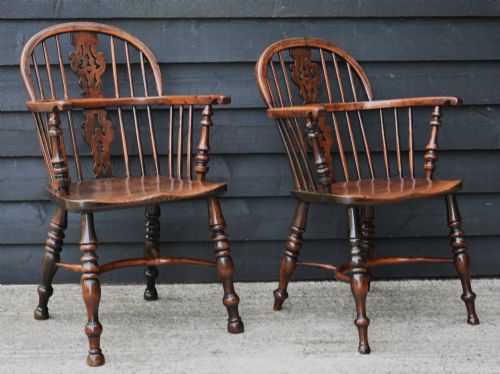
The most common examples on this page are Windsor armchairs featuring shaped wooden seats paired with ash, beech, or yew spindles and legs. Regional variations such as Thames Valley, Lancashire, and West Country designs frequently appear, displaying distinct back configurations like comb backs, wheel backs, and hoop backs.
Materials and construction
Makers utilised elm for the solid plank seats because the interlocking grain resists splitting under heavy use, while bending woods like ash and beech were shaped for steam-bent hoops, arms, and spindles. Yew and fruitwood appear frequently in high-status country chairs, selected for rich colour and decorative grain patterns.
Traditional construction relies on wedged through-tennss joints where leg and spindle tenons pass completely through the seat plank and lock with wedges. Regional turnery methods determined the shape of legs and stretchers, using pole lathes to produce spindles and supports before final assembly.
Elm Seat Armchair Retail Price Guide 2026
Typical asking prices for elm seat armchair among the pieces listed under this phrase on Sellingantiques today, from the lower quarter to the upper quarter. They describe what is for sale here now, not the wider market.
Many historical chair seats show subtle depression contours moulded by generations of sitting.
Assessing quality and proportion
Quality in an elm seat armchair rests upon the balance of proportion, the sculptural shaping of the solid seat, and the integrity of the timber. Chairs with well-sculpted saddle seats and generous proportions demonstrate superior craftsmanship compared to simpler, flatter boards.
The choice of secondary woods and the complexity of the back design indicate the maker's ambition. Matched pairs, robust double box stretchers, and retained original surface finishes elevate a piece within its regional tradition.
The Elm Seat Armchair Glossary
- Windsor chair
- A wooden armchair constructed with a heavy solid seat into which the legs, back spindles, and arms are separately tenoned. These chairs developed distinct regional profiles across the Thames Valley and northern English counties.
- Penny seat
- A colloquial term for a saddle-shaped wooden seat featuring a circular depression carved into the centre for comfort.
- Crinoline stretcher
- A bentwood stretcher curving forward between the legs of a Windsor chair, often reinforced with additional turned supports.
- Smoker's bow
- A low-backed armchair with a continuous curved arm rail and spindles, frequently used in 19th-century inns and smoking rooms.
Elm Seat Armchair: Frequently Asked Questions
What is an elm seat armchair?
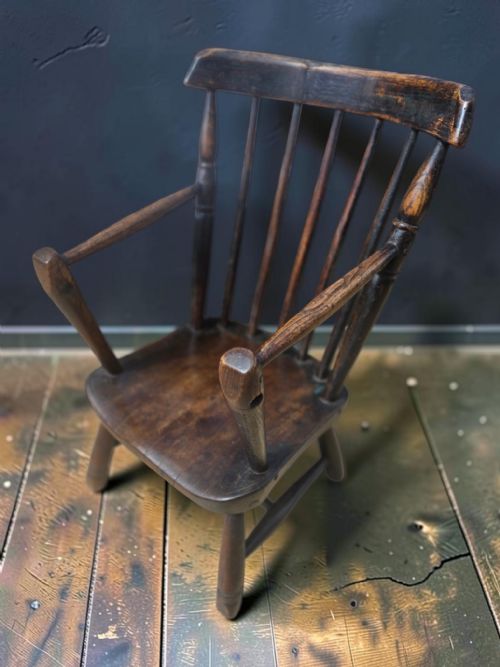
An elm seat armchair is a traditional wooden country chair featuring a solid timber seat plank paired with a spindle or slat back. These chairs were built for durability in domestic and rural settings across England.
Craftsmen combined tough elm for the seat with flexible timbers like ash and beech for the superstructure. They survive today as enduring examples of regional vernacular woodworking.
How do I date an antique armchair?
Dating relies on observing construction methods, turning styles, and wood patination. Georgian chairs often display heavier proportions and distinct wheel or comb back designs, while Victorian iterations introduce steam-bent components and darker finishes.
Tool marks underneath the seat and the wear patterns on the foot ring or stretchers also offer clues to the age of the piece.
Were these chairs used outdoors?
These armchairs were primarily designed for interior domestic use in kitchens, parlours, and farmhouses. Elm and ash construction provided the strength needed for daily family life rather than garden use.
Their robust build allowed them to withstand heavy everyday seating, which accounts for their survival in vernacular households over centuries.
How do I care for an antique wood chair?
Maintain antique wood by keeping it away from direct heat sources and dramatic humidity fluctuations that cause timber to split. Regular dusting and occasional application of appropriate wax preserve the natural patina.
Avoid harsh chemical cleaners and heavy polishes that can degrade the original surface finish over time.