



Yew Windsor Chair
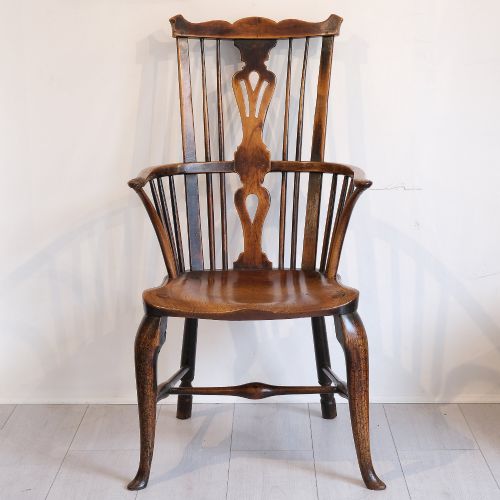
A yew windsor chair brings tactile warmth and enduring structural integrity into a room through traditional English vernacular craftsmanship.
Yew Windsor Chair
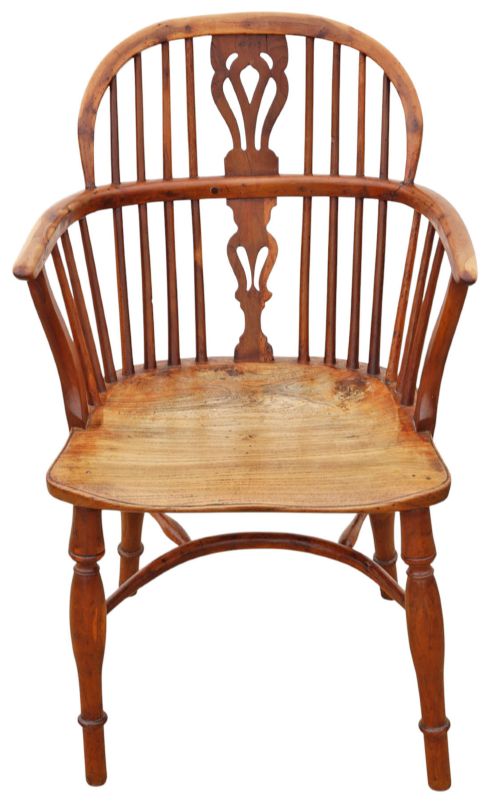
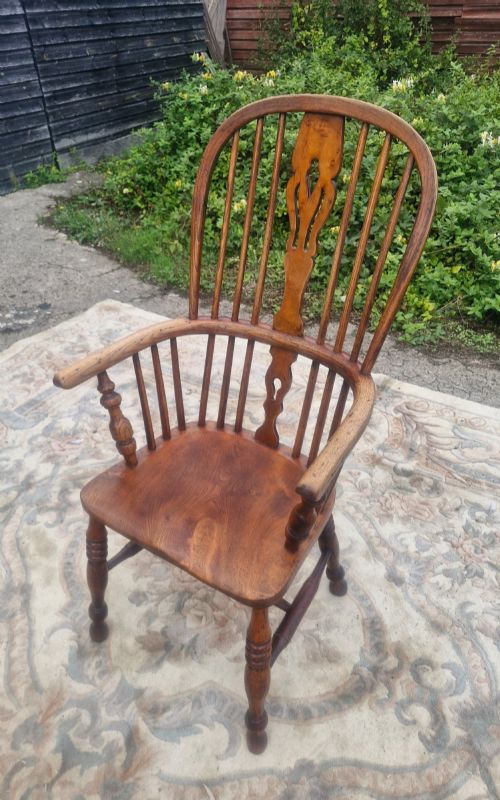
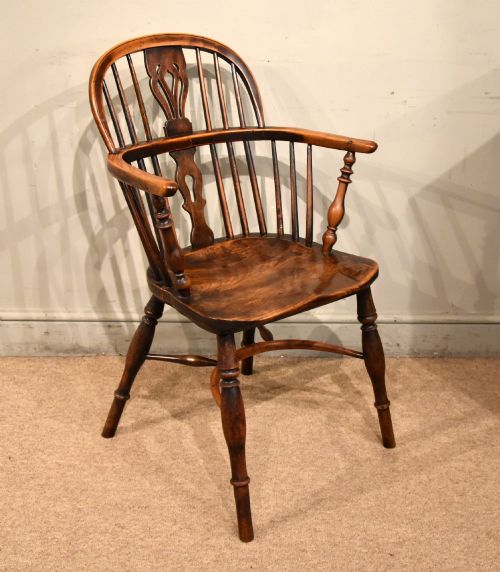
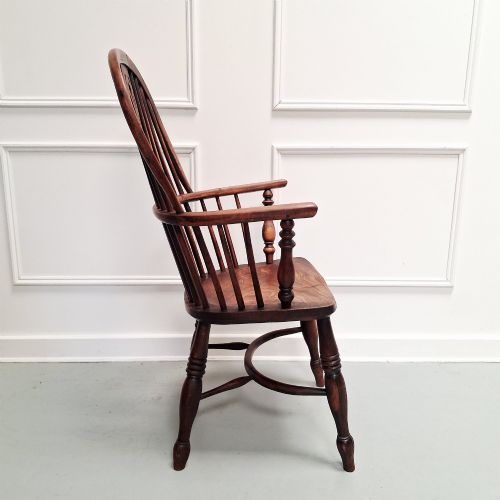
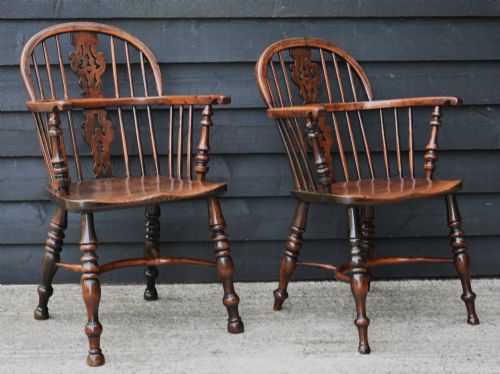
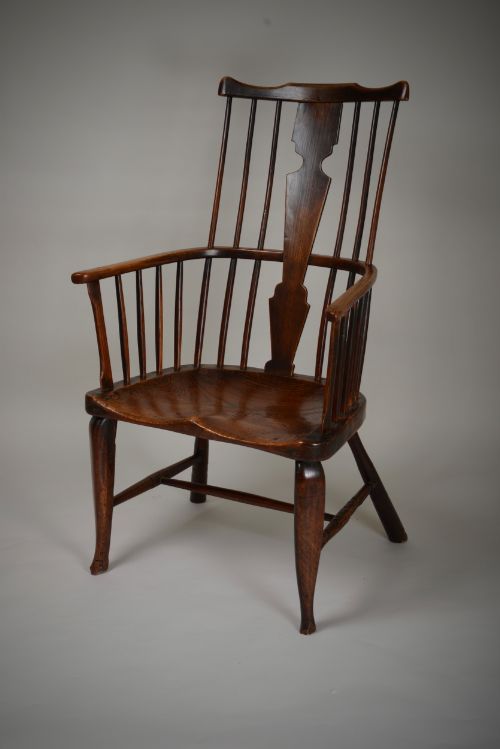
When searching for a yew windsor chair, a buyer encounters seating built around a solid shaped wooden seat into which the legs and back spindles are independently wedged. These pieces emerge predominantly from the eighteenth and nineteenth centuries, spanning Georgian and Victorian periods of English country furniture production.
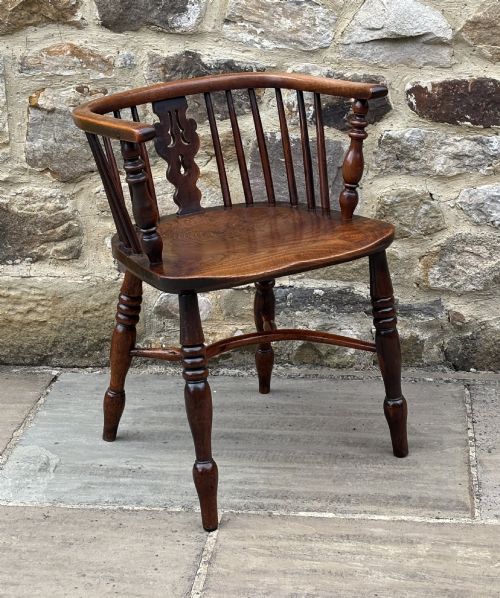
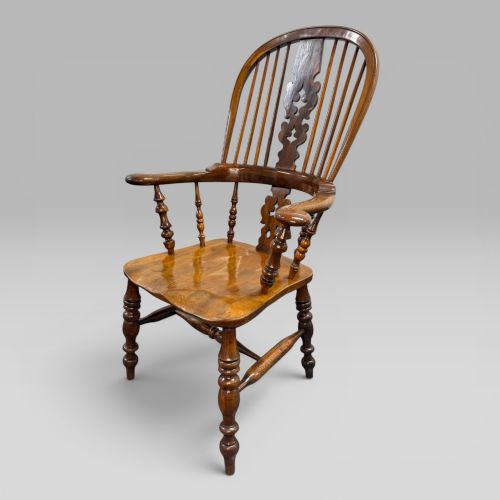
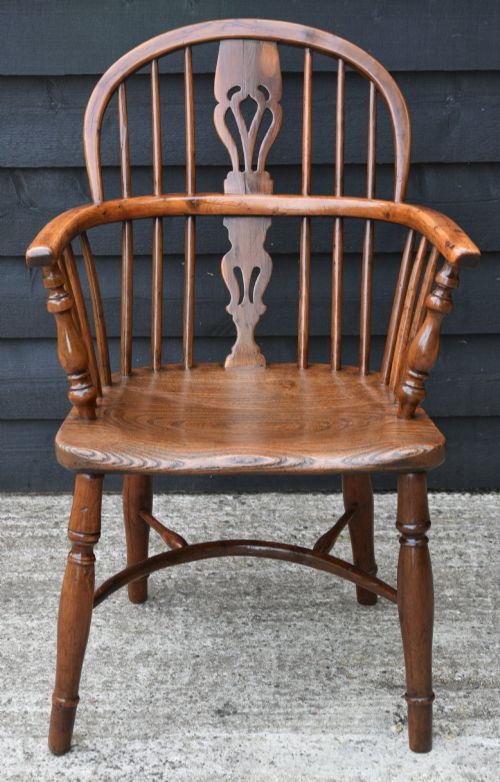
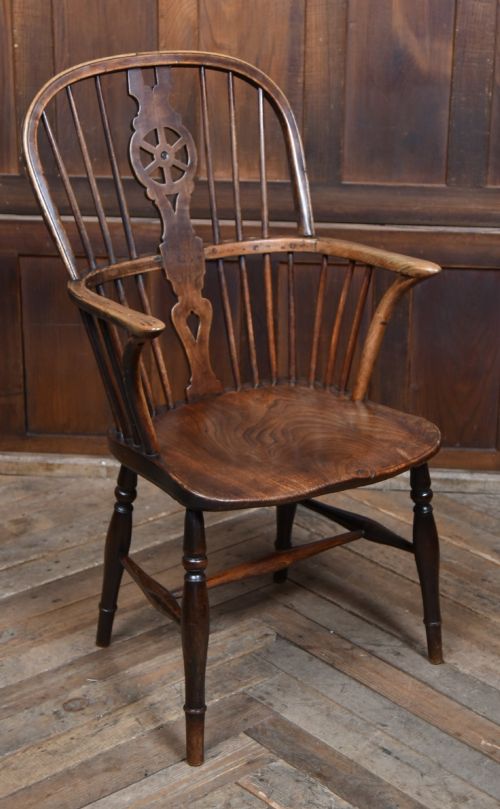
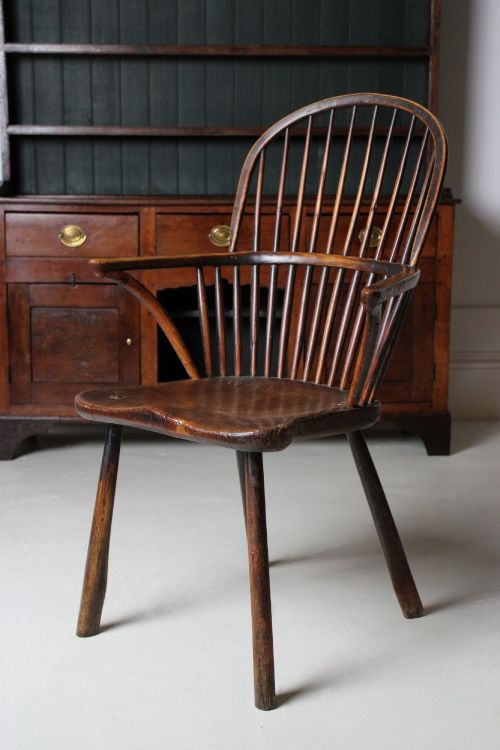
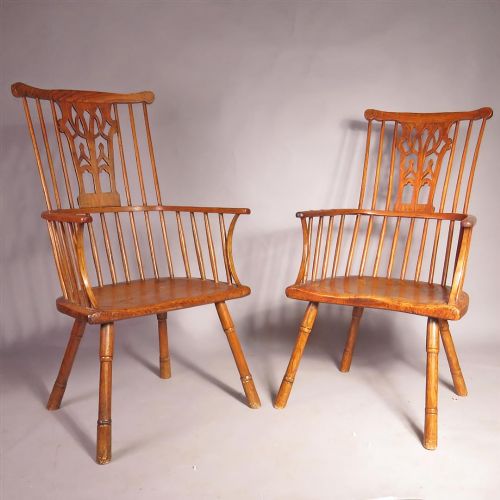
The most frequent form on this page is the high-back or comb-back armchair, often constructed with a figured yew wood upper section paired with an elm seat. Regional variations include Thames Valley and northern provincial workshops, showing local preferences for hoop backs, wheel backs, or low-back configurations.
Makers occasionally stamped their work, pointing to specific rural production centres rather than large urban factories. Pairs and matched sets appear alongside individual armchairs, demonstrating that these robust seats were made for both modest cottages and substantial country houses.
Materials and Construction
Makers utilised contrasting native timbers, pairing durable yew wood for its rich grain and elasticity in the bowed backrests with tough elm for the solid plank seats. Ash, beech, and fruitwood frequently supply the turned legs and spindles, providing rigid support where straight-grained timber was required.
Construction relies on the stick-built method where tenoned spindles and legs lock directly into bored holes in the seat slab, secured by wedges from above. Steam bending shapes the continuous hoop or comb back from a single piece of timber, creating a resilient sprung support without complex joinery.
Yew Windsor Chair Retail Price Guide 2026
Typical asking prices for yew windsor chair among the pieces listed under this phrase on Sellingantiques today, from the lower quarter to the upper quarter. They describe what is for sale here now, not the wider market.
Many comb-back chairs bear the thumbprint indentations of nineteenth-century makers testing the softness of newly carved wooden seats.
Assessing Quality and Character
The hierarchy of these chairs rests on the degree of figuring in the yew wood and the boldness of the turning on the legs and stretchers. Subtle variations in the saddle-shaped depth of the elm seat and the graceful rake of the back pillars distinguish master provincial work from utilitarian output.
Proportion and survival of original surfaces dictate desirability, as many pieces sustained heavy use in domestic settings over centuries. Matching sets or pairs maintain greater cohesion of design, whereas individual chairs display distinct local quirks born of independent rural joinery.
J Spencer·Gabbitass Worksop·John Brand of Sleaford·William Wheatland·Allsop
The Yew Windsor Chair Glossary
- Comb back
- A Windsor chair backrest featuring a horizontal crest rail supported by vertical spindles that pass through it. This design originates in the eighteenth century.
- Crinoline stretcher
- An arched underframe connecting the legs of a Windsor chair to provide structural rigidity. It is often found on earlier English provincial examples.
- Hoop back
- A continuous bentwood bow forming both the arms and the upper back of a chair. It is typically steam-bent from yew or ash.
- Wheel back
- A Windsor chair back incorporating a pierced central splat carved in the shape of a spoked carriage wheel. This motif became popular during the nineteenth century.
- Vernacular furniture
- Domestic objects made by local tradesmen using regional materials and traditional methods rather than following metropolitan academic styles. These pieces reflect local practical needs.
Yew Windsor Chair: Frequently Asked Questions
How do I identify a yew windsor chair?
Look for the characteristic combination of dense, highly figured reddish yew wood on the bow and spindles, paired with a thick plank seat, usually elm. The legs are typically turned from secondary timbers like beech or ash.
Examine the underside of the seat for wedged tenons and maker stamps if present. Eighteenth-century versions often feature high comb backs and crinoline stretchers, while Victorian iterations may show wheel backs or hoop frames.
Were these chairs used at dining tables?
These seats were originally utilised as versatile household chairs in kitchens, parlours, and country house studies. Their sturdy construction made them suitable for general daily sitting.
While single armchairs are common, matched sets do appear on the market for dining use. Their generous proportions and armrests mean they require more space around a table than standard dining chairs.
How should I care for a historic wooden chair?
Keep the wood away from direct heat sources and sudden temperature fluctuations to prevent timber shrinkage or splitting. Maintaining stable indoor humidity preserves the structural integrity of the dry joints.
Apply a microcrystalline wax periodically to nourish the surface and protect the historic patina. Avoid modern silicone polishes, which can degrade the aged timber finish over time.
What is the difference between low back and high back models?
Low-back chairs feature a shorter, continuous arm bow that sits beneath the user's shoulders, offering a more compact profile. They often date to earlier regional traditions in the Thames Valley or Yorkshire.
High-back and comb-back variants extend significantly higher to support the head and upper back, providing a more imposing silhouette. Both styles utilise the same underlying stick-built construction methods.