

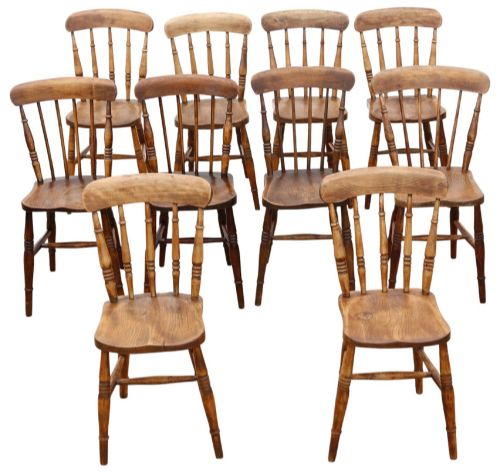

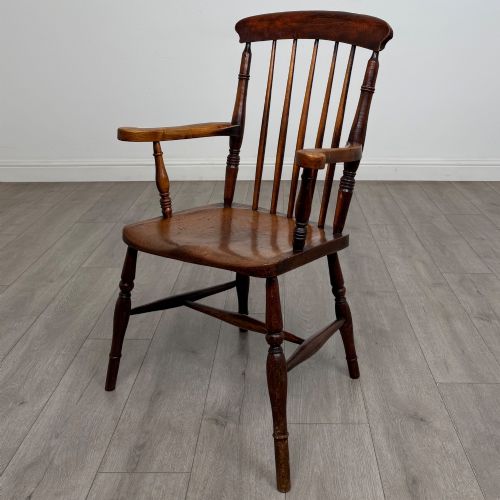

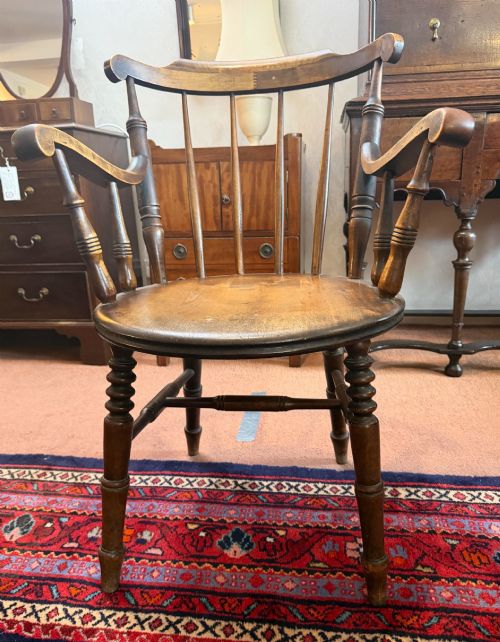
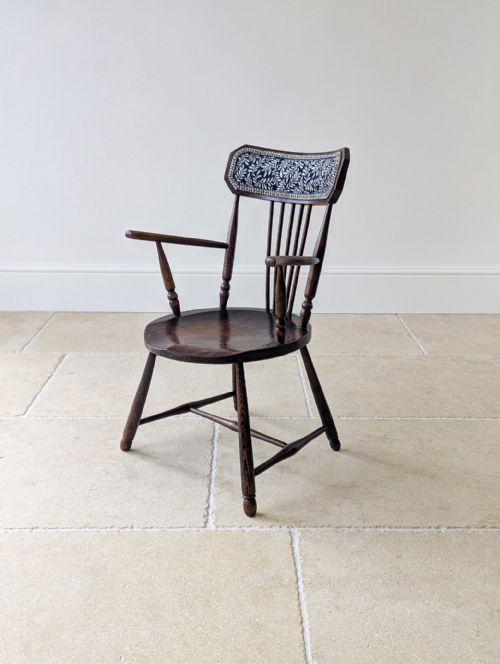
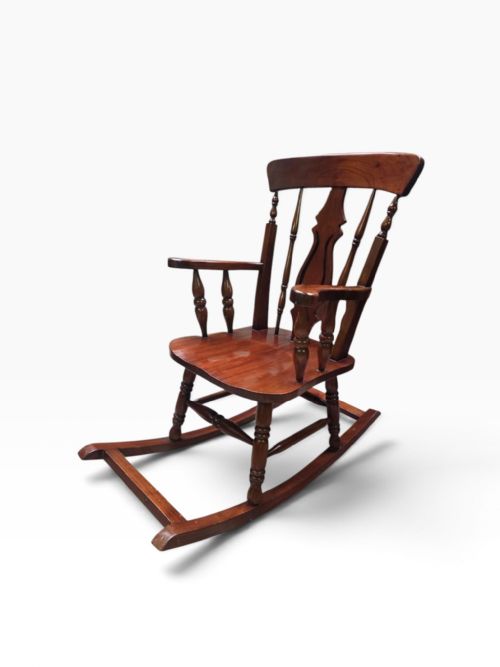
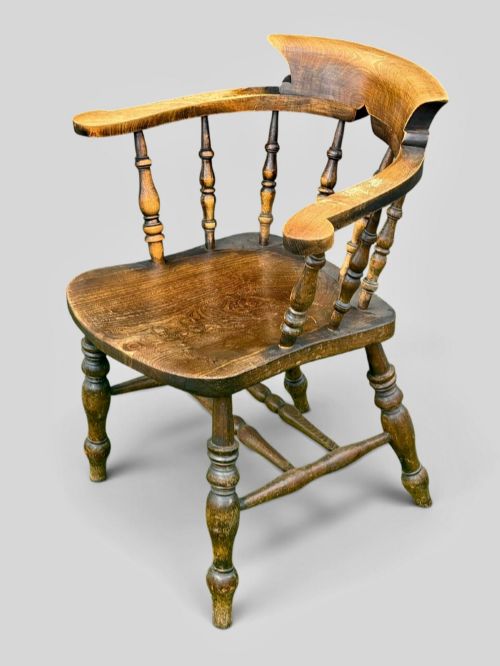
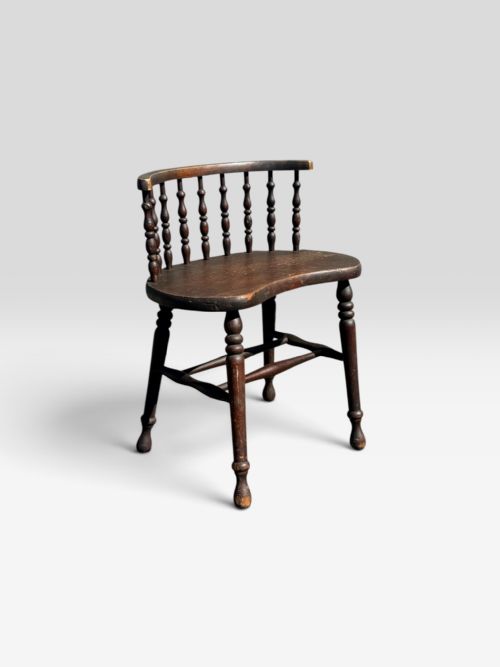
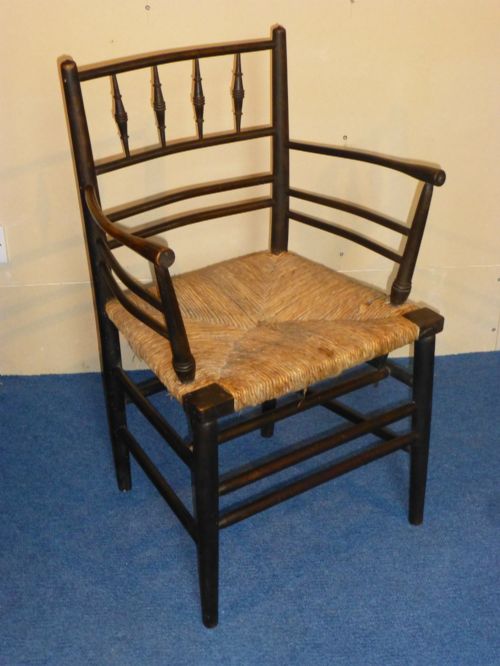
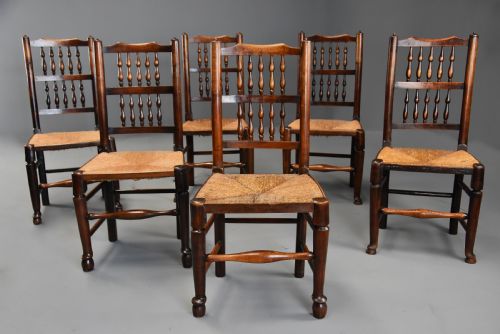
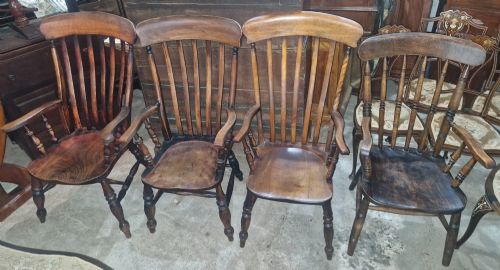
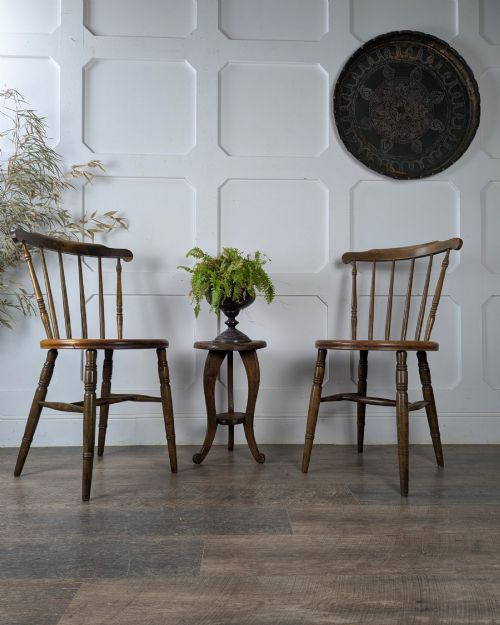
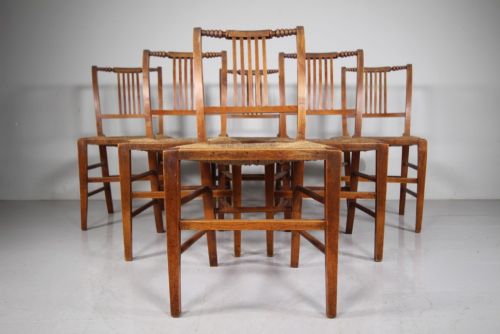
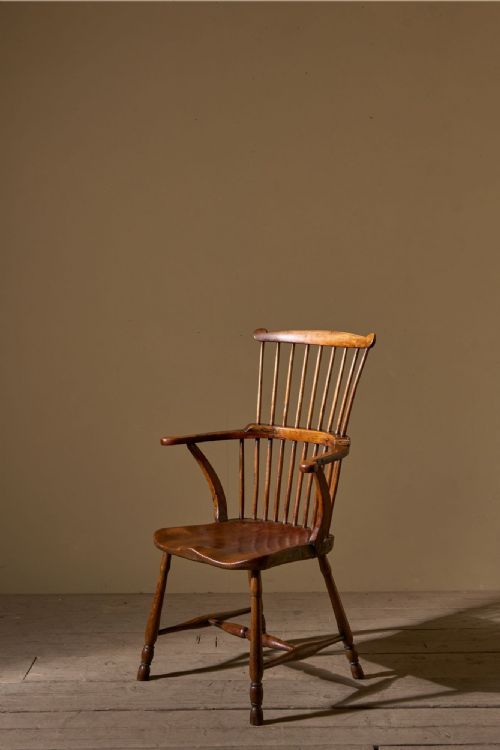
Spindle Back Chair
Spindle back chair selections bring solid country seating into modern rooms, uniting utilitarian timber frames with slender turned uprights.
Understanding the spindle back chair
A spindle back chair relies on a series of slender turned wooden uprights fitted between the seat and top rail to support the sitter. This grouping covers versatile formats including kitchen dining sets, low rocking chairs, nursing seats, and robust Windsor armchairs.
The majority of pieces met here belong to the nineteenth and eighteenth centuries, bearing regional British vernacular traits from Lancashire, Cheshire, and rural farmhouses. Formal variations also appear through Edwardian mahogany desks and Victorian walnut libraries.
Buyers encounter single armchairs, rocking formats, and matched dining sets numbering from four up to twelve pieces. Elm seats paired with ash frames dominate the vernacular selection, alongside oak, beech, and walnut alternatives.

Materials and construction methods
Local timbers dictate the construction, combining tough woods for different structural demands. Elm typically forms the solid plank seats, while ash, beech, and oak supply the turned spindles, legs, and bow frames.
Makers utilised green woodworking techniques, turning unseasoned timber on pole lathes and assembling components while shrinkage locked the tenon joints tightly together. Rush seating and leather pads provide additional comfort on specific dining and library models.
Retail Price Guide 2026
Typical UK retail prices for spindle back chair, calculated from the Sellingantiques database of over a million retail prices indexed since 2003. This retail price guide relies exclusively on Sellingantiques data; no external sources or auction records are used, so the figures do not describe the wider market.
Listings demonstrate a strong preference for ash and elm combinations across eighteenth and nineteenth-century country chairs.
Distinctions in quality and finish
Quality separates examples by the crispness of the spindle turnings and the depth of the timber's patina. Years of friction impart a soft, rich sheen to ash and elm that chemical stripping or heavy sanding destroys.
Structural integrity depends on the original wedged joinery remaining firm without excessive replacement parts. Matched sets maintaining their original number of identical chairs command greater architectural cohesion than assembled harlequin groups.
The Spindle Back Chair Glossary
- Spindle
- A slender turned wooden upright fitted into the backrail or arms of a seat. These elements distribute back support evenly while keeping the furniture light.
- Windsor
- A chair built with a solid wooden saddle seat into which the legs and back spindles are directly socketed. This construction provides exceptional structural strength.
- Crinoline
- A curved under-stretcher joining the legs of a chair for added stability. It derives its name from the hoop skirts worn in the nineteenth century.
- Penny seat
- A wooden seat shaped with a central circular depression resembling a large coin. This shaping enhances the comfort of a flat plank surface.
- Rush
- Dried marsh grass twisted into cords and woven tightly across a seat frame. It offers a resilient, flexible surface found frequently on country dining chairs.
Frequently Asked Questions
How do I identify a genuine period spindle back chair?
Examine the construction joints underneath the seat to check for hand-turned tenons and wedged insertions rather than modern metal screws. Genuine age shows in the uneven wear patterns and soft polish accumulated across generations of use.
Inspect the timber species used in different parts of the frame, as vernacular makers routinely combined native woods like elm seats with ash spindles.
Are these chairs suitable for daily dining use?
Most antique country models remain robust enough for regular dining when joints are secure and stable. Selecting pieces with solid elm seats and well-pegged undercarriages ensures daily durability.
Consider adding loose pads if prolonged sitting on wooden saddles is required during long meals.
How do I care for antique timber and rush seats?
Maintain the wood by applying occasional applications of traditional beeswax to preserve the natural moisture and patina. Avoid placing chairs near direct heat sources that cause timber shrinkage and loosen pegged joints.
Keep rush seats clean with a soft brush and avoid excessive moisture.