





Elm Rocking Chair
An elm rocking chair brings tactile country warmth into a room through its sculptural timber grain and comforting motion.
Elm Rocking Chair
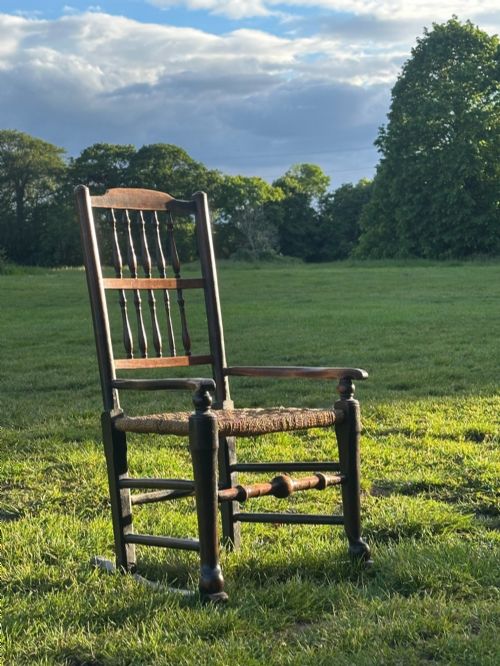
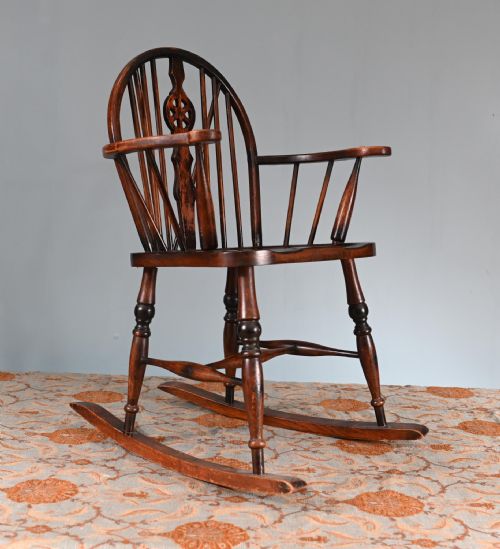
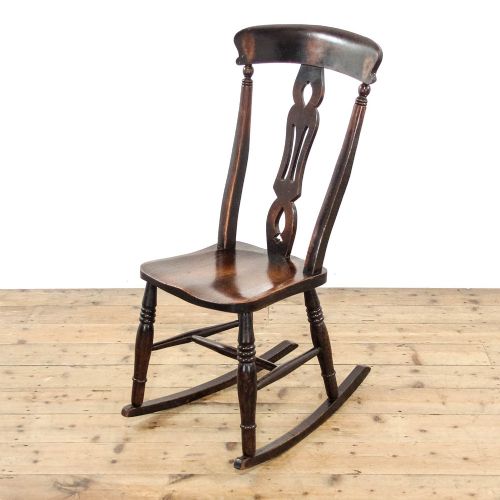
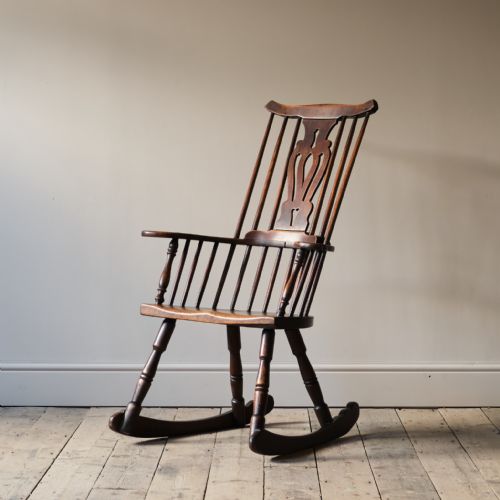
An elm rocking chair offers a sturdy vernacular seat designed for domestic comfort in country houses and farmhouses. When you search for this phrase, you meet traditional forms spanning from the eighteenth century through to the Victorian era. The selection draws together Windsor designs, ladderbacks, and splat-back models intended for fireside use.
Most examples combine an elm seat with ash or beech framing, reflecting regional English craftsmanship. These pieces range from full-sized farmhouse armchairs down to small child's versions built with similar care. The enduring appeal lies in the honest construction and the rich patina built up on the timber over generations of use.
How they were made
Maker-joiners utilised solid elm for its resilient, interlocking grain, making it the primary choice for sculpted saddle seats that resist splitting. Steam-bent ash or beech formed the bow backs and spindles, offering the necessary spring and structural flexibility for a rocking chair. Hardwoods like fruitwood or beech often served for structural legs and stretchers.
Traditional bodgers and country joiners turned spindles on pole lathes and shaped components with drawknives and adzes. Seats were deeply hollowed out by hand to provide ergonomic comfort before being pegged and wedged into rigid frame assemblies.
Elm Rocking Chair Retail Price Guide 2026
Typical asking prices for elm rocking chair among the pieces listed under this phrase on Sellingantiques today, from the lower quarter to the upper quarter. They describe what is for sale here now, not the wider market.
Listings feature elm combined with ash, beech, and rush across eighteenth-century and Victorian periods.
What varies in quality
Quality rests in the depth and ergonomic shaping of the solid elm seat board, where thicker, deeply dished timber demonstrates superior craftsmanship. The balance of the rocker sweep determines the smoothness of the motion, relying on original rocker rails that retain their proportional height.
The sophistication of the spindle turning and the tightness of the wedged joints dictate the structural integrity. Examples retaining their untouched surface texture and rich original finish sit at the upper end of desirability.
John Shadford
The Elm Rocking Chair Glossary
- Windsor
- A chair built with a solid wooden seat into which the legs, back and spindles are separately socketed. This construction method provides exceptional durability and structural stability.
- Splat back
- A chair design featuring a central vertical wooden slat, often shaped or pierced, set into the backrest. This detail adds decorative character to country seating.
- Spindle back
- A chair constructed with numerous thin, turned wooden uprights forming the backrest. These members distribute support evenly while maintaining a light visual profile.
- Rush seat
- A seating surface woven from dried marsh reeds tightly twisted around a frame. This traditional technique yields a flexible, textured platform.
- Lath back
- A chair style utilising horizontal wooden slats across the backrest rather than vertical spindles. This variant provides sturdy support for everyday farmhouse use.
Elm Rocking Chair: Frequently Asked Questions
How do I date an elm rocking chair?
Dating relies on observing construction methods, tool marks, and timber ageing characteristics. Hand-carved elements and pegged joints typically point to earlier periods.
Later Victorian and twentieth-century versions often show more uniform machine turning and standardised assembly techniques. Comparing the timber patination and wear patterns on the rockers helps confirm the age.
Were these chairs used outdoors?
These chairs served primarily as indoor fireside and parlour seating within farmhouses and cottages. The sturdy timber construction handled heavy daily domestic life rather than garden use.
Exposing antique elm and ash to outdoor weather damages the timber and degrades the historical finish.
How do I care for an antique rocking chair?
Protect the timber by keeping the chair away from direct heat sources and sudden humidity changes. Applying a traditional wax polish occasionally maintains the natural lustre of the wood.
Avoid harsh chemical cleaners that strip the historic finish and dry out the grain.