
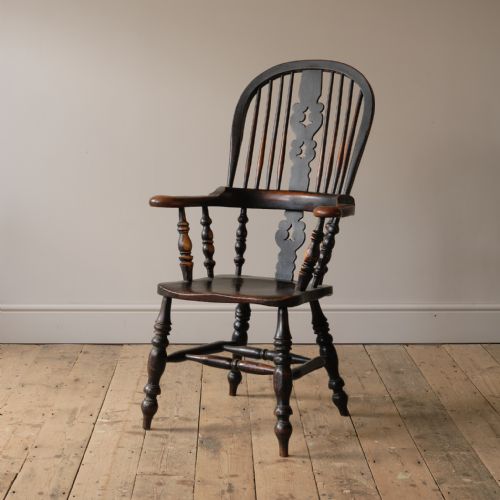
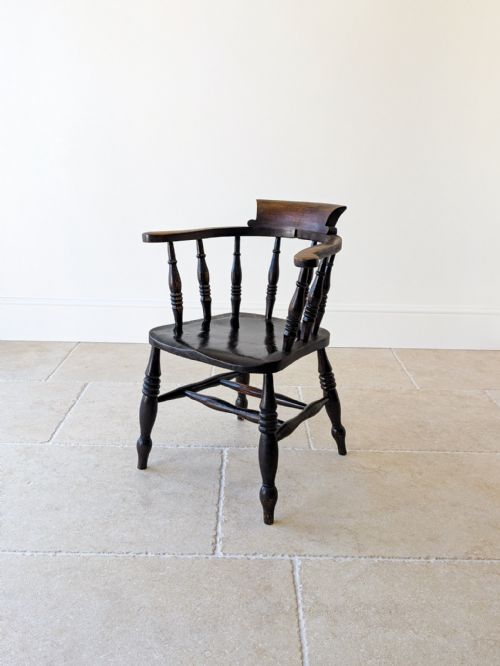
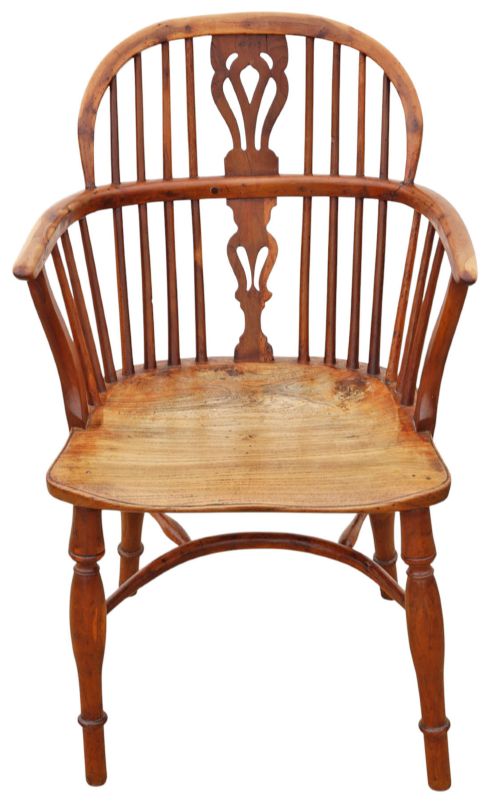
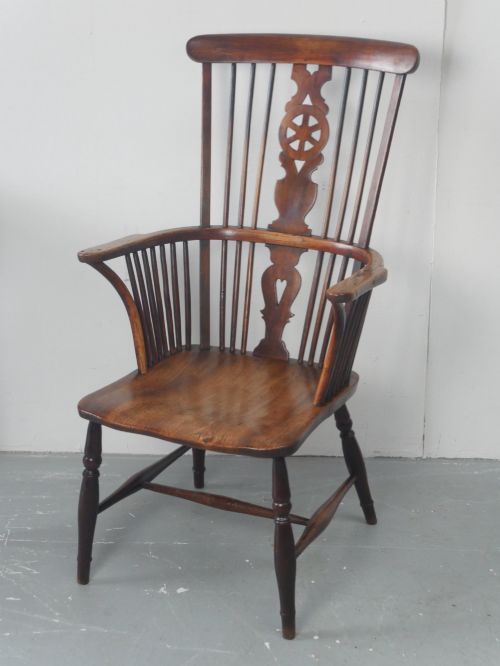

Victorian Elm Armchair
A victorian elm armchair brings tangible tactile warmth to a room through deep-grained timber and generous proportions.
Defining the Victorian elm armchair
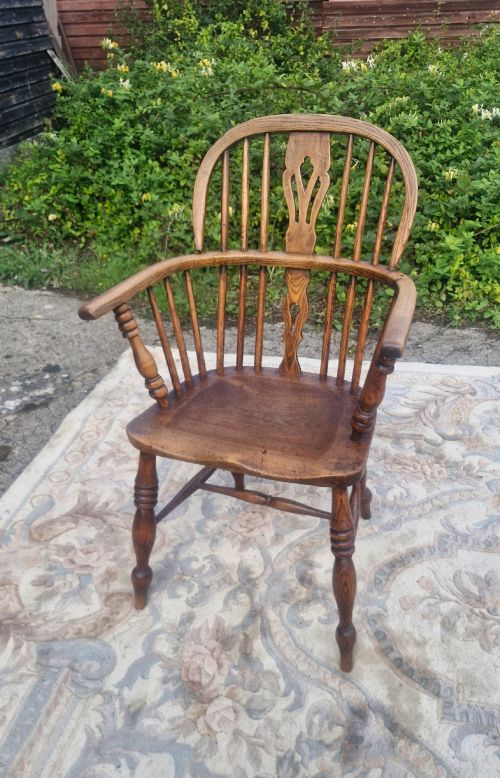
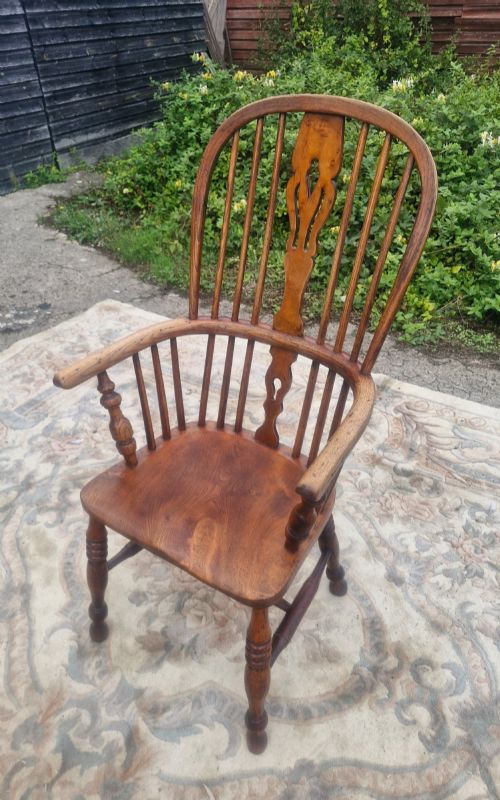
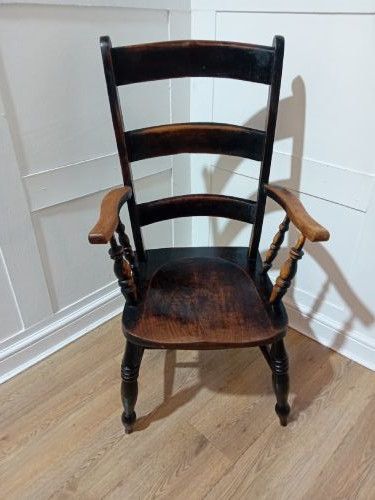
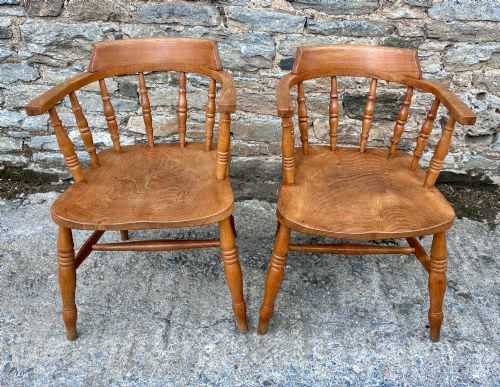
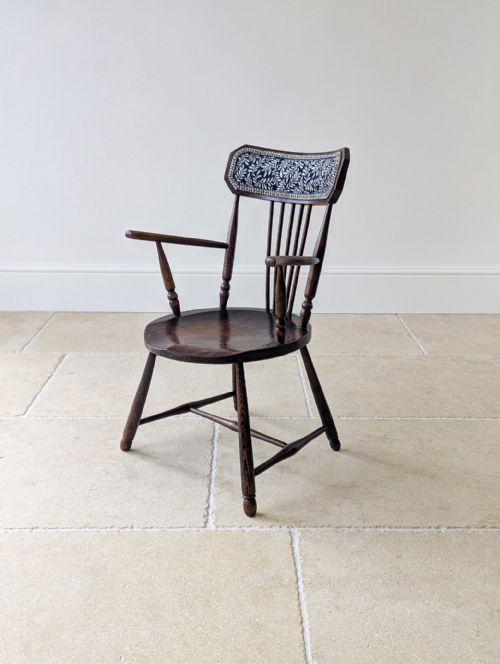
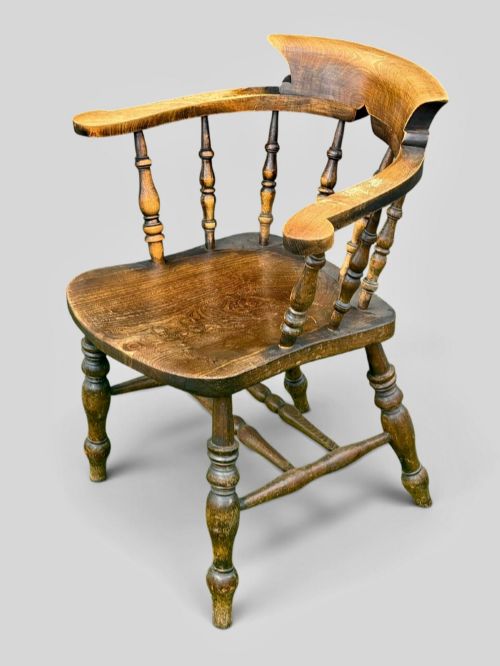
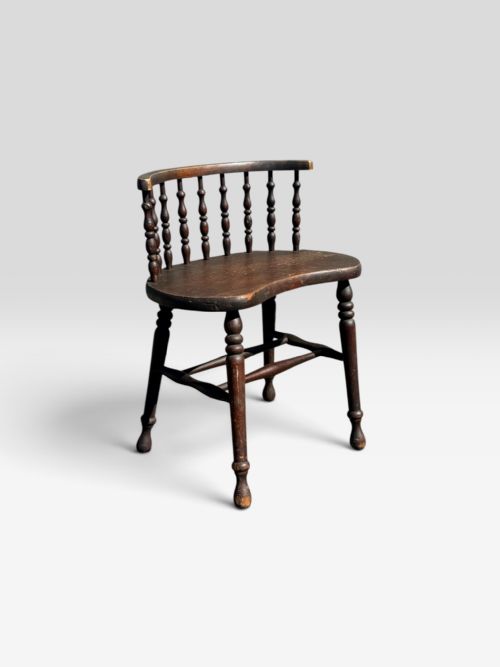
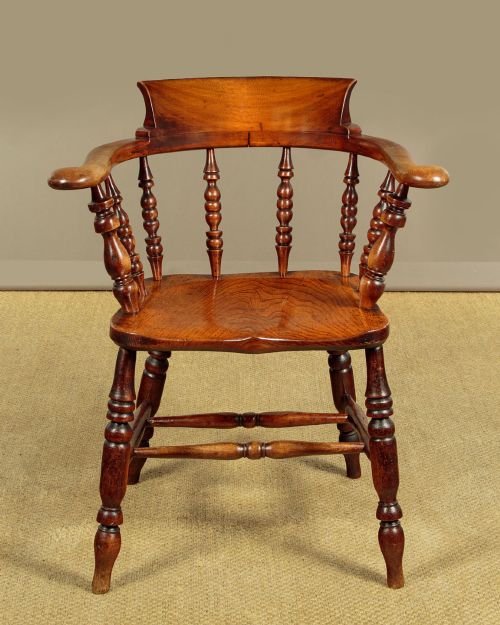
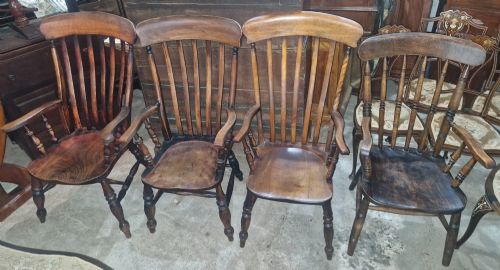
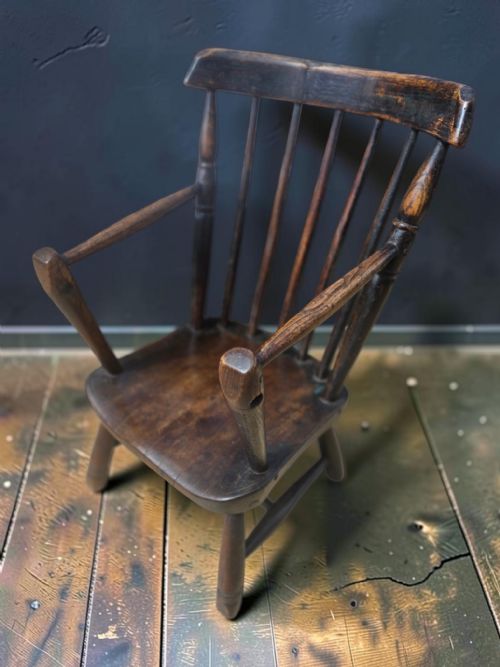
A victorian elm armchair is a robust seating form originating in the nineteenth century, built for domestic service, country houses, and demanding workspaces. Buyers looking for this phrase meet sturdy Windsor chairs, low-backed smokers bows, captain seats, and stickback kitchen chairs.
The most common variants on this page combine a solid elm seat with supporting timbers like beech and ash. These country chairs serve well as desk seating, fireside chairs, or kitchen armchairs.
Regional British makers shaped these pieces using vernacular woodworking traditions. They range from simple ladderbacks to high-backed Windsor forms with carved details.
Materials and construction
Makers selected elm for seats due to its interlocking grain which resisted splitting under heavy use. Spindles, bow backs, and legs utilised straight-grained ash and beech.
Construction relied on traditional green woodworking and Windsor framing techniques. Turned legs and uprights were tenoned directly into thick, saddle-shaped solid timber seats.
Retail Price Guide 2026
Typical UK retail prices for victorian elm armchair, calculated from the Sellingantiques database of over a million retail prices indexed since 2003. This retail price guide relies exclusively on Sellingantiques data; no external sources or auction records are used, so the figures do not describe the wider market.
Elm possesses a notoriously stubborn grain that refused to straighten, meaning these seats twisted and warped with immense character over the decades.
Distinguishing quality
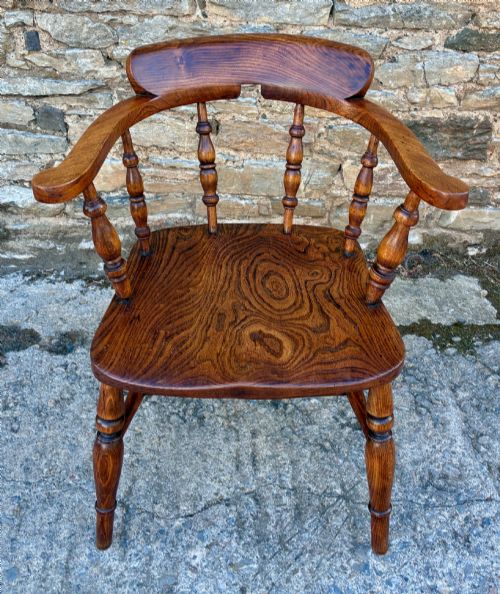
Quality rests in the figure and depth of the timber grain on the seat, alongside the crispness of the spindle turnings. Well-balanced proportions and comfortable, deep saddle shapes elevate a piece above standard utility furniture.
The integration of secondary woods like yew or ash alongside the primary elm indicates a higher tier of regional craftsmanship. Patina developed through prolonged daily use distinguishes superior examples.
Glenister High Wycombe
The Victorian Elm Armchair Glossary
- Smokers bow
- A low-backed Windsor-style armchair with a continuous curved armrail, frequently found in pubs and offices.
- Windsor chair
- A chair built with a solid wooden seat into which the back and legs are dowelled directly rather than using a framed skeleton.
- Captain chair
- A sturdy office or desk armchair featuring a rounded wooden backrest supported by vertical spindles.
- Latheback
- A chair back featuring flat, steam-bent wooden slats rather than rounded cylindrical spindles.
- Rush seat
- A traditional woven seating surface constructed from dried marsh rushes fitted onto a wooden frame.
Frequently Asked Questions
How do I identify a Victorian elm armchair?
Check the seat for a thick, heavy slab of elm showing deep whorls and an adzed or saddle-shaped contour. Look for turned beech or ash spindles locked into the seat by traditional wedged tenons.
Examine the overall construction for vernacular joinery typical of nineteenth-century country workshops rather than mass-produced factory assembly.
Were these chairs used at desks?
Many sturdy examples function brilliantly as desk or office seating due to their supportive rounded arm rails and solid timber construction. Captains chairs and low-backed forms were routinely placed in studies and libraries.
The ergonomic wooden saddle seats provided durable comfort for long hours of writing or administrative work.
Can I use these chairs around a dining table?
Country armchairs and kitchen stickbacks work well at large dining tables, provided you measure the clearance for the arm rails beneath the tabletop. Their varied heights and profiles create a collected, informal dining arrangement.
The robust elm and beech materials easily withstand daily family meals.