

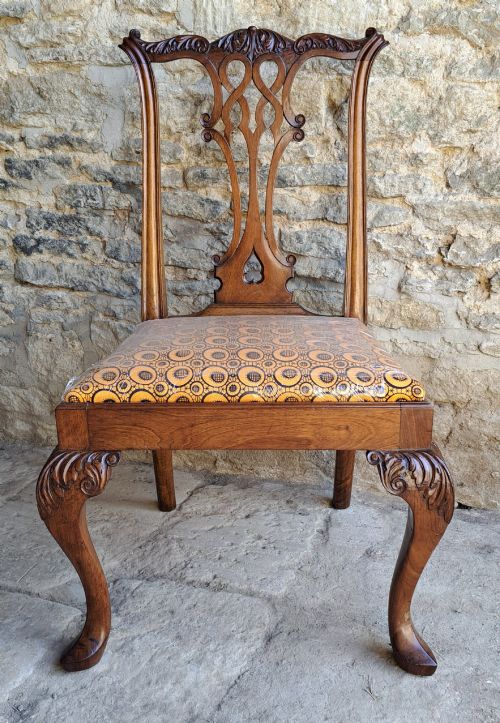
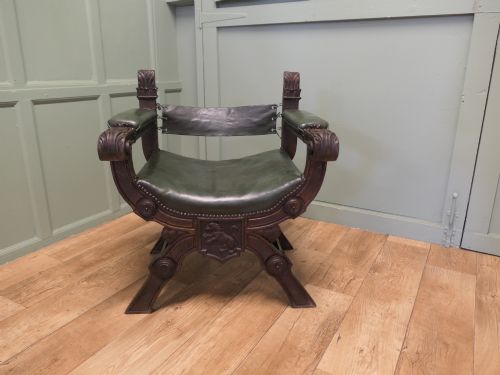
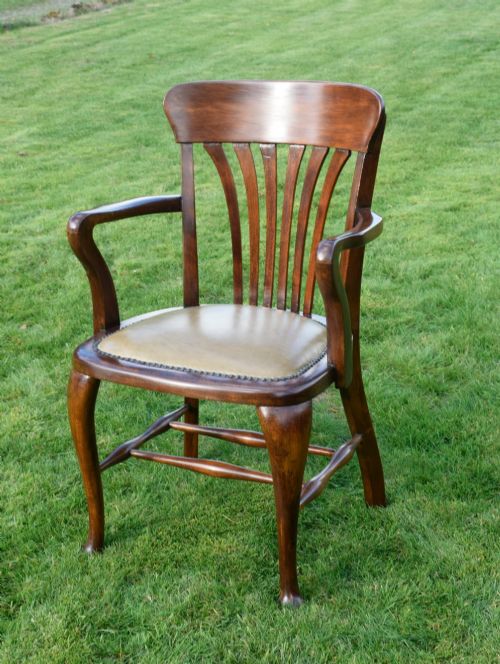
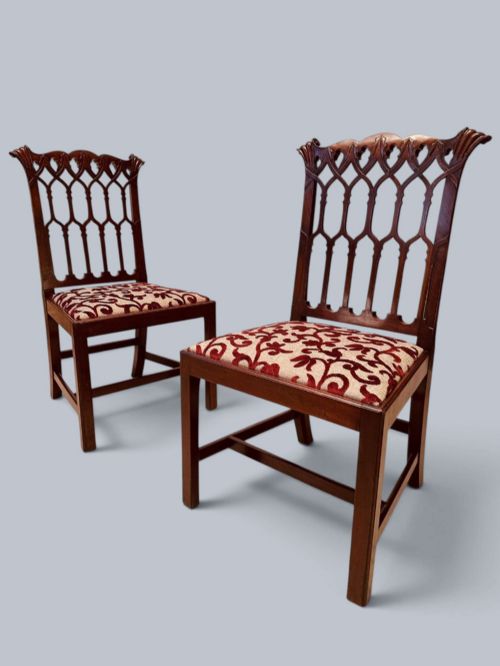
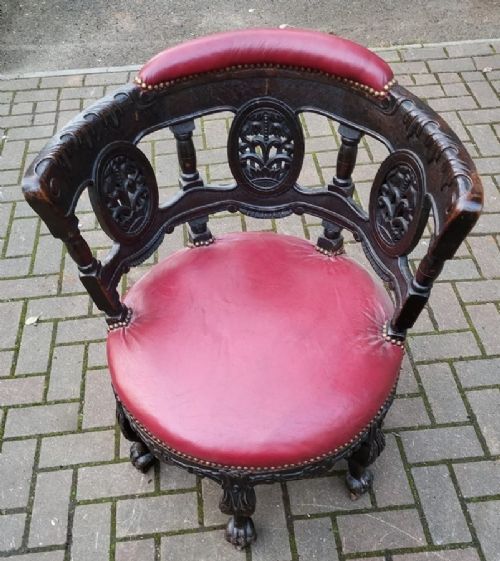
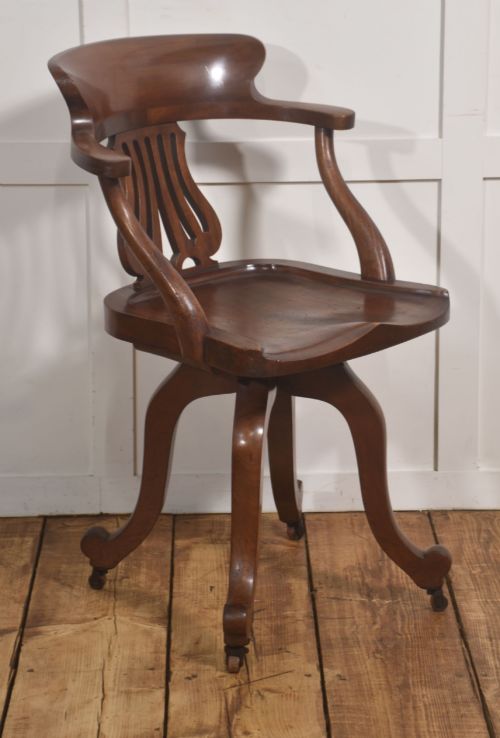
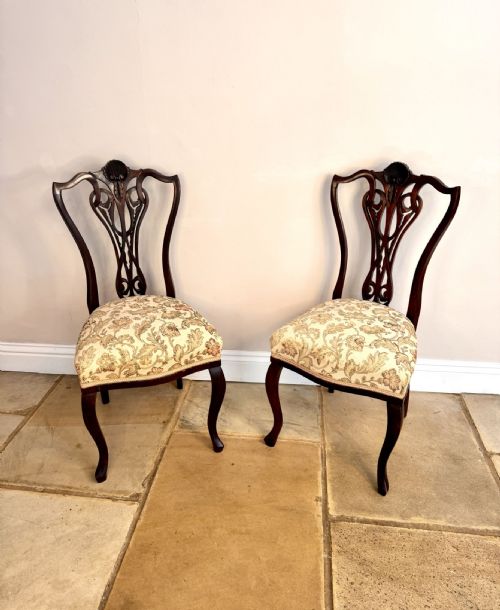
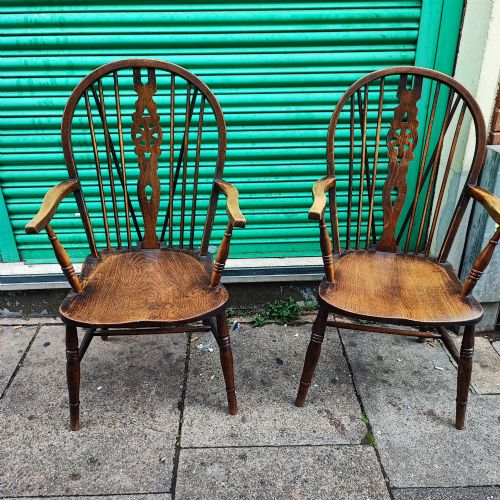
Carved Wooden Desk Chair
Carved wooden desk chair forms provide solid seating for workspaces, spanning styles from Georgian Chippendale to Victorian revolving designs.
Carved Wooden Desk Chair
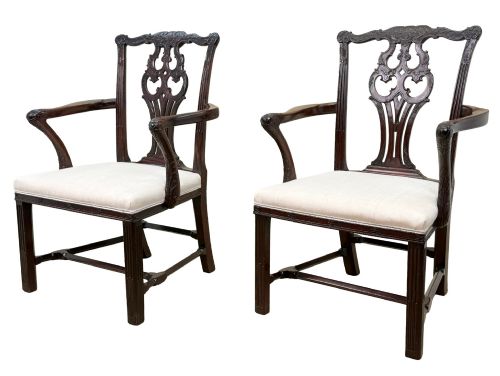
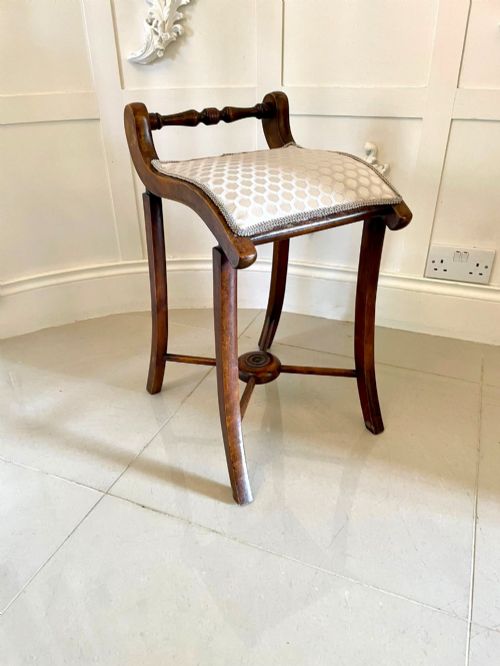
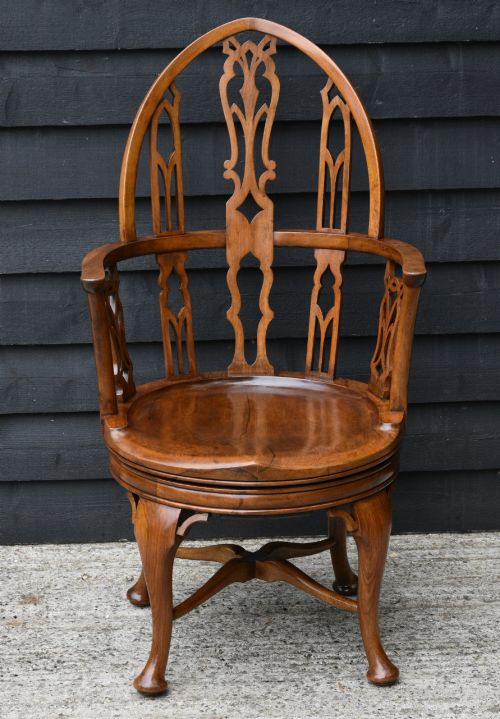
A carved wooden desk chair offers sturdy seating designed for study and writing, often taking the form of a captain's chair, elbow chair, or revolving armchair. These seats emerge from periods including the 18th century, Regency, and Victorian eras.
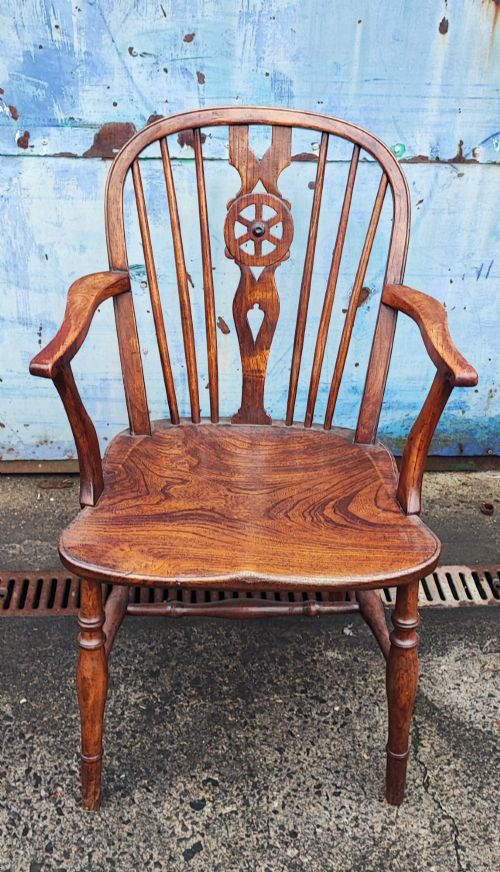
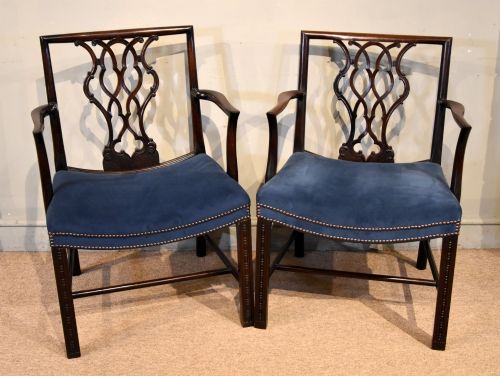
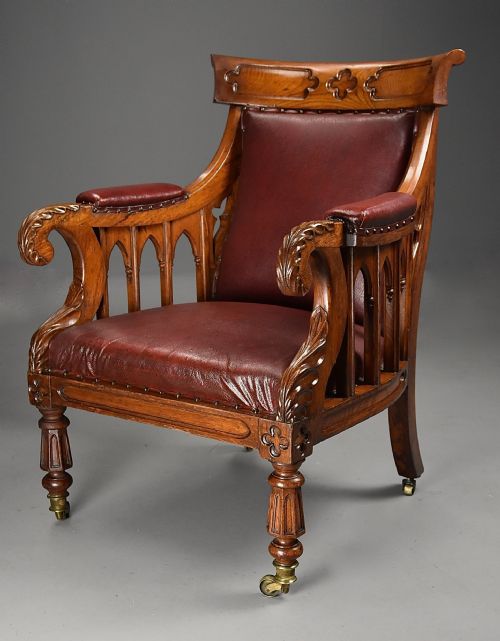
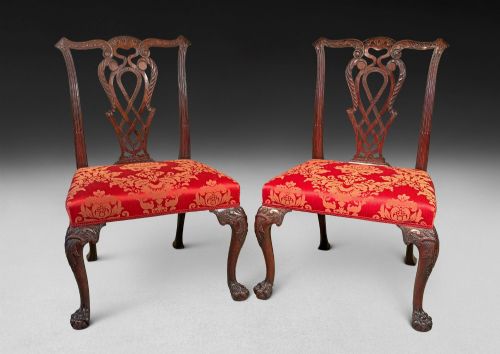
Mahogany, elm, oak, and walnut form the primary timbers of these chairs, frequently paired with leather or fabric upholstery. Makers utilise varied styles such as Gothic Revival, Chippendale, and Windsor to shape the timber.
Buyers encounter examples ranging from simple elm captain's chairs to mahogany Chippendale style elbow chairs and revolving desk models. These pieces serve functional daily use in studies alongside historical appeal.
How they were made
Cabinet makers and joiners constructed these chairs using solid hardwoods such as mahogany, walnut, oak, elm, and birch. Timber selection dictated the strength of the frame, particularly for weight-bearing arms and revolving mechanisms.
Woodcarving techniques created decorative ladderbacks, ropebacks, and Gothic details upon the timber frames. Craftsmen integrated brass fittings on revolving models and applied fabric or leather to seats.
Carved Wooden Desk Chair Retail Price Guide 2026
Typical asking prices for carved wooden desk chair among the pieces listed under this phrase on Sellingantiques today, from the lower quarter to the upper quarter. They describe what is for sale here now, not the wider market.
Periods represented span from the late 17th century through the Georgian, Regency, and Victorian eras to the Edwardian period.
What varies in quality
The sophistication of the timber carving and the depth of the patina separate standard examples from finer pieces. Superior chairs display crisp detailing on ladderbacks, arms, and rails.
Structural integrity and original components distinguish better examples, particularly in revolving mechanisms and joined frames. Timber selection also matters, with richly grained mahogany and figured walnut commanding attention.
Hindley & Sons
The Carved Wooden Desk Chair Glossary
- Captain's chair
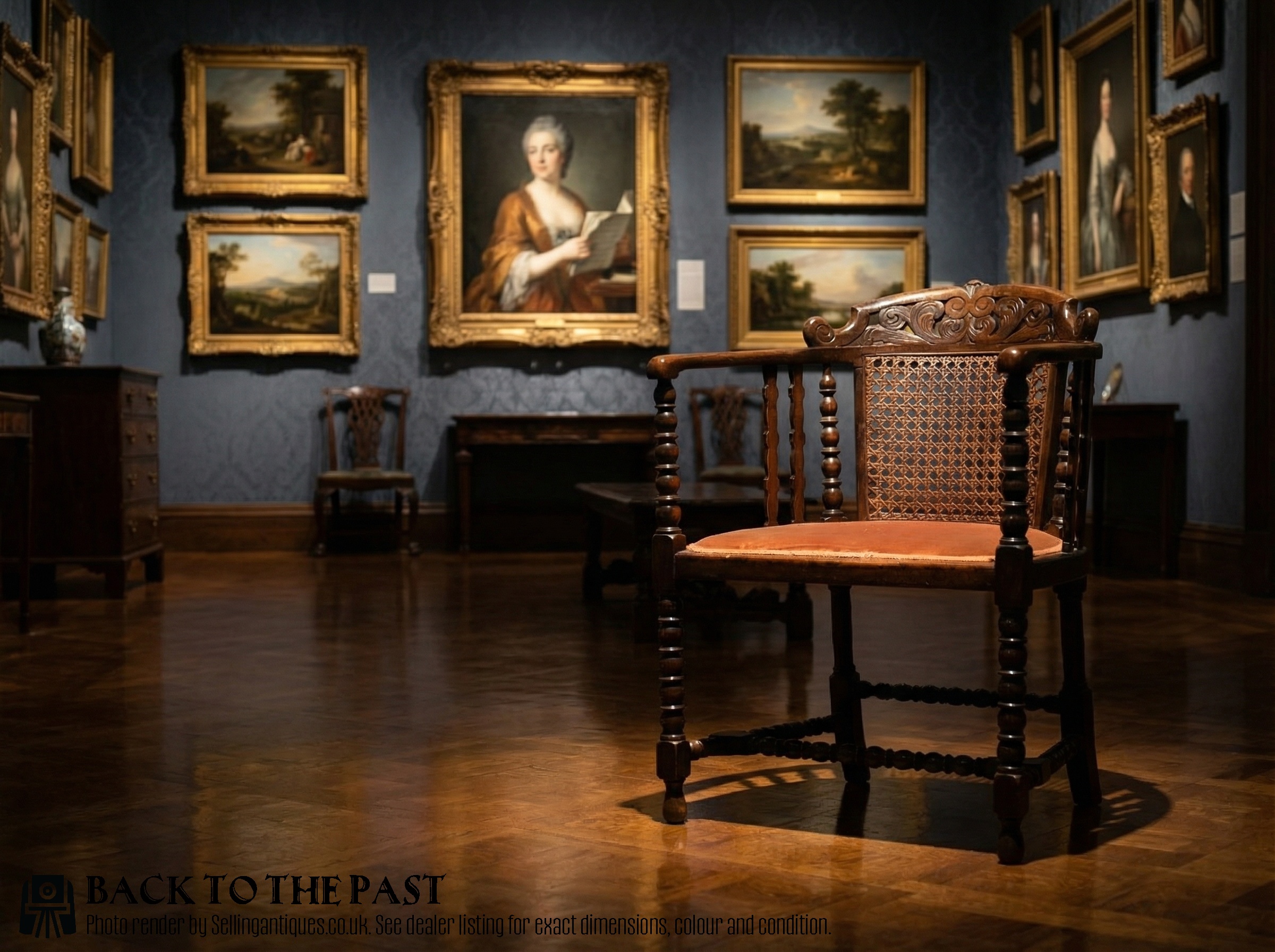
- A sturdy low-backed armchair with a rounded wooden top rail supported by spindles. These chairs often feature elm or mahogany construction.
- Chippendale style
- A decorative design tradition named after Thomas Chippendale, featuring carved ladderbacks and ornate rails. Pieces in this style date from the 18th century onwards.
- Revolving desk chair
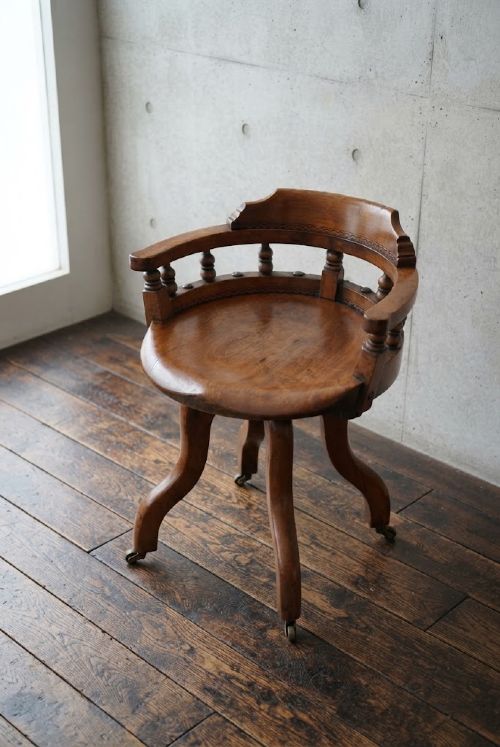
- A swivel seat mounted on a central wooden or brass pivot mechanism. Victorian examples frequently utilise this functional form.
- Smoker's bow
- A type of low wooden armchair with a turned spindle back and continuous curved armrest. Elm and birch serve as common materials for this form.
Carved Wooden Desk Chair: Frequently Asked Questions
What is a captain's chair?
A captain's chair is a low-backed wooden armchair designed for sturdiness and comfort at a desk or table.
These pieces typically feature curved armrests supported by turned spindles and a solid timber seat.
How do I identify a Victorian desk chair?
Victorian desk chairs often incorporate solid mahogany, walnut, or elm with heavier framing than earlier periods.
Revolving mechanisms and Gothic Revival details frequently appear on chairs from this era.
Are these chairs suitable for daily use?
Many of these chairs were built for writing and study, making them practical for modern workspaces.
Solid timber construction and ergonomic curved backs provide durable support for regular sitting.
What woods were used for these chairs?
Cabinet makers utilised hardwoods such as mahogany, oak, walnut, and elm for their strength and grain.
Beech and birch also appear frequently in regional Windsor and captain's chair variations.