
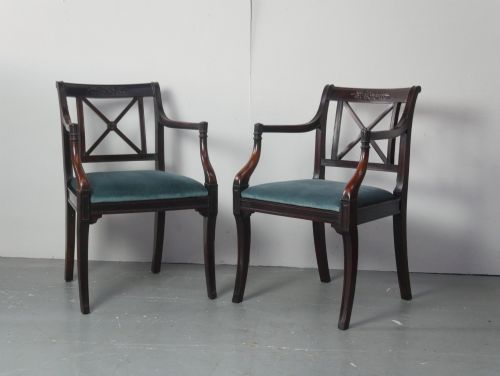
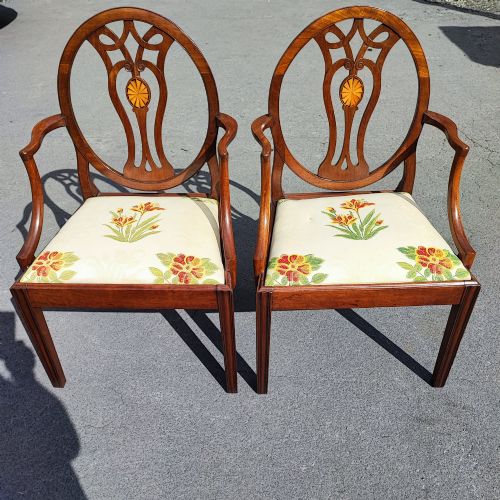

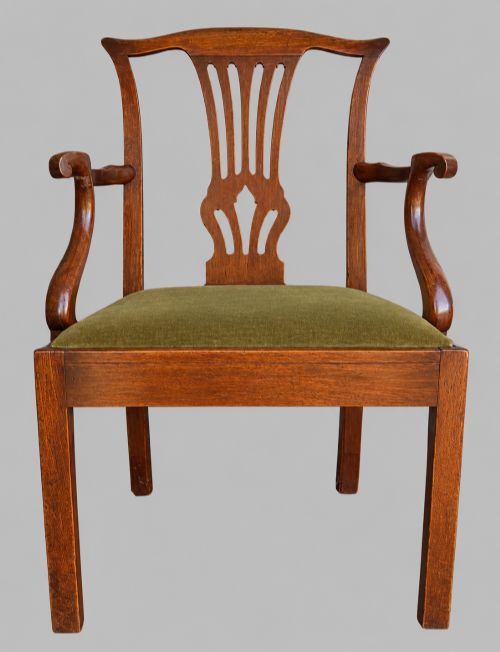
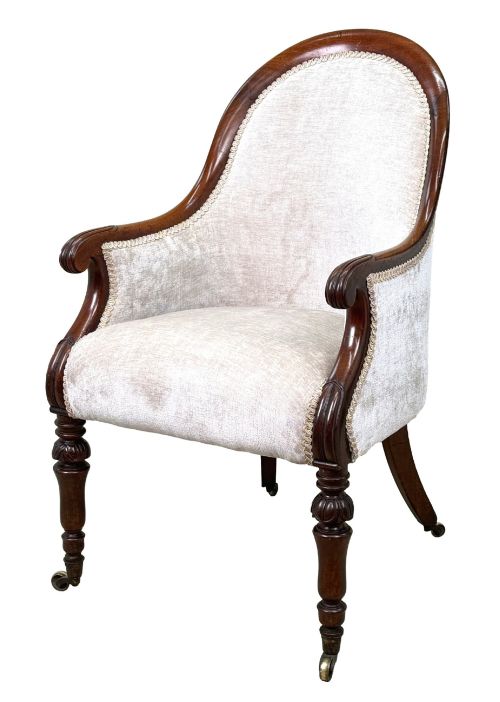
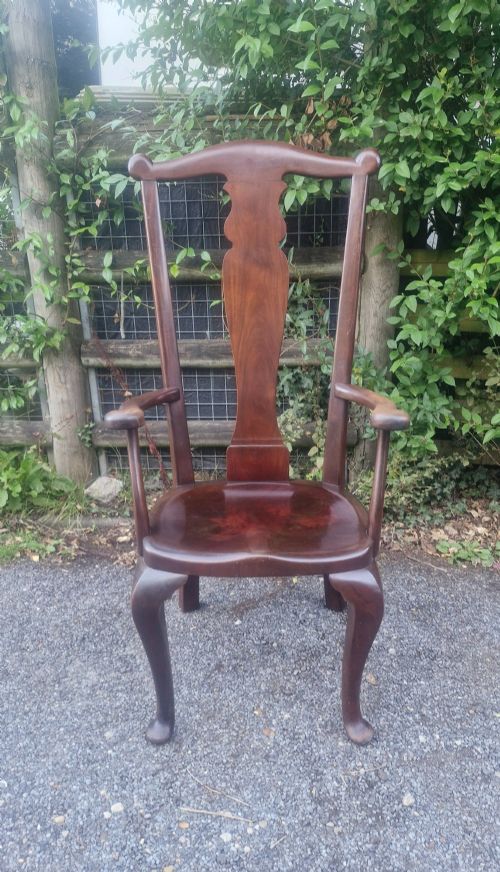
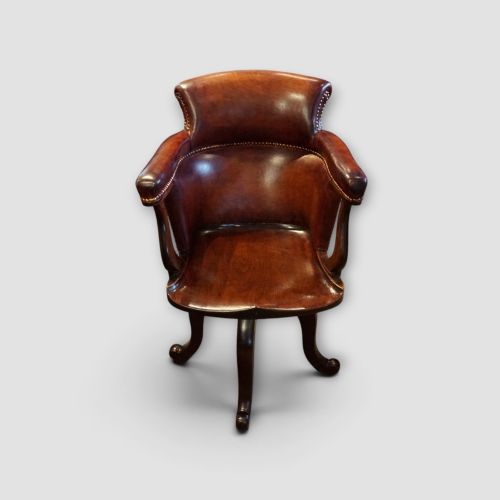
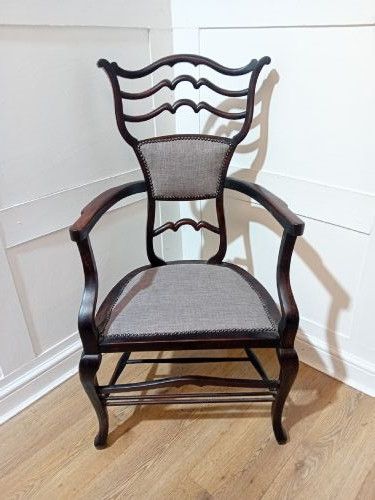
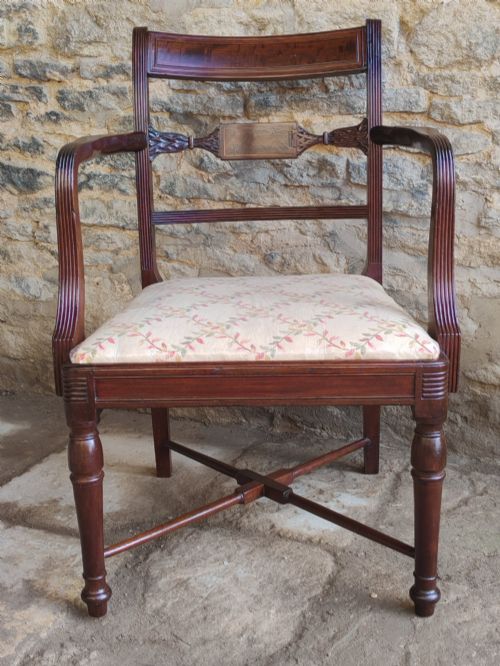

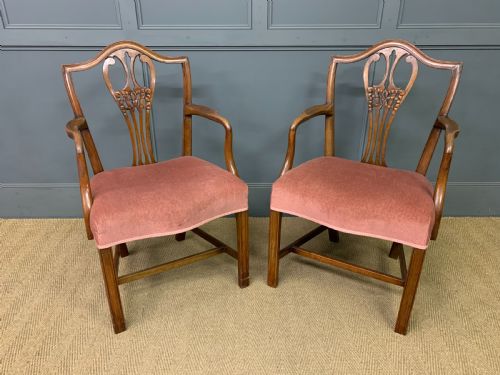
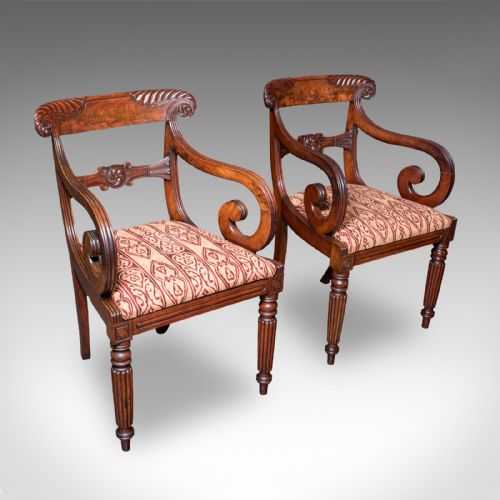
Mahogany Desk Armchair
When you search for a mahogany desk armchair, you enter a tradition of sturdy timber seating designed for the study and the library.

Mahogany Desk Armchair
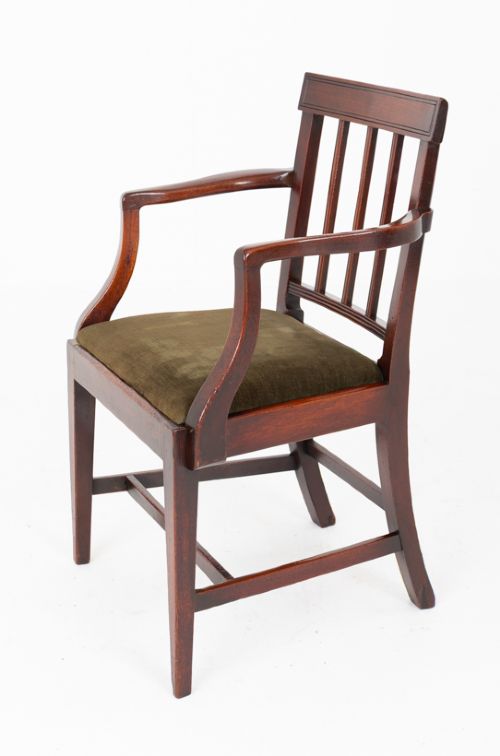
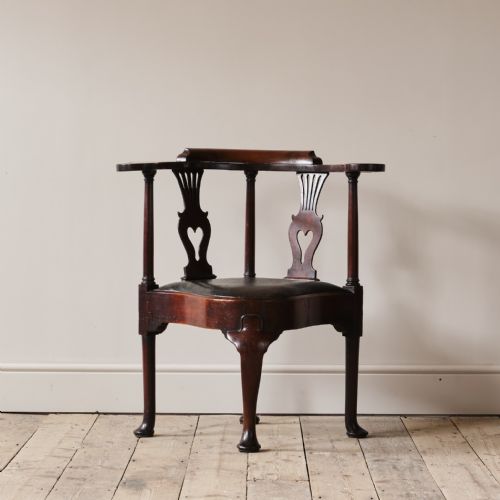
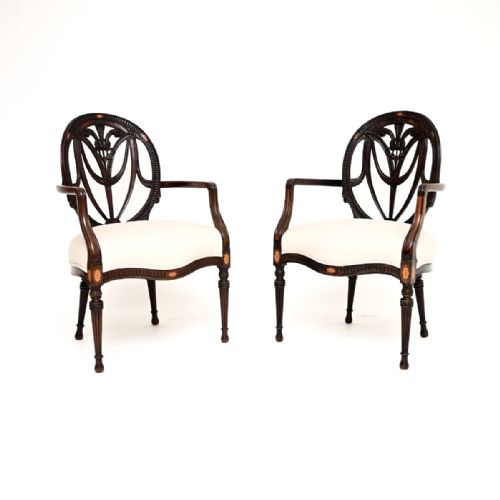
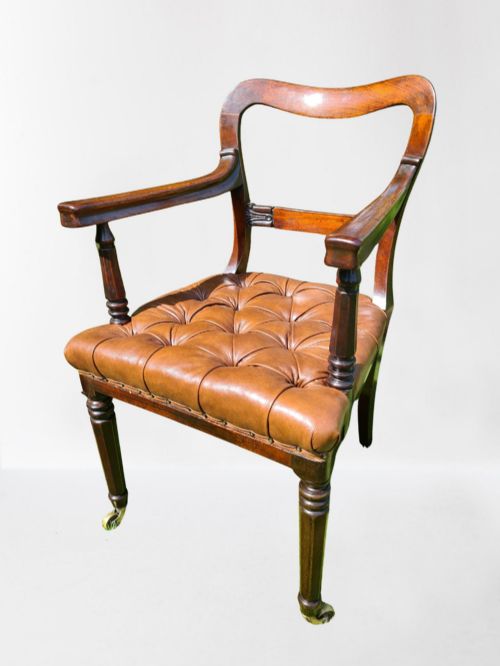
A mahogany desk armchair serves the workspace and the library, combining a supportive backrest with enclosed arms for extended periods of sitting. Buyers searching for a mahogany desk armchair encounter forms spanning the 18th century, the Georgian and Regency eras, through to the Victorian, Edwardian, and early 20th century periods.
The selection ranges from upright Georgian library models and Gainsborough chairs to swivel and revolving desk chairs from the Victorian and Edwardian decades. Alongside standard stationary carvers, many variants incorporate tub shapes, caned panels, or high spindle backs.
Originating largely from English workshops, these seats appear in diverse iterations such as Sheraton and Chippendale styles, as well as revival pieces from around 1900. The most frequently encountered pieces on this page combine timber frames with leather, fabric, or horsehair upholstery.
Materials and Construction
Makers relied primarily on solid and veneered mahogany for the structural frames, often utilising its dense grain to carve elaborate details like ropebacks, lyre motifs, and cabriole legs. Brass accents, castors, and swivel mechanisms appear frequently on the later 19th-century and early 20th-century revolving office variants.
Upholstery forms a vital component of construction, with leather, velvet, tapestry fabric, and basic upholstery fabric secured to padded seats using traditional tacks. Caned panels also feature in specific tub and open arm designs, demonstrating varied weaving techniques across different workshops.
Mahogany Desk Armchair Retail Price Guide 2026
Typical asking prices for mahogany desk armchair among the pieces listed under this phrase on Sellingantiques today, from the lower quarter to the upper quarter. They describe what is for sale here now, not the wider market.
Many a Victorian clerk likely spun a touch too fast in their revolving mahogany chair when the afternoon post finally arrived.
Distinctions in Standard
The standard of a mahogany desk armchair depends heavily on the crispness of the timber carving and the integrity of the underlying frame joinery. Superior examples display carefully selected mahogany grain, robust structural connections, and harmonious proportions between the arms, seat, and backrest.
Workshop execution dictates the finer details, such as the smooth operation of swivel mechanisms on Victorian and Edwardian office chairs or the precision of inlaid satinwood stringing. Pieces stamped by notable makers or retaining their original leather and brass furnishings generally represent the upper tier of craftsmanship.
Alfred Allen of Birmingham·Gillows·WM Heywood Chair Co
The Mahogany Desk Armchair Glossary
- Carver
- An armchair, typically designed with arms to match a set of dining or desk chairs. These seats often functioned as principal chairs at the head of a table or beside a writing surface.
- Gainsborough chair
- A type of 18th-century upholstered armchair featuring an open wooden frame, padded armrests, and short legs. They were traditionally used in libraries and studies.
- Tub chair
- An armchair with a continuous curved back and armrest rail enclosing the sitter. Many incorporate solid mahogany framing alongside caned or upholstered panels.
- Revolving desk chair
- A pivoting office seat mounted on a central pillar, frequently featuring a swivel mechanism and adjustable height. These became popular during the Victorian and Edwardian periods.
- Ropeback
- A decorative chair back design carved to resemble a twisted rope or cable. This motif appears on 18th-century and early 19th-century mahogany seating.
Mahogany Desk Armchair: Frequently Asked Questions
What is a mahogany desk armchair?
A mahogany desk armchair is a sturdy wooden seat featuring integrated armrests, built specifically for writing tables, libraries, and offices. These chairs combine durable tropical hardwood with supportive backs to facilitate prolonged work.
They appear in numerous historical styles, ranging from 18th-century Georgian designs to revolving Victorian and Edwardian office variants equipped with leather upholstery.
How do I date a mahogany desk armchair?
Dating relies on observing structural characteristics, timber tones, and stylistic details associated with specific eras. Georgian and 18th-century pieces often display hand-carved mahogany frames and traditional joinery, while later Victorian and Edwardian examples frequently incorporate mechanical swivels, brass castors, or golden mahogany finishes.
Makers' stamps, brass plates, and regional construction methods also provide precise chronological clues.
Were these chairs used only for writing?
While primarily constructed for desks and writing tables, these armchairs served multiple domestic functions in period homes. They frequently doubled as dining carvers, occasional reception seats, or comfortable library chairs for reading.
Their versatile proportions allowed them to be placed in morning rooms, studies, and bedrooms alike.
How do I care for a leather and mahogany chair?
Maintaining these pieces involves protecting both the timber frame and the upholstered surfaces from extreme temperature fluctuations and direct sunlight. Regular dusting of the mahogany keeps the polished grain in good condition.
Leather seats benefit from occasional gentle conditioning to prevent the material from drying out, while fabric and velvet upholstery require careful vacuuming.