




Burgundy Leather Armchair
A burgundy leather armchair brings rich colour and deep comfort to a study, library or sitting room.

Burgundy Leather Armchair
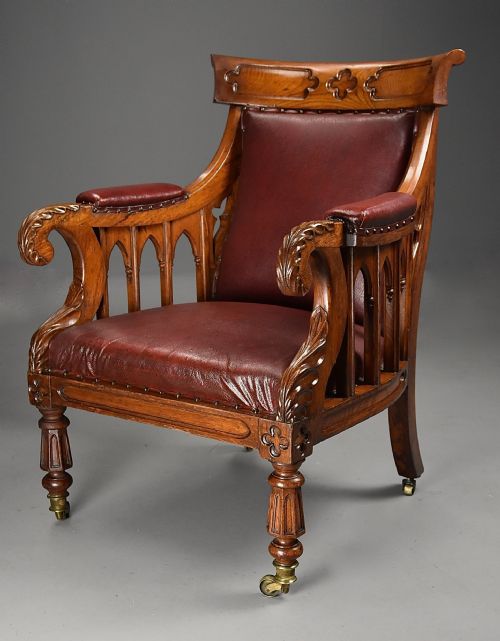
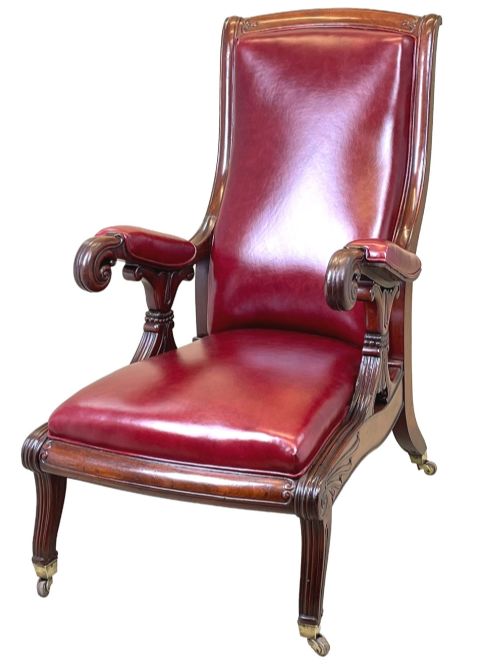
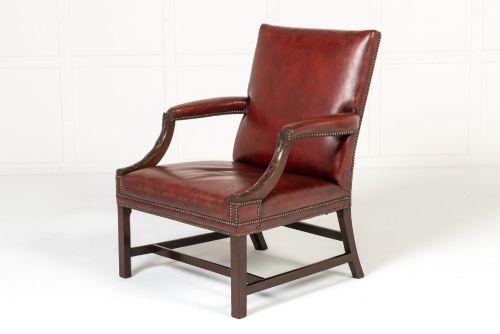
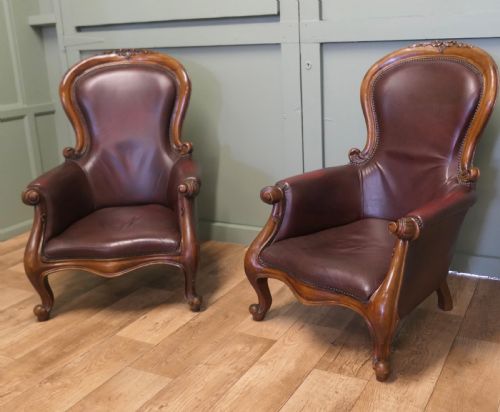
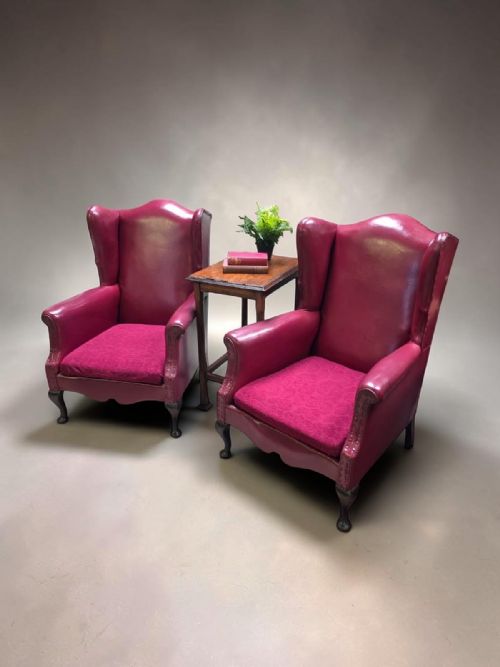
A burgundy leather armchair is a substantial seat designed for reading, writing or resting, most frequently seen here in Victorian and later nineteenth-century forms. The selection on this page ranges from library armchairs and wing chairs to desk chairs and club elbow chairs, spanning periods from the eighteenth century to the early twentieth century.
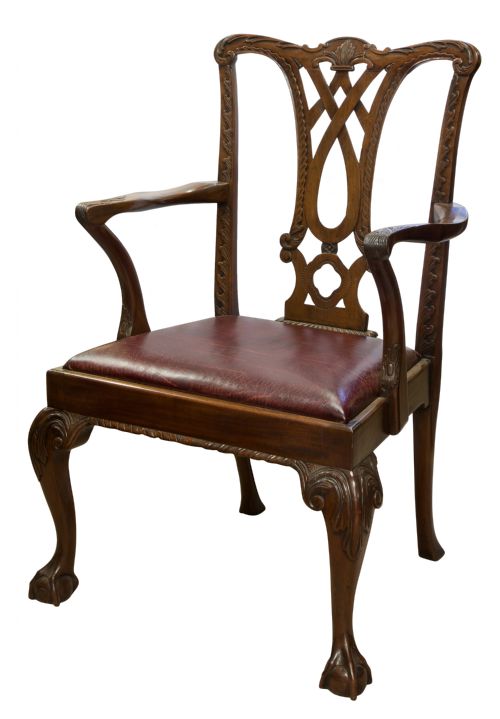
Buyers seeking a burgundy leather armchair will encounter frames built from mahogany, oak, rosewood and walnut, often upholstered in rich red or burgundy hide. These pieces reflect styles such as Victorian, Georgian, Regency, William IV and Chippendale Revival, showing how makers adapted traditional forms for comfort over successive generations.
How they were made
Cabinetmakers constructed the supportive frames of these armchairs using dense hardwoods like mahogany, oak, walnut and rosewood, ensuring structural longevity. Metal elements such as brass tacking and wrought iron components frequently appear in the construction and detailing.
Upholsterers fitted the frames with durable leather hides, securing them with traditional techniques to create button-backed, spoon-backed or panelled seating surfaces designed for daily use.
Burgundy Leather Armchair Retail Price Guide 2026
Typical asking prices for burgundy leather armchair among the pieces listed under this phrase on Sellingantiques today, from the lower quarter to the upper quarter. They describe what is for sale here now, not the wider market.
Listings span the eighteenth, nineteenth and early twentieth centuries, incorporating Victorian, Georgian, Regency and William IV styles.
What varies in quality
The standard of a burgundy leather armchair rests upon the integrity of its timber frame and the depth of work in its upholstery. Finer examples display carefully carved mahogany or oak woodwork paired with thick, supple leather that shows natural grain and patination.
Proportion and the handling of period styles also set pieces apart, where balanced proportions in the arms and back elevate a library or desk chair from standard utility to distinguished craftsmanship.
The Burgundy Leather Armchair Glossary
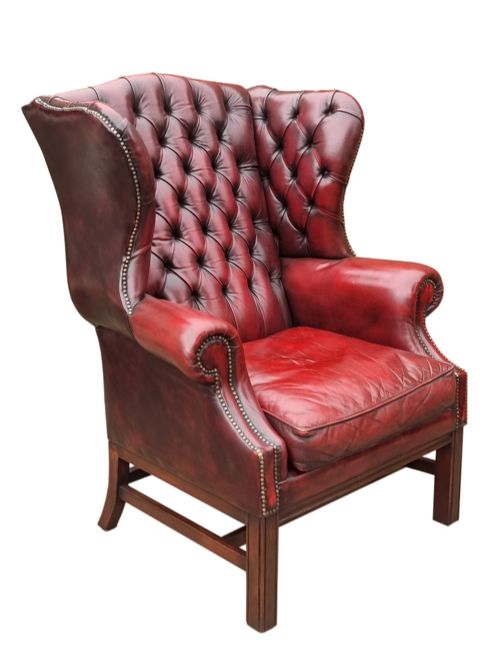
- Wing chair
- An upholstered armchair with high back and flanking side panels designed to shield the sitter from drafts. These pieces often feature deep leather upholstery and wooden legs.
- Library chair
- A comfortable armchair designed for reading rooms, typically featuring sturdy wooden armrests and upholstered leather seating. They often date from the Victorian and Georgian periods.
- Club elbow chair
- A low, sturdy armchair with upholstered arms intended for relaxed seating. These pieces commonly combine oak or mahogany frames with leather hides.
- Bergere
- An enclosed wooden armchair with upholstered back and sides, often featuring woven cane panels or padded leather. This French-influenced form appears across various nineteenth-century dates.
- Patina
- The deep surface sheen and softness developed on timber and leather over decades of handling and use. It serves as an indicator of age and careful preservation.
Burgundy Leather Armchair: Frequently Asked Questions
How do I style a burgundy leather armchair?
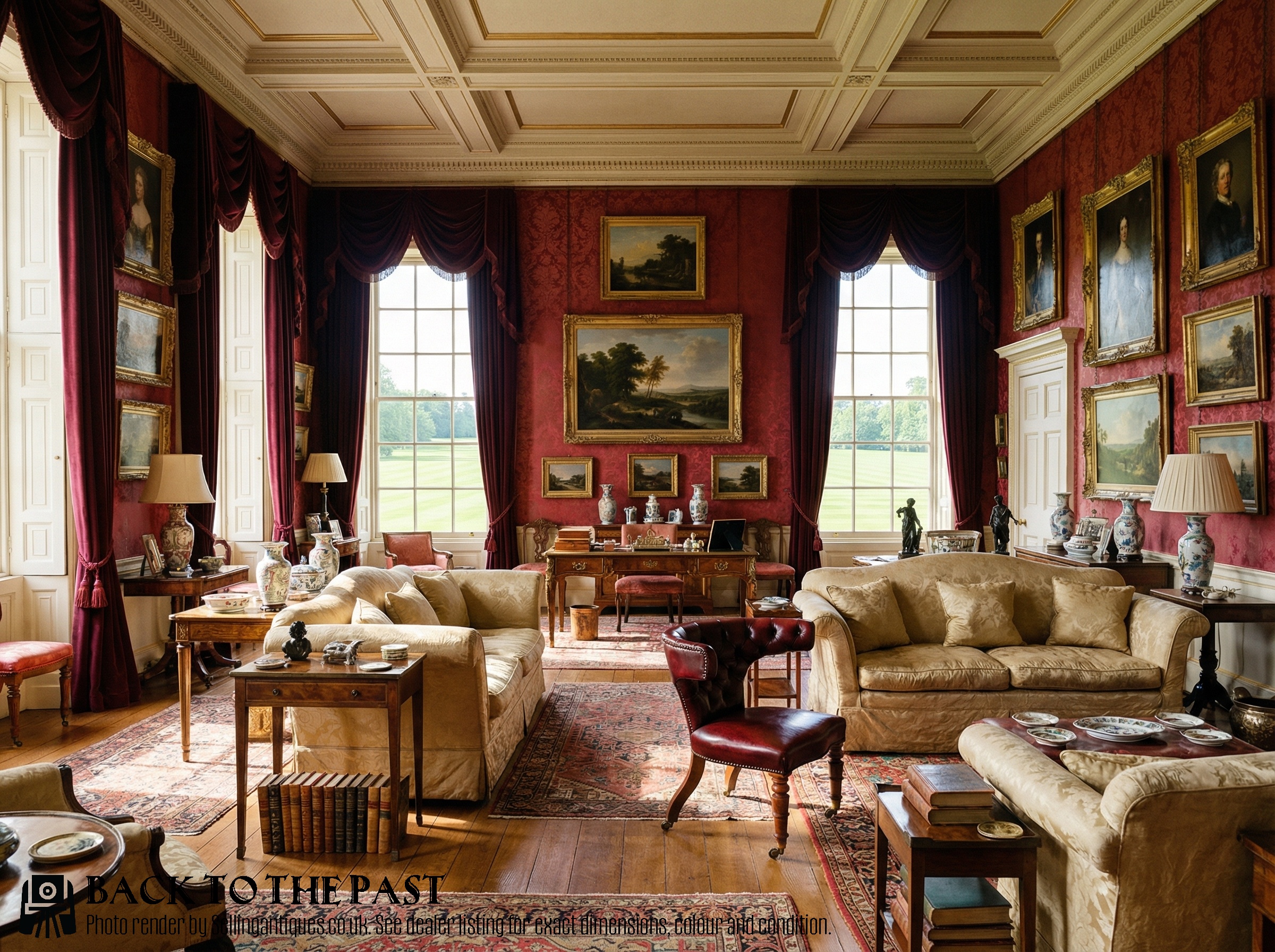
Place the chair beside a wooden bookcase or mahogany desk to complement its rich hide and traditional frame. It anchors a room when paired with complementary tones in rugs and textiles.
Allow enough space around the chair for the arms and back to stand out as a focal point in a study or sitting room.
Which periods do these armchairs come from?
The pieces span from the eighteenth century through the Victorian era up to the nineteen-thirties. You will find Georgian, Regency and William IV examples alongside Victorian and early twentieth-century revivals.
Each period brings distinct stylistic details in the woodwork, from Chippendale-style mahogany carvings to plain oak club frames.
How do I care for antique leather?
Maintain the hide by keeping the armchair away from direct heat sources and strong sunlight that can dry out the material. Regular dusting and occasional conditioning will help preserve the suppleness of the leather.
Avoid harsh chemical cleaners, using only specialised leather care products recommended for antique upholstery.