
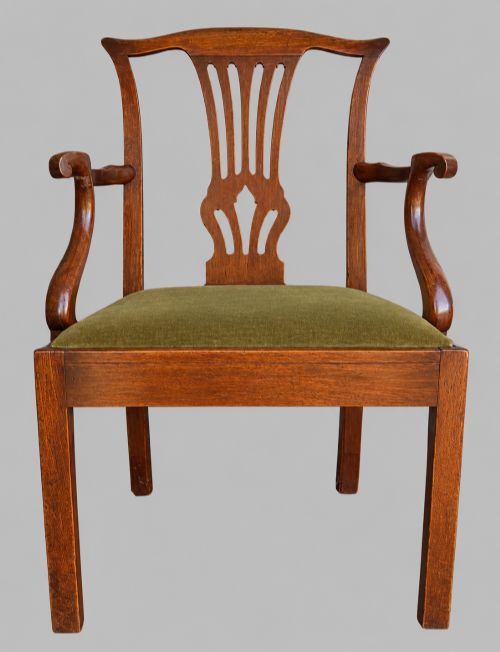
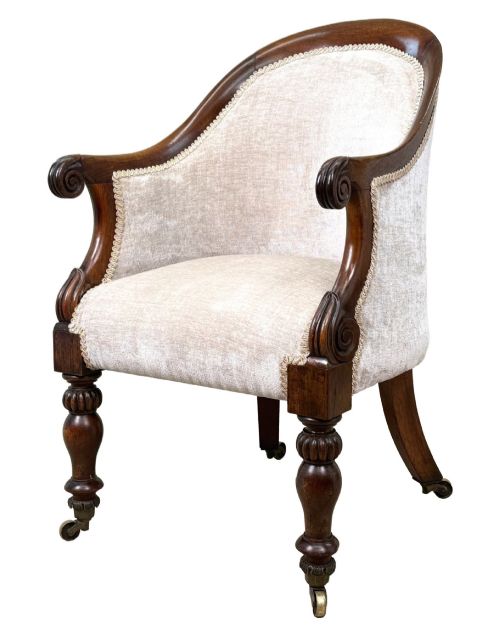
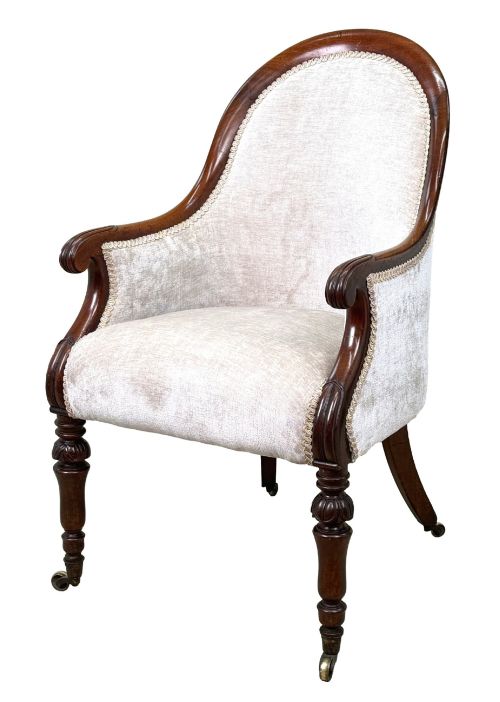
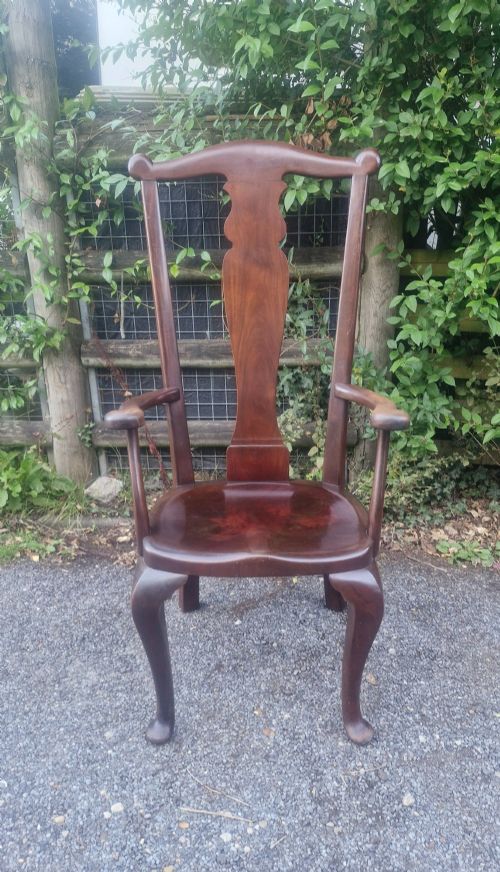
Georgian Library Armchair
A georgian library armchair brings solid mahogany and deep leather comfort to a study, built to anchor a serious room with traditional presence.

Forms and Origins
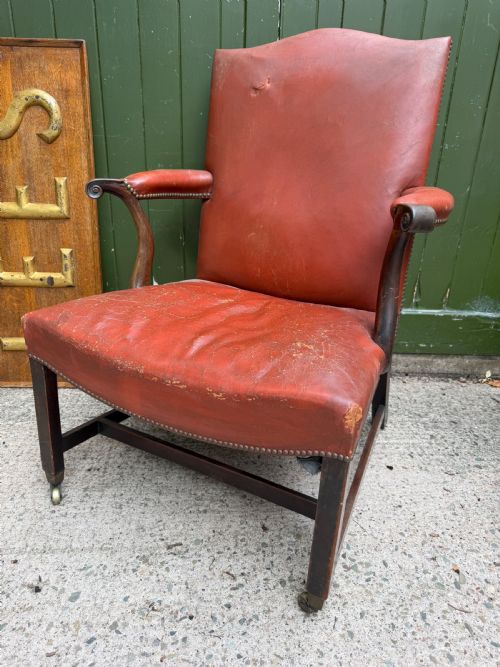
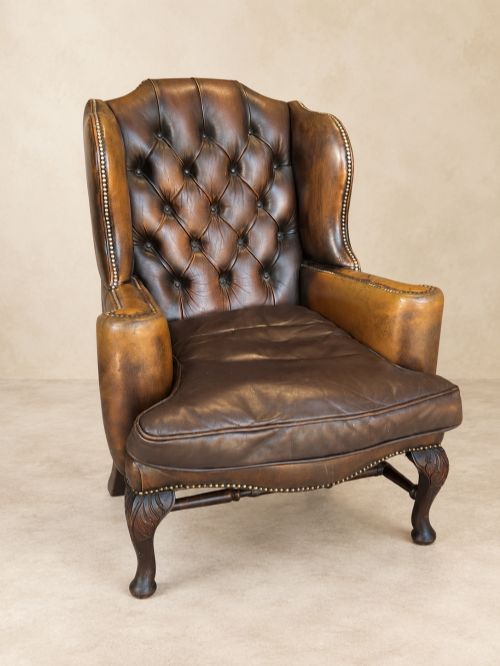
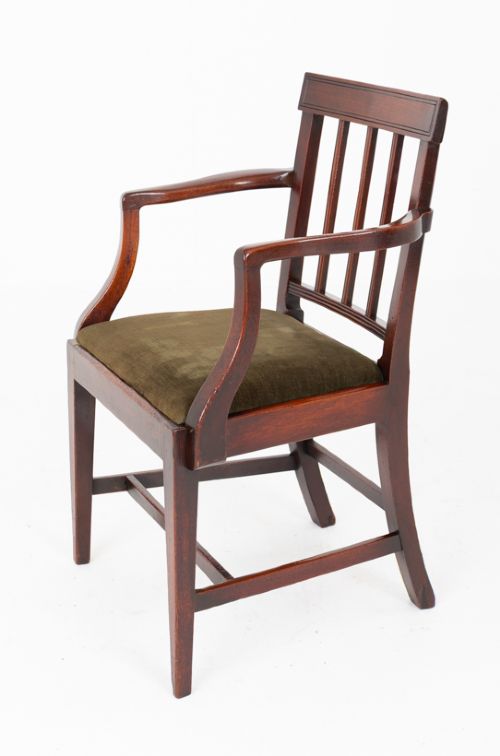
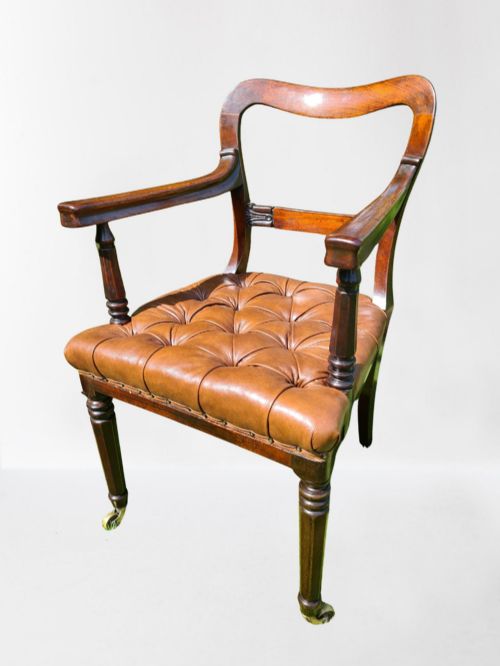
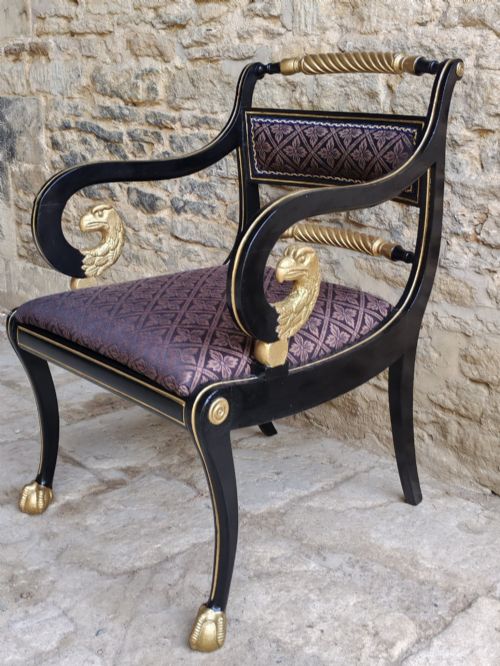
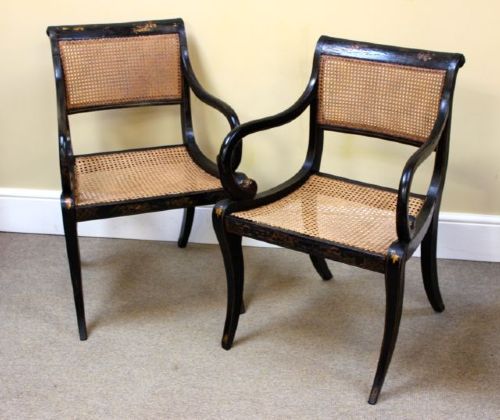
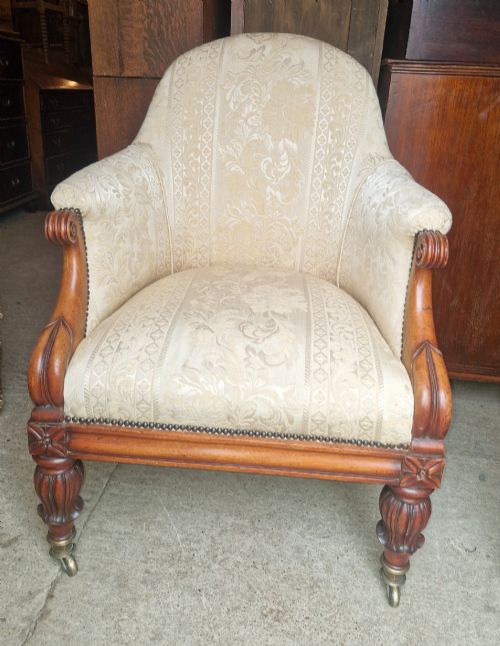
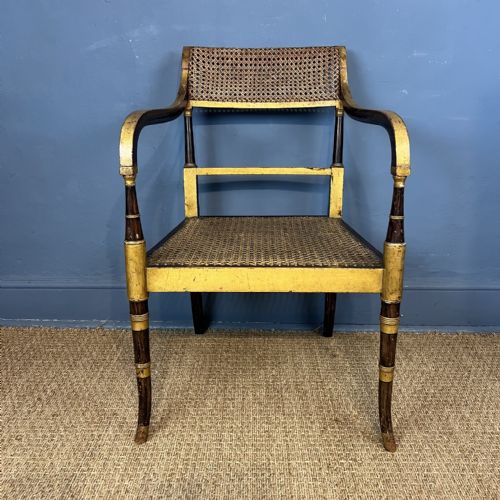
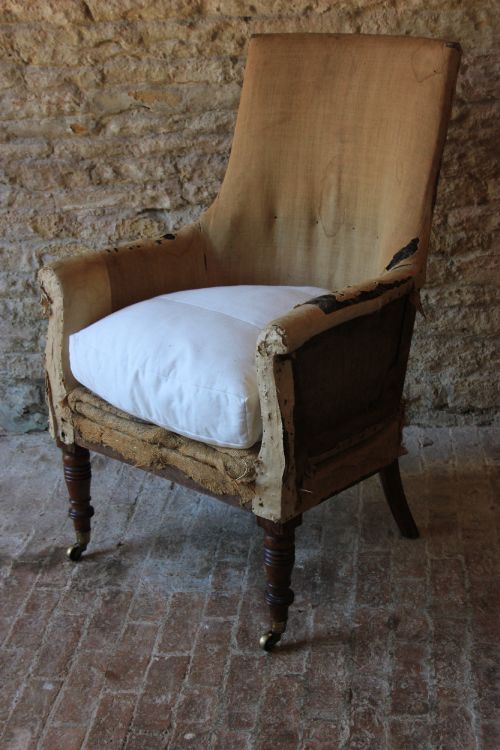
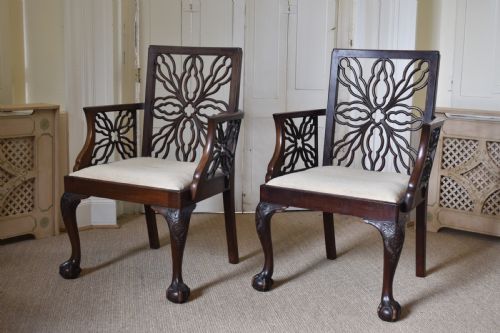
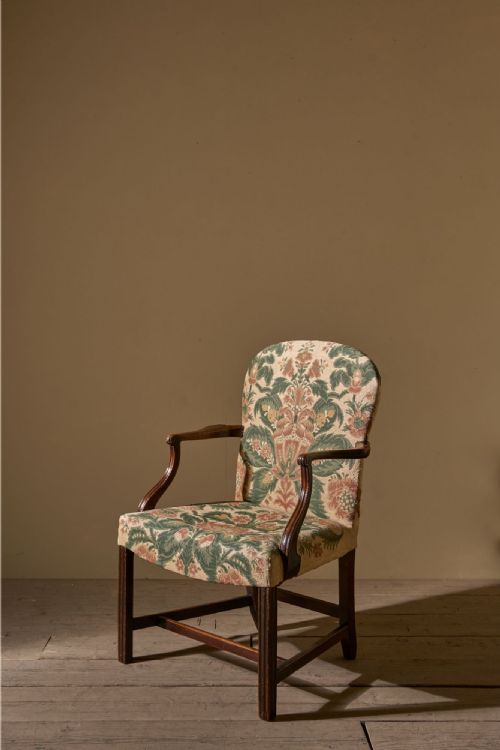
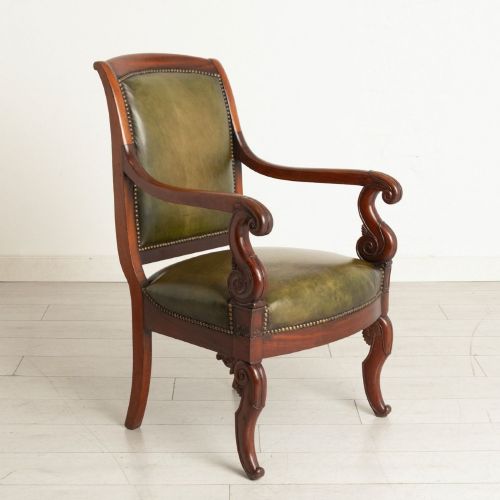
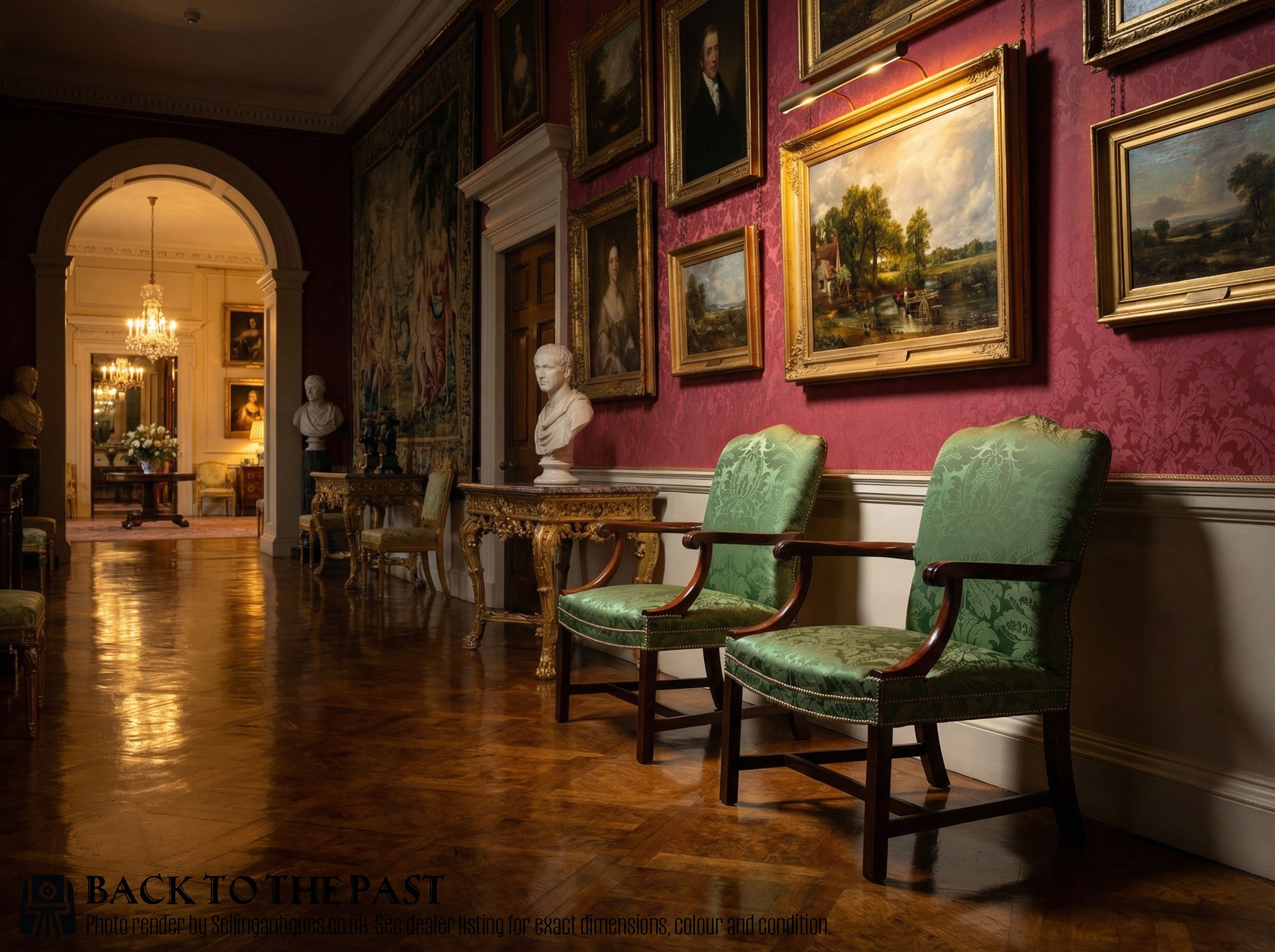
A georgian library armchair is a sturdy seat designed for reading and study, appearing in forms such as the open armchair, the Gainsborough, the tub chair, and the bergere. These pieces span the eighteenth and nineteenth centuries, including Regency and William IV iterations, alongside later interpretations in the Georgian style.
The materials recorded in these seating forms include mahogany, walnut, and simulated rosewood, upholstered in leather, fabric, horsehair, hessian, and velvet. Brass details and cane panels appear frequently across the selection.
Makers and workshops of the period produced armchairs that double as desk chairs or reading seats, sometimes incorporating reclining mechanisms or steps.
Qualities of the Build
The distinction between standard output and finer examples lies in the weight of the timber and the crispness of the carved details on the arms and legs. Superior pieces display thoughtful proportions and robust frame integrity that survive centuries of use.
The grade of the secondary woods and the precision of the upholstery foundation differentiate an ordinary workshop product from a piece commissioned for a prominent library.
Retail Price Guide 2026
Typical UK retail prices for georgian library armchair, calculated from the Sellingantiques database of over a million retail prices indexed since 2003. This retail price guide relies exclusively on Sellingantiques data; no external sources or auction records are used, so the figures do not describe the wider market.
Cock fighting chairs allowed gentlemen to sit astride backwards, resting their arms on the padded top rail.
Gillows Inspired
The Georgian Library Armchair Glossary
- Bergere
- An enclosed upholstered armchair with wooden frames, often featuring cane panels on the sides and back. This form provides a lighter visual weight while maintaining structural support.
- Gainsborough
- A wide, open armchair with a padded back and armrests, standing on short legs. It was designed specifically for use at a desk or in a library.
- Tub chair
- An armchair with a continuous curved back and arms forming a single circular enclosure. This shape surrounds the sitter for added comfort during long reading sessions.
- Horsehair
- A traditional upholstery stuffing material woven from tail or mane hair. It provides a resilient and breathable foundation beneath leather or fabric covers.
- Simulated rosewood
- A painted or stained finish applied to a secondary timber to imitate the rich grain of genuine rosewood. Cabinetmakers utilised this technique during the Regency period.
Frequently Asked Questions
What defines a georgian library armchair?
These pieces are sturdy wooden seats built with upholstered backs and armrests, designed for reading rooms and studies. They utilise materials like mahogany and leather to provide comfort and durability.
They appear in distinct forms such as tub chairs, Gainsborough chairs, and bergere models. Their proportions reflect the functional requirements of eighteenth and nineteenth-century interiors.
How were these armchairs used originally?
Owners placed them in libraries, studies, and drawing rooms for reading, writing, and administrative tasks at a desk. Some specialised versions included reclining functions or paired with metamorphic steps.
Their robust construction suited long hours of sitting in domestic and institutional settings. The materials chosen ensured they withstood heavy daily wear.
How do I care for the leather and wood?
Maintain the timber frames with appropriate wax polish applied sparingly with a soft cloth. Keep leather surfaces clean using gentle, non-abrasive conditioners to prevent drying.
Position the chairs away from direct sunlight and strong heat sources to protect the upholstery and wood finish. Regular dusting preserves the natural grain and patina.
How can I distinguish period pieces from later styles?
Examine the construction methods, timber patination, and wear patterns on the frame and undercarriage. Period pieces show construction traits consistent with eighteenth and nineteenth-century workshop practices.
Compare the specific stylistic markers, such as the turnings on Regency legs or Chippendale-influenced arm designs, against established historical examples.