
Regency Library Armchair
A regency library armchair brings architectural dignity to a room, offering deep seating designed for long hours of reading.
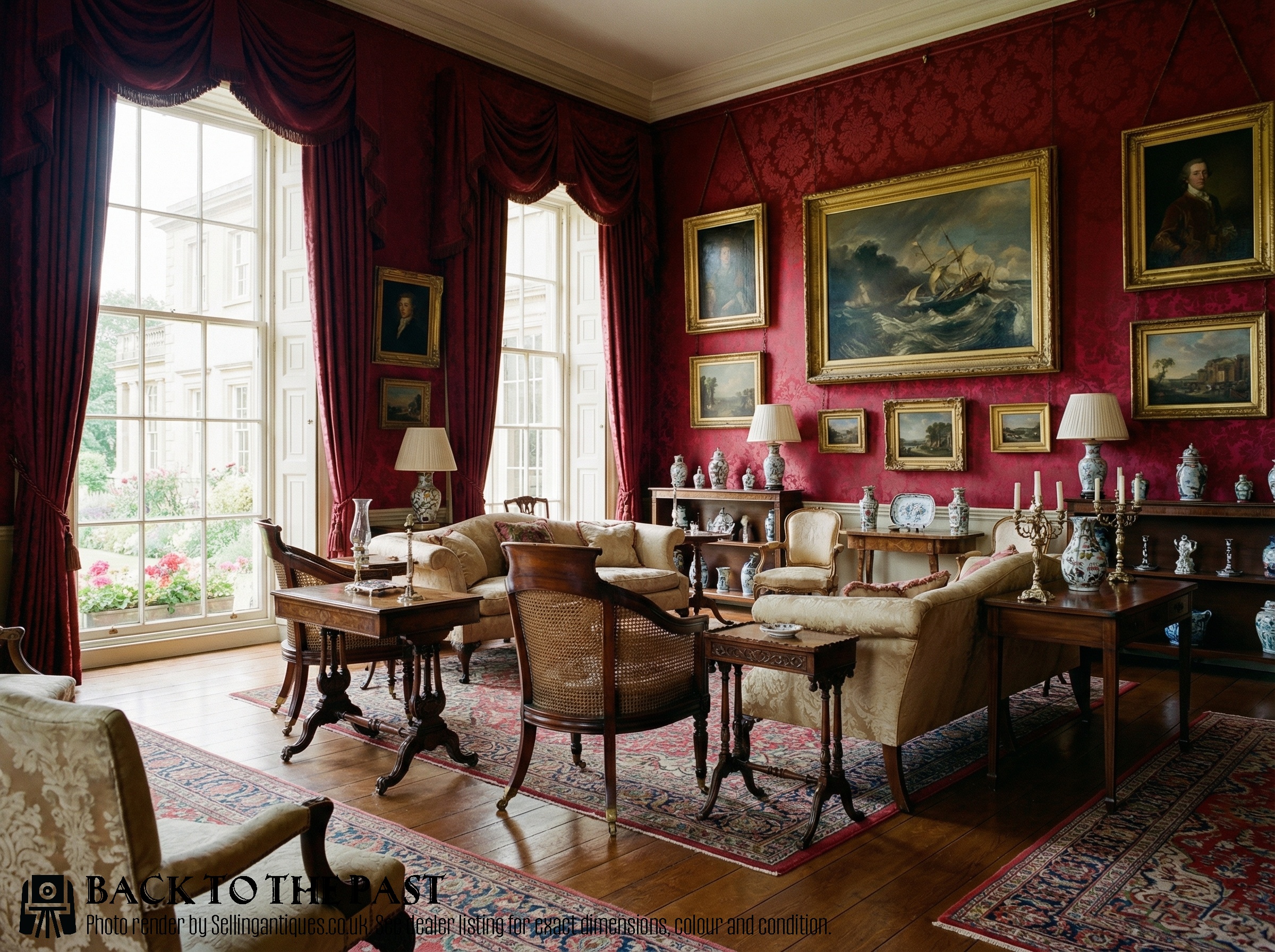
Regency Library Armchair
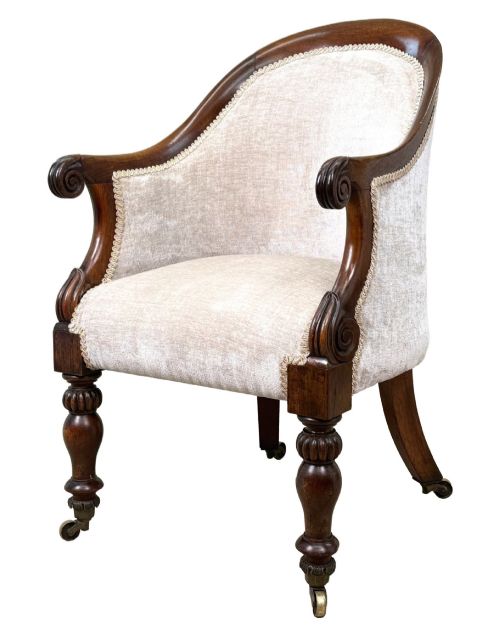
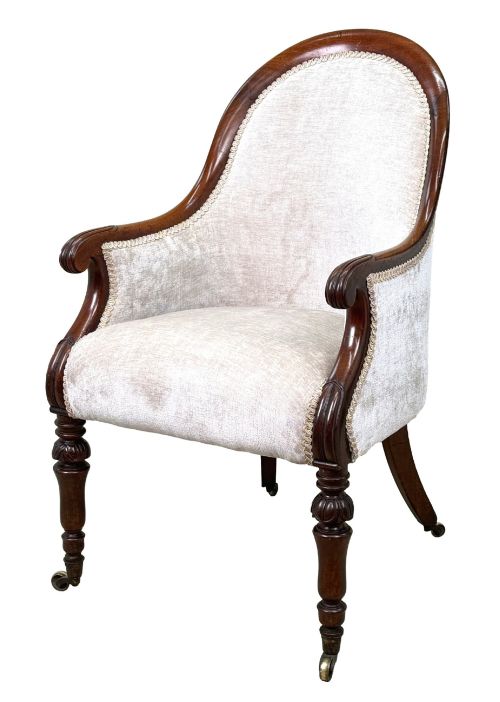
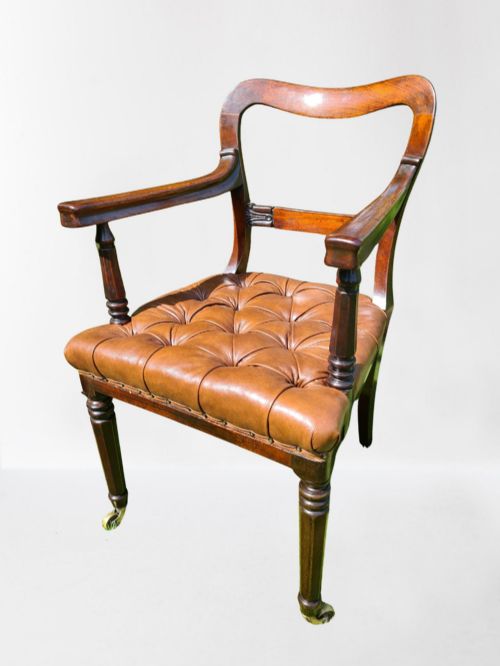
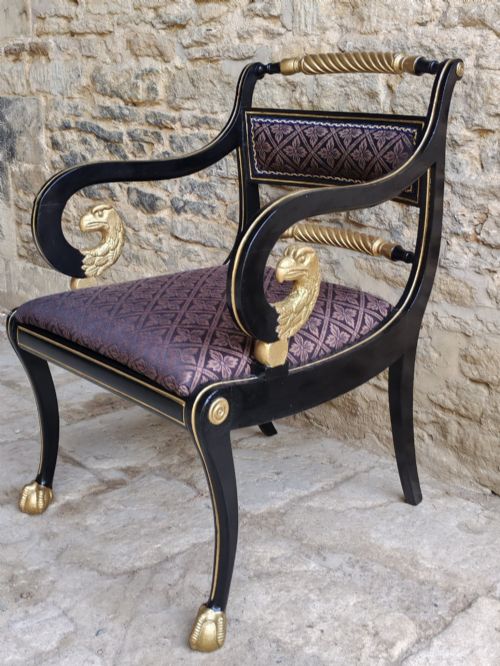
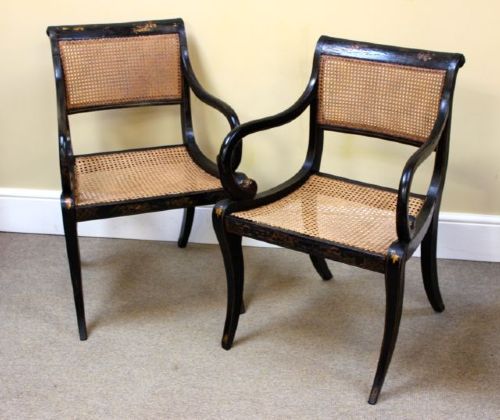
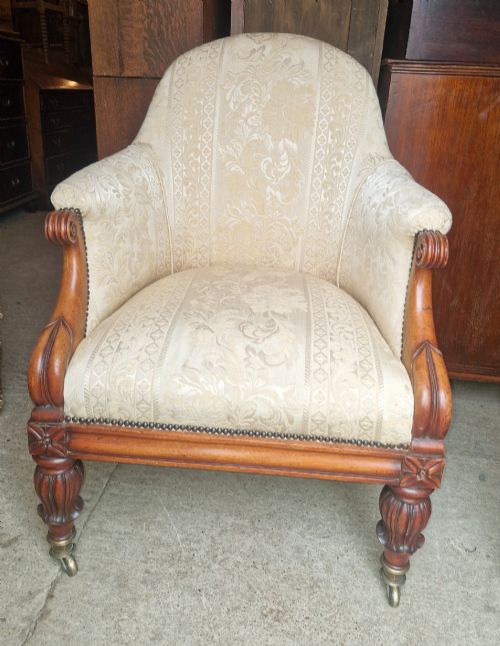
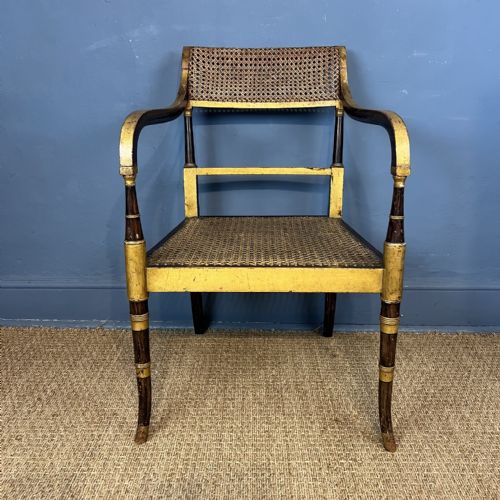
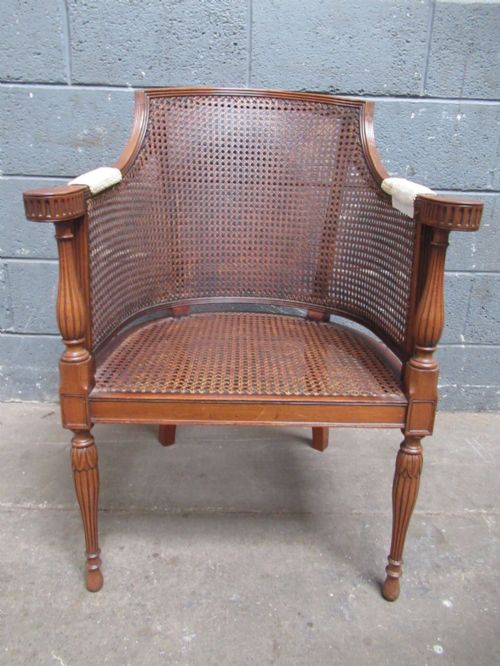
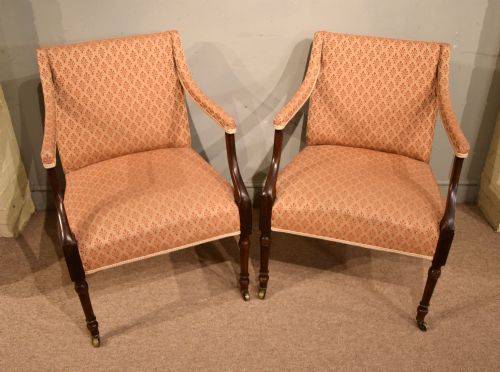
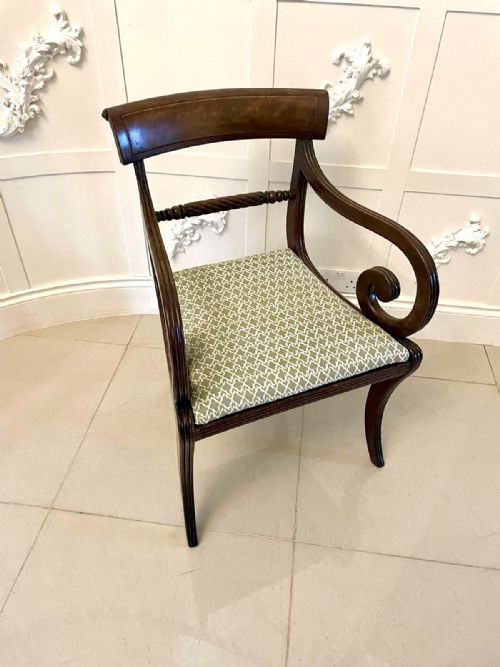
A regency library armchair is a sturdy, low-slung seat built for reading rooms, studies and libraries during the early nineteenth century. These chairs frequently appear in mahogany, rosewood, or ebonised wood, often taking the form of a tub shape, a desk chair, or a bergère with enclosed cane panels. The majority of examples date from the Regency period itself, alongside later nineteenth century interpretations and revival pieces.
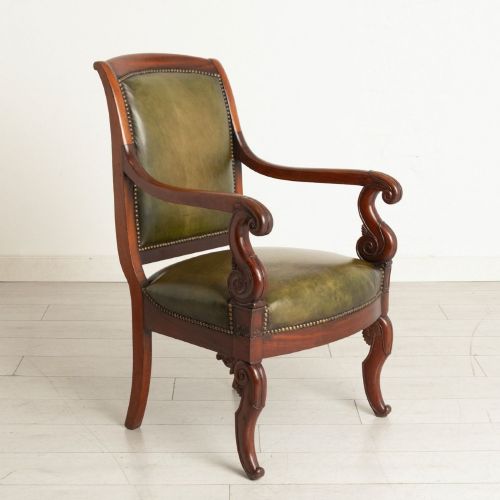
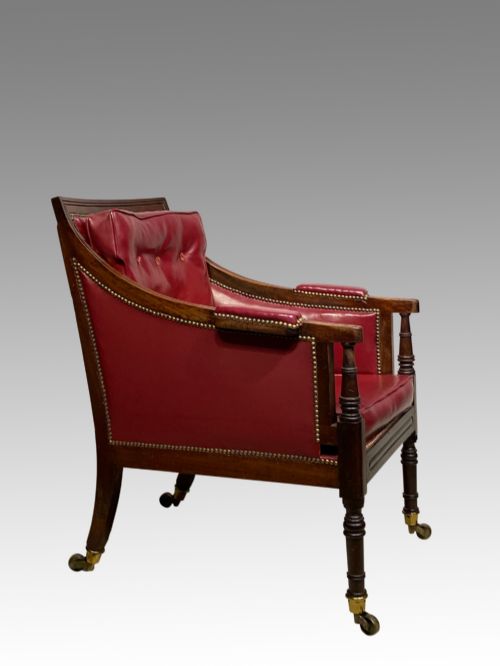
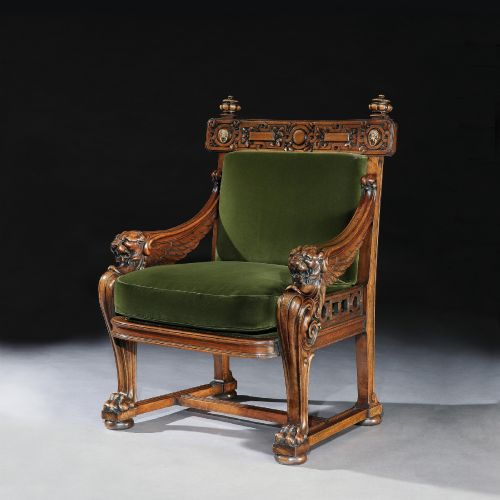
Makers designed these chairs to offer maximum support, incorporating padded armrests, leather upholstery, or loose cushions. Many variations feature reeded frames, carved details, or brass inlay, while specific iterations include patent reclining mechanisms or deep lion monopodia supports. Whether found as single reading seats or in matched pairs, they serve as substantial focal points in traditional interiors.
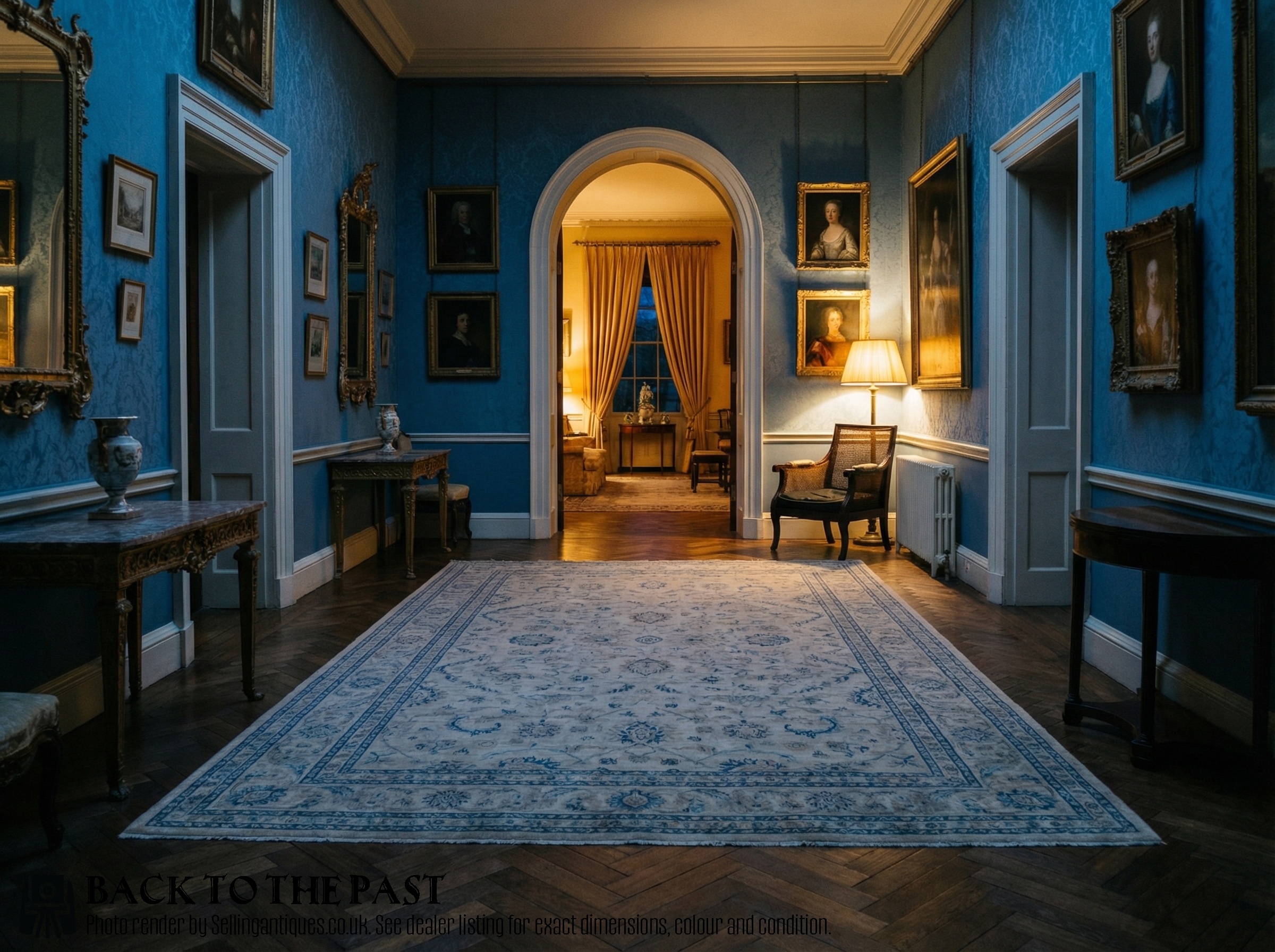
Materials and Construction
Makers constructed these chairs primarily using dense hardwoods such as mahogany and rosewood, selected for structural stability and rich grain patterns. Cane work provides lightweight, flexible panels on bergère models, while secondary woods support internal frames.
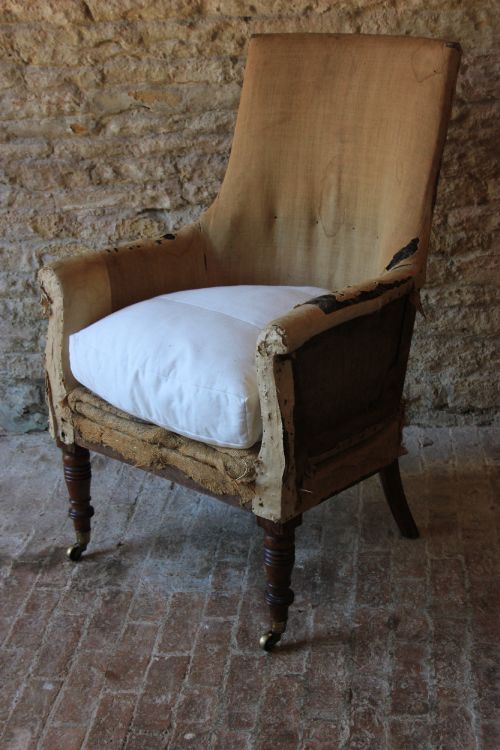
Surface ornamentation relies on brass inlay, parcel gilding, and simulated rosewood finishes painted onto alternative timbers. Upholstery utilises tactile leather, velvet, or woven fabric, secured with traditional stuffing techniques over sturdy webbing.
Regency Library Armchair Retail Price Guide 2026
Typical asking prices for regency library armchair among the pieces listed under this phrase on Sellingantiques today, from the lower quarter to the upper quarter. They describe what is for sale here now, not the wider market.
One extraordinary nineteenth-century survival includes a patented mechanical reclining system designed for maximum slumber between chapters.
Craftsmanship and Proportion
Quality rests upon the crispness of the timber carving, the precision of brass inlay work, and the structural integrity of the frame joints. Superior examples display thoughtful proportions, balanced curves, and refined turning on the legs.
The choice of primary timber significantly dictates the grade of the piece, with richly figured rosewood and solid mahogany sitting at the higher end. Original components, intact caning, and period leather upholstery elevate the standing of an individual chair.
Gillows of Lancaster·Thomas Hope
The Regency Library Armchair Glossary
- Bergère
- An enclosed armchair with cane or upholstered sides and back. This French-inspired form became widely popular in English libraries for its comfortable, cocooning shape.
- Monopodia
- A carved furniture support taking the form of a single animal leg, usually ending in a lion's paw. This neoclassical motif appears on high-status seating.
- Reeded
- A decorative moulding consisting of parallel convex rounded strips resembling inverted fluting. Craftsmen carved these lines directly into the solid wood legs and arm supports.
- Tub chair
- A curved upholstered seat where the arms sweep continuously into the back in a single rounded enclosure. This shape protects the sitter from draughts in large rooms.
Regency Library Armchair: Frequently Asked Questions
How do I identify a Regency period chair?
Regency chairs typically display neoclassical influences, featuring clean architectural lines, dark tropical hardwoods, and subtle brass stringing or inlay. Look for characteristic reeded woodwork and saber legs.
Many pieces from this era incorporate specific seating types like tub backs or caned bergere panels designed for prolonged sitting.
Are these chairs suitable for modern desks?
Desk chairs and low library armchairs from the nineteenth century often pair well with modern workspaces, provided the seat height aligns correctly. Models upholstered in leather offer durable surfaces for daily sitting.
Checking the arm clearance under desk drawers ensures the chair fits comfortably beneath your workspace.
Why are some listed as revival pieces?
Revival pieces were manufactured later in the nineteenth or early twentieth centuries, copying the earlier Regency aesthetic using traditional methods. These items replicate the desirable forms of the 1820s while offering alternative date profiles.
Such chairs share the heavy mahogany construction and classic silhouettes of their earlier counterparts.