


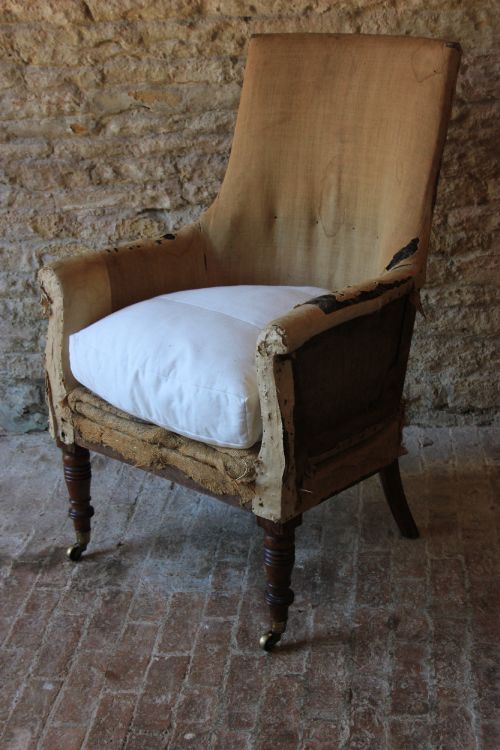
Regency Period Chair
A regency period chair brings architectural discipline and refined seating to a room through precise classical proportions.
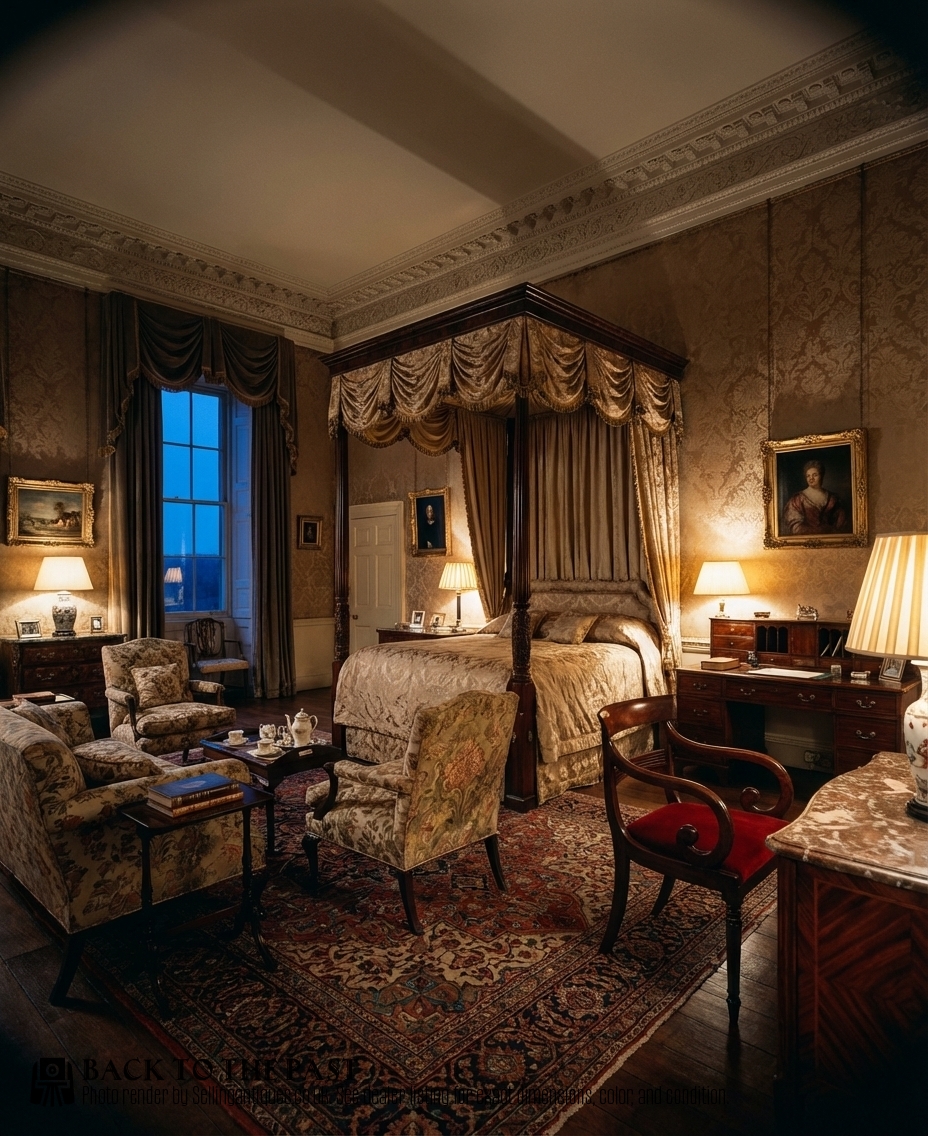
Regency period chair forms and origins
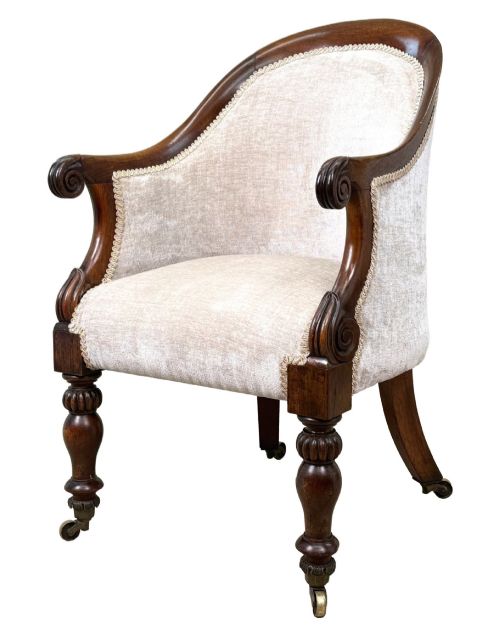
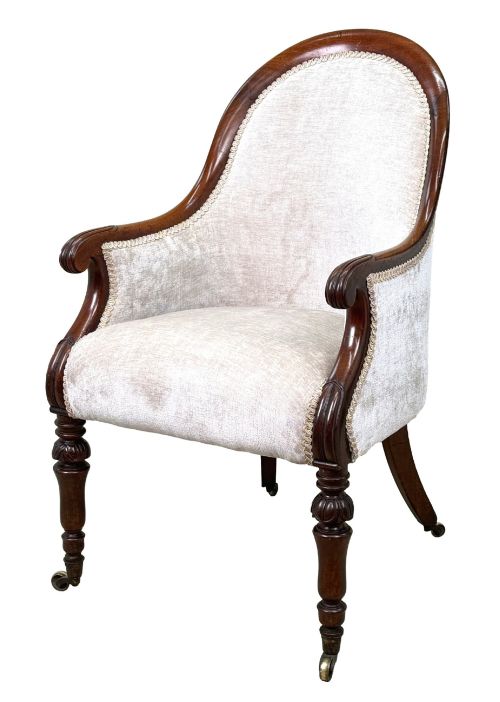
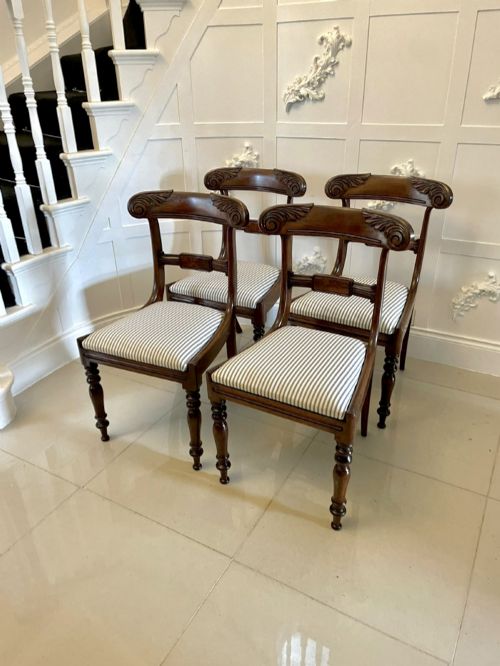
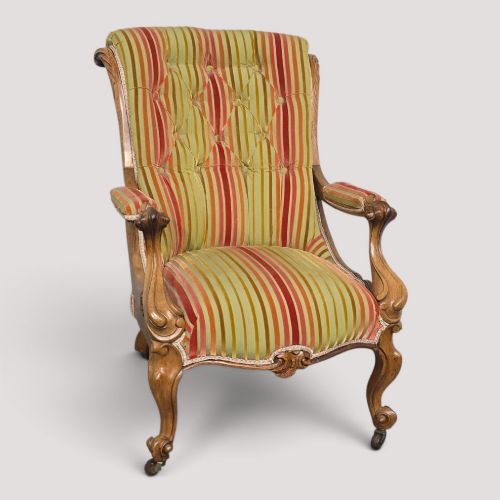
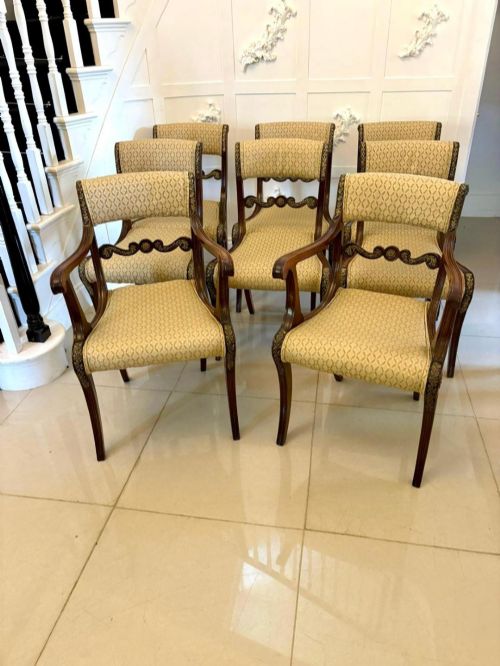
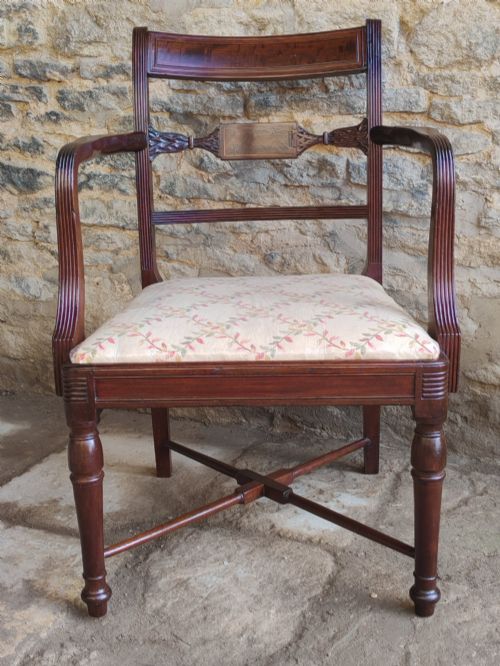
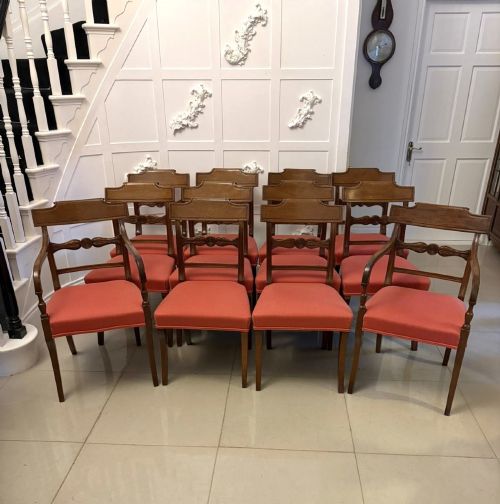
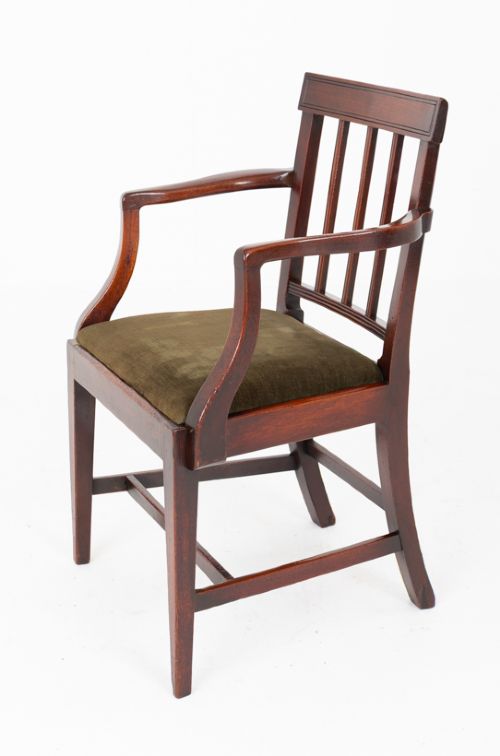
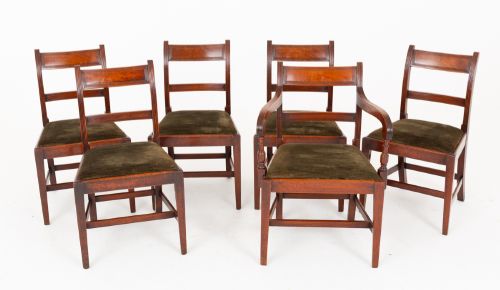
A regency period chair spans armchairs, occasional chairs, desk chairs, and dining sets originating from the Regency era and the broader nineteenth century. Buyers searching for a regency period chair frequently encounter mahogany dining chairs and library armchairs framed in rich timbers.
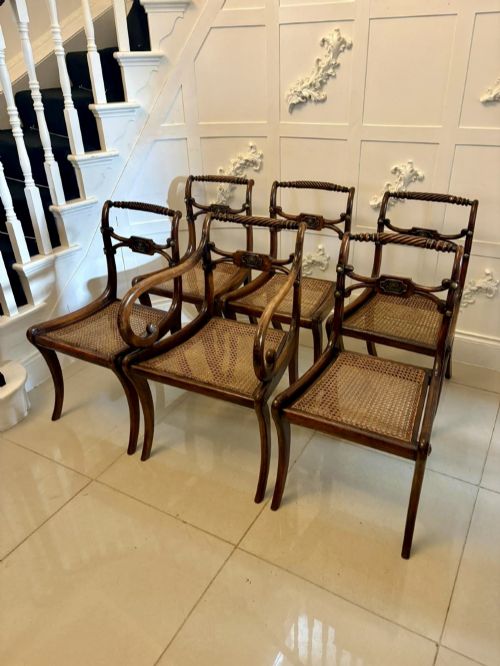
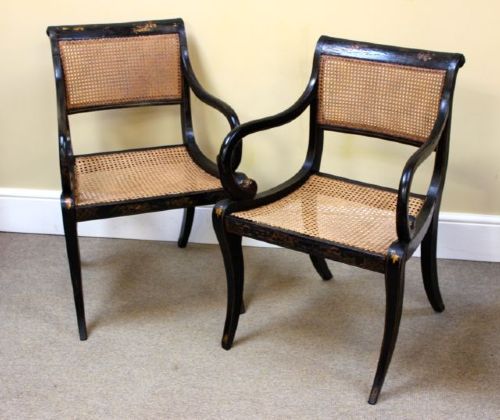
The evidence records diverse forms including bar back chairs, scroll armchairs, bergere library armchairs, and Windsor low back arm chairs. Workshops produced both side chairs for dining arrangements and substantial elbow chairs intended for libraries and desks.
Geographic origins extend across English production centres alongside Scottish and Anglo-Indian regional variants. These pieces reflect the neoclassical taste of the period, utilising austere architectural lines and classical motifs.
Materials and construction techniques
Cabinetmakers constructed these frames using solid mahogany, fruitwood, elm, ash, and exotic timbers such as rosewood and satin birch, alongside giltwood finishes. Many examples incorporate simulated or faux rosewood graining applied to secondary woods to mimic costly materials.
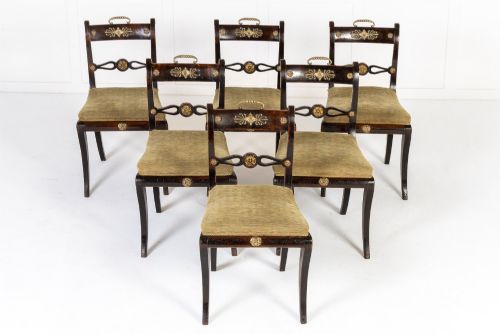
Decorative detailing relies on brass inlay, brass mounts, bobbin turning, and hand-carved elements following classical design vocabulary. Seating surfaces feature cane work, upholstery in fabric and leather, or drop-in pads.
Retail Price Guide 2026
Typical UK retail prices for regency period chair, calculated from the Sellingantiques database of over a million retail prices indexed since 2003. This retail price guide relies exclusively on Sellingantiques data; no external sources or auction records are used, so the figures do not describe the wider market.
Makers simulated costly rosewood on humble woods using paintbrushes and beer.
Distinctions in craftsmanship and design
Quality rests upon the selection and figure of the timber, particularly in mahogany and rosewood surfaces where grain patterns dictate visual depth. Finer examples display crisp, hand-cut brass inlay and deeply articulated carving rather than mechanical execution.
Structural integrity depends on the joinery within the frame, especially where splats meet rails and legs join the seat. Superior construction ensures stability in daily use while maintaining the slender proportions characteristic of the period.
Gillow
The Regency Period Chair Glossary
- Bergere
- An enclosed upholstered armchair with wooden framing visible around the sides and back. This form often includes cane work panels.
- Bar back
- A chair featuring a horizontal splat shaped like the top rail of a classical bench. This design is frequently inlaid with brass.
- Scroll arm
- An armrest curving outward and downward in a tight volute scroll. This contour defines many library and dining armchairs.
- Simulated rosewood
- A painted or stained surface treatment imitating the dark grain of rosewood on a lighter timber base. Makers used this technique during the nineteenth century.
- Giltwood
- Wood coated with gold leaf or gold paint to create a lustrous decorative surface. It appears on formal occasional chairs.
Frequently Asked Questions
How do I identify a genuine regency period chair?
Examine the timber selection, joinery methods, and classical proportions characteristic of early nineteenth-century cabinetmaking. Genuine examples display period construction traits such as hand-cut joints and native or imported hardwoods suited to the era.
Look for design details like brass inlay, sabre legs, or reeded framing that align with documented Regency stylistic patterns.
Can I use antique dining chairs every day?
These seating pieces were built for daily domestic use from durable timbers like mahogany and elm. Careful handling and appropriate weight distribution ensure they remain functional in a modern dining room.
Check the structural joints periodically to maintain stability, and avoid placing them in overly dry or humid environments.
What is a library bergere chair?
A library bergere is a fully upholstered armchair with enclosed sides designed for comfort during extended reading. They frequently incorporate cane panels and leather desk surfaces.
Cabinetmakers often mounted these heavy chairs on castors to allow easy movement across carpeted study floors.
How do I care for leather upholstery on a desk chair?
Maintain antique leather by applying appropriate conservative dressings that prevent the hide from drying out. Avoid harsh chemical cleaners and direct sunlight to preserve the surface colour.
Gentle dusting with a soft cloth protects the leather grain and any surrounding polished timber frames.