
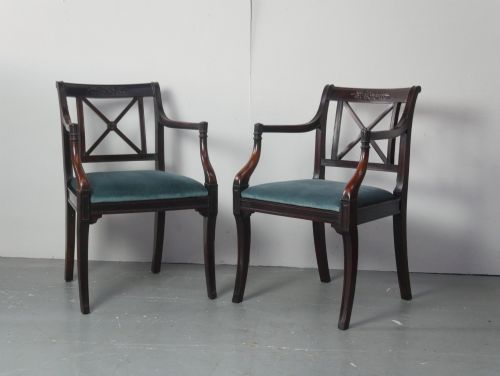
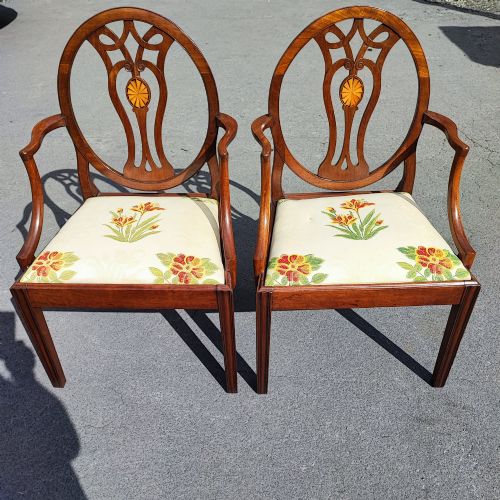
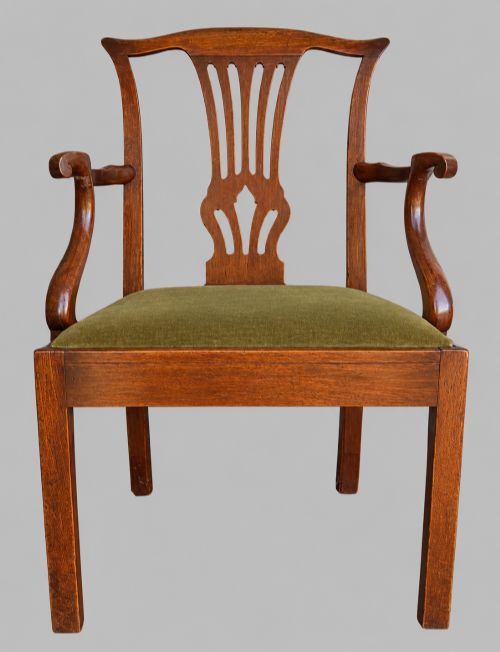
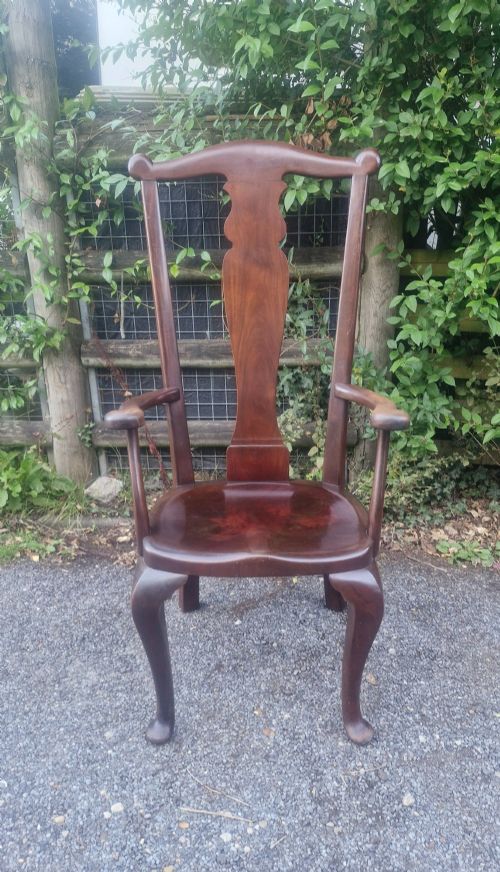
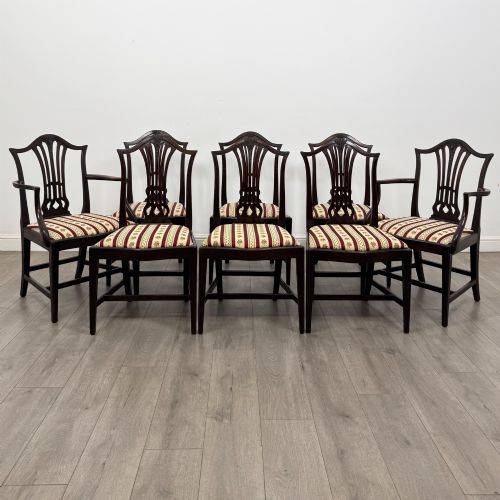
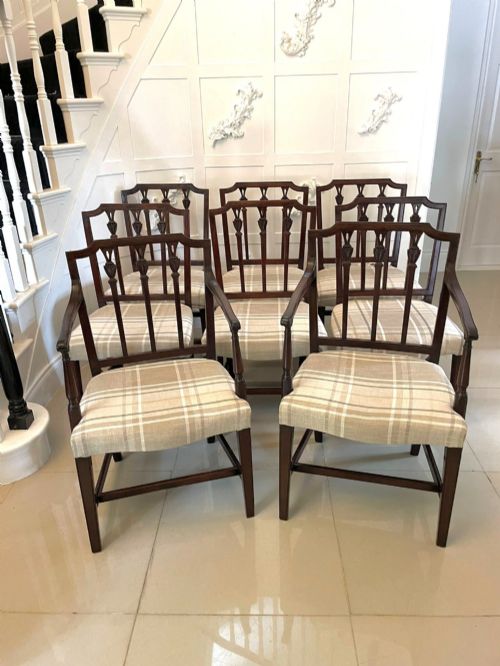
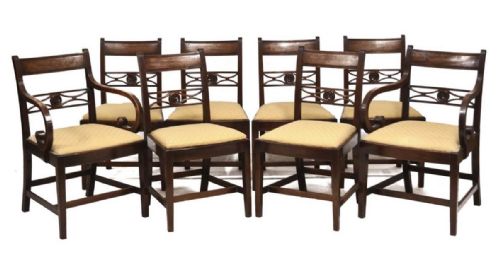
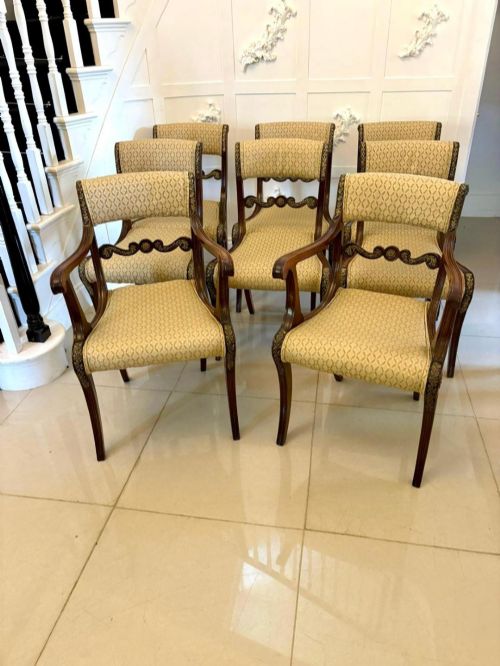
Georgian Mahogany Carver Chair
A georgian mahogany carver chair brings architectural grace and sturdy seating to a traditional interior through enduring timber construction and period arm designs.
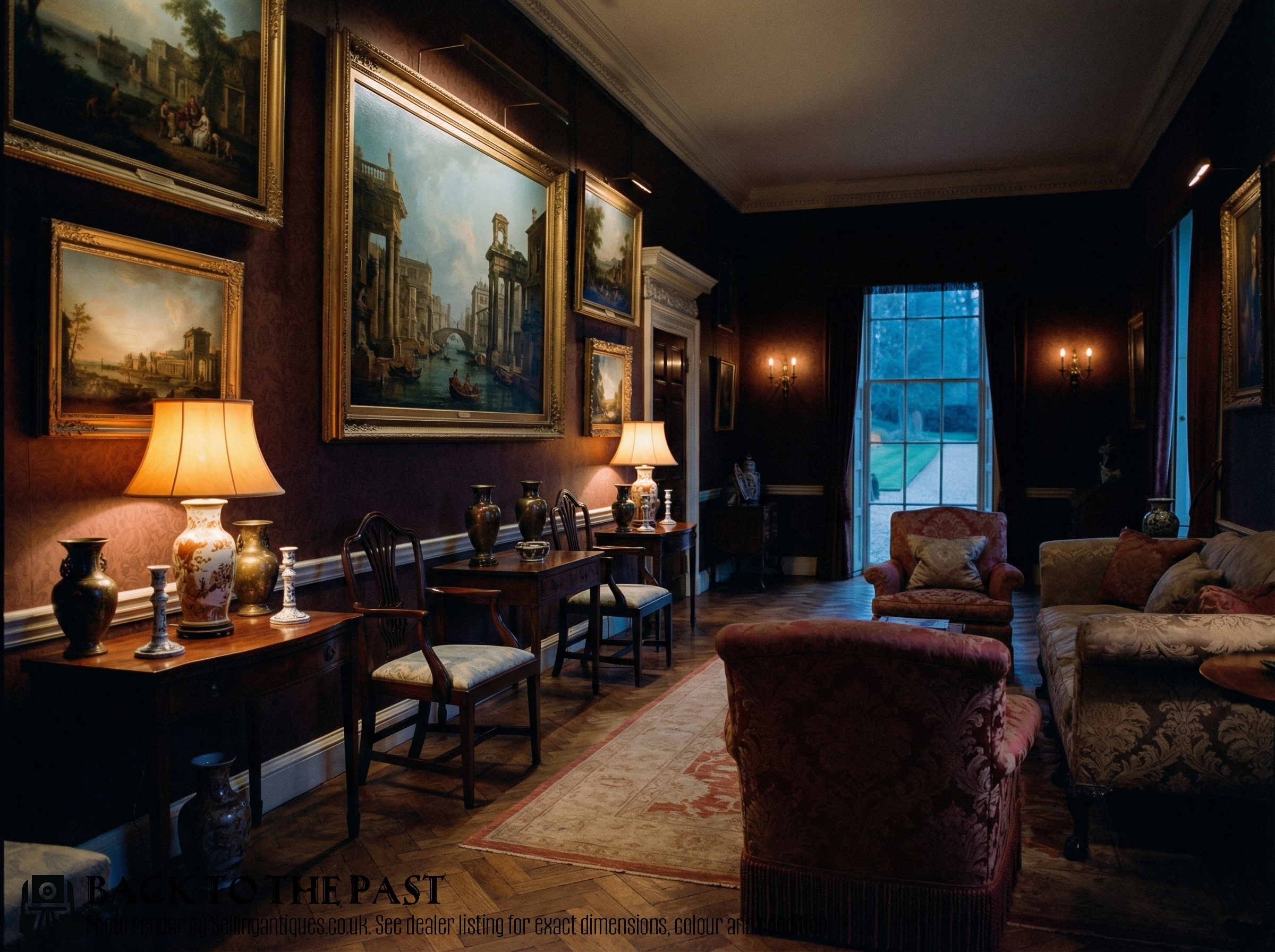
Georgian Mahogany Carver Chair
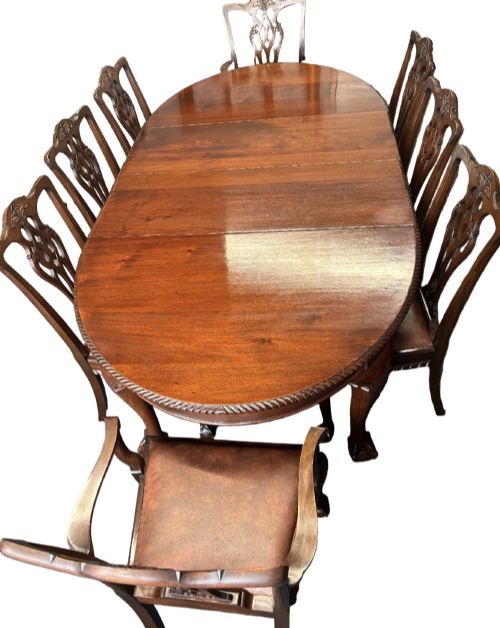
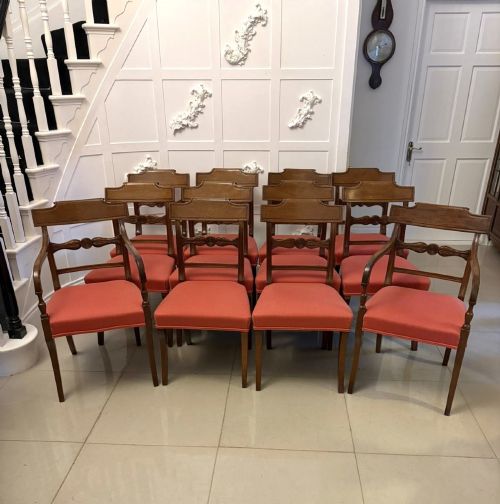
A georgian mahogany carver chair functions as an open armchair designed for the head of a dining table, a desk, or an occasional interior space. Buyers find these seating forms originating from the eighteenth century through the regency period, alongside later revival interpretations produced around nineteen hundred.
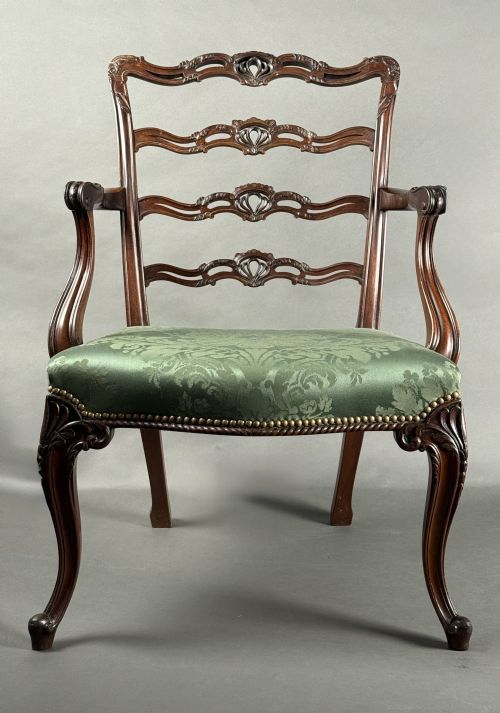
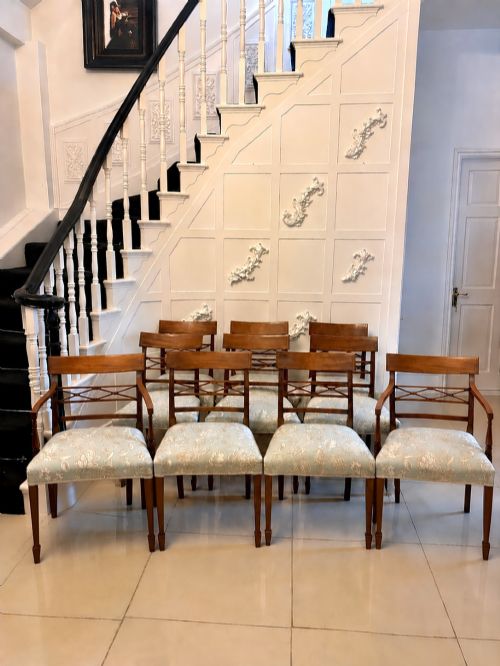
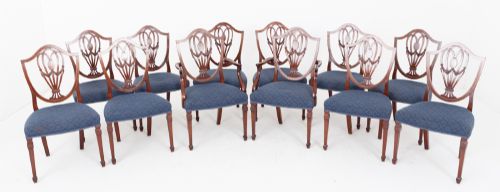
The inventory on this page ranges from individual library and desk armchairs to matched pairs and larger dining sets that include flanking carvers. Forms span shield back, ladder back, bar back, and carved splat designs influenced by cabinet makers of past centuries.
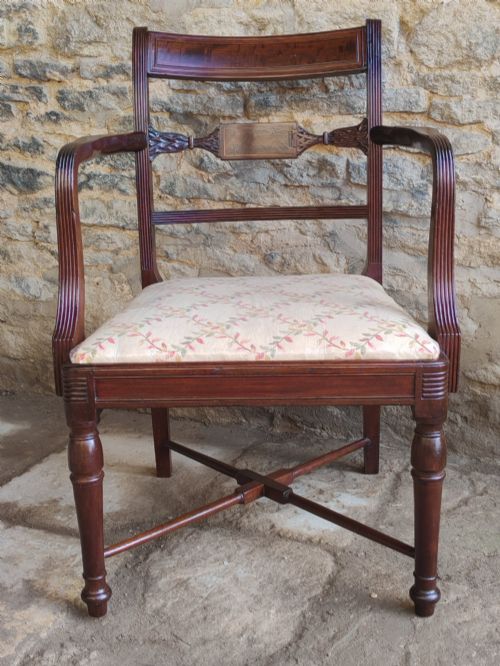
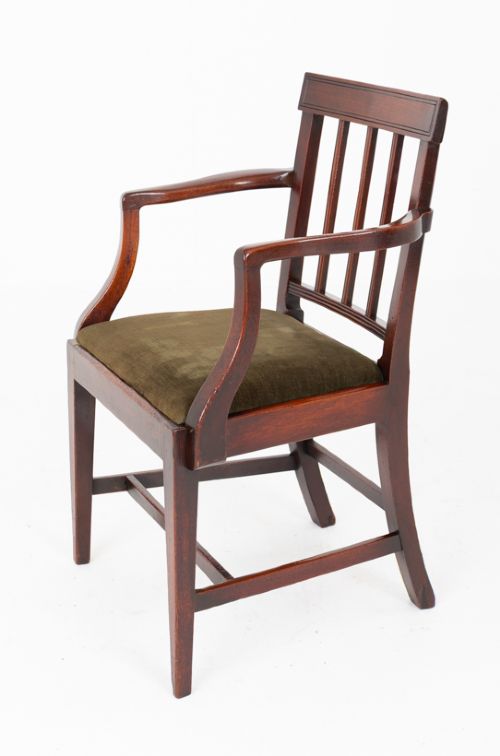
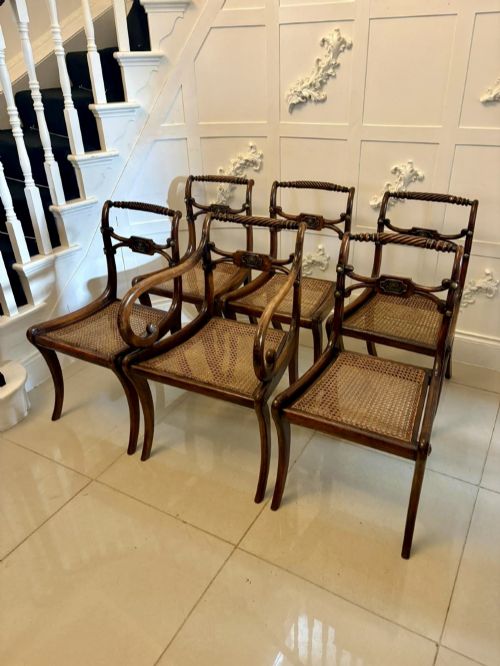
The wood timber shows deep reddish-brown grain patterns, shaped arm supports, and sturdy front legs. Upholstery choices in leather, fabric, velvet, or woven cane cover drop-in or fixed seat pads.

How They Were Made
Cabinet makers utilised dense imported mahogany timber for structural frames, jointing seat rails and uprights with mortise and tenon joinery. Decorative elements such as satinwood inlay, brass mounts, and carved scroll arms were applied by hand.
Seat frames often received drop-in wooden panels covered in leather, velvet, or upholstery fabric secured by tacks, while other variants incorporated woven cane inserts.
Georgian Mahogany Carver Chair Retail Price Guide 2026
Typical asking prices for georgian mahogany carver chair among the pieces listed under this phrase on Sellingantiques today, from the lower quarter to the upper quarter. They describe what is for sale here now, not the wider market.
Listings feature mahogany frames spanning the eighteenth century, the regency era, and nineteen-hundred revivals.
What Varies in Quality
Timber selection and grain density determine the primary grade of a frame, with dense stock holding crisp carved details better than softer alternatives. Period pieces from the eighteenth century demonstrate hand-cut joinery and integrated structural wear that distinguishes them from later revival copies.
The complexity of the back splat and arm geometry separates standard workshop output from exhibition grade seating. Original surface patination and intact structural framing elevate the standing of surviving examples.
Waring and Gillow·Gillows
The Georgian Mahogany Carver Chair Glossary
- Carver
- An open armchair with wooden elbow supports, traditionally placed at the head of a dining table. These pieces match smaller single chairs in a set.
- Splati
- The vertical wooden slat positioned in the centre of a chair backrest. Makers carved and pierced this element into ribbon, ladder, or shield shapes.
- Elbow chair
- An alternative term for an armchair or carver featuring supportive side arms. The phrase appears frequently in nineteenth-century and period records.
- Bar back
- A horizontal curved wooden rail spanning the uprights of a chair back. Regency examples frequently incorporate this supportive architectural member.
- Drop-in seat
- A removable wooden frame padded and covered in fabric or leather that rests inside the seat rails. This construction allowed easy reupholstery without dismantling the main frame.
Georgian Mahogany Carver Chair: Frequently Asked Questions
What is a carver chair?
A carver chair is an armchair designed to match a set of dining chairs, traditionally used at the head of a dining table. These pieces feature supportive wooden armrests integrated into the side rails.
Beyond the dining room, they served as desk chairs or occasional seating in studies and morning rooms.
How do I identify a Georgian chair?
Georgian chairs display dense mahogany timber, hand-cut joinery, and specific backrest geometries such as pierced splats or shield outlines. Period examples date from the eighteenth to early nineteenth century.
Revival pieces from around nineteen hundred imitate these proportions but display machine-cut elements and different wood conditioning under magnification.
Were carvers used at desks?
Cabinet makers built sturdy elbow chairs specifically for writing desks and libraries alongside dining use. These frames often incorporated leather upholstery or revolving mechanisms for office work.
Their open arm design allowed comfortable seating while managing ledgers or correspondence.