
Georgian Open Arm Chair
When you search for a georgian open arm chair, you seek a seat that combines 18th-century cabinet-making with an airy, structural frame designed for the parlour or study.

Georgian Open Arm Chair
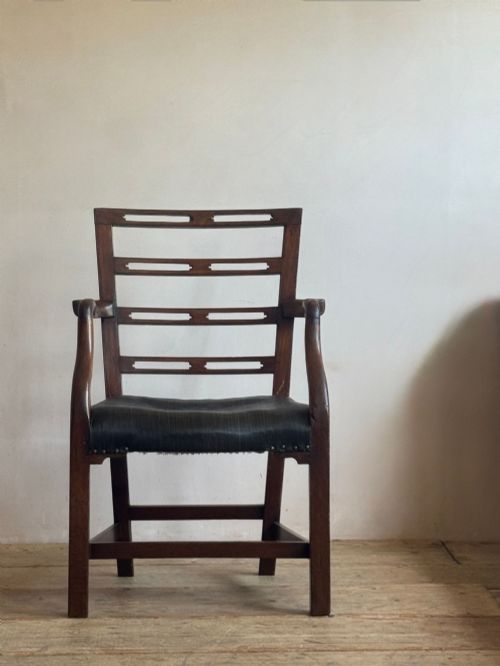
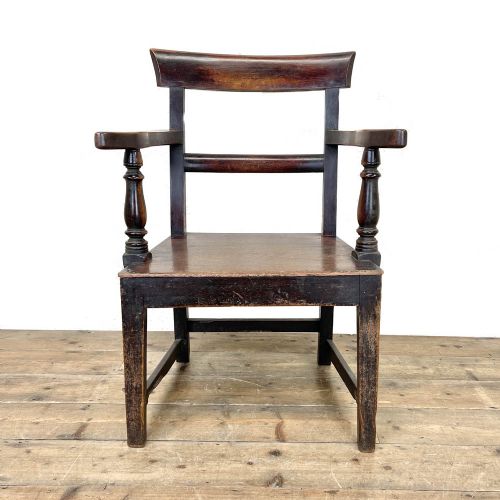
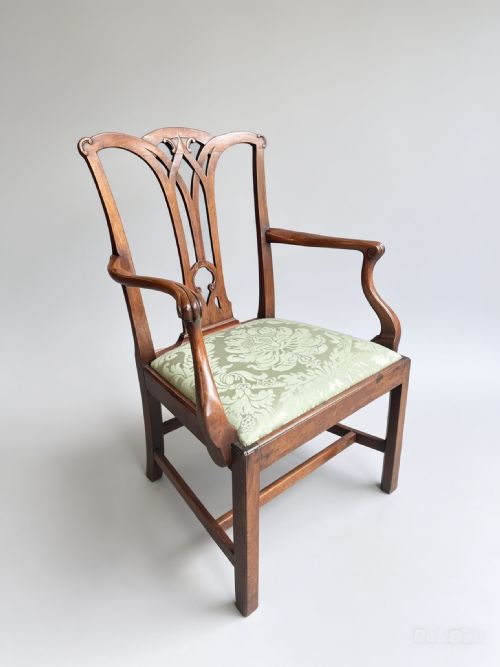
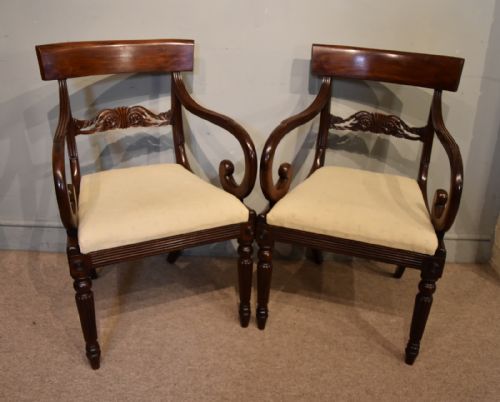
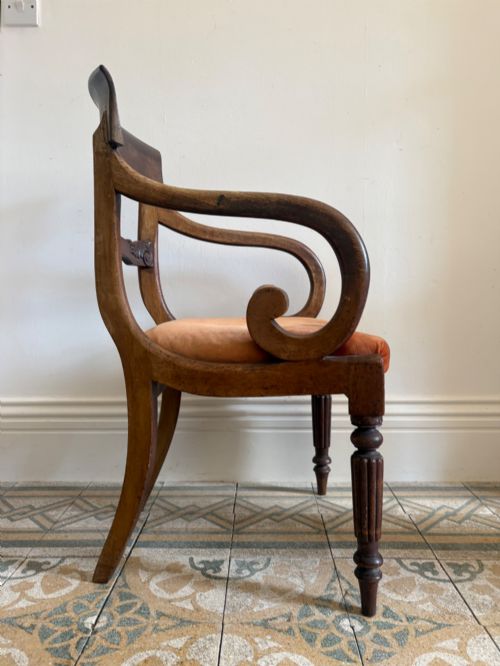
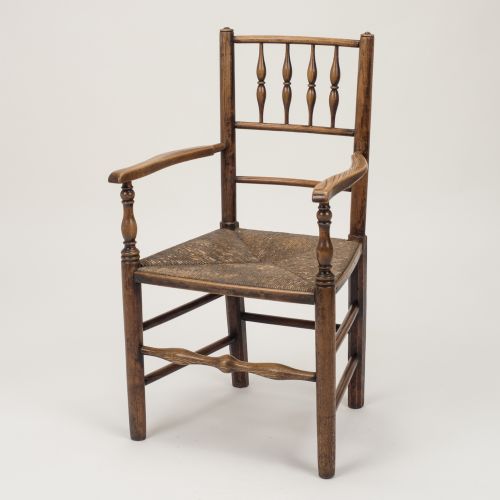
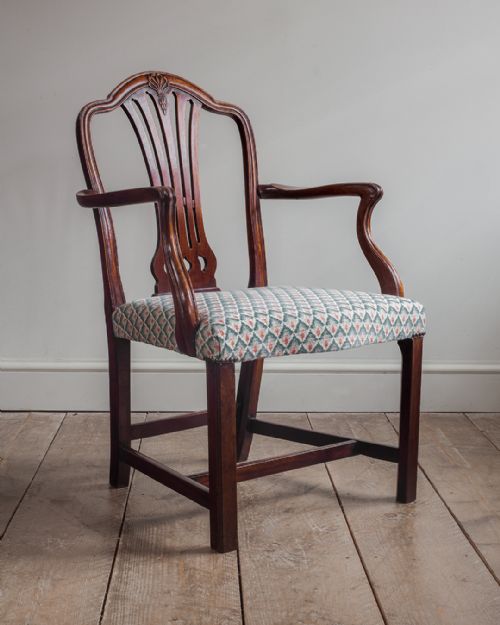
A georgian open arm chair is a seating form defined by its exposed wooden arms, emerging primarily from 18th-century workshops through to the Regency period and later revivals. Buyers encounter examples ranging from formal mahogany library chairs to country elm ladder-backs and spindle-backs.
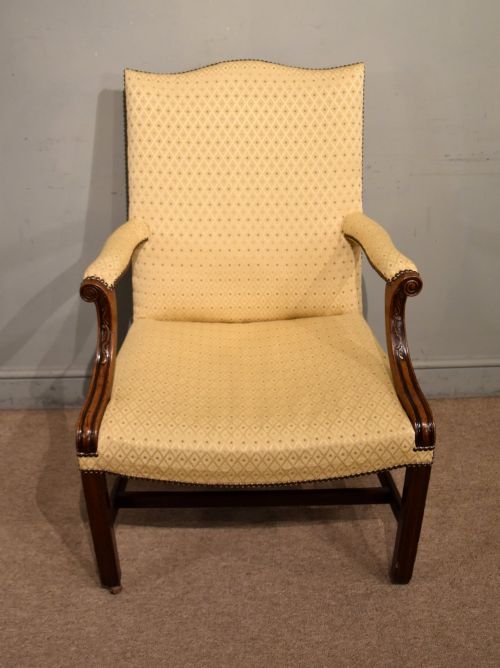
The category encompasses reading chairs, Gainsborough chairs, and desk elbow chairs created for domestic comfort and polite conversation. Many survive in pairs or single library formats, utilising distinctive regional timbers and refined upholstery.
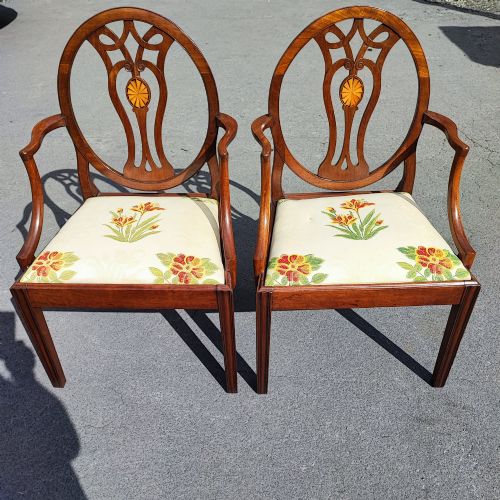
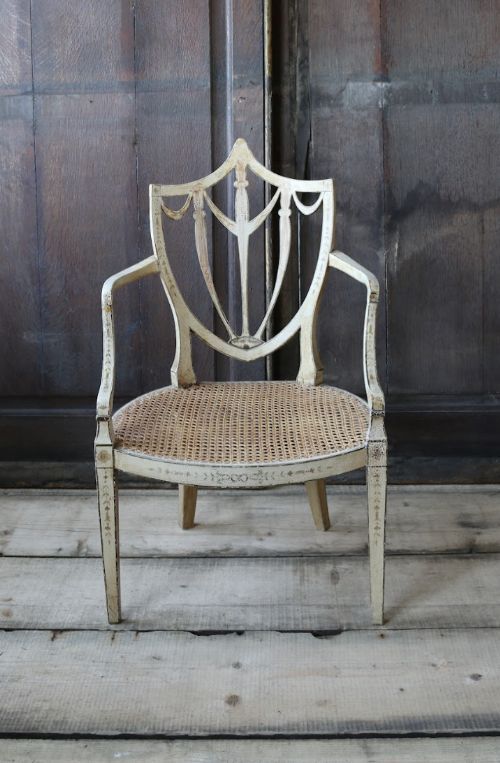
Forms span the heavy George II proportions through the lighter neoclassical lines associated with Hepplewhite and Sheraton. Later Victorian and Edwardian revivals continue these classical shapes using the same traditional joinery.
How They Were Made
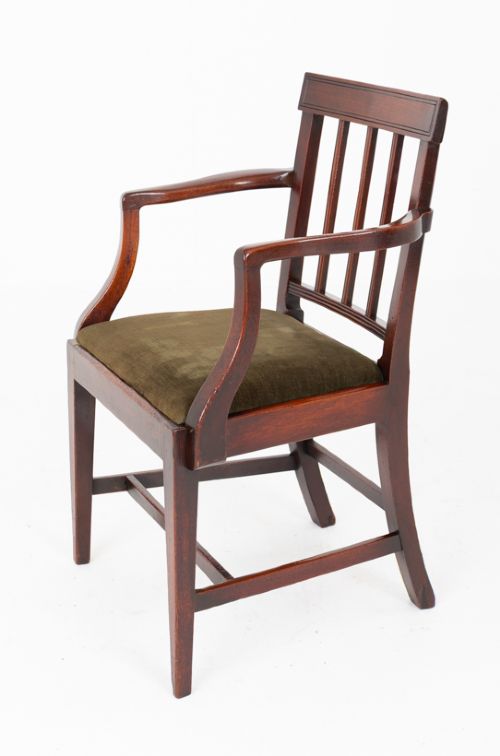
Mahogany, oak, elm, walnut, and yew form the primary structural timbers, selected for strength in slender framing and carved detailing. Cabinet-makers utilised mortise and tenon joints to secure the arms and legs, often reinforcing stress points with corner blocks.
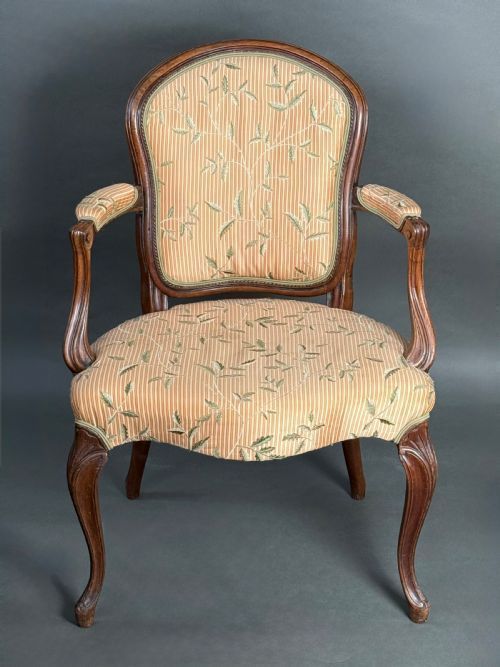
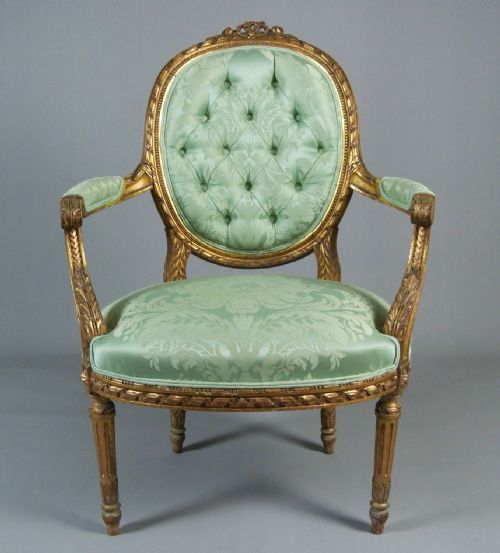
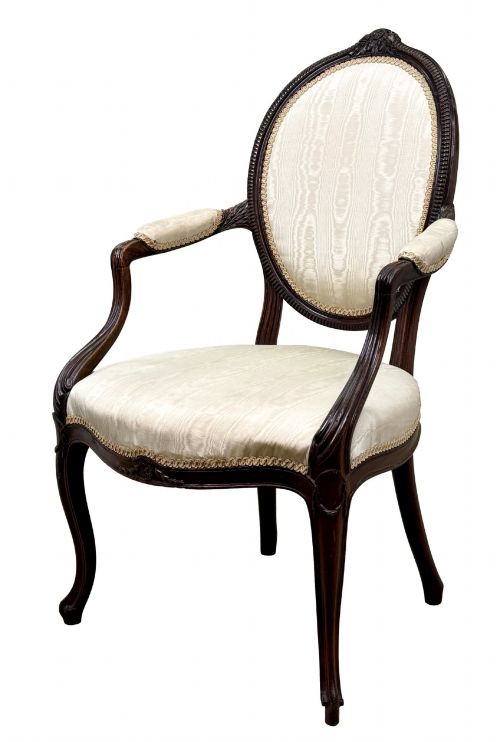
Upholstery methods varied from drop-in rush and woolwork seats to elaborate silk, leather, and linen coverings secured with brass tacks. Giltwood, painted finishes, and inlaid brass details further embellished formal library and salon models.
Georgian Open Arm Chair Retail Price Guide 2026
Typical asking prices for georgian open arm chair among the pieces listed under this phrase on Sellingantiques today, from the lower quarter to the upper quarter. They describe what is for sale here now, not the wider market.
Listings feature mahogany predominantly, alongside oak, elm, walnut, and painted wood forms spanning the 18th to early 20th centuries.
What Varies in Quality
Quality rests upon the crispness of the hand-carved fretwork, the weight and grain of the primary timber, and the architectural harmony of the arm supports. Finer pieces demonstrate precise joinery where the arm meets the upright post without awkward pinning.
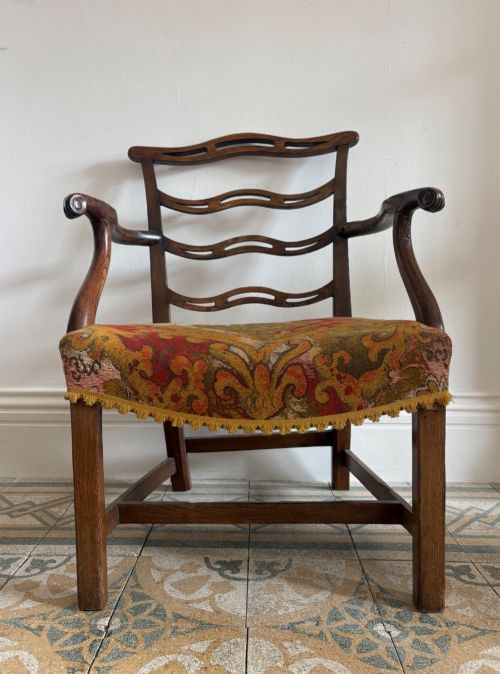
The integrity of the original frame structure dictates the tier of the piece, alongside the presence of period upholstery materials such as tapestry or velvet. Subtle differences in the sweep of the backrest and the proportion of the legs separate standard domestic seating from elite library examples.
Thomas Chippendale·Giles Grendey
The Georgian Open Arm Chair Glossary
- Gainsborough chair
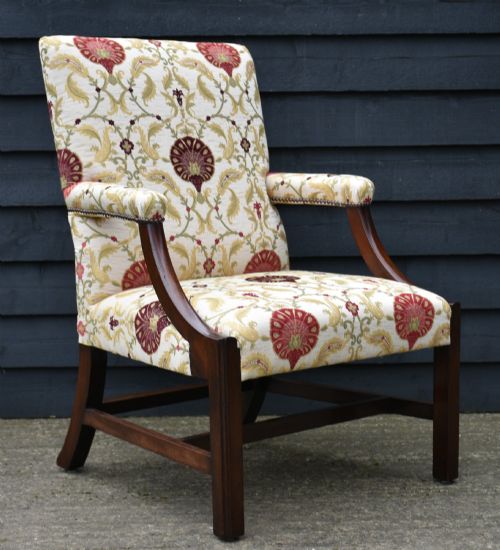
- A fully upholstered armchair with an open frame and padded armrests, designed during the mid-18th century for writing desks and libraries. These seats typically feature mahogany legs and straight stretchers.
- Carver chair
- An armchair traditionally placed at the head of a dining table or utilised as a desk seat, matching a set of side chairs. They provide sturdy open arms for formal dining spaces.
- Ladder-back
- A chair back featuring horizontal arched slats between the vertical stiles, common in country workshops using elm and oak. This construction offers lightweight durability.
- Shield-back
- A neoclassical chair back shaped in the outline of a shield, popularized by Hepplewhite designs in the late 18th century. It frequently incorporates carved wheat ears or drapery motifs.
- Drop-in seat
- A removable wooden frame supporting webbing and upholstery, designed to drop directly into a rebated seat rail. This method simplified recovering and cleaning.
Georgian Open Arm Chair: Frequently Asked Questions
What is a Gainsborough armchair?
A Gainsborough armchair is a wide, upholstered seat with open wooden arms, designed specifically for writing desks and library use during the 18th century.
These pieces feature padded armrests and exposed mahogany frames, offering a comfortable seat without the bulk of a full wingback.
How do I distinguish country chairs from formal ones?
Country examples rely on native timbers like elm, oak, and ash, often featuring rush seats, spindle backs, or ladder backs rather than carved mahogany.
Formal versions utilise imported mahogany, elaborate fretwork, and upholstered silk or leather, reflecting urban cabinet-making standards.
Were these chairs used at dining tables?
Armchairs were traditionally placed at the heads of dining tables as carvers, accompanied by matching side chairs for guests.
They also served multiple domestic functions in bedrooms, hallways, and studies as occasional desk or dressing table seats.
How do I identify a Regency period chair?
Regency seating incorporates classical Greek and Roman motifs, often showing painted and gilt finishes, sabre legs, or inlaid brass details.
These 19th-century designs favour clean, austere lines and dark mahogany timbers over the earlier Rococo carving.