
18th Century Open Armchair
An 18th century open armchair brings architectural timber and period upholstery together to ground a room with genuine age and utility.
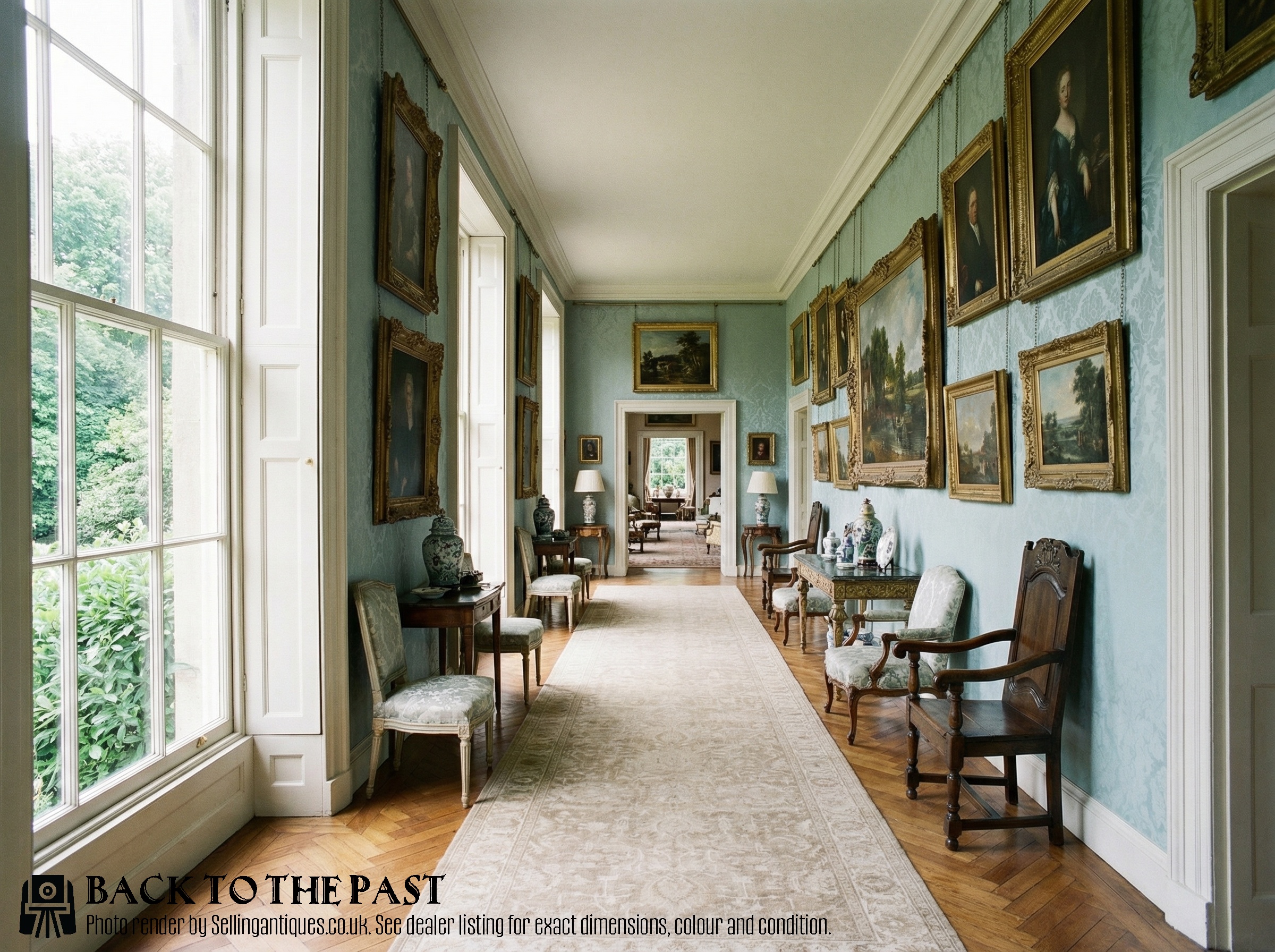
What an 18th century open armchair is
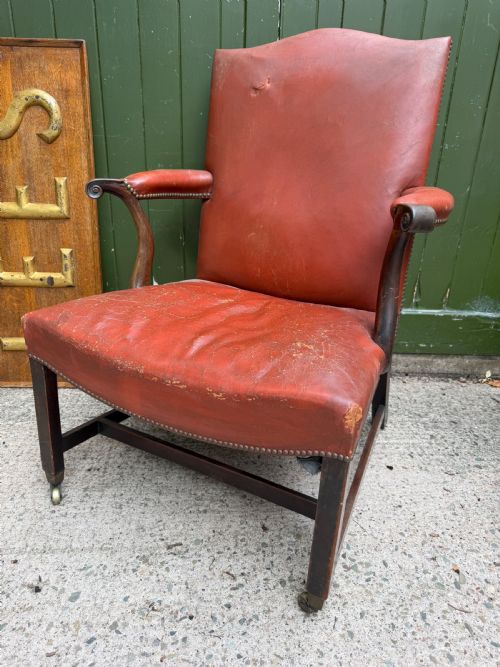
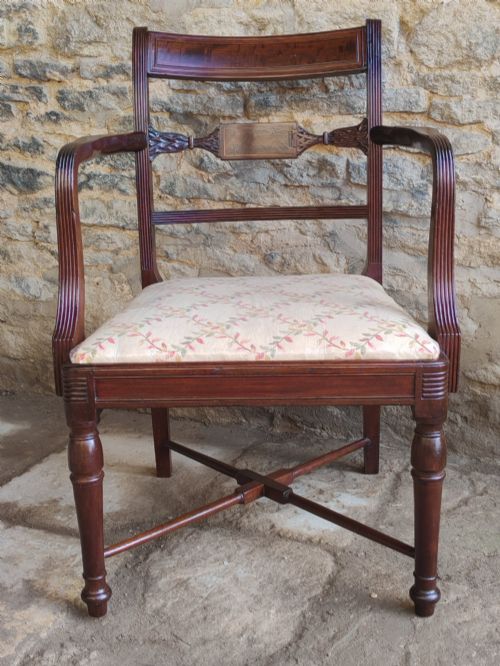
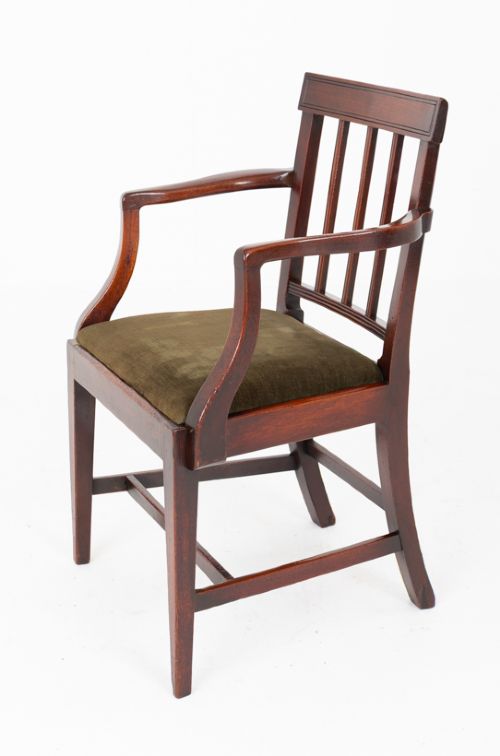
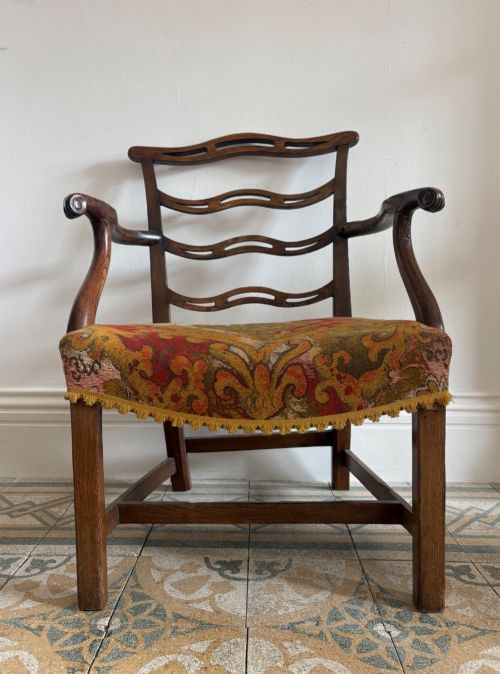
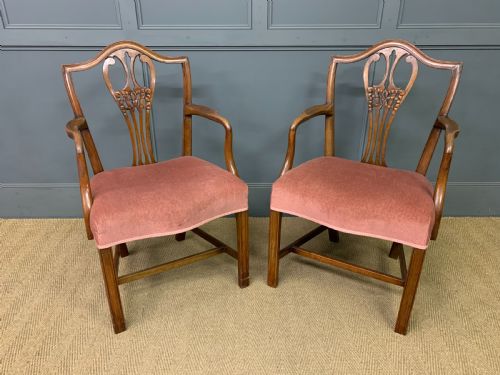
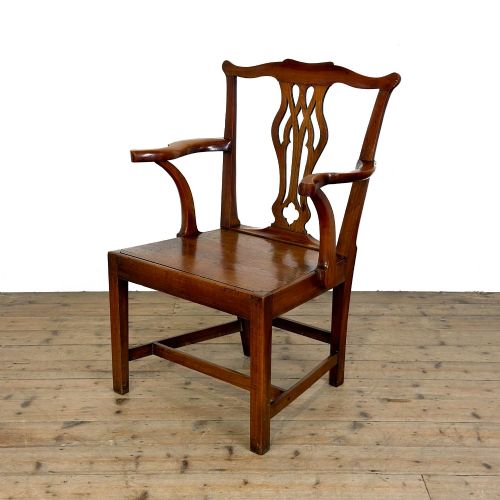
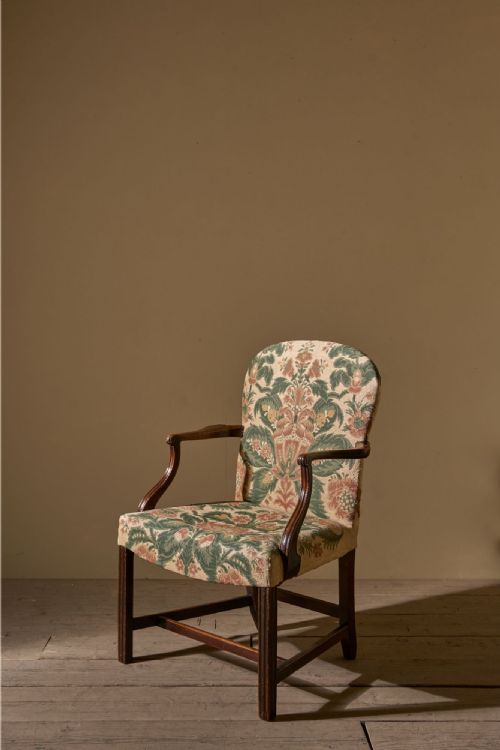
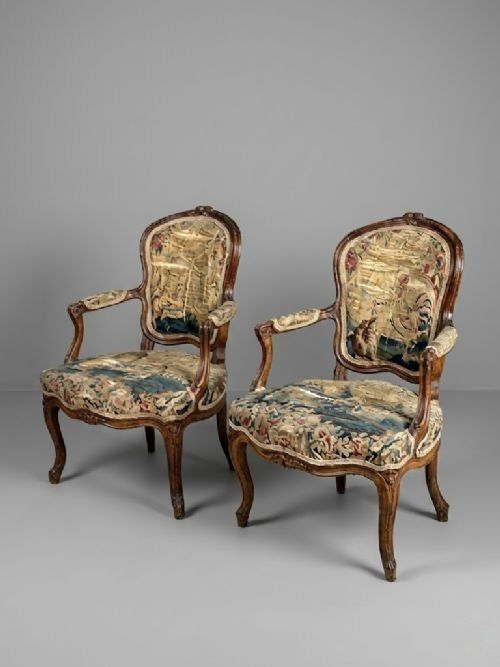
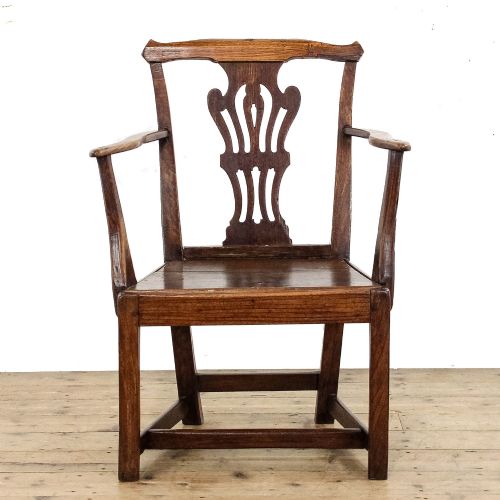
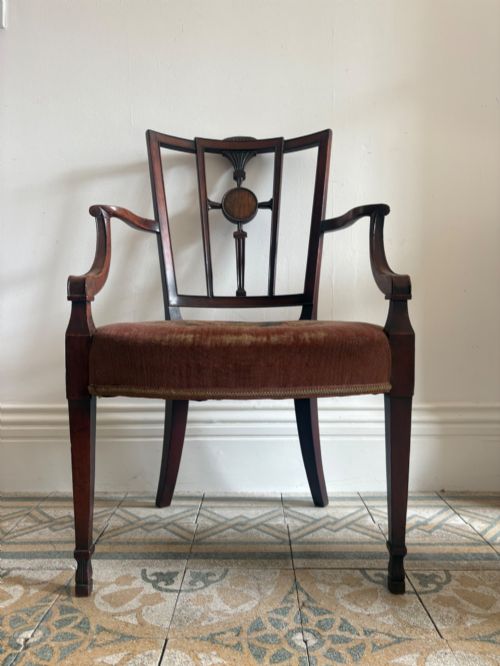
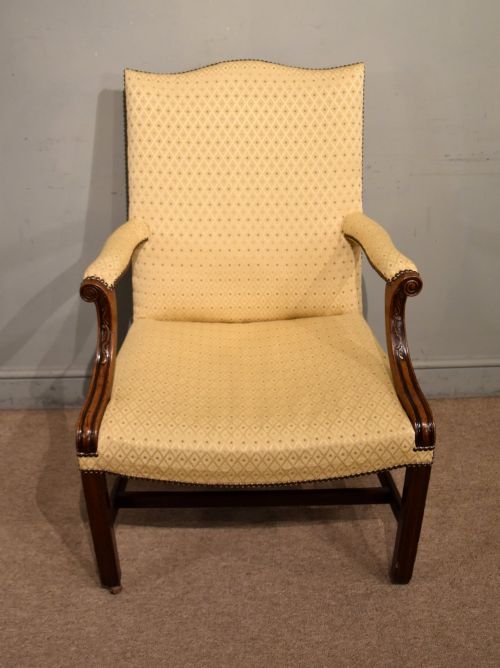
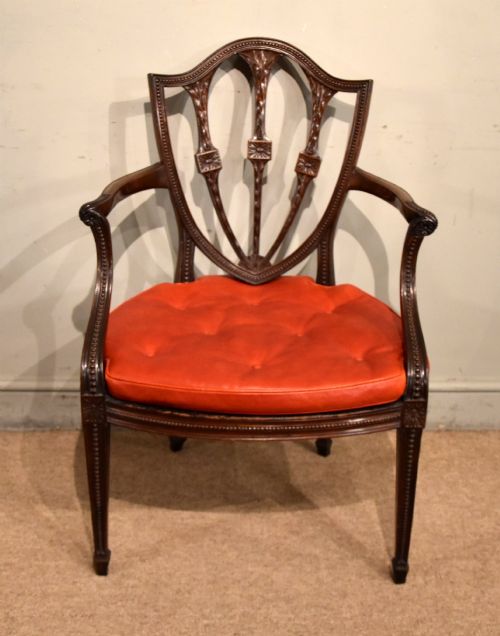
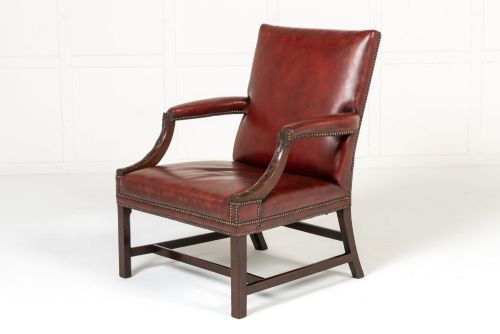
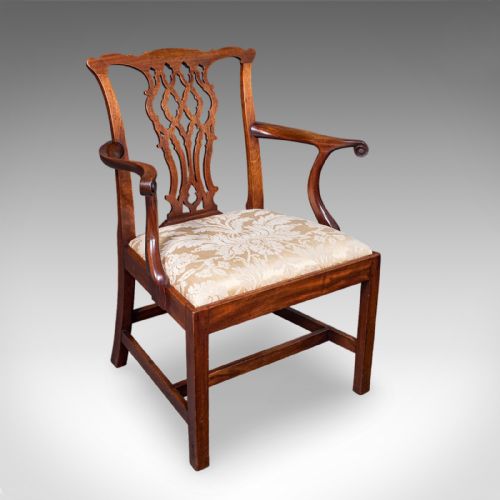
The 18th century open armchair covers seating designed with upholstered or exposed wooden armrests, intended for libraries, drawing rooms and parlours. These chairs survive in forms ranging from substantial George II library seats to lighter George III satinwood designs and regional Welsh oak examples.
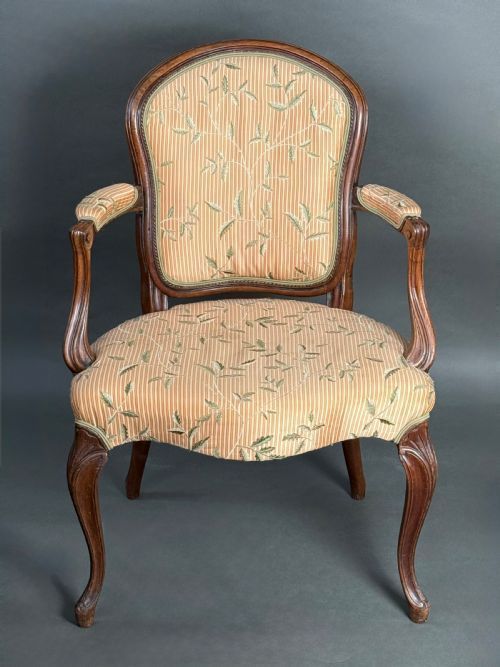
The pieces listed on this page cross walnut, mahogany, oak and cherry wood, reflecting the diverse cabinet-making traditions of the era. Buyers encounter proportions designed for gentlemanly reading or formal entertaining, often retaining later silk, fabric, leather or velvet upholstery.
Regional variations appear alongside metropolitan cabinet work, including Irish walnut frames and Scottish proportions. Each piece demonstrates the structural priorities of its decade, balancing open arms with robust underframes.
How they were made
Makers utilised dense timbers such as mahogany, walnut and oak, selecting grain patterns to give visual depth to the frame. Structural stability relied on pegged mortise and tenon joinery within the seat rails and back supports.
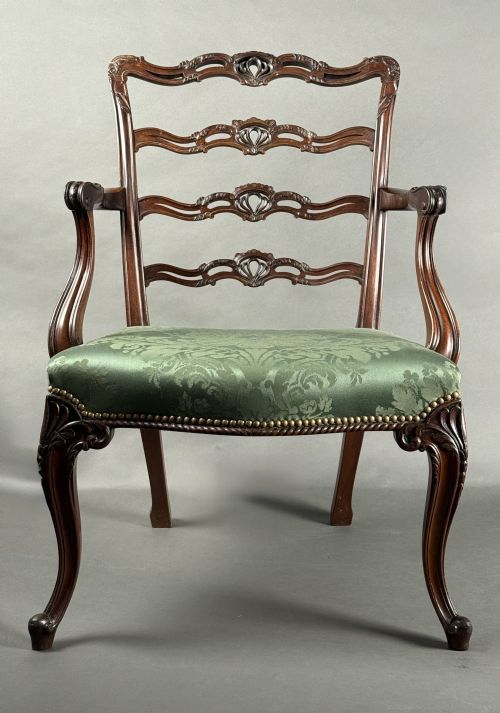
Carving was executed directly into the solid wood of the arms, legs and crest rails, employing techniques like blind fretting or moulded shaping. Upholstery materials including horsehair and webbing were built up over traditional frames before securing the outer fabric with brass tacks.
Retail Price Guide 2026
Typical UK retail prices for 18th century open armchair, calculated from the Sellingantiques database of over a million retail prices indexed since 2003. This retail price guide relies exclusively on Sellingantiques data; no external sources or auction records are used, so the figures do not describe the wider market.
Listings feature mahogany, walnut, oak, cherry wood, and satinwood alongside upholstery in silk, velvet, leather, and fabric.
What varies in quality
The distinction between standard and exceptional pieces rests on the crispness of the timber carving and the architectural ambition of the frame. Superior chairs display fluent proportions in the sweep of the armrests and the stance of the cabriole or straight legs.
Conservation history also dictates distinction, as frames retaining their original timber patination and minimal structural alteration hold greater integrity. The integration of secondary woods and the harmony between the carved decoration and the overall form separate competent joinery from master cabinet-making.
Robert Manwaring·Colefax and Fowler
The 18th Century Open Armchair Glossary
- Gainsborough chair
- A type of wide, upholstered armchair with open padded arms, short cabriole or straight legs, and a low back designed for library use.
- Cabriole leg
- A furniture leg that curves out at the knee and tapers inward to an ankle, mimicking an animal limb. It was widely used throughout the 18th century.
- Wainscot
- A heavy wooden chair type constructed from oak, featuring panelled backs and solid wooden seats reflecting earlier 17th-century vernacular traditions.
- Satinwood
- A pale, lustrous timber imported from the tropics, utilised during the later 18th century for refined neoclassical furniture frames and inlay work.
Frequently Asked Questions
How do I identify a genuine 18th century open armchair?
Examine the timber patination, hand-cut joinery methods, and the weight of the wood within the seat frame. Tool marks and timber shrinkage offer reliable indicators of period manufacture.
Compare the proportions and carving style against established regional traditions, noting that secondary woods should match the era of the main frame.
Were these chairs used at dining tables?
These open armchairs were principally designed for libraries, withdrawing rooms and parlours rather than dining use. Their generous arm widths required more space than standard dining arrangements allowed.
Library and reading chairs served gentlemen seeking comfortable seating for study, while lighter satinwood examples furnished fashionable drawing rooms.
How should I care for historic upholstery and wood?
Keep wooden frames away from direct sunlight and sudden temperature shifts to prevent timber splitting and veneer lifting. Maintain stable indoor humidity levels.
Vacuum fabric, silk, or velvet gently using a low suction attachment with a soft brush, and consult textile conservators for professional cleaning.
What is the difference between George II and George III styles?
George II pieces typically feature heavier proportions, robust walnut or mahogany frames, and prominent cabriole legs ending in pad or ball-and-claw feet. Carving leans towards robust architectural motifs.
George III designs shift towards lighter neoclassical lines, straight tapered legs, satinwood veneers, and slender open arm structures influenced by contemporary pattern books.