
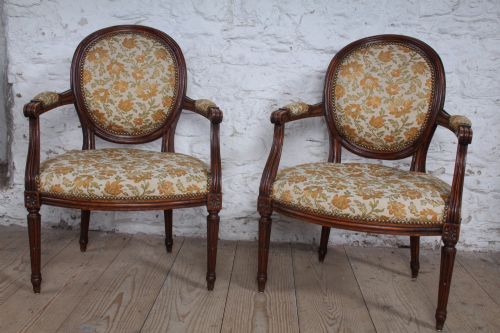
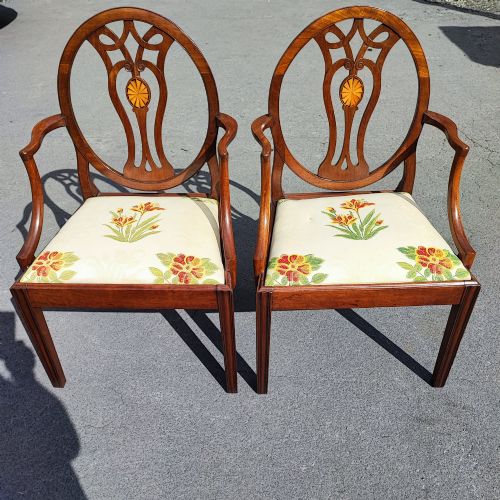
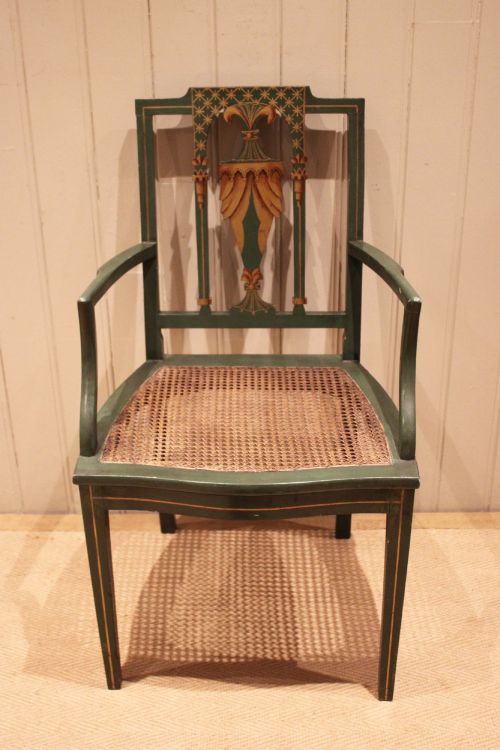
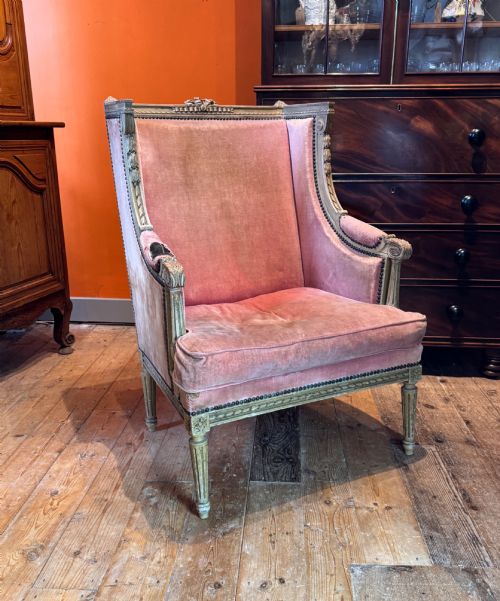
Neoclassical Armchair
A neoclassical armchair offers restrained symmetry and classical proportion, bringing structural clarity and refined seating to a room.
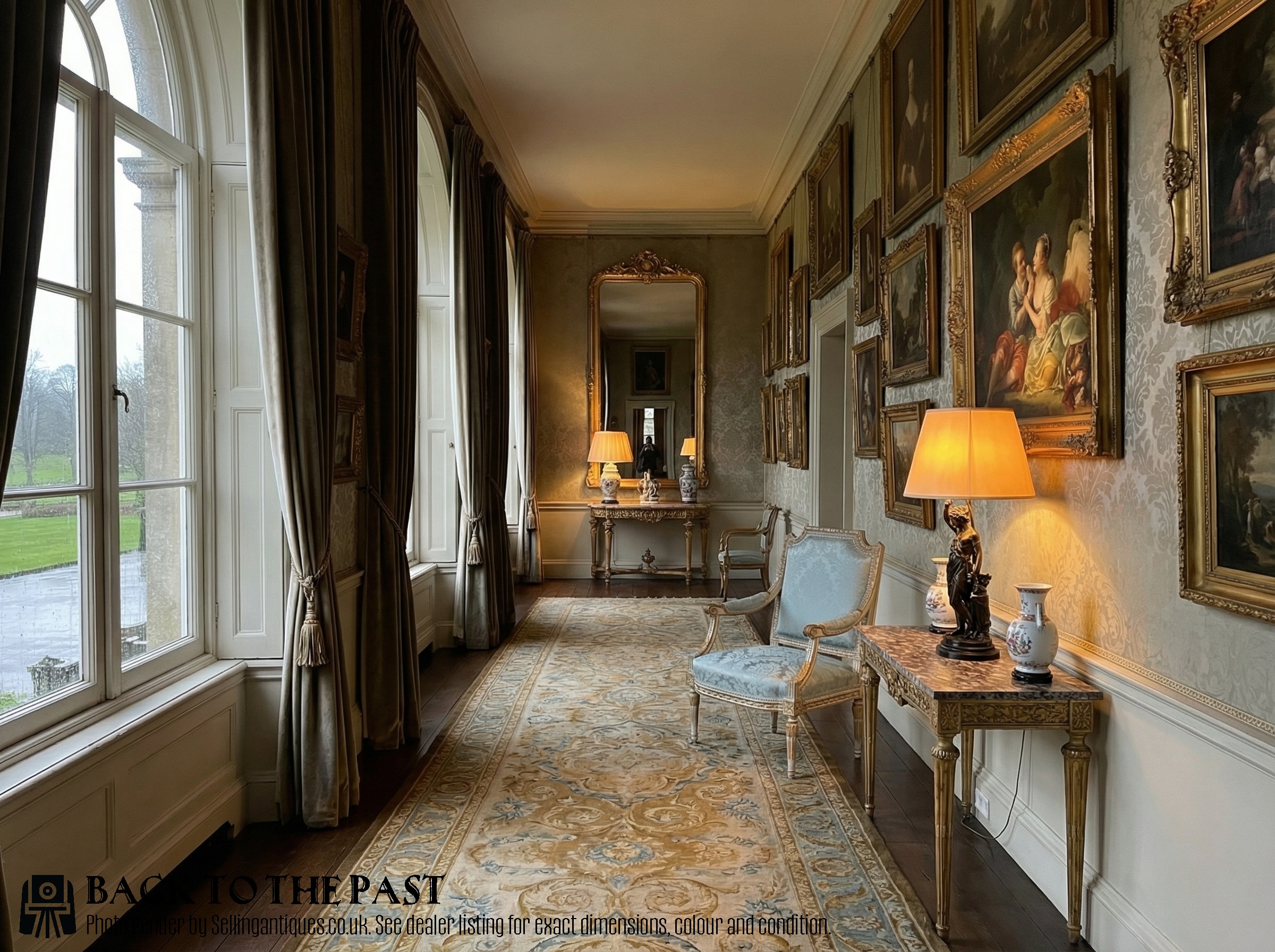
Neoclassical Armchair
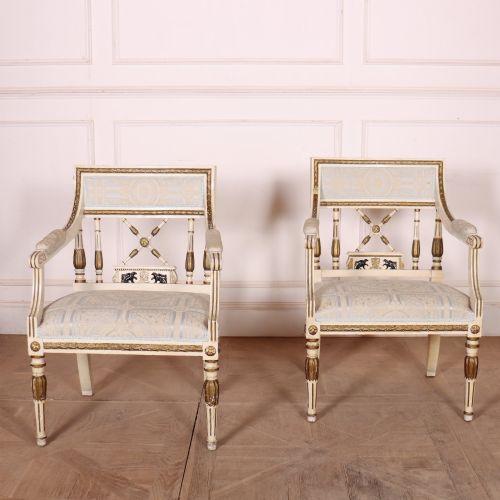
When searching for a neoclassical armchair, a buyer encounters seating shaped by eighteenth-century classical revival movements across England, France, Sweden, and Italy. The versions met most frequently on this page range from eighteenth-century George III and Louis XVI originals to later nineteenth-century revivals and early twentieth-century interpretations.
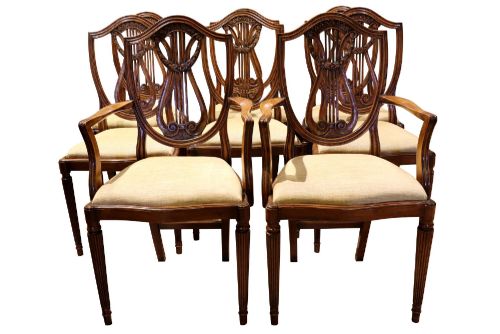
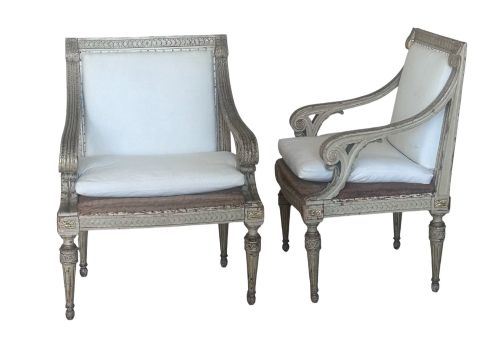
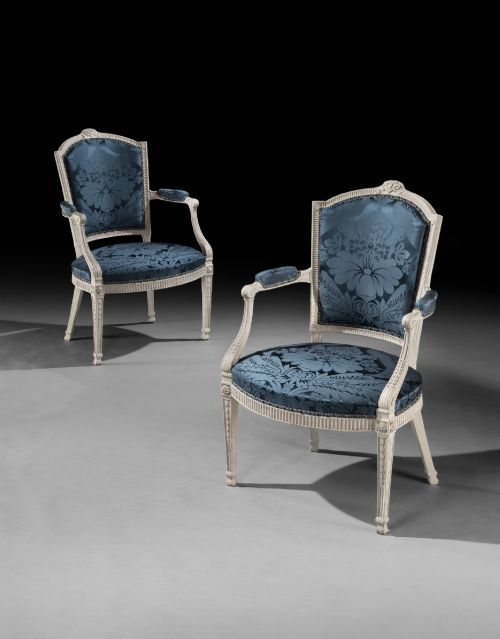
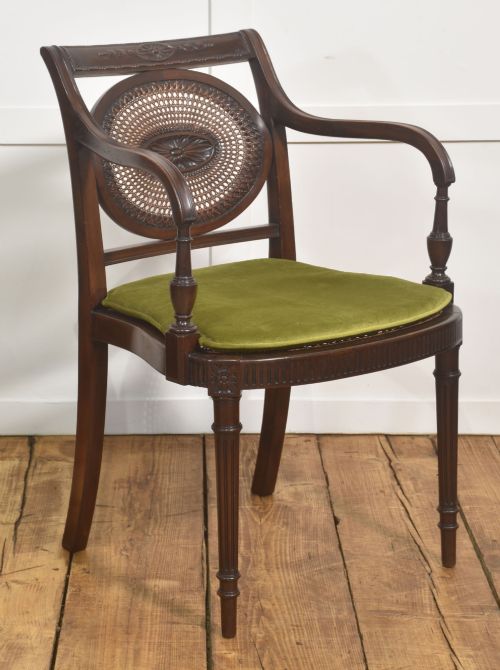
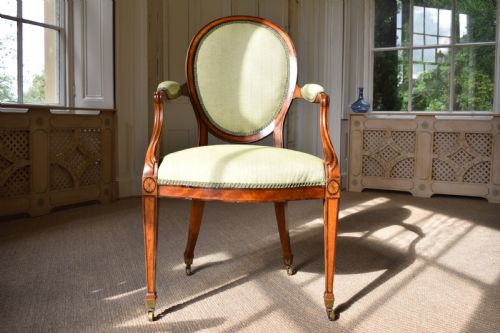
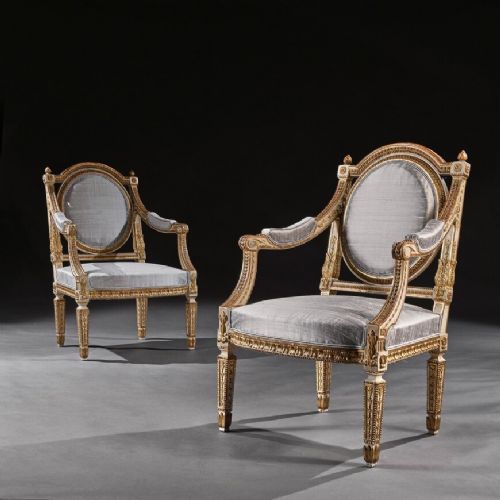
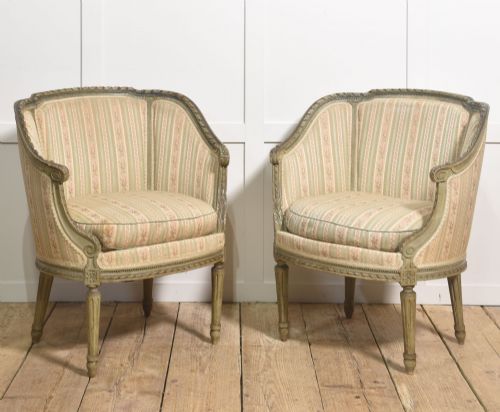
Forms include open armchairs, library armchairs, desk chairs, and salon chairs, alongside matched dining sets and occasional pairs. Materials span solid mahogany, satinwood, elm, birch, and giltwood, often paired with painted finishes, cane seating, or silk and velvet upholstery.
Materials and Construction
Joinery relies on solid hardwoods such as mahogany and elm, shaped through carving and turning to achieve straight tapered legs, fluted columns, and oval or shield backs. Structural stability is maintained through traditional mortise and tenon joints.
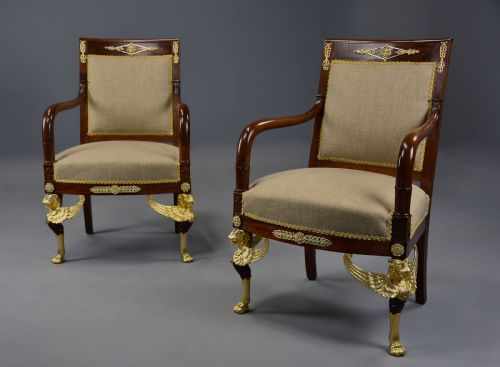
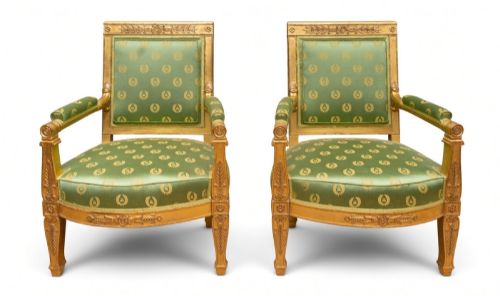
Surface treatments combine carved giltwood and parcel gilt finishes with hand-applied paint, inlay, and ormolu mounts. Upholstery incorporates traditional webbing and stuffing finished in contemporary or period textiles, tapestry, needlepoint, and silk damask.
Neoclassical Armchair Retail Price Guide 2026
Typical asking prices for neoclassical armchair among the pieces listed under this phrase on Sellingantiques today, from the lower quarter to the upper quarter. They describe what is for sale here now, not the wider market.
Listings span the eighteenth, nineteenth, and early twentieth centuries, featuring mahogany, giltwood, fabric, and painted wood forms.
Judging Quality
Quality rests upon the crispness of the carved detail and the integrity of the timber frame, distinguishing master workshops from standard production pieces. Superior examples exhibit balanced proportions, refined joinery, and original surface treatments such as untouched paint or genuine gilding.
The sophistication of decorative elements, from finely cast ormolu mounts to intricate inlay work and needlepoint panels, separates standard seating from exceptional works. Consistency within pairs or larger suites further determines the standing of a piece.
Jacob-Desmalter·Thomas Chippendale·Henri Jacob
The Neoclassical Armchair Glossary
- Fauteuil
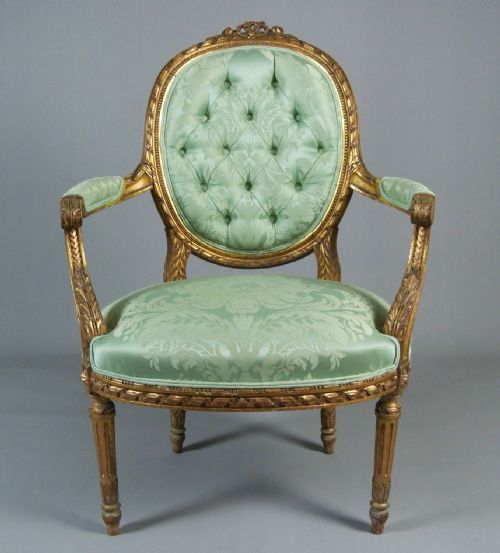
- An open-framed upholstered armchair with exposed wooden armrests originating in France. These chairs typically feature carved woodwork and padded arm supports.
- Giltwood
- Wood that has been coated with gold leaf or gold paint to create a lustrous decorative surface. This finish appears frequently on French and Italian pieces.
- Shield-back
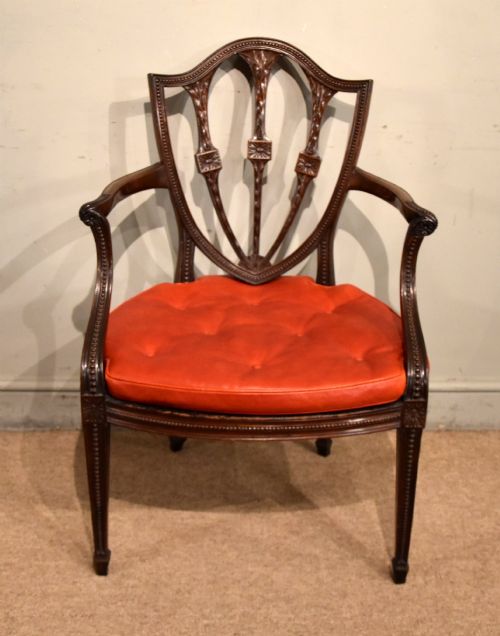
- A chair back shaped in the outline of a shield, popular during the late eighteenth century. This silhouette is closely associated with Hepplewhite designs.
- Ormolu
- Gilded bronze used for decorative mounts and furniture ornamentation. It provides metallic contrast against dark mahogany and painted timber.
- Lyre-back
- A chair back featuring an open splat shaped in the form of an ancient Greek lyre. This classical motif recurs in dining and armchair designs.
Neoclassical Armchair: Frequently Asked Questions
How do I identify a neoclassical armchair?
Look for straight tapered legs, symmetrical geometric proportions, and classical motifs such as urns, fluting, and laurel wreaths. The overall silhouette prioritises clean architectural lines over the curving asymmetry of earlier rococo designs.
Examination of the timber and joining methods helps determine whether the piece is an eighteenth-century original or a later revival dating from the nineteenth or twentieth century.
Are these chairs suitable for daily use?
Many solid hardwood armchairs are structurally robust enough for regular seating, provided the joints remain sound and stable. Library and desk variants offer comfortable proportions for working or reading.
Delicate giltwood or antique upholstered pieces with fragile silk or tapestry coverings require more careful placement to preserve their historical fabrics and decorative finishes.
How do French and English styles differ?
French designs from periods like Louis XVI and the Empire often feature painted, gilt, or parcel-gilt surfaces alongside exposed carved frames and upholstered medallion backs. They lean towards grand decorative presence.
English George III and Sheraton pieces frequently highlight the natural grain of mahogany or satinwood, utilising subtle inlay, cane seating, and restrained classical geometry.
What does revival style mean?
Revival pieces are items manufactured in later periods, such as the late nineteenth or early twentieth century, that deliberately emulate the aesthetics of earlier eras like Louis XVI or the Regency. These pieces apply historical design vocabulary using the manufacturing techniques of their own time.
They offer the visual character of older periods while often providing greater structural durability for contemporary interiors.