
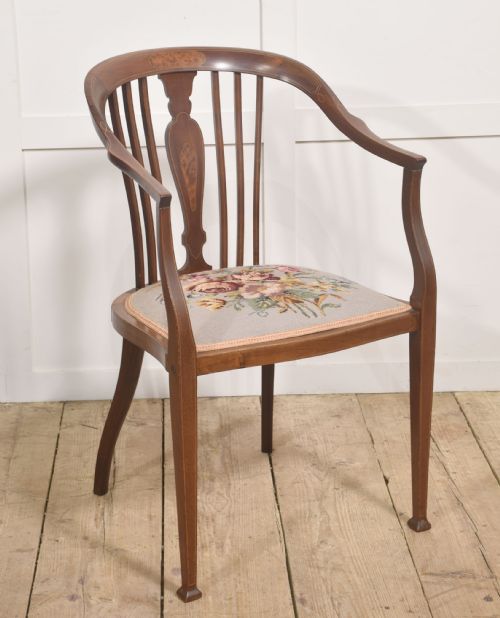


Satinwood Desk Chair
A satinwood desk chair brings figured timber and refined form to a working space, offering a distinct alternative to standard mahogany.
What these pieces are
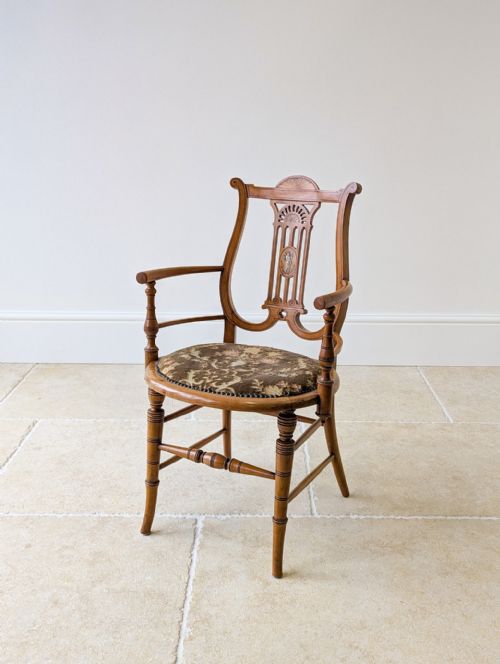
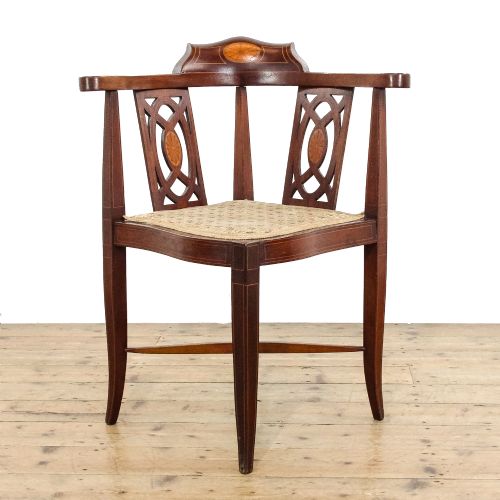
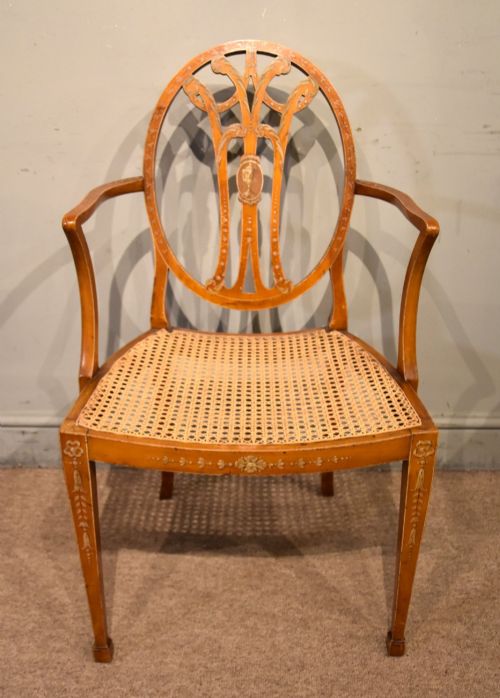
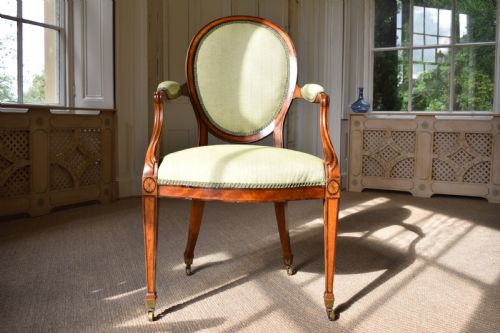
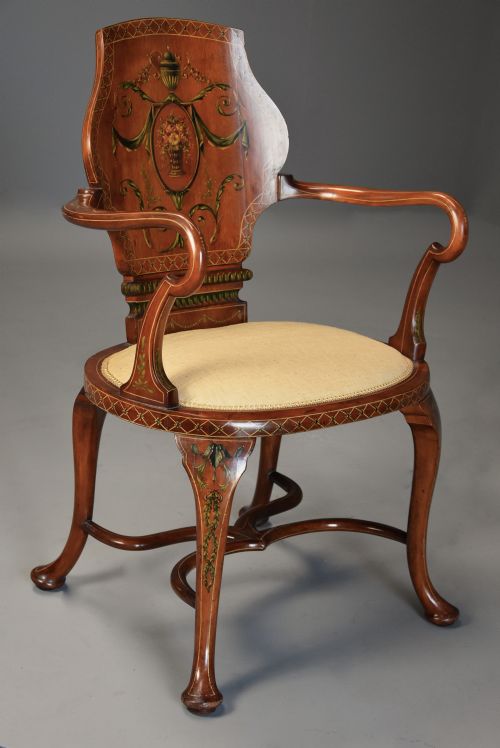
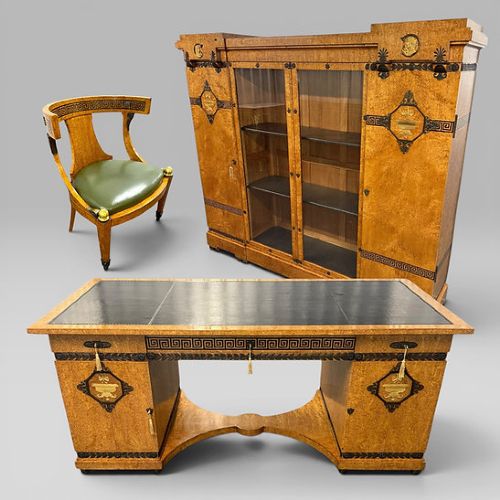
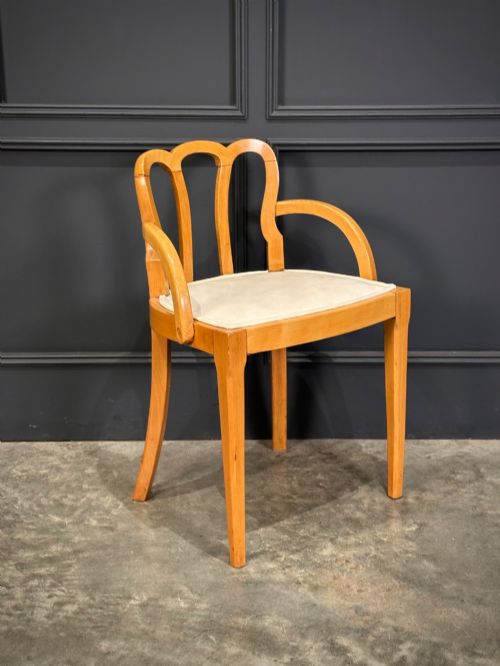
When you search for a satinwood desk chair, you encounter seating designed for writing tables and libraries, largely drawing on George III, Sheraton Revival, Victorian, Edwardian, and Art Deco idioms. The forms include open armchairs, elbow chairs, lyre-back designs, and shield-back shapes alongside painted bedroom chairs.
The material character defines the group, featuring light timber alongside marquetry, inlay, and occasional painted decoration. You find examples spanning the nineteenth century through to the early twentieth century, including pieces produced around eighteen hundred, eighteen thirty, eighteen eighty, eighteen ninety, and nineteen thirty.
How they were made
The construction relies primarily on satinwood, occasionally complemented by mahogany and other woods, shaped into open armchairs and desk chairs. Artisans incorporated structural and decorative elements in brass, cane, and fabric upholstery.
Surface ornamentation involved marquetry and delicate painting directly onto the timber, alongside inlaid details that accentuated the grain. Joinery traditions ranged from George III cabinet-making principles through to Sheraton Revival interpretations and Arts and Crafts workshop methods.
Retail Price Guide 2026
Typical UK retail prices for satinwood desk chair, calculated from the Sellingantiques database of over a million retail prices indexed since 2003. This retail price guide relies exclusively on Sellingantiques data; no external sources or auction records are used, so the figures do not describe the wider market.
The recorded pieces combine satinwood with fabric, brass, and cane across Edwardian, Victorian, and George III stylistic revivals.
What varies in quality
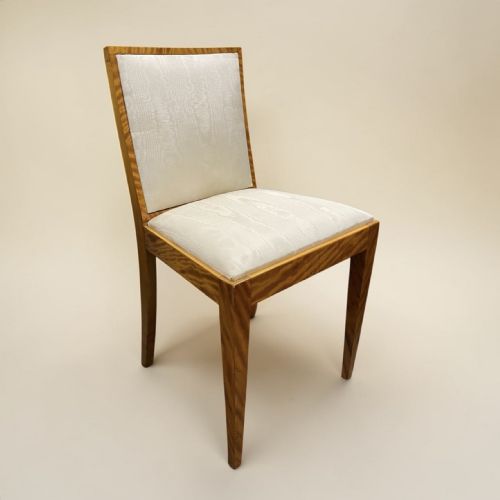
The distinction between standard output and finer work rests on the selection and figuring of the satinwood timber itself. Rich grain patterns and crisp execution of marquetry or painted motifs elevate an ordinary seat into a more sophisticated piece.
Construction integrity and fidelity to historical styles, such as Sheraton Revival or George III precedents, dictate the refinement of the form. The subtlety of the carving or inlay work separates basic utility seating from pieces with a stronger decorative presence.
The Satinwood Desk Chair Glossary
- Satinwood
- A dense, lustrous tropical timber prized for its pale yellow colour and chatoyant grain. It forms the primary visual identity of these chairs.
- Sheraton Revival
- A late nineteenth-century design movement that reinterpreted the lighter, neoclassical furniture forms associated with the eighteenth-century designer Thomas Sheraton.
- Lyre-back
- A chair back featuring a central splat shaped in the unmistakable outline of a classical musical instrument. This motif appears frequently in nineteenth-century desk chairs.
- Marquetry
- The art of applying decorative veneer pieces to a structure to form intricate pictorial or geometric patterns. It often embellishes the back splats and rails of finer seating.
- Shield-back
- A chair back configuration shaped like a traditional heraldic shield, popularised during the Georgian period and revived in later Victorian cabinet-making.
Frequently Asked Questions
What periods do these chairs come from?
The available pieces and archival records span several eras, predominantly featuring Victorian and Edwardian examples alongside George III, Regency, and Art Deco pieces.
Production dates cluster around the late nineteenth century, particularly the eighteen eighties and nineties, with earlier nineteenth-century and early twentieth-century variants also appearing.
How do I identify a true desk chair?
Desk chairs typically feature open arms or elbow supports designed to clear the edge of a writing table, distinguishing them from standard dining seats.
Many examples incorporate sturdy construction, cane or upholstered seats, and specific back configurations like lyre or shield designs intended for study use.
Are these chairs suitable for daily desk use?
These pieces were originally built for writing rooms and libraries, making them well-suited for light modern desk work when structural integrity allows.
Consider the seat height and arm clearance relative to your modern table, as historical proportions often differ from contemporary office furniture.
What is the difference between painted and inlaid satinwood?
Painted satinwood chairs feature surface decoration applied directly to the pale timber, often depicting floral motifs or classical subjects popular in the Edwardian period.
Inlaid versions utilise contrasting woods and marquetry techniques embedded directly into the timber surface to create geometric or figural patterns.