
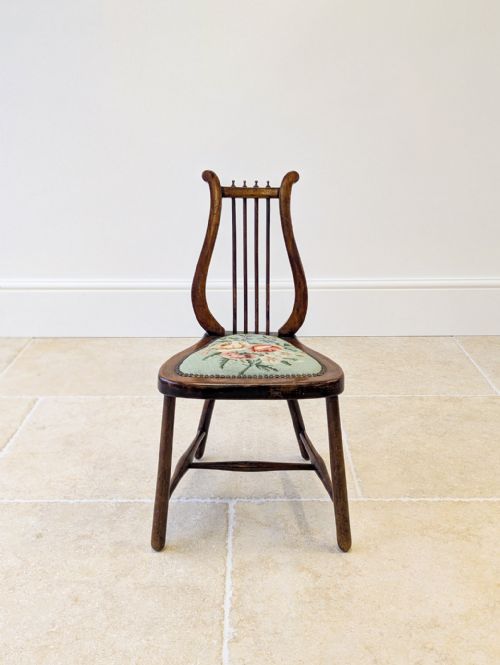


Antique Lyre Back Chair
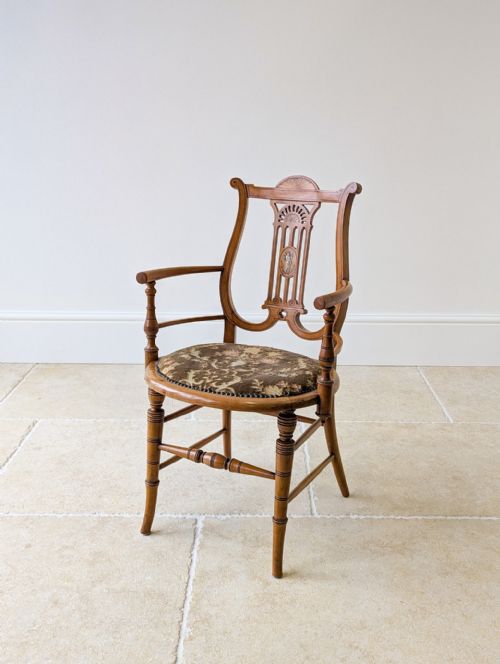
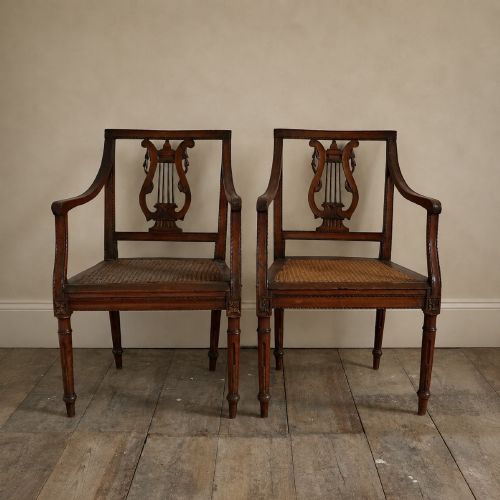
These antique lyre back chair pieces bring graceful classical form into the room, offering collectors a refined silhouette shaped like the ancient Greek instrument.
What They Are
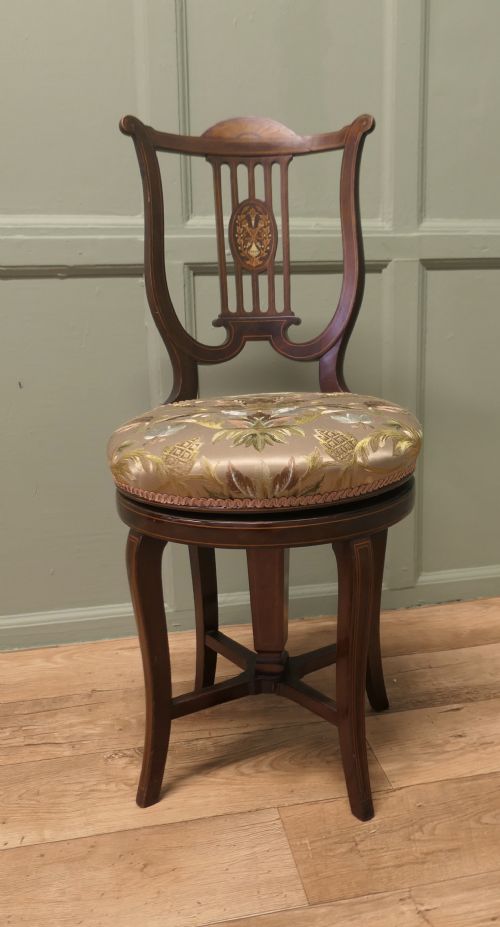
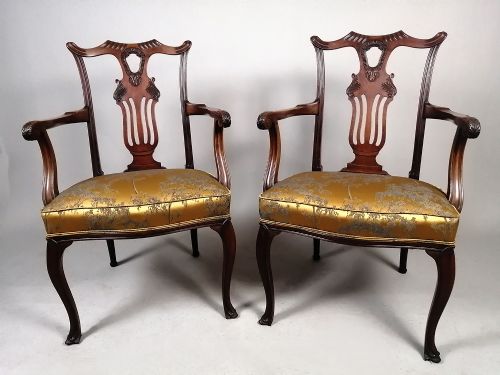
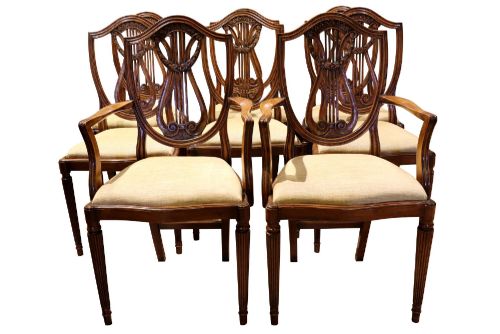
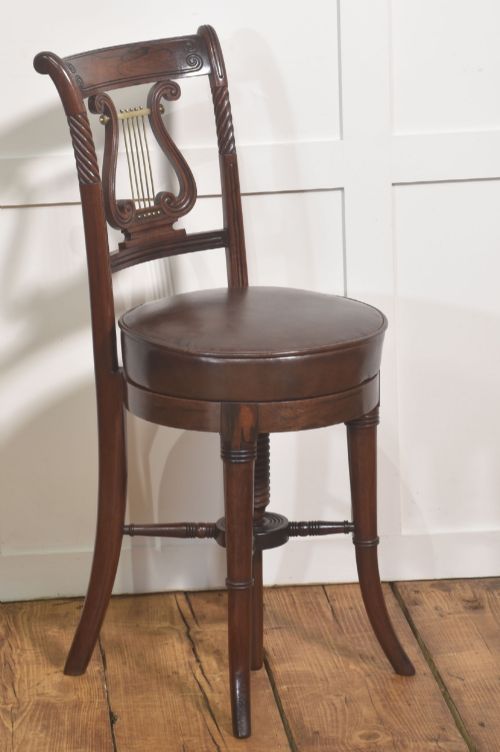
An antique lyre back chair is a seating form defined by its pierced splat shaped in the outline of a musical lyre. The pieces on this page span Victorian, 19th Century, Edwardian, and 1900 periods, encompassing both English and French origins.
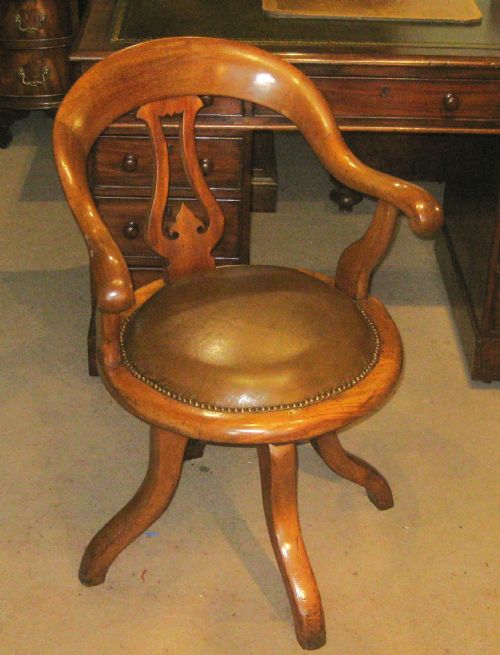
You are most likely to encounter side chairs, desk chairs, and dressing chairs among these listings. Styles range through Sheraton Revival, Grand Regency, Edwardian, and Louis XVI.
The recorded materials include mahogany, satinwood, beech, and painted wood, often paired with brass, leather, fabric, or tapestry upholstery. The scale and function vary from compact dressing seats to adjustable desk chairs.
How They Were Made
Cabinetmakers constructed these frames using dense hardwoods like mahogany and satinwood, alongside flexible beech for curved components. Joinery was meticulously fitted to support the delicate openwork of the central lyre splat without compromising structural integrity.
Surface treatments combine polished timber veneers, painted wood finishes, and inlaid details reflecting Sheraton Revival and Louis XVI influences. Metal adjustments in brass appeared on specialised desk and dressing table variants.
Retail Price Guide 2026
Typical UK retail prices for lyre back chair, calculated from the Sellingantiques database of over a million retail prices indexed since 2003. This retail price guide relies exclusively on Sellingantiques data; no external sources or auction records are used, so the figures do not describe the wider market.
At least one nineteenth-century example includes an adjustable mechanism, proving that Victorians took their vanity seating very seriously indeed.
What Varies in Quality
The distinction between standard examples and the finest work lies in the crispness of the carved or pierced lyre splat and the selection of figured timbers like satinwood and mahogany. Superior pieces exhibit harmonious proportions and refined joinery that remains steady over time.
Upholstery appointments also separate the tiers of craftsmanship, with hand-stitched tapestry, fine leather, and patterned fabrics reflecting the original aesthetic ambition of the maker.
The Antique Lyre Back Chair Glossary
- Lyre-back
- A chair back featuring a central splat shaped to resemble an ancient Greek lyre. This classical motif became especially popular during the Regency and Sheraton Revival periods.
- Satinwood
- A lustrous, fine-grained hardwood with a golden yellow colour often used for high-status cabinetmaking and decorative inlay. It provides a striking contrast when paired with darker timbers.
- Sheraton Revival
- A late nineteenth-century design movement inspired by the neoclassical furniture of George Sheraton. It frequently employs delicate painted decoration, satinwood, and classical motifs.
- Splater
- The vertical central strip of wood down the middle of a chair back. In these pieces, it takes the characteristic form of musical instrument strings and frame.
Frequently Asked Questions
What is an antique lyre back chair?
An antique lyre back chair is a historic seating form defined by a distinctive central splat carved or pierced in the shape of a musical lyre. These pieces draw on classical Greek design principles.
They appear across various nineteenth and early twentieth-century styles, including Sheraton Revival and Louis XVI interpretations.
Where were these chairs used?
These chairs served multiple domestic functions across the home, appearing as side seating in parlours or drawing rooms. Specific variants also functioned as specialised desk or dressing table seats.
Adjustable mechanisms on certain examples allowed them to meet the practical needs of writing and grooming.
What woods are used in these chairs?
Cabinetmakers utilised dense hardwoods such as mahogany and satinwood for visible show-wood surfaces and decorative impact. Beech also appears frequently for structural frames and painted finishes.
Contrasting timbers and brass details often highlight the classical proportions of the frame.
How do I identify the period?
Dating relies on stylistic markers such as Sheraton Revival inlay, Louis XVI shaping, or Edwardian construction traits. Material choices and upholstery types provide further clues to the era of manufacture.
Reference points like approximate decades help place each piece within the Victorian or Edwardian timeline.