


Grey Painted Side Chairs
Grey painted side chairs bring muted Continental elegance and robust seating to a room, spanning eighteenth-century Gothic tastes to twentieth-century French styles.
Grey Painted Side Chairs
Grey painted side chairs encompass seating items designed without arms, primarily originating from French or British traditions across the eighteenth, nineteenth, and early twentieth centuries. These pieces appear in matching sets or pairs, serving functions as diverse as dining seating, hall furniture, and salon accents.
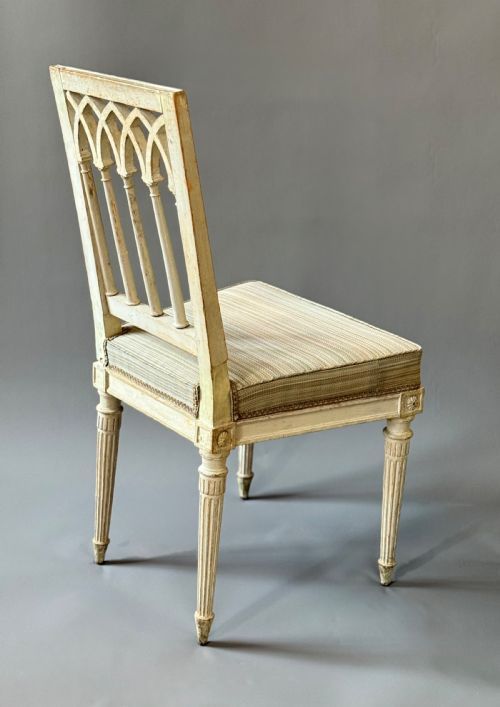
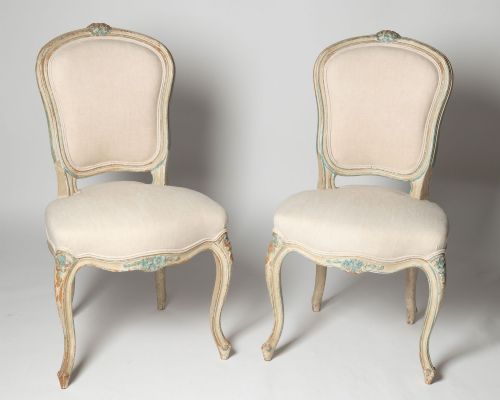
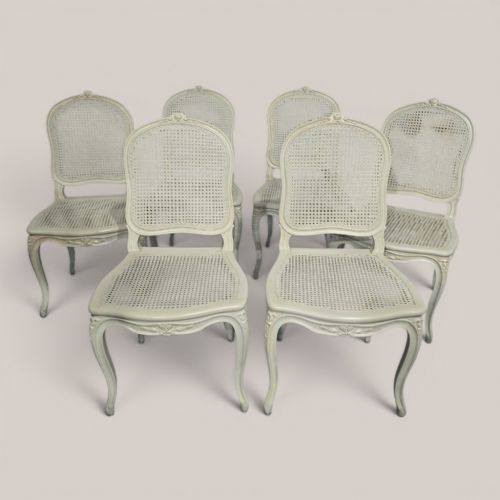
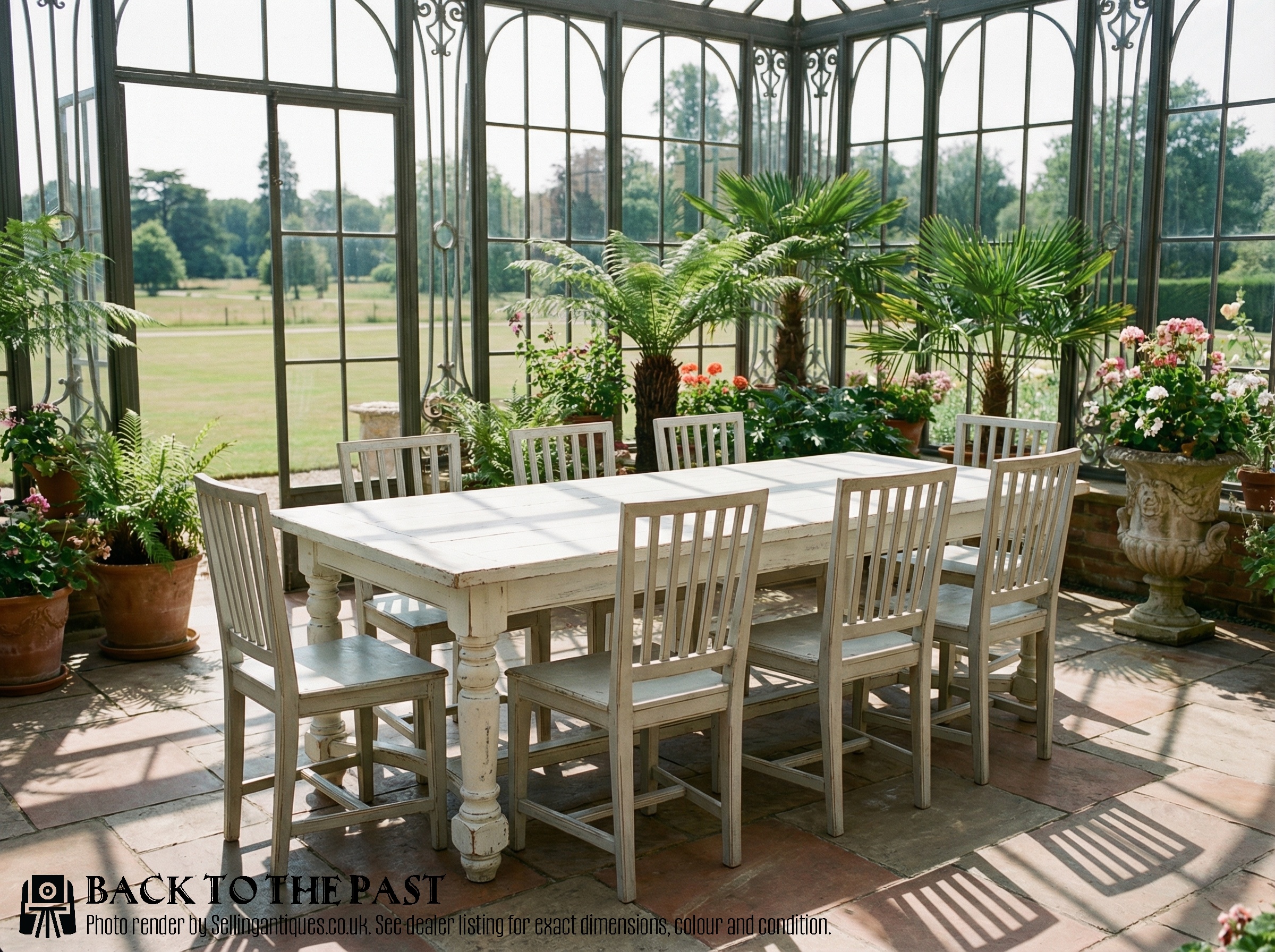
The selections on this page demonstrate notable variation in form, including Louis XV designs, Gothic Revival expressions, and simpler painted wooden configurations. Such grey painted side chairs draw attention through their distressed painted surfaces and classic structural silhouettes.
Makers utilised painted wood as a primary medium, often pairing the frames with cane, rattan, fabric, or linen upholstery. These chairs reflect periods ranging from the 1880s through to the 1930s, alongside older eighteenth-century examples.
How they were made
Construction relies heavily on carved timber frames, using oak and beech shaped into stylistic forms like Louis XV curves or Gothic Revival geometry. These structural elements receive applications of paint to create the characteristic grey surface finish.
Seating areas and backrests incorporate woven cane, rattan, or textile elements such as linen and upholstery fabric. Artisans integrated these materials into the wooden frameworks using traditional joinery and hand-carving techniques.
Listings feature oak and beech timbers paired with cane, rattan, and linen across the nineteenth and early twentieth centuries.
What varies in quality
Quality differences emerge through the crispness of hand-carved ornamentation on the wooden frames and the integrity of the underlying timber structure. Pieces featuring detailed carving and substantial oak or beech construction sit at the higher end of the range.
The application and retention of the painted finish further distinguish examples, alongside the durability of integrated cane or upholstery elements. Consistency across sets, particularly in larger groupings of dining chairs, dictates the overall distinction of the items.
The Grey Painted Side Chairs Glossary
- Side chair
- A chair without arms, designed primarily for dining or occasional use around a room. These form the majority of seating options found in standard sets.
- Bergere
- An enclosed upholstered armchair with wooden frames and panelled cane or upholstered sides. This style appears frequently among French seating options.
- Sgabello
- A type of Renaissance-derived hall chair featuring a backrest and a solid wooden base instead of traditional legs. Such forms offer a distinct architectural silhouette.
- Gothic Revival
- A nineteenth-century design movement drawing inspiration from medieval architecture and pointed arch motifs. Pieces in this taste display characteristic pointed tracery and robust carved details.
Grey Painted Side Chairs: Frequently Asked Questions
Where should I place grey painted side chairs?
These chairs function well around a dining table or placed symmetrically in a hallway or salon as decorative accents. Their painted finishes complement neutral and patterned interiors alike.
Larger sets suit dining rooms, while pairs of side chairs or armchairs fit comfortably in bedrooms or reception spaces.
How do I identify French styles?
French styles often display curved cabriole legs, carved floral motifs, and integrated bergere or upholstered elements. Eighteenth-century and later revival pieces capture this distinct Continental aesthetic.
Examining the carved woodwork and the form of the frame helps distinguish French origins from other regional traditions.
What materials are used in these chairs?
The primary framework consists of painted wood, predominantly oak or beech, finished in shades of grey. Seats and backrests frequently incorporate woven cane, rattan, or fabric upholstery.
Combinations of wood and textile materials provide both structural support and decorative texture across the different periods.
Are these chairs sold as sets?
Listings include individual pairs as well as larger sets containing six or eight chairs. Sets prove particularly common for dining room applications.
Pairs usually originate from salon or hall seating arrangements rather than large dining collections.