
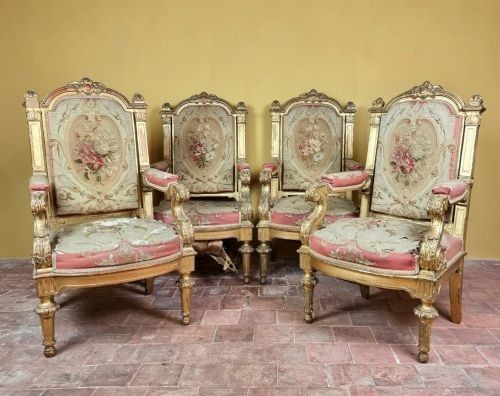


French Chateau Salon Chairs
French chateau salon chairs are grand, decorative seating options designed to bring continental elegance into reception rooms.
French Chateau Salon Chairs
When searching for french chateau salon chairs, buyers encounter pieces primarily originating from the nineteenth century through the early twentieth century. The selection leans heavily towards armchairs and pairs of salon chairs embodying historical revivals.
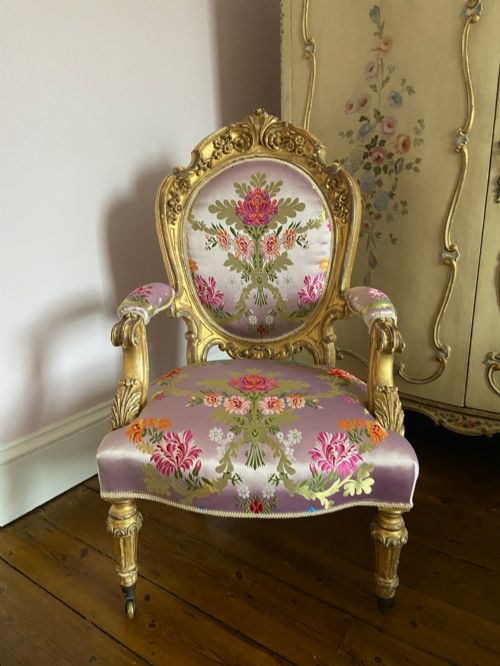
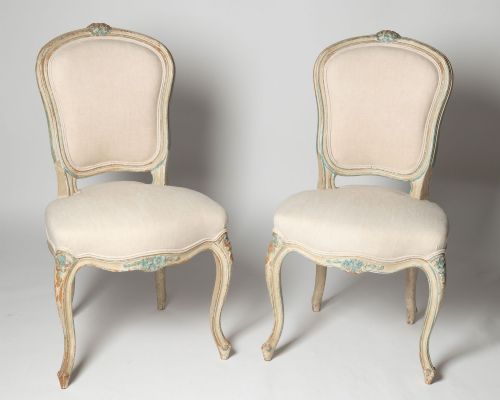
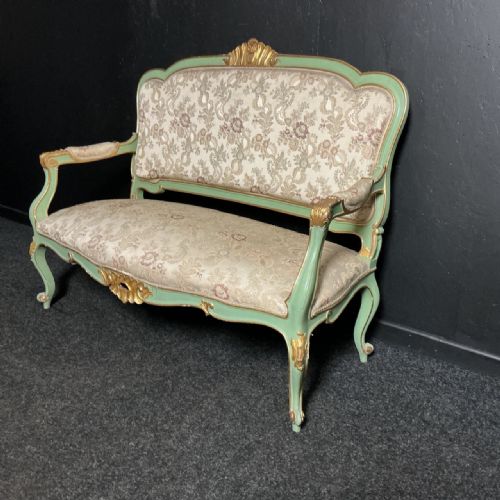
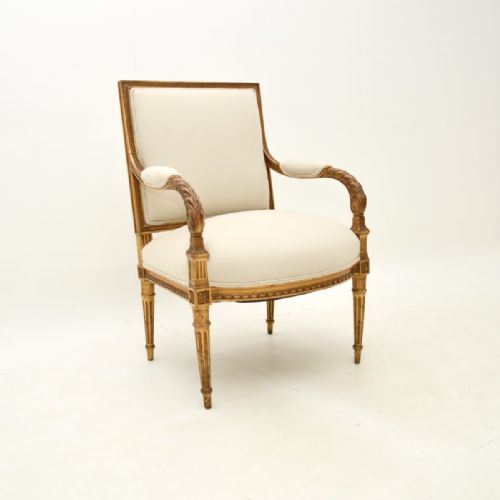
The most common forms on this page include gilded armchairs, painted boudoir seating, and side chairs reflecting Louis XV and Louis XVI styles. These items span periods from eighteen eighty up to nineteen twenty, alongside Edwardian and mid-century painted examples.
How they were made
The frames are constructed from hardwoods such as beech, oak, and walnut, shaped through carving techniques to form ornate structural lines. Giltwood finishes and painted surfaces are frequently applied to the carved wooden frames.
Upholstery relies on traditional textiles, incorporating fabric, velvet, and silk to finish the seats and backrests. Brass details occasionally appear as structural or decorative accents on the wooden frames.
The listings span the nineteenth century through nineteen sixty, featuring materials such as giltwood, beech, velvet, and silk.
What varies in quality
The sophistication of the hand carving on the wooden frames separates standard items from finer examples. Crisp detailing in the floral and scroll motifs indicates a higher grade of craftsmanship.
The treatment of the finish, whether giltwood or painted, dictates the visual depth of the piece. Superior execution ensures the gilding or paintwork complements the underlying carved contours rather than masking them.
The French Chateau Salon Chairs Glossary
- Giltwood
- Wood that has been covered with a thin layer of gold leaf. This finish gives the carved frames a bright, reflective surface suited to formal reception rooms.
- Louis XVI Revival
- A nineteenth-century style drawing on the neoclassical design of the late eighteenth century. Pieces in this style display straight tapered legs and geometric motifs.
- Rococo Revival
- A mid-nineteenth-century style characterised by asymmetrical curves, naturalistic plant motifs, and C-scrolls. It brings an ornate, flowing appearance to salon seating.
French Chateau Salon Chairs: Frequently Asked Questions
What defines a salon chair?
Salon chairs are decorative seats traditionally used in formal reception rooms and entertaining spaces. They prioritize visual elegance and comfort for social gatherings.
These pieces typically feature carved wooden frames with upholstered seats and backs, often arranged in matched pairs or larger sets.
How do I identify a revival style?
Revival pieces copy historical aesthetics from specific French royal periods like the reigns of Louis the fifteenth or sixteenth. Look at the legs and carving motifs to determine the source.
Straight tapered legs usually point to neoclassical revival, while curved cabriole legs suggest rococo influence.
Where were these chairs used?
These seats belonged in the principal reception rooms, boudoirs, and drawing rooms of large houses. They served as movable seating for guests during social events.
Their decorative backs meant they looked correct when placed away from walls in the centre of a room.
How do I care for giltwood?
Giltwood requires gentle dusting with a dry, soft cloth to protect the delicate gold leaf finish. Avoid chemical cleaners and moisture, which can lift the metallic layer from the wood underneath.
Keep these chairs away from direct sunlight and strong heat sources to prevent the wood and finish from drying out.