

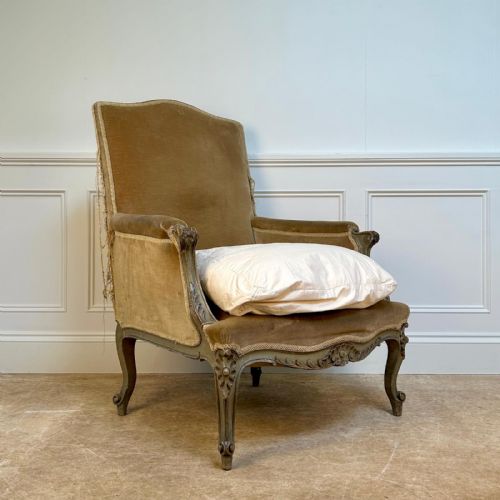


Distressed Grey Accent Chairs
Distressed grey accent chairs bring continental style into a room, offering painted wooden frames and upholstered seats designed for occasional seating.
Distressed Grey Accent Chairs
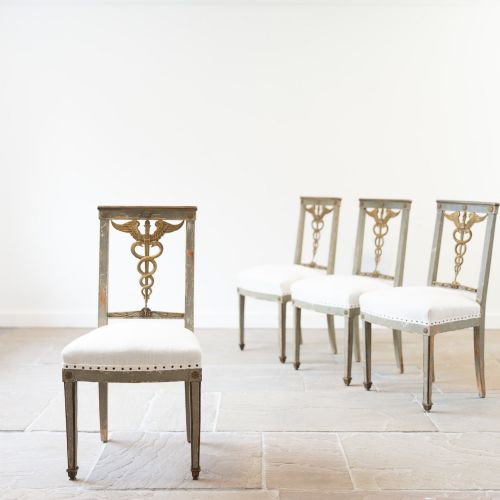
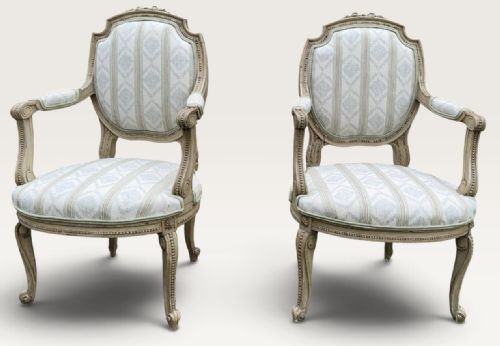
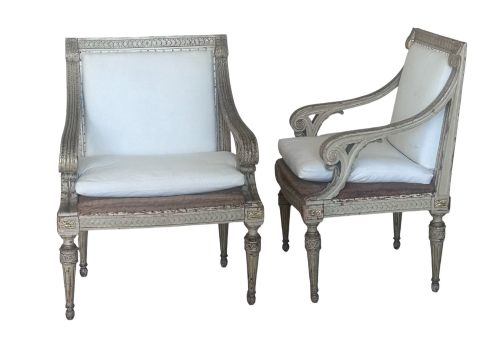
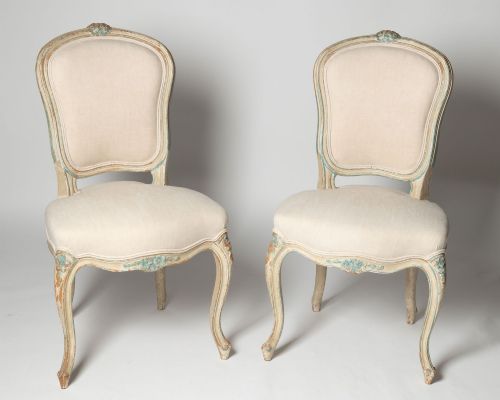
Distressed grey accent chairs encompass antique French armchairs, bergères, fauteuils, and salon chairs dating from the nineteenth and early twentieth centuries. These seating options arrive in styles such as Louis XV, Louis XVI, Neoclassical, and French Provincial, reflecting classic continental designs. A buyer examining this selection encounters pairs and single armchairs alongside side chairs, frequently bearing original paint.
The periods represented stretch from the late nineteenth century through the Edwardian era up to the nineteen-twenties, incorporating French chateau aesthetics and regional Piedmontese pieces. Walnut and beech form the structural timber for these frames, often ornamented with gesso. Original painted surfaces display the wear and distress accrued over more than a century of use.
How they were made
Carpenters shaped structural frames from hardwoods including beech and walnut, employing traditional joinery to build sturdy armchairs and side chairs. Gesso was applied to wooden surfaces to prepare them for decorative painting, creating a smooth ground for the initial coats of colour.
Paint finishes were applied directly to the wood or over gesso preparations, later developing natural distress through decades of domestic handling. Upholstery techniques utilised textile and linen coverings secured to the seat frames to provide comfortable support for salon and occasional use.
Distressed Grey Accent Chairs Retail Price Guide 2026
Typical asking prices for distressed grey accent chairs among the pieces listed under this phrase on Sellingantiques today, from the lower quarter to the upper quarter. They describe what is for sale here now, not the wider market.
The listings span the nineteenth century through the Edwardian period and nineteen-twenty, featuring beech, walnut, painted wood, gesso, fabric, and linen.
What varies in quality
The preservation of original paint determines much of the distinction between examples, with untouched surfaces holding greater integrity than later repainted finishes. Carved detail across the wooden frames shows varying degrees of crispness, distinguishing provincial output from more refined urban workshops.
Structural proportions and the symmetry of stylistic elements such as Louis XV or Neoclassical curves affect the visual balance of each armchair. The survival of matching pairs provides a level of uniformity that elevates the significance of the seating within a room.
The Distressed Grey Accent Chairs Glossary
- Fauteuil
- An open-armed upholstered armchair originating in France, characterised by exposed wooden arms and a padded back. The style alters across periods from ornate Louis XV curves to restrained Neoclassical lines.
- Gesso
- A plaster mixture applied to wooden furniture frames to create a smooth surface for painting or gilding. It forms the brittle white layer often revealed beneath worn grey paint.
- French Provincial
- A furniture style reflecting regional French interpretations of court fashions. These pieces display simpler carving and sturdier proportions than metropolitan counterparts.
Distressed Grey Accent Chairs: Frequently Asked Questions
Are these chairs comfortable for daily seating?
These antique armchairs were built for formal salons and occasional use rather than lounging for hours. Their upright proportions and period upholstery offer firm support suited to sitting at a desk or in a drawing room.
Buyers intending to use them daily often assess the seat height and depth to ensure they match modern comfort expectations while retaining their antique character.
How do I identify a Louis XV style chair?
Louis XV style chairs feature characteristic asymmetrical curves, cabriole legs, and floral carved motifs upon the wooden frame. The overarching design avoids straight lines in favour of flowing organic contours.
Later revival pieces produced around nineteen-hundred adopted these exact eighteenth-century vocabulary traits, making stylistic details a guide to design rather than strict age.
What is original paint on an antique chair?
Original paint refers to the earliest decorative surface applied to the wooden frame, which has aged naturally over the decades. It shows authentic wear, chipping, and softening rather than a simulated distress applied recently.
Examining the layers under magnification often reveals the accumulation of dirt and the gradual thinning of the pigment over the gesso base.
How should I care for painted wooden frames?
Painted wooden frames require gentle dusting with a dry microfibre cloth to prevent the accumulation of grit. Moisture and harsh cleaning agents must be avoided to protect the fragile nineteenth-century paint layers from lifting.
Placing the seating away from direct sunlight and steady heat sources prevents the underlying wood and gesso from drying out and cracking.