

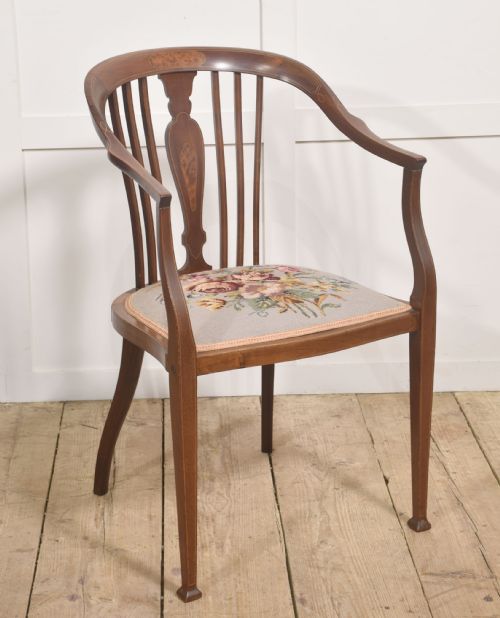


Antique Satinwood Armchair
An antique satinwood armchair brings pale timber and refined neoclassical design to a room, offering both a comfortable seat and a piece of history.
Antique Satinwood Armchair
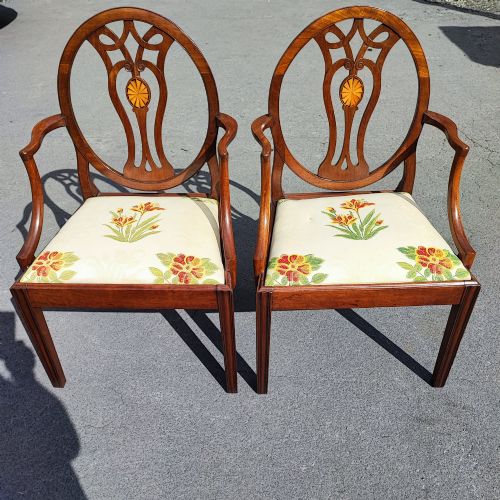
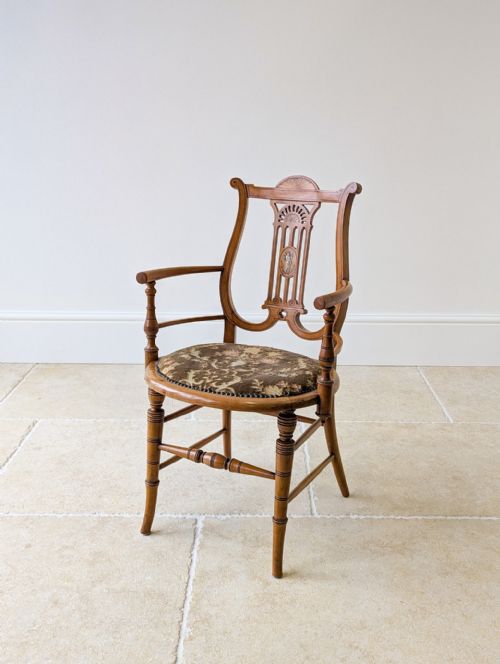
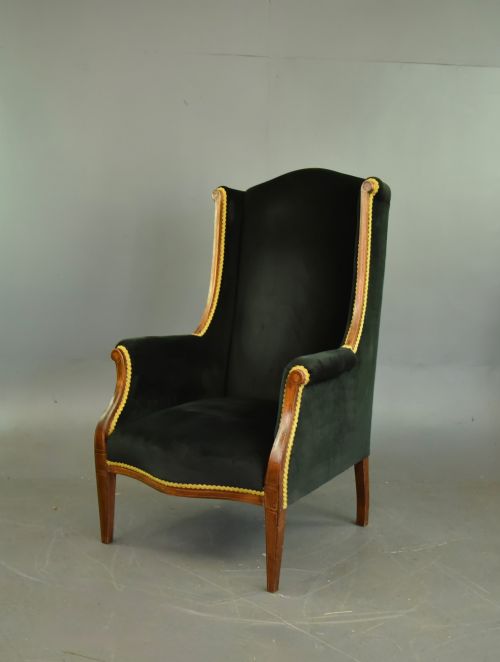
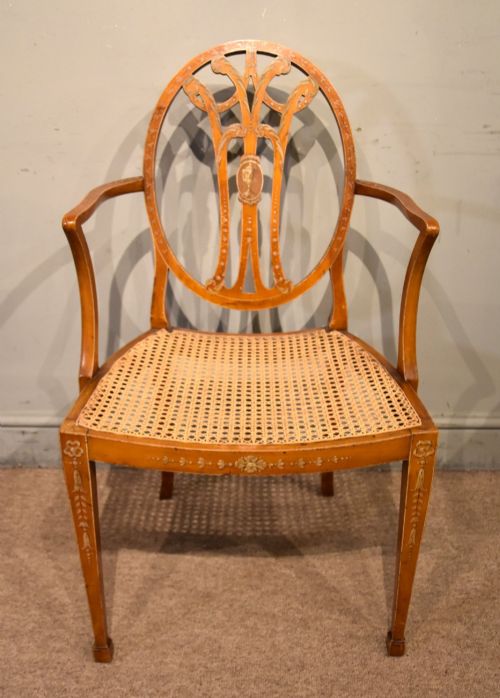
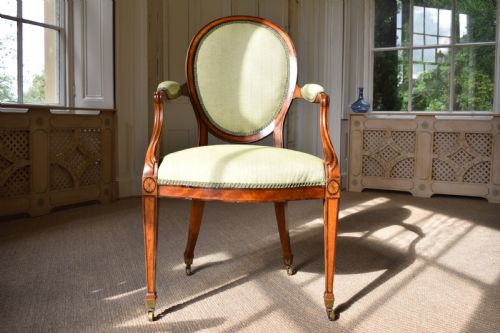
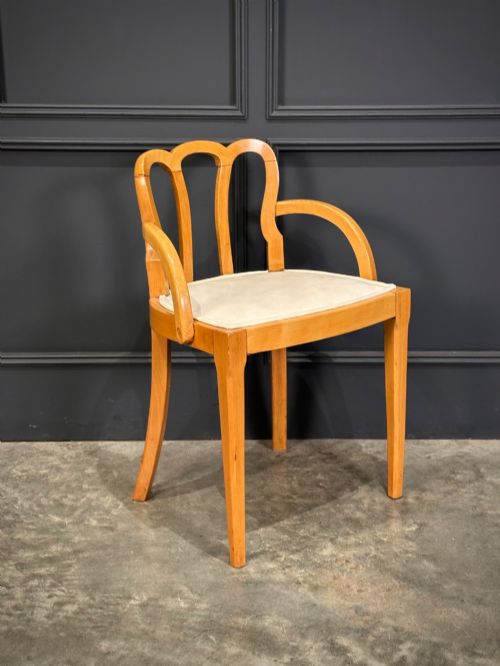
When you search for an antique satinwood armchair, you encounter seating built from pale, figured tropical timbers, spanning periods from the Georgian era through the Edwardian years and into the Art Deco period. The listings show forms ranging from formal desk chairs and library armchairs to painted salon seating and occasional chairs.
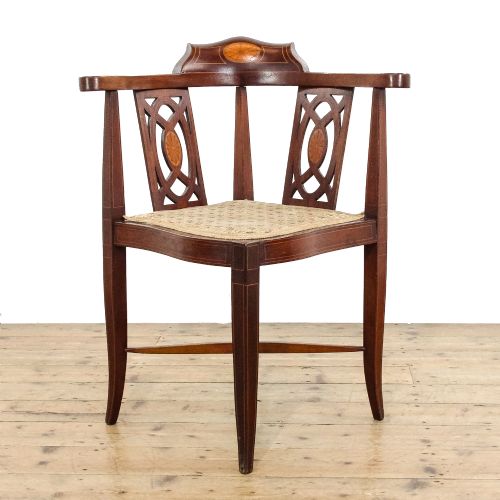
Edwardian pieces dominate the selection, often taking the form of mahogany frames enriched with satinwood stringing and inlay. Alongside these are earlier Georgian and Regency pieces, together with Sheraton Revival interpretations that emulate eighteenth-century elegance.
How they were made
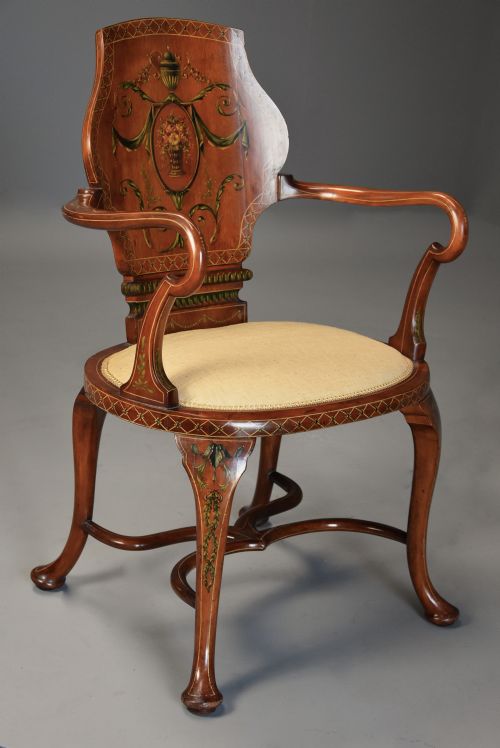
Cabinetmakers constructed these frames primarily in mahogany or birch, applying finely figured satinwood veneers to prominent surfaces. Decoration relied upon contrasting timbers, marquetry, and delicate paintwork to create crisp geometric or floral patterns.
Seats utilised traditional methods, incorporating fabric upholstery, leather inserts, cane panels, or velvet cushions supported by internal framing and brass hardware.
The listings span the Georgian, Victorian, Edwardian, and Art Deco periods, encompassing materials such as satinwood, mahogany, cane, and leather.
What varies in quality
The distinction between ordinary and exceptional pieces lies in the crispness of the inlay and the depth of the timber figuring. Subtle hand-painted ornamentation and well-executed joinery separate standard production from more ambitious workshop output.
Proportion and the integrity of the original surface finish dictate the standing of a chair. Pieces that retain their original cane or early leather upholstery alongside clean timber surfaces demonstrate superior preservation.
Maple & Co·Shoolbred
The Antique Satinwood Armchair Glossary
- Satinwood
- A lustrous tropical timber with a golden sheen, used extensively for veneers and decorative banding on fine furniture.
- Sheraton Revival
- A late nineteenth-century design movement that reinterpreted the lighter, neoclassical forms associated with the designer Thomas Sheraton.
- Bergere
- An enclosed upholstered armchair featuring cane panels on the back and sides, popular in library and salon settings.
- Stringing
- Thin lines of contrasting timber inlaid into grooves on a furniture surface to create geometric borders.
- Marquetry
- Elaborate patterns formed by fitting together pieces of veneered wood on a solid carcase.
Antique Satinwood Armchair: Frequently Asked Questions
How do I identify a Sheraton Revival armchair?
Sheraton Revival armchairs typically date from the late nineteenth or early twentieth century and draw inspiration from eighteenth-century neoclassical designs. They feature slender tapered legs, delicate satinwood inlay, and painted motifs.
Look for light timber construction and restrained ornamentation rather than heavy carving. The presence of satinwood banding against a mahogany ground is a strong indicator of this revival style.
What is the difference between satinwood and mahogany?
Satinwood is a pale, golden hardwood with a natural shimmer, whereas mahogany is a deeper reddish-brown timber. Many chairs combine both materials, using mahogany for the structural frame and satinwood for decorative veneers.
Solid satinwood furniture is less common due to the timber's scarcity, making veneered and inlaid combinations the standard approach for makers.
Where were these chairs used in a historic home?
Antique armchairs served varied functions depending on their form, appearing in libraries, bedrooms, morning rooms, and formal salons. Desk chairs and swivel models equipped offices, while painted salon chairs furnished entertaining spaces.
Occasional chairs were designed to be moved easily around a room as needed, serving guests during gatherings.
How should I care for an antique satinwood surface?
Protect antique satinwood from direct sunlight and excessive moisture to prevent the pale timber from darkening or the veneer from lifting. Gentle dusting with a dry, soft cloth maintains the finish without stripping historic polishes.
Avoid placing these chairs near heat sources, as fluctuating temperatures can cause the wood and delicate inlay to warp or crack over time.