



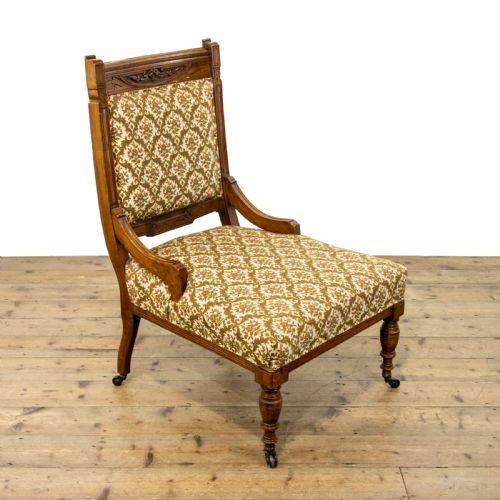


Brown Fabric Desk Chair
These brown fabric desk chair options bring period timber and textile work straight to the workspace, offering sturdy seating with historic character.
Brown Fabric Desk Chair
A brown fabric desk chair brings together period woodwork and upholstered seating designed for working spaces. The selection spans centuries from the eighteenth through to the early twentieth, covering forms such as library desk chairs, armchairs, and side chairs.
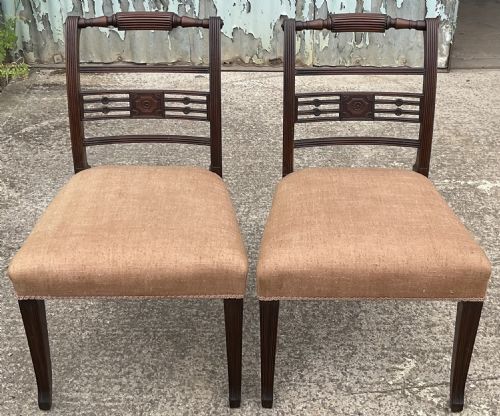
Makers shaped these pieces in mahogany, walnut, oak, satinwood, and rosewood, applying styles from Georgian and Regency to Edwardian and Art Deco. Buyers most frequently meet Edwardian mahogany library desk chairs and nineteenth-century upholstered forms on this page.
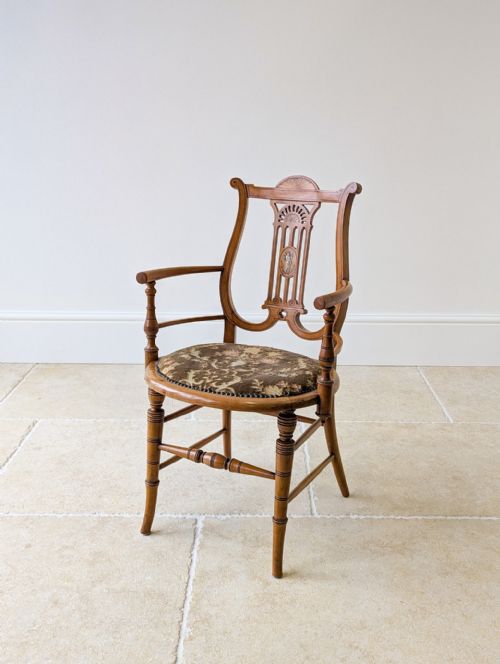
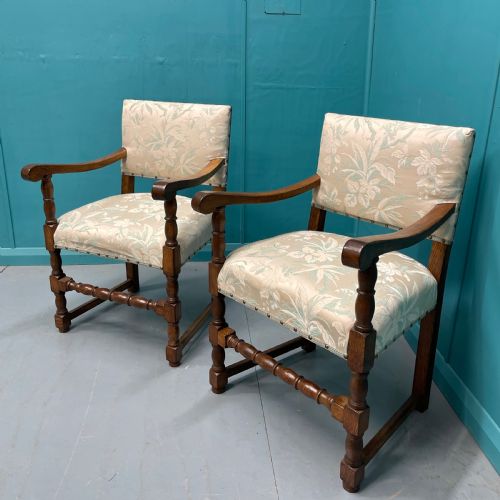
The objects serve practical seating needs while displaying traditional joinery and textile coverings. Each piece reflects the aesthetic preferences of its period, from Sheraton Revival lyre-backs to plain oak armchairs.
How they were made
Craftsmen shaped the frames of these chairs from hardwoods including mahogany, walnut, oak, satinwood, and rosewood. These timbers provided the structural strength required for daily use in libraries and studies.
Workshops applied textile and fabric upholstery over traditional stuffing to form comfortable seats and backs. Brass details often appeared as castors or decorative mounts on the timber and fabric frames.
Design styles represented on this page span Georgian, Regency, Sheraton Revival, Edwardian, Jacobean Revival, and Art Deco.
What varies in quality
The refinement of the timber carving and the precision of the joinery set pieces apart. Finer examples display carefully shaped ribbon backs, lyre-backs, or well-proportioned library frames.
The grade of the fabric upholstery and the integrity of the underlying structure influence the overall execution. Superior items retain crisp detail in woods like mahogany and satinwood alongside well-fitted textile covers.
The Brown Fabric Desk Chair Glossary
- Upholstery
- The soft padding and fabric covering applied to a chair seat or back. It provides comfort and defines the visual appearance of the textile portion.
- Mahogany
- A durable tropical hardwood widely used in eighteenth and nineteenth-century furniture making. Its dense grain takes a fine polish and supports intricate carving.
- Lyre-back
- A chair back shaped in the outline of an ancient musical instrument. This design motif appears frequently in Regency and Revival seating.
- Ribbon back
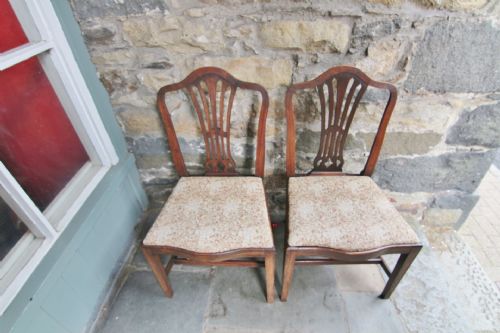
- A chair back carved to resemble intertwined ribbons or bows. This decorative style is characteristic of finer Georgian seating.
- Fauteuil
- An open-armed upholstered armchair of French origin with exposed wooden framing. These chairs combine formal styling with comfortable padded seating.
Brown Fabric Desk Chair: Frequently Asked Questions
What periods do these desk chairs come from?
The listings include pieces from the eighteenth, nineteenth, and early twentieth centuries. Specific eras represented range from the Georgian and Regency periods through to Victorian and Edwardian times.
Makers working in later decades also produced revival pieces that imitated these earlier styles. Each chair reflects the construction methods and aesthetic trends of its particular decade of manufacture.
How were these chairs used historically?
These seating forms served primarily in studies, libraries, and formal rooms for reading and writing. Desk chairs and library chairs provided support during administrative or scholarly tasks.
Armchairs and side chairs also functioned as general seating around the home. Their robust timber frames and upholstered pads accommodated daily domestic and professional use.
What woods appear in these chairs?
Cabinetmakers utilised a variety of dense hardwoods to construct the frames. Mahogany, walnut, oak, satinwood, and rosewood all appear across the different periods and styles.
These timbers offered the necessary structural rigidity and visual appeal for high-status furniture. Selection depended on the prevailing fashion and the workshop's location.
How do I identify a revival style?
Revival pieces borrow decorative vocabulary and structural forms from earlier centuries such as the Georgian era. Makers in the nineteenth and twentieth centuries produced these interpretations to satisfy contemporary demand for historic designs.
Examining the timber ageing, joinery techniques, and secondary woods helps distinguish a later revival piece from an original of the primary period.