




Inlaid Satinwood Elbow Chair
An inlaid satinwood elbow chair brings refined classical proportion and subtle grain contrast into a room.
Inlaid Satinwood Elbow Chair
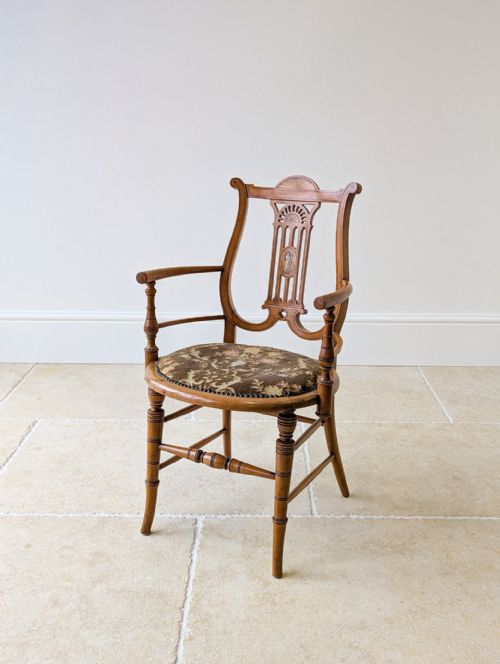
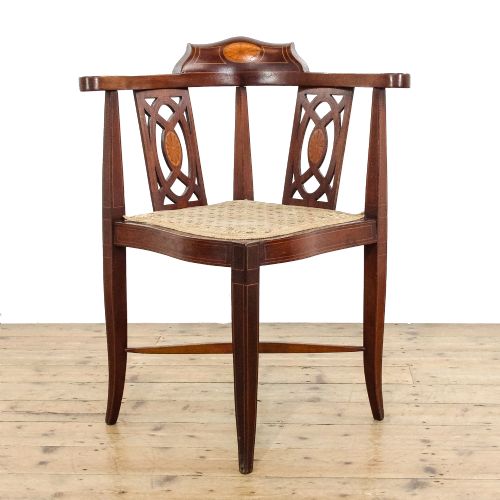
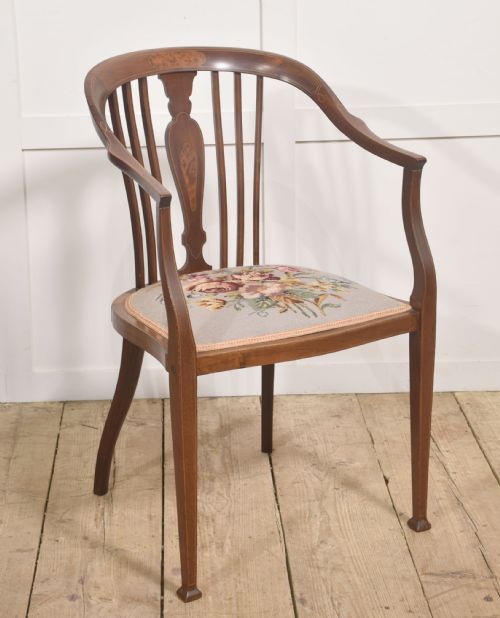
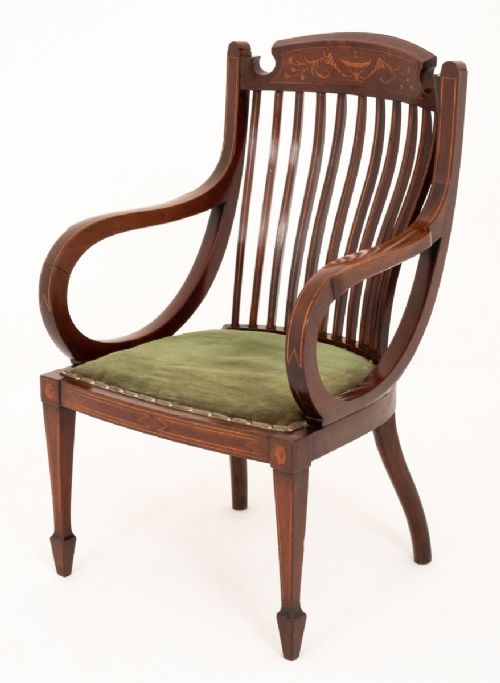
The search for an inlaid satinwood elbow chair brings up seating from the late nineteenth and early twentieth centuries, spanning the Victorian, Edwardian, and Sheraton Revival periods. These pieces combine supportive armrests with decorative timber surfaces, functioning as desk chairs, salon seating, or occasional chairs.
Most examples found on this page are constructed from mahogany combined with satinwood, often featuring delicate stringing or contrasting wood inlay. They reflect historical revivals of eighteenth-century neoclassical design, interpreted through the cabinet-making standards of the late eighteen-hundreds and early nineteen-hundreds.
How they were made
Makers built these chairs using solid hardwoods such as mahogany and walnut, applying satinwood veneers and contrasting string inlay to the backrests and rails. Surface decoration relied on precise carpentry techniques to insert lighter timbers into darker grain.
Upholstery methods varied from drop-in pad seats covered in fabric, leather, or needlepoint tapestry to open wooden frames with shaped elbow rests. Brass fixings and structural framing supported the arms and legs during daily use.
Inlaid Satinwood Elbow Chair Retail Price Guide 2026
Typical asking prices for inlaid satinwood elbow chair among the pieces listed under this phrase on Sellingantiques today, from the lower quarter to the upper quarter. They describe what is for sale here now, not the wider market.
An elbow chair was once considered essential for writing letters in the morning room without crushing one's cuffs.
What varies in quality
Quality rests in the precision of the inlay work and the selection of the timber figures. Sharply cut veneer and tight joints distinguish finer workshop production from simpler commercial output.
The integrity of the frame and the retention of original upholstery materials also define the standard of a piece. Chairs that retain their original timber colour and sound structural joinery stand apart.
Shoolbred
The Inlaid Satinwood Elbow Chair Glossary
- Satinwood
- A hard, yellow-toned timber prized for its lustrous sheen and smooth grain. It is frequently used for banding and decorative panels in revival furniture.
- Sheraton Revival
- A late nineteenth-century design movement inspired by the neoclassical furniture of George Sheraton. It favours light proportions, tapered legs, and classical inlay motifs.
- Elbow chair
- An armchair with a compact footprint, designed originally for desks, dressing tables, or occasional parlour use. The arms curve gracefully to support the user without bulk.
- Inlay
- A decorative technique where pieces of contrasting wood or other materials are inserted into depressions in the base timber to form a flush surface pattern.
Inlaid Satinwood Elbow Chair: Frequently Asked Questions
What is an inlaid satinwood elbow chair?
An inlaid satinwood elbow chair is a seating piece featuring wooden armrests, decorative contrasting veneers, and classical revival styling.
These chairs date predominantly from the late Victorian and Edwardian eras, serving practical roles at desks or in salons.
How do I identify a Sheraton Revival chair?
Sheraton Revival pieces display neoclassical elements such as tapered legs, symmetrical stringing, and light timber contrasts.
They emulate eighteenth-century aesthetics using nineteenth-century manufacturing methods and materials.
Where were these chairs placed originally?
They functioned as versatile seating in morning rooms, dressing areas, bedrooms, and home offices.
Their compact proportions allowed them to sit comfortably beside desks or in occasional groupings.
How should I care for satinwood veneer?
Keep the wood away from direct sunlight and extreme temperature changes to protect the delicate veneers and natural finish.
Dust gently with a dry cloth and avoid harsh chemical polishes.