
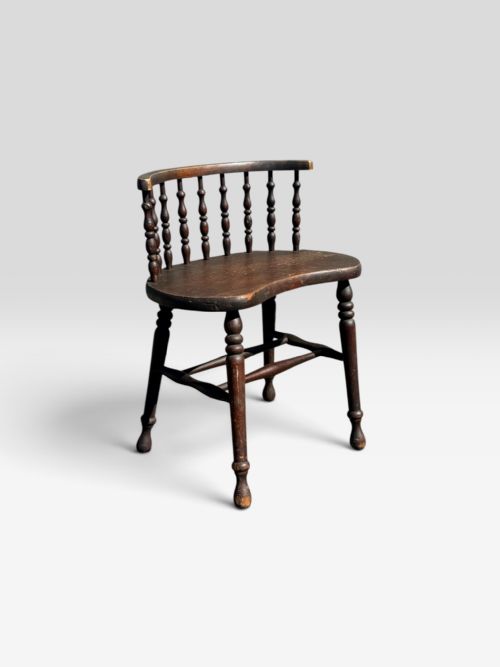
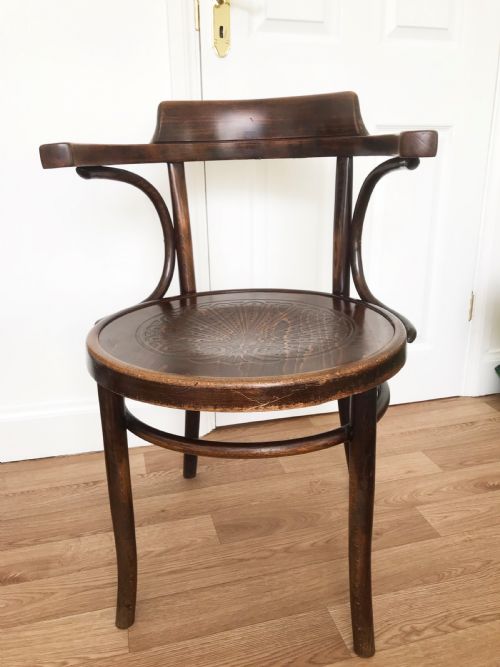


Curved Arm Desk Chair
These curved arm desk chair options combine practical workspace seating with centuries of timber craftsmanship, offering an essential study anchor.
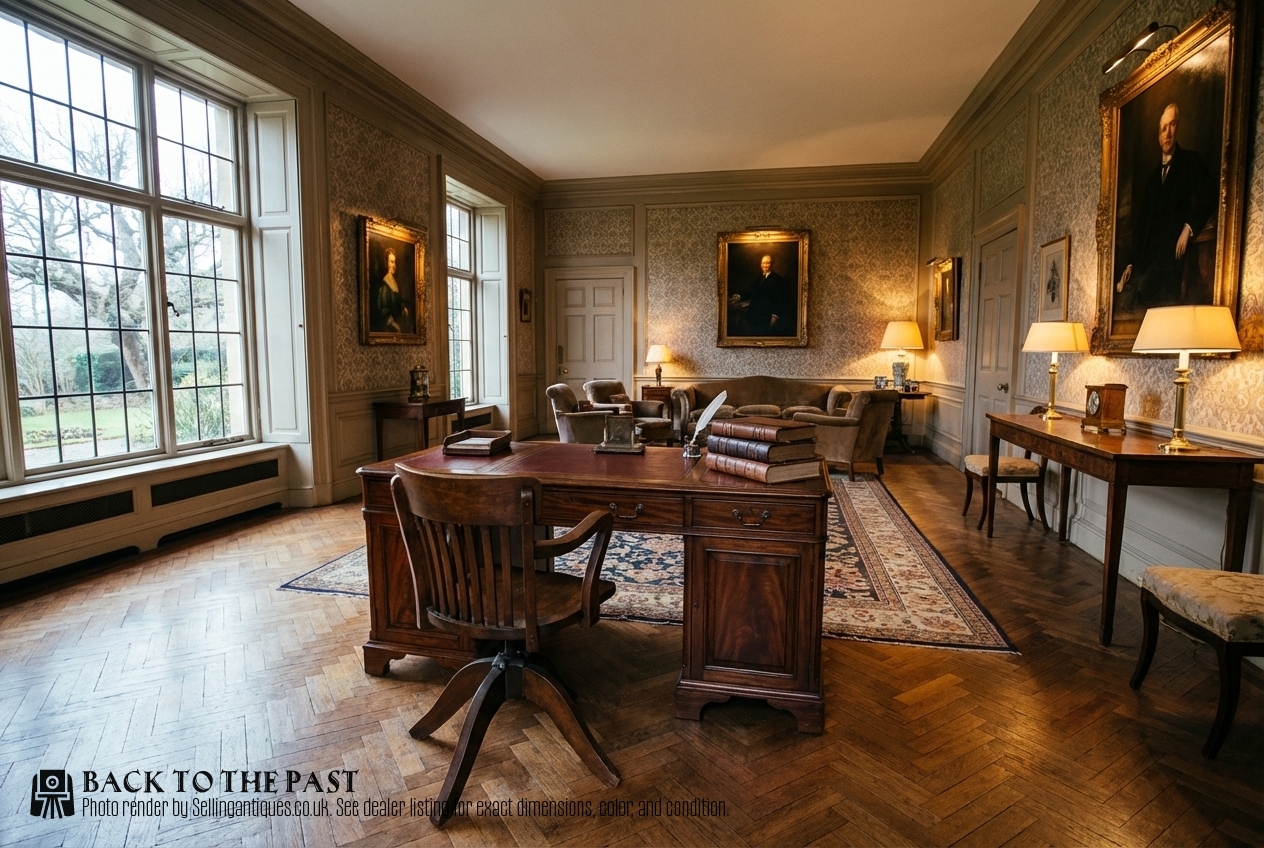
Curved Arm Desk Chair
A curved arm desk chair serves as a functional workspace seat defined by supportive siderests and ergonomic framing. These pieces bridge the gap between heavy library seating and lighter parlour forms.
The selections span distinct historical eras, ranging from restrained Georgian and Regency models to robust Victorian iterations. Edwardian and 1920s interpretations bring lighter timbers and alternative bentwood shapes to the category.
Forms vary from solid elm country variants to polished mahogany and birchwood frames designed for formal studies. Buyers encounter everything from low-backed Windsor configurations to upholstered Art Deco versions.
How They Were Made
Cabinetmakers utilised hardwoods such as mahogany, oak, walnut, beech, elm, and birchwood to construct durable seating frames. Timber selection dictated the structural integrity and grain pattern of each individual piece.
Makers integrated curved components through steam bending or precise joinery to create supportive armrests and rounded backs. Leather, fabric, and brass detailing were frequently applied to enhance comfort and visual finish.
Curved Arm Desk Chair Retail Price Guide 2026
Typical asking prices for curved arm desk chair among the pieces listed under this phrase on Sellingantiques today, from the lower quarter to the upper quarter. They describe what is for sale here now, not the wider market.
Materials across these listings span mahogany, oak, walnut, elm, beech, birchwood, brass, leather, and fabric.
What Varies in Quality
The distinction between tiers rests upon the selection of timber and the precision of the joinery. Fine examples display carefully chosen wood grains and seamless structural unions that endure heavy daily use.
Decorative elements such as brass inlay, ebonised highlights, or integrated carving distinguish standard utilitarian seating from refined salon and study pieces. The sophistication of the curved arm geometry directly reflects the maker's skill.
The Curved Arm Desk Chair Glossary
- Biedermeier
- A Central European style characterised by utilitarian comfort, clean lines, and minimal ornamentation. It prioritises honest wood veneers over excessive carving.
- Bentwood
- Wood that is shaped by being heated with steam and bent into curved forms. This technique creates lightweight, continuous structural framing.
- Sabre leg
- A concave sweeping leg shape that tapers toward the foot, commonly found on Regency furniture. It provides outward stability while maintaining a sleek profile.
- Elbow chair
- An armchair designed with shorter armrests that fit neatly beneath a desk or table. These seats provide lateral arm support without obstructing movement.
- Tub armchair
- A fully upholstered or enclosed seating form where the back and arms merge into a continuous curved barrier. It envelops the sitter for sustained comfort.
Curved Arm Desk Chair: Frequently Asked Questions
How do I choose the right height?
Consider the clearance between the desk surface and the chair arms. Measure your workspace carefully to ensure the curved armrests slide underneath comfortably.
Matching the period of the chair to your desk is secondary to ensuring correct ergonomic proportions for daily sitting.
Can these chairs handle daily office work?
Most antique wooden desk chairs were built for durability using dense hardwoods like mahogany and oak. Their sturdy construction suits regular modern use.
Adding a loose cushion can increase seating comfort during extended working hours without altering the frame.
What maintenance do leather seats need?
Leather upholstery benefits from occasional conditioning to maintain suppleness and prevent cracking over time. Keep the material away from direct heat sources.
Gentle cleaning with a dry or slightly damp cloth preserves the natural finish of both the leather and the surrounding timber.
How do I identify a Regency desk chair?
Regency pieces often feature classical motifs, dark mahogany timbers, and characteristic sabre legs that sweep outward. The lines tend to be architectural and refined.
Comparing the stretcher arrangement and joinery style helps distinguish authentic early nineteenth-century work from later revivals.