


Leather Desk Armchair
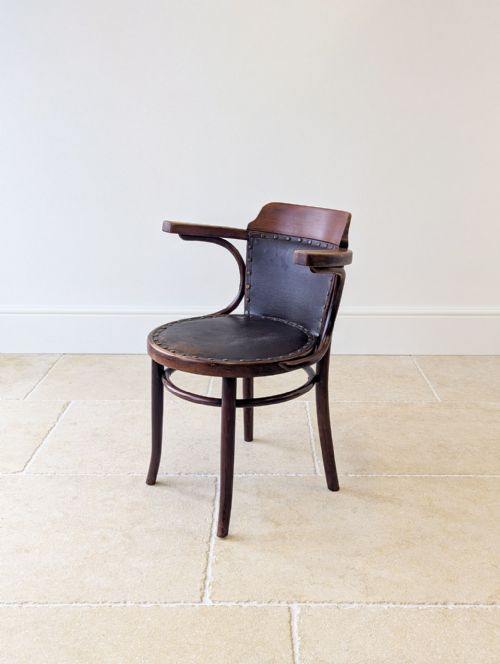
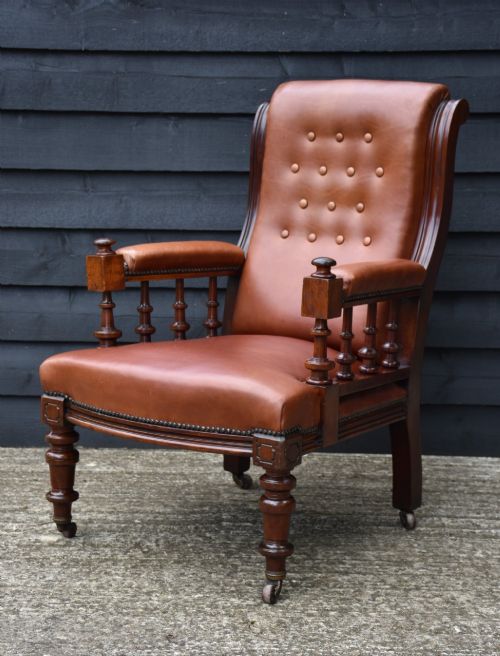
A leather desk armchair brings substance to a workspace through enduring timber frames and traditional hide upholstery.
Leather Desk Armchair
When searching for a leather desk armchair, a buyer encounters pieces primarily spanning the nineteenth and early twentieth centuries, with Victorian, Edwardian, and Regency examples appearing frequently alongside Georgian and William IV designs.
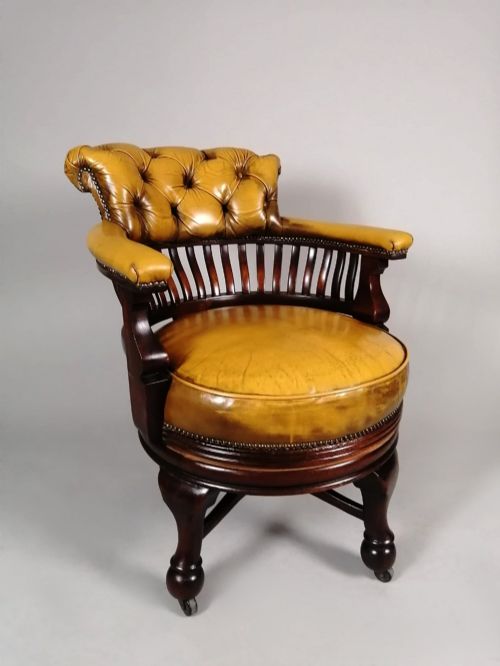
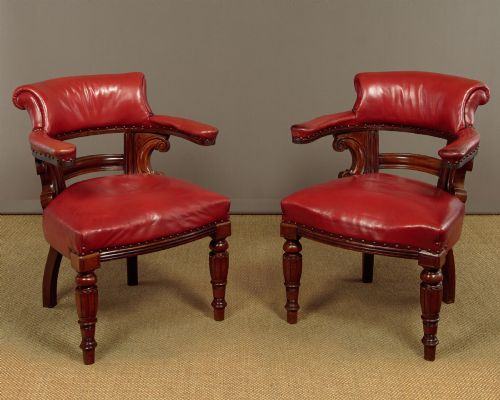
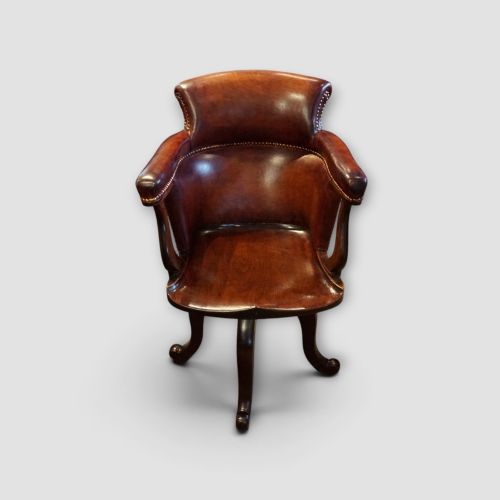
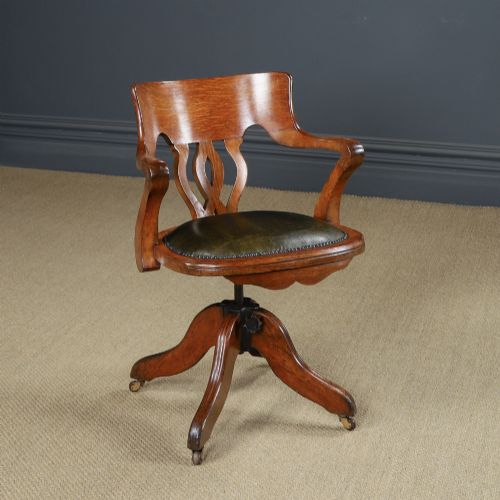
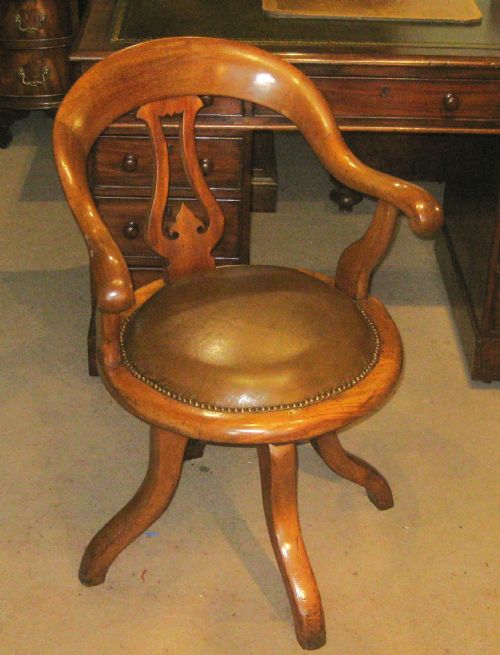
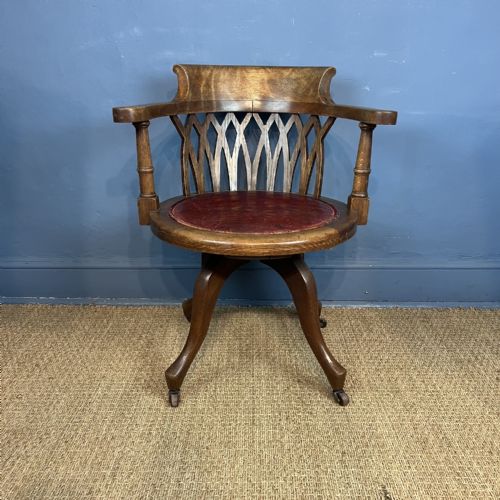
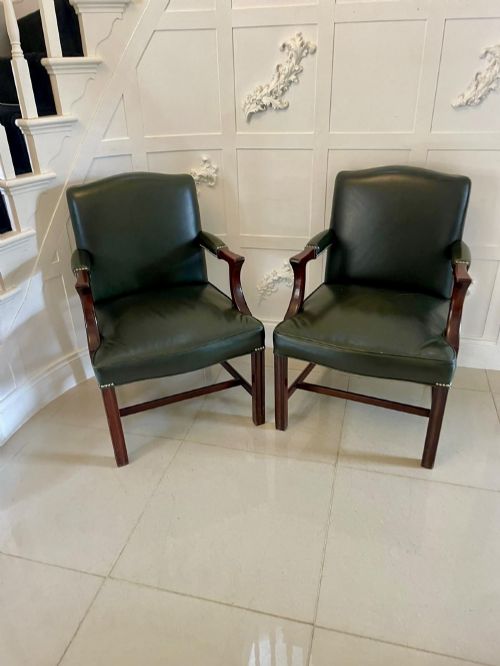
The inventory encompasses stationary library armchairs and heavy Gainsborough chairs alongside swivel and revolving models fitted with adjustable mechanisms for office use.
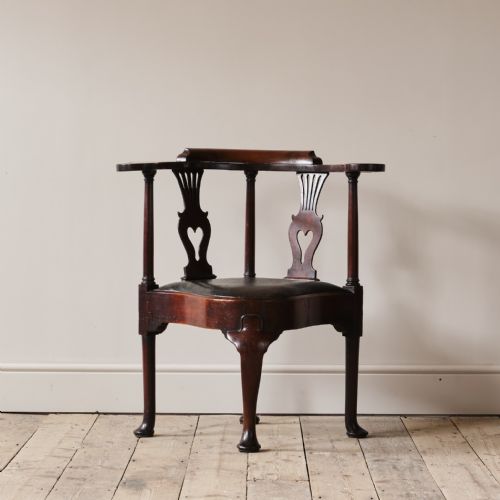
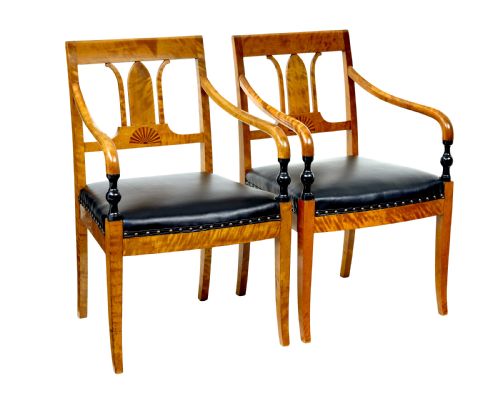
Forms range from deep-buttoned captains chairs and tub shapes to open armchairs framed in mahogany, oak, and walnut.
Materials and construction methods
Makers built the foundational frames of these chairs using durable hardwoods such as mahogany, oak, and walnut, often complemented by turned supports and carved details.
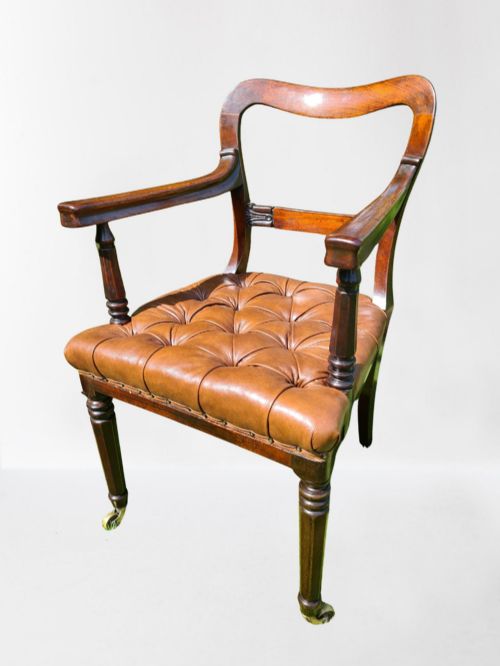
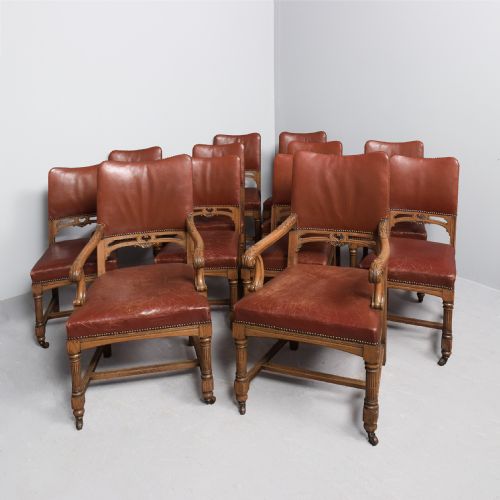
Upholstery relies on traditional leather hide, frequently hand-dyed in shades of green or brown and secured to the seat and back with brass nail tacks or deep buttoning.
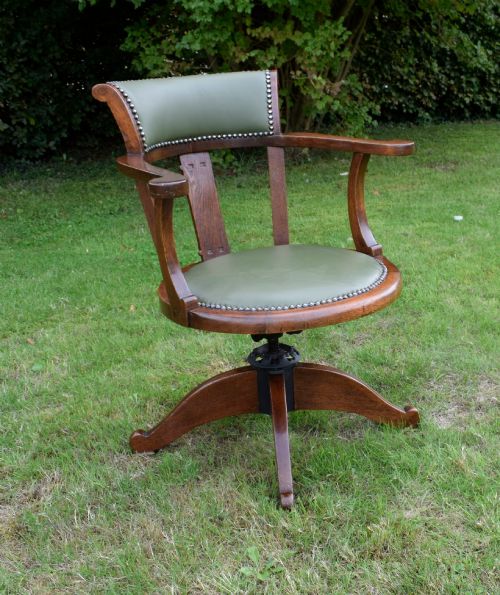
Swivel iterations integrate cast iron and brass revolving mechanisms that allow rotation and tilt functions while maintaining a heavy timber structure.
Leather Desk Armchair Retail Price Guide 2026
Typical asking prices for leather desk armchair among the pieces listed under this phrase on Sellingantiques today, from the lower quarter to the upper quarter. They describe what is for sale here now, not the wider market.
Listings feature woods such as mahogany, oak, and walnut paired with brass hardware and cane inserts across Victorian, Edwardian, and Regency periods.
Factors influencing execution and finish
The standard of timber selection and the depth of carving separate standard examples from finer commissions, particularly where cabinetmakers applied blind fretwork or shaped arm supports.
The grade of the leather upholstery and the precision of the buttoning dictate the visual weight and tactile appeal of the seat.
The integrity of the revolving mechanism and the stability of the joined frame determine how well the chair handles daily use.
WM Heywood Chair Co
The Leather Desk Armchair Glossary
- Gainsborough chair
- A wide, upholstered armchair with open padded arms, low sides, and a high back, designed during the eighteenth century.
- Revolving desk chair
- A seating form featuring a central spindle and undercarriage that permits rotation and often height adjustment.
- Carver chair
- An armchair, typically heavier and more ornate than dining chairs, often utilised at the head of a table or at a desk.
- Deep buttoning
- An upholstery technique where leather is pulled into a padded surface using tufts or buttons to create a diamond pattern.
- Bergère
- An enclosed armchair with wooden framing and cane or upholstered sides and back.
Leather Desk Armchair: Frequently Asked Questions
Are these chairs comfortable for daily work?
Many of these pieces were built for long hours of study or administrative work, featuring supportive high backs and padded armrests.
Swivel models and adjustable tilt mechanisms provide modern desk users with the necessary mobility and ergonomic support.
How do I distinguish a Victorian desk chair from a Georgian one?
Victorian examples frequently incorporate revolving mechanisms, heavy cast iron undercarriages, and deep buttoned upholstery typical of late nineteenth-century offices.
Georgian pieces rely on stationary frames with fixed legs, exposed mahogany joinery, and classical proportions intended for domestic libraries.
What woods are most common in these armchairs?
Mahogany remains the predominant timber across eighteenth and nineteenth-century examples, offering a rich grain and deep colour.
Oak and walnut also appear regularly, particularly in Edwardian office chairs and Victorian library seating.
Did original desk chairs swivel?
While early forms like Gainsborough chairs remained stationary on fixed legs, nineteenth-century office and library chairs often featured sophisticated wooden and iron swivel mechanisms.
Makers adapted designs to include height adjustment and tilting actions for professional clerks and executives.