

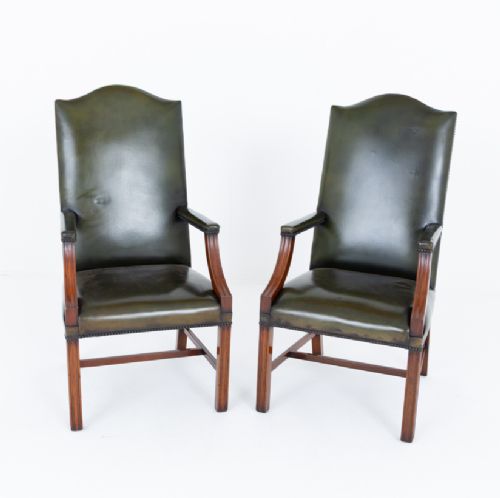
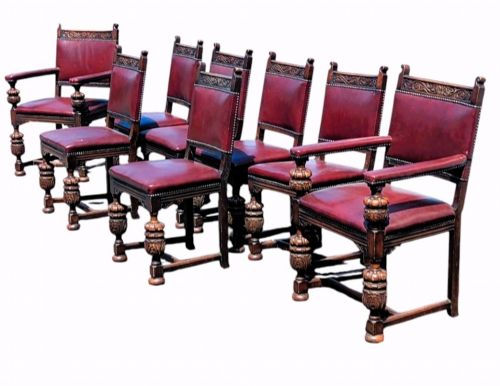
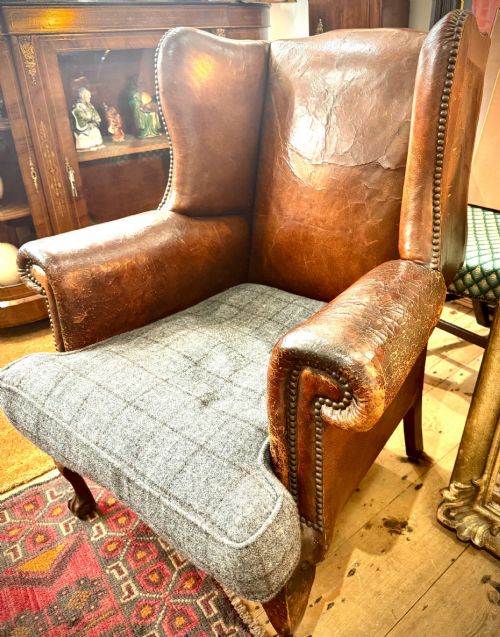
High Back Leather Armchair
A high back leather armchair offers commanding presence and deep support, drawing collectors who value period craftsmanship and comfort.
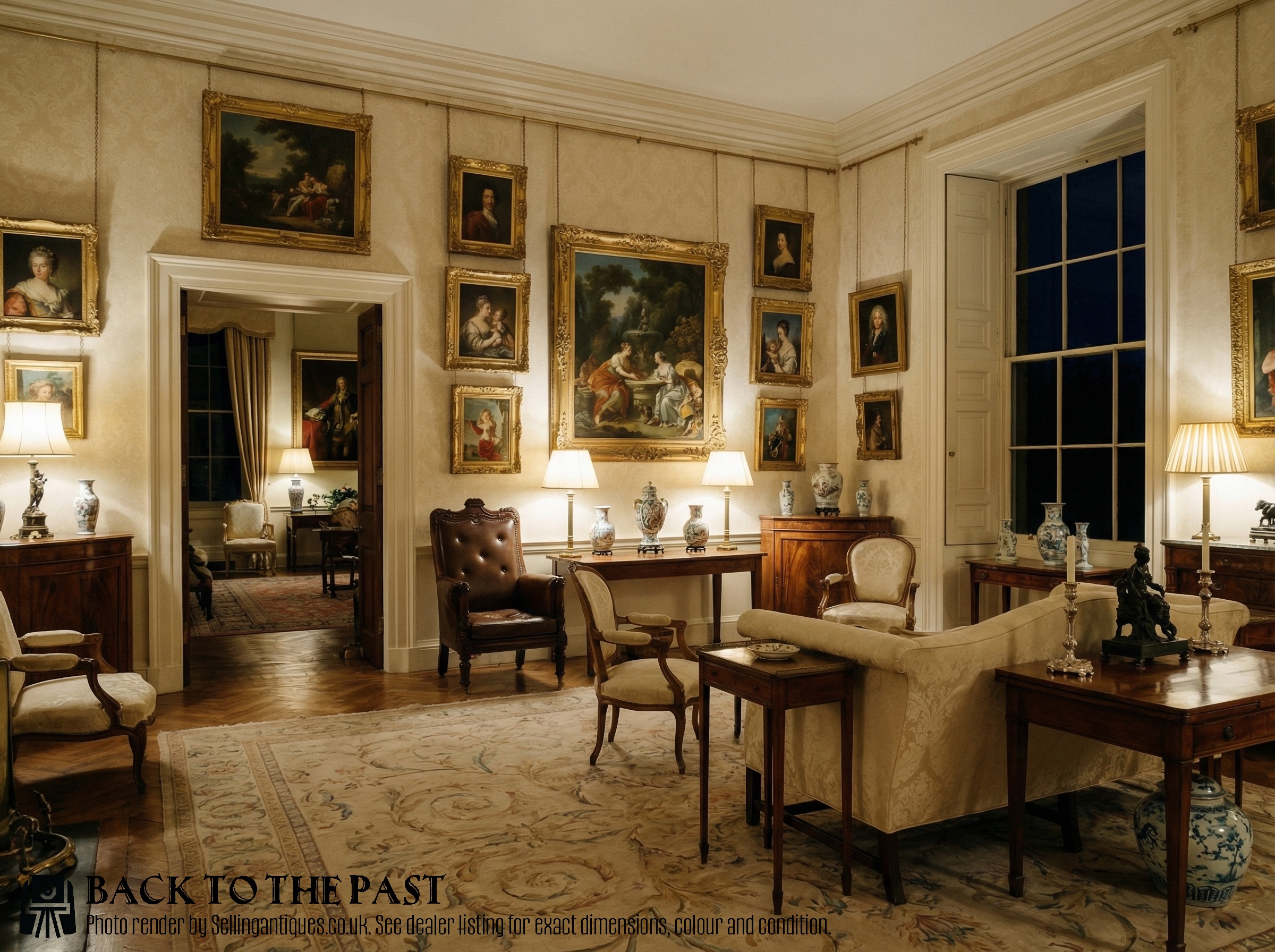
High Back Leather Armchair
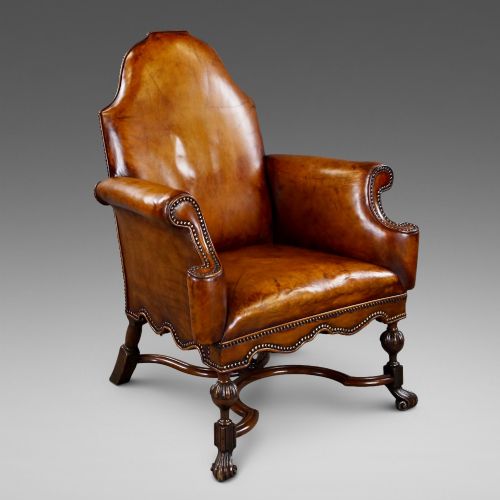
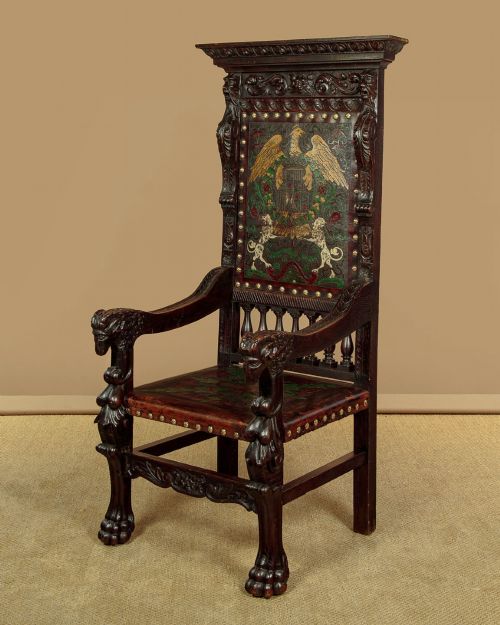
A high back leather armchair combines tall structural framing with substantial upholstery, designed to shield the sitter from draughts and provide sustained comfort. The search phrase encompasses varied forms ranging from library chairs and wingbacks to imposing fireside and throne seating.
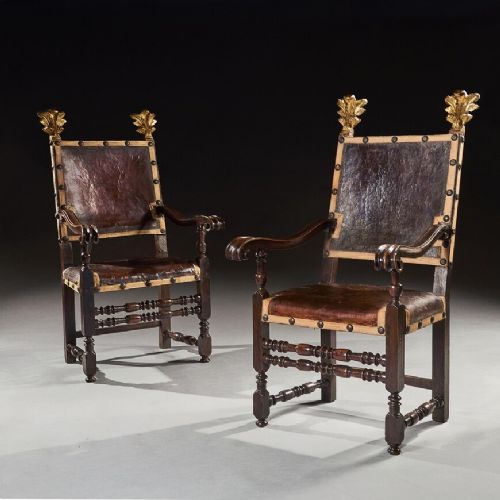
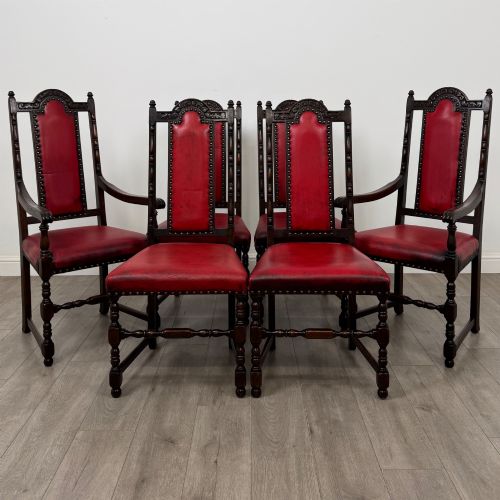
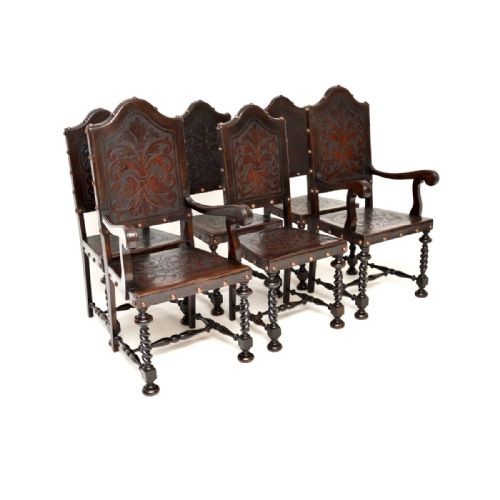
Examples on this page span centuries and stylistic revivals, drawing on 17th Century Italian Baroque, Georgian, Victorian, and Arts and Crafts traditions. Buyers encounter everything from buttoned Chesterfield designs to carved oak panels and mahogany frames.
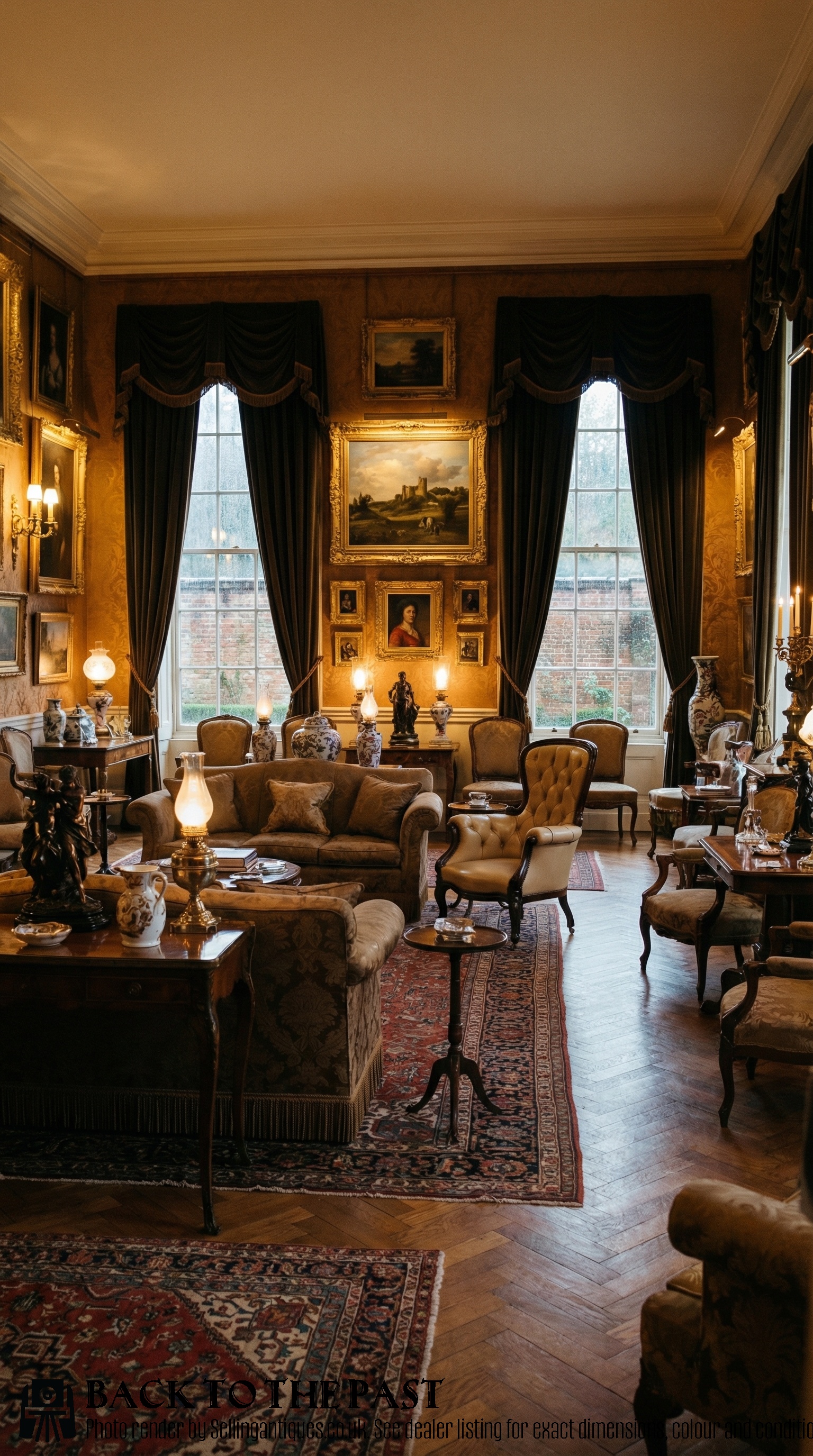
Materials and construction
Construction relies heavily on robust timbers including oak, mahogany, walnut, and fruitwood, providing the foundational strength for substantial seating. Artisans shaped these woods into carved frames, cabriole legs, or supportive upright stiles.
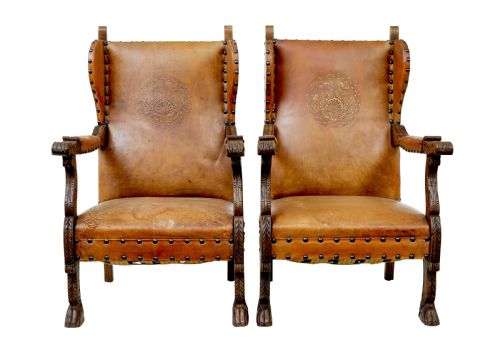
Upholstery utilises durable leather, frequently hand-dyed, embossed, or secured with brass detailing and traditional buttoning. These tactile surfaces are mounted over dense internal stuffing supported by webbing or springs within the timber framework.
High Back Leather Armchair Retail Price Guide 2026
Typical asking prices for high back leather armchair among the pieces listed under this phrase on Sellingantiques today, from the lower quarter to the upper quarter. They describe what is for sale here now, not the wider market.
Materials documented across the inventory include oak, mahogany, walnut, fruitwood, brass, and gold leaf paired with leather.
Assessing craftsmanship and finish
Quality rests upon the integrity of the timber frame and the depth of hand-carved detailing, where crispness of execution distinguishes superior cabinet work. The selection of wood grain and the richness of the polished finish dictate visual weight and period authenticity.
Leather selection and upholstery execution separate standard examples from finer pieces, particularly in the precision of buttoning, embossing, and brass stud placement. The harmonious integration of leather hide with structural woodwork reveals the maker's competence.
Robert Mouseman Thompson·A.W.N. Pugin
The High Back Leather Armchair Glossary
- Wingback
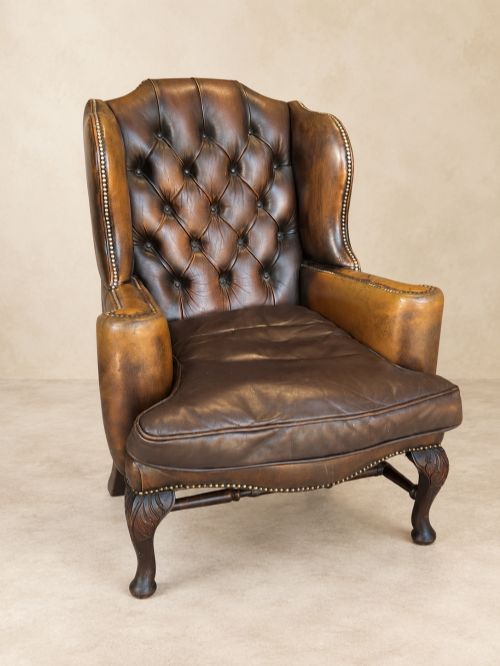
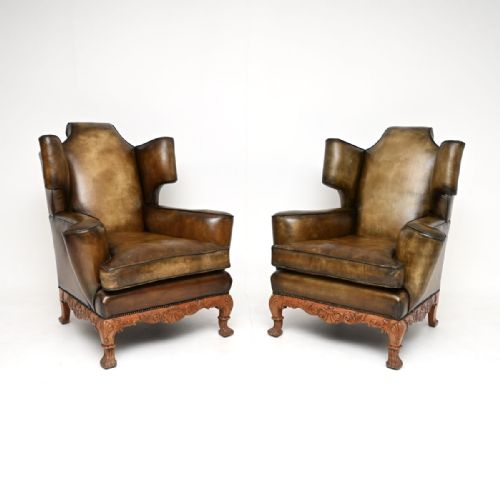
- An armchair featuring protective side panels designed to deflect draughts and retain fireplace heat. This form often appears in Georgian and Victorian iterations.
- Gainsborough chair
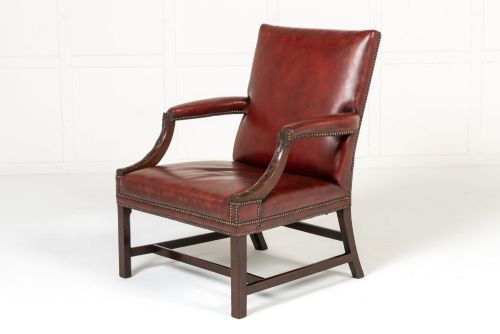
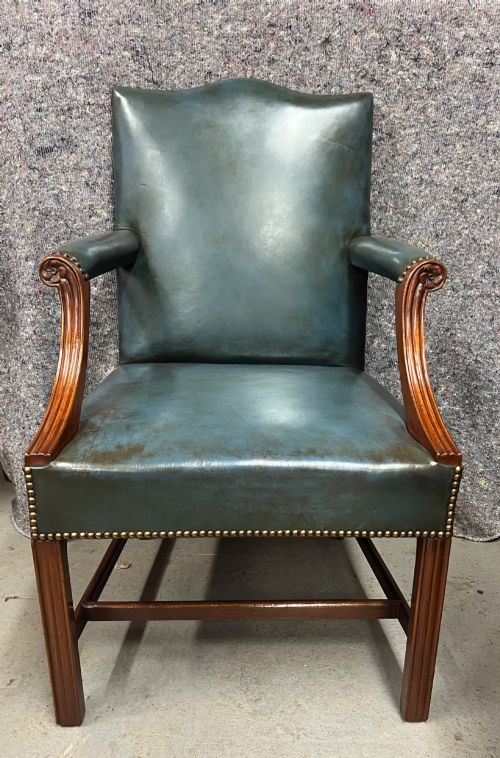
- A type of wide, upholstered armchair with an open frame, short armrests, and mahogany or walnut legs, originating in the 18th century. These chairs commonly served at writing desks or in libraries.
- Chesterfield
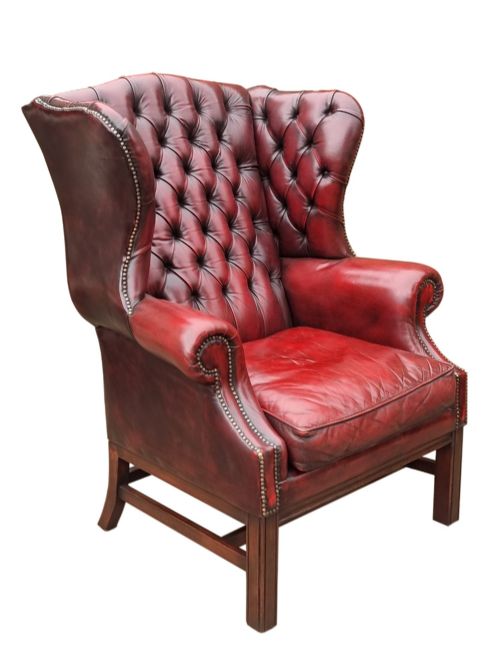
- A style of upholstered seating characterised by deep button tufting and rolled arms of equal height to the back. It typically employs brown or tan leather.
- Parcel-gilt
- Partially gilded woodwork where specific carved details receive a thin application of gold leaf over a prepared base. This technique highlights ornamental elements on walnut or oak frames.
- Library chair
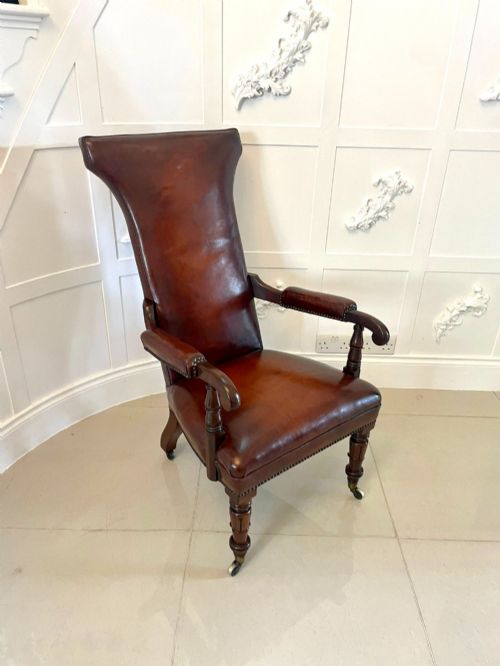
- A substantial, comfortable armchair designed for reading rooms, frequently rendered in mahogany or oak with leather upholstery. They prioritise ergonomic support for extended sitting.
High Back Leather Armchair: Frequently Asked Questions
What is a high back leather armchair?
A high back leather armchair is a tall seat designed for comfort and insulation, featuring substantial wooden framing and leather upholstery. These chairs include wingbacks, library chairs, and fireside seating.
They draw on historical styles spanning the 17th century through the early 20th century, incorporating materials like oak, walnut, and brass studs.
How do I identify the period of a leather armchair?
Period identification relies on examining the timber species, joinery methods, and stylistic cues such as carved motifs or leg shapes. For instance, cabriole legs and mahogany point toward 18th-century influence, while heavy oak carving often links to revival styles.
Upholstery techniques like deep buttoning or embossed leather details further help differentiate Victorian and Edwardian interpretations from earlier baseline designs.
Where were high back armchairs used historically?
These armchairs traditionally occupied libraries, studies, and principal reception rooms where warmth and formal seating were paramount. Their tall backs provided shelter from cold draughts near open hearths.
In larger houses, specific forms like porter's chairs served at hall entrances to regulate drafts around the attendant.
How do I care for antique leather furniture?
Antique leather requires consistent maintenance to prevent the natural hide from drying out or cracking over time. Gentle cleaning and appropriate conditioning help preserve the supple texture of hand-dyed or embossed surfaces.
Positioning the chair away from direct sunlight and strong heat sources protects both the leather upholstery and the underlying timber frame.