
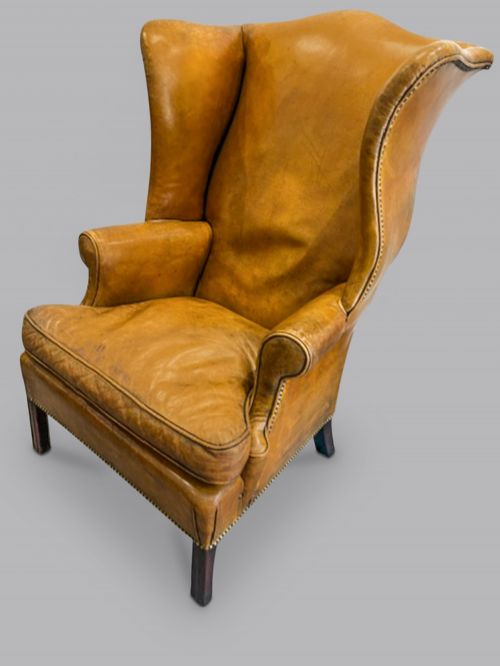
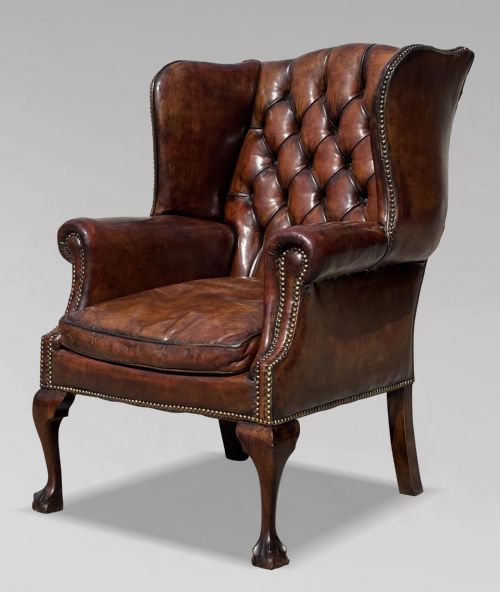
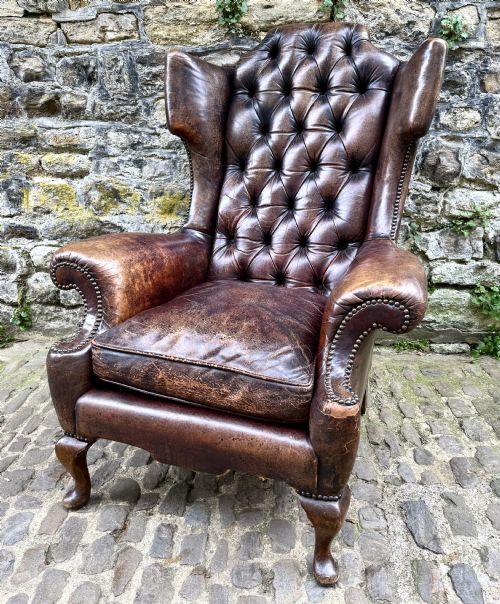
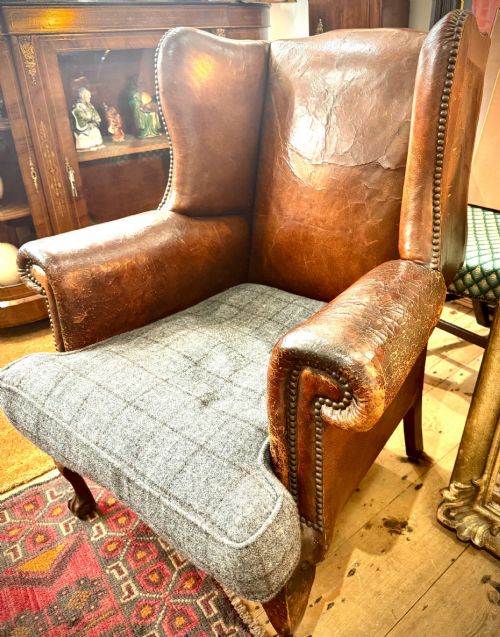


Studded Leather Wing Chair
A studded leather wing chair offers deep comfort and traditional presence, combining high protective sides with rich upholstery.
Studded Leather Wing Chair
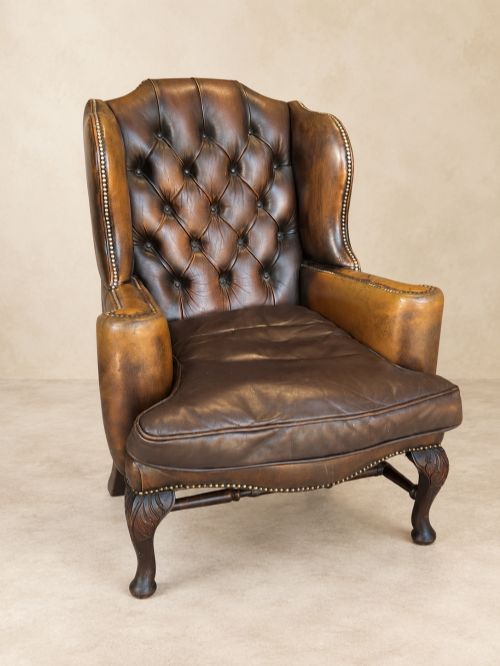
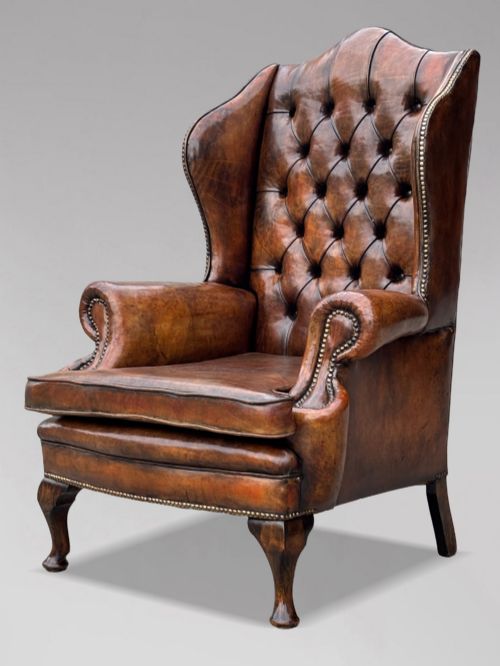
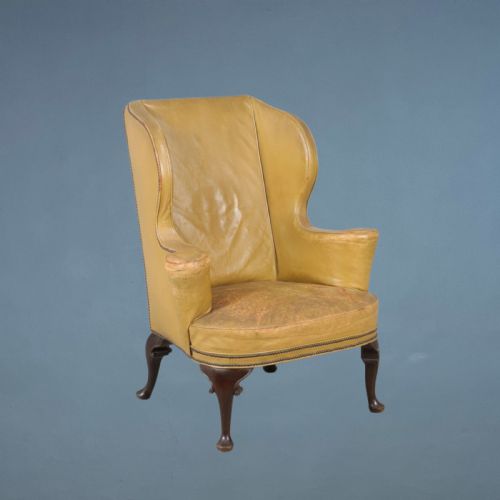
A studded leather wing chair is a classic seating form defined by upholstered side panels designed to shield the sitter from draughts. These armchairs appear in periods ranging from the Georgian era through the Victorian and Edwardian decades, alongside later revivals.
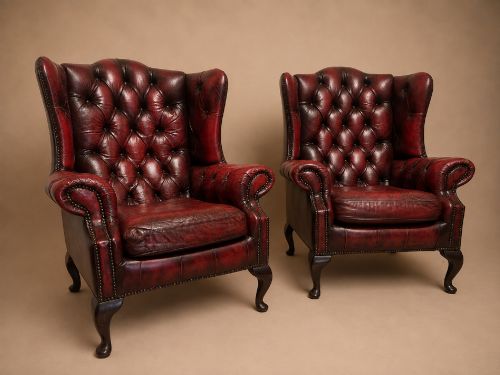
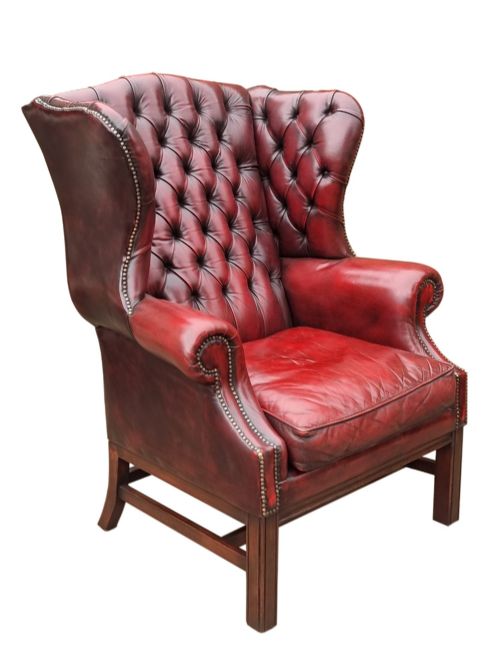
The version most commonly met on this page is the nineteenth-century brown leather button wing armchair, often featuring brass studwork detailing. Pieces span origins from the eighteenth century up to the nineteen-thirties, including library chairs and porter's armchairs.
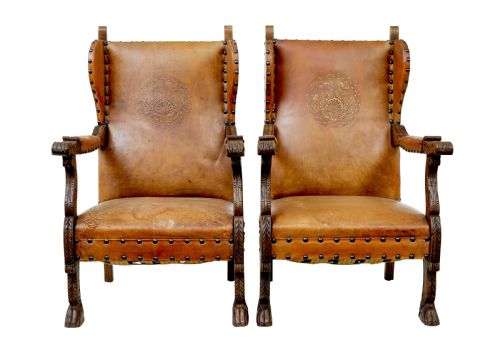
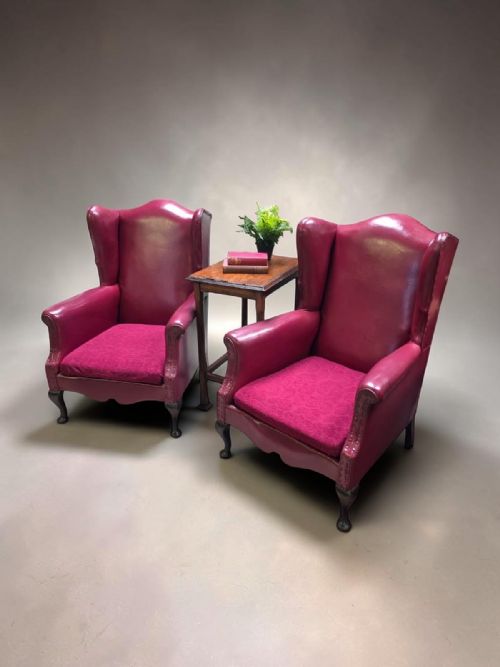
Buyers also encounter matching pairs and larger sets alongside occasional sofas and settees upholstered in similar materials. Styles draw heavily upon earlier forms, showing George II, George III, Regency and Queen Anne revival influences.
Materials and construction
Frames rely on sturdy timbers such as mahogany, oak, walnut, and general hardwood or timber foundations. These woods provide the structural strength required for substantial seating.
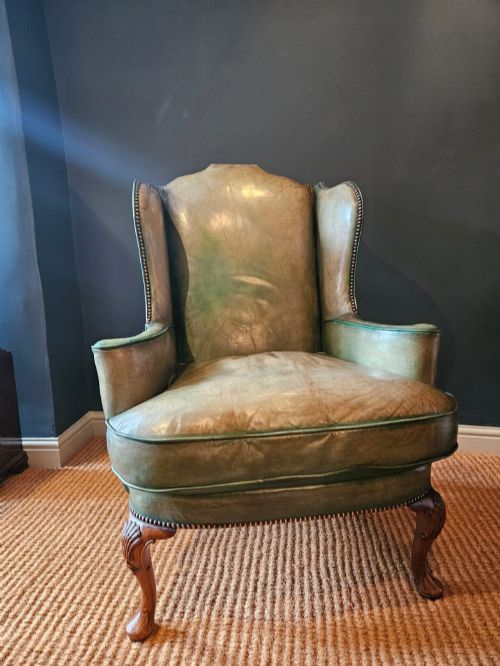
Upholstery utilises durable leather, frequently hand-dyed, hand-coloured, or embossed. Individual pieces incorporate brass studs driven along the seams to secure the hide tightly to the frame.
Studded Leather Wing Chair Retail Price Guide 2026
Typical asking prices for studded leather wing chair among the pieces listed under this phrase on Sellingantiques today, from the lower quarter to the upper quarter. They describe what is for sale here now, not the wider market.
Listings feature seating from the eighteenth century, the Victorian era, and the nineteen-twenties, constructed using mahogany, oak, walnut, leather, and brass.
Distinguishing quality across examples
Quality separates along the depth of the timber frame and the richness of the leather upholstery. Superior examples display carefully finished hand-dyed hides and substantial hardwood structures.
Fine craftsmanship shows in the precision of the brass studwork and the integrity of the period framing, whether original Georgian work or later revival pieces.
The Studded Leather Wing Chair Glossary
- Wingback
- A chair design featuring protective lateral panels attached to the arms or backrest. This traditional shape was originally created to retain fireplace heat and block draughts.
- Button-back
- An upholstery method where depressions are formed in the padding using buttons pulled tight. This technique secures the internal filling and creates a patterned surface.
- Cabriole leg
- A furniture leg that curves outward and then tapers inward, finishing in a pad or claw foot. This form is common on walnut and mahogany seating.
- Porters armchair
- A fully enclosed hooded seat designed to keep out cold air in large drafty halls. Porters used these chairs while guarding building entrances.
Studded Leather Wing Chair: Frequently Asked Questions
How do I identify a Georgian wing chair?
Georgian pieces generally display authentic period timber frames and traditional proportions reflecting eighteenth-century design standards.
Later revivals from the twentieth century often copy these earlier styles while using construction methods typical of their own time of manufacture.
Are these chairs comfortable for daily use?
These armchairs were built for sustained sitting, featuring high backs and padded armrests for proper support.
The enclosed sides and deep cushioning make them well-suited for reading and relaxation in modern living spaces.
What woods were used for the frames?
Framwork commonly relies on dense timbers like mahogany, oak, and walnut to ensure long-term stability.
Some examples utilise general hardwood or timber foundations hidden beneath the leather upholstery and padding.
What is the purpose of the brass studs?
Brass studs serve the functional purpose of fastening the leather securely to the wooden frame beneath.
Over time, these metal pins also developed an aesthetic role, outlining the curves of the wings and arms.