


Vintage Leather Accent Chair
These vintage leather accent chair designs bring together sturdy wood frames and supple hides across periods ranging from the eighteenth century to Art Deco.
Vintage Leather Accent Chair
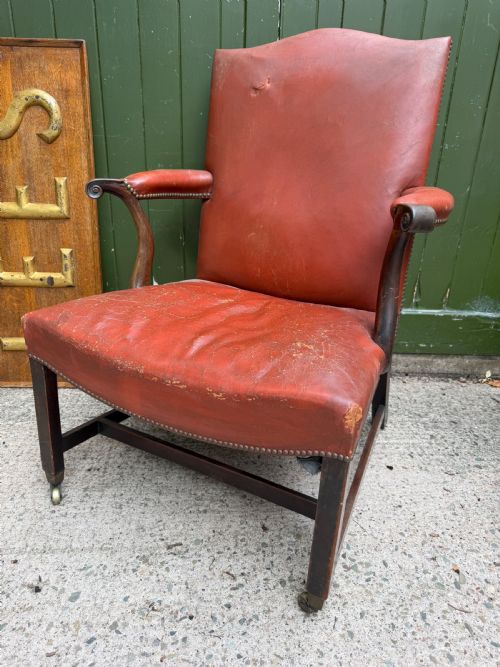
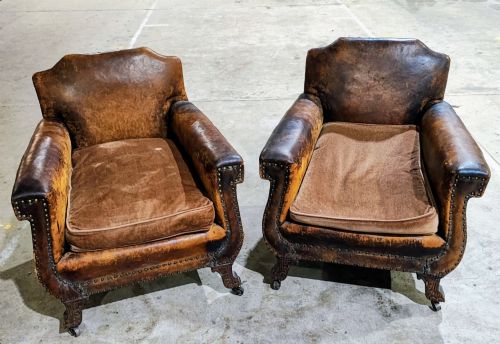
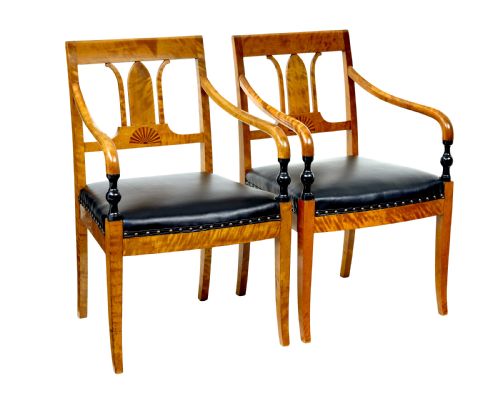
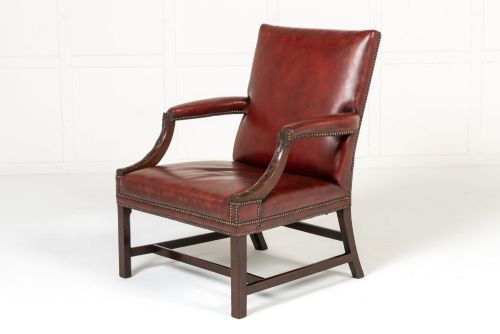
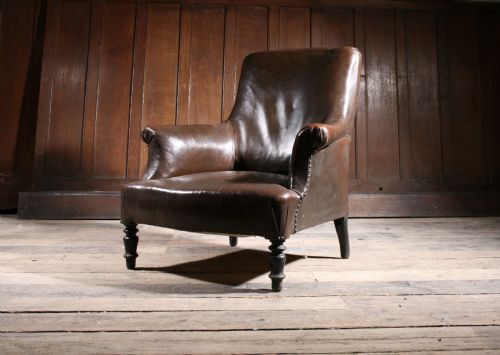
When a buyer explores a vintage leather accent chair, they are looking at seating options that span multiple centuries, from Georgian and Victorian periods to Art Deco twentieth-century pieces. The selection includes library armchairs, club chairs, and occasional chairs designed to anchor a room.
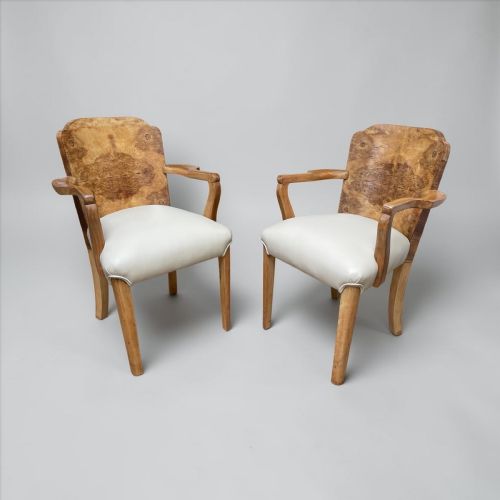
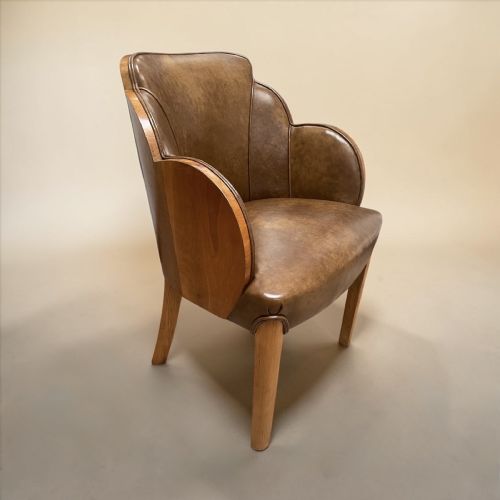
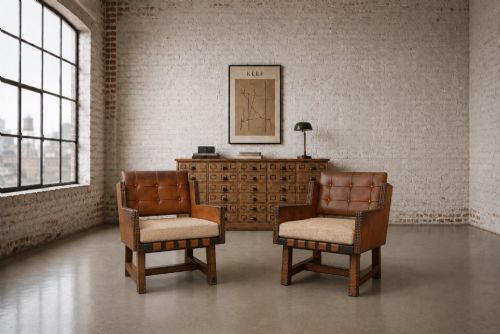
The most common examples on this page date from the nineteen-thirties, featuring distinct Art Deco lines alongside nineteenth-century club chairs and earlier mahogany Gainsborough frames. Formats range from low lounge seats to upright side chairs and paired seating arrangements.
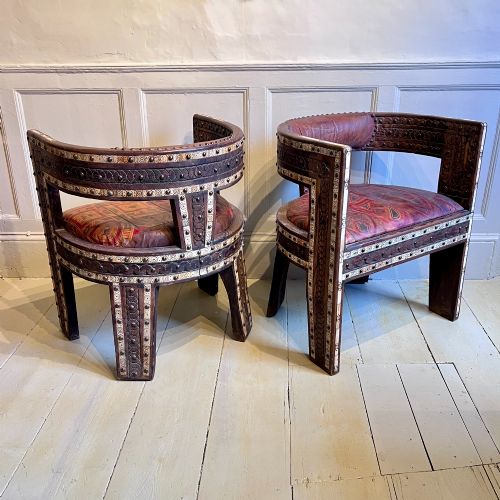
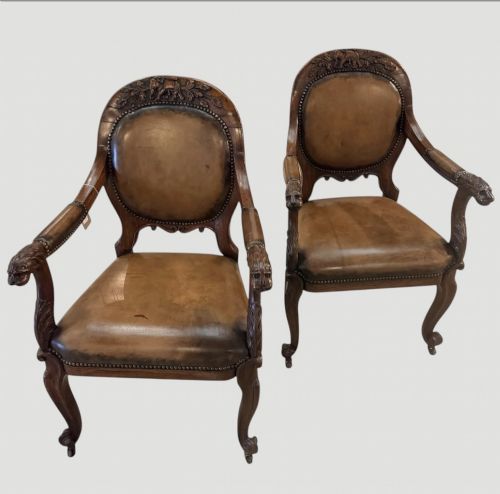
Origins vary across English, French, Scandinavian, and Anglo-Indian workshops, bringing diverse regional carpentry traditions into contact with fitted leather upholstery. Buyers encounter everything from button-backed reading chairs to carved hardwood frames with brass detailing.
How they were made
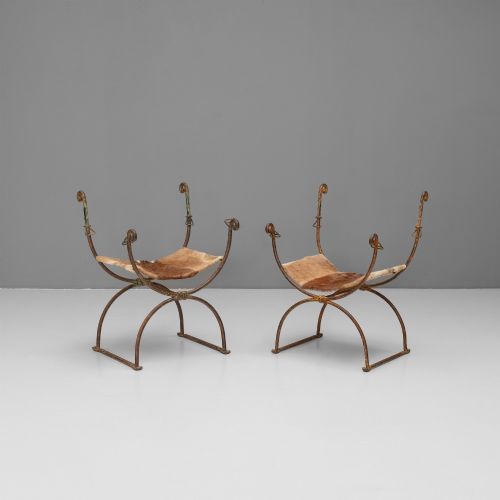
Frames rely on traditional timbers such as mahogany, oak, walnut, rosewood, birch, and fruitwood, joined through mortise and tenon construction to support daily use. Iron framing also appears in continental European seating from the opening of the twentieth century.
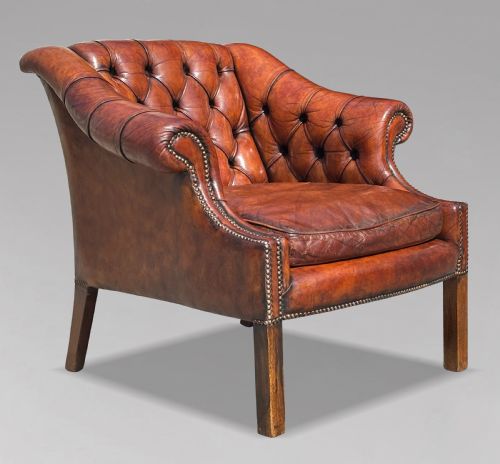
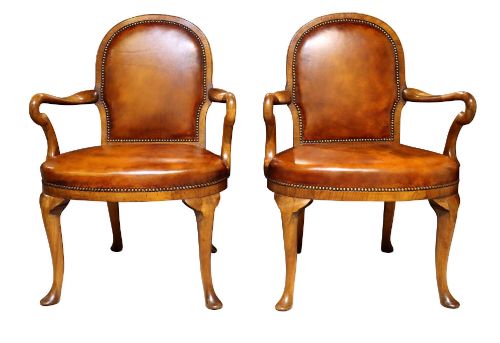
Upholstery relies on cattle leather and sheep's hide, often secured with brass nail detailing or deep buttoning techniques across the backrests. Natural materials provide both structural longevity and the patinated surfaces characteristic of older seating.
Vintage Leather Accent Chair Retail Price Guide 2026
Typical asking prices for vintage leather accent chair among the pieces listed under this phrase on Sellingantiques today, from the lower quarter to the upper quarter. They describe what is for sale here now, not the wider market.
Period origins span from the eighteenth century through Victorian and Edwardian eras to nineteen-thirties Art Deco.
What varies in quality
Quality rests in the relationship between the timber frame and the hide, where dense hardwoods like mahogany or walnut provide stable foundations for supple, thick leather upholstery. Superior examples display balanced proportions and joinery that remains tight after decades of service.
The integration of decorative elements, such as hand-carved woodwork, brass studding, and button-backed cushioning, separates standard utilitarian seating from finer studio pieces. Maker attribution also plays a role, with signed or documented workshop pieces holding distinct standing.
Hille·Harry and Lou Epstein
The Vintage Leather Accent Chair Glossary
- Gainsborough
- An eighteenth-century style of armchair characterised by an upholstered back and seat, open padded arms, and short cabriole or straight legs. These seats were originally designed for libraries and writing desks.
- Club chair
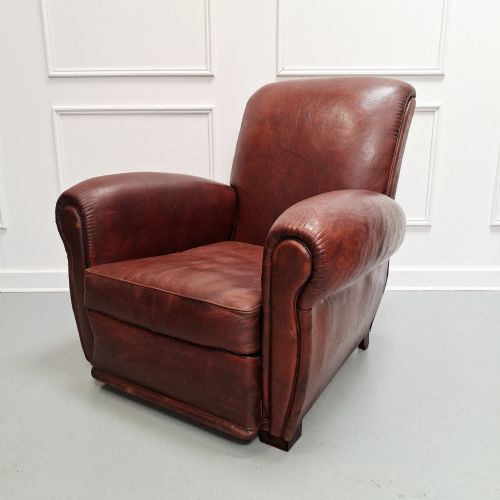
- A deep, comfortable armchair upholstered in leather, originating in France and Britain during the nineteenth and early twentieth centuries. They prioritise relaxed lounging through generous proportions and padded armrests.
- Bergère
- A French-style enclosed upholstered armchair with wooden framing exposed around the sides and back. Examples frequently combine cane work with upholstered seat cushions.
- Button-back
- An upholstery technique where buttons are pulled deep into the padding in a diamond pattern to secure the filling and create a textured surface. This method appears frequently on Victorian and Edwardian library chairs.
- Art Deco
- A design style from the nineteen-thirties featuring streamlined geometric forms and smooth surfaces. In seating, this translates to rounded club shapes and dramatic birch or walnut frames.
Vintage Leather Accent Chair: Frequently Asked Questions
How do I date a leather armchair?
Dating relies on examining the underlying timber frame construction, joinery methods, and the style of the legs, whether cabriole, square, or turned. Materials like mahogany point towards earlier centuries, while tubular steel or distinct geometric veneers indicate nineteen-thirties production.
The type of leather and method of upholstery further clarify the period. Deep buttoning and horsehair stuffing typically suggest nineteenth-century work, whereas smoother sheep's hide finishes align with Art Deco club chairs.
Are club chairs comfortable for daily use?
Club chairs are built with deep seats and thick cushioning designed for prolonged relaxation. Their low profiles and padded arms make them practical lounge seating.
The supportive internal webbing and resilient leather hides ensure they withstand regular sitting. Over time, the leather conforms further to the user.
How do I care for vintage leather?
Vintage leather benefits from regular dusting with a soft cloth and occasional treatment with appropriate conditioning balms to prevent drying. Keeping chairs away from direct heat sources protects the hide from cracking.
Allowing the natural patina to develop preserves the character of the material. Avoid harsh chemical cleaners that strip the original finish.