



Vintage Leather Club Chair
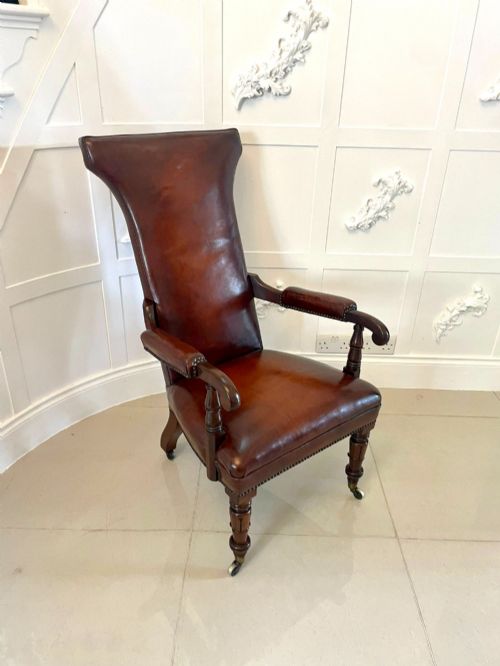
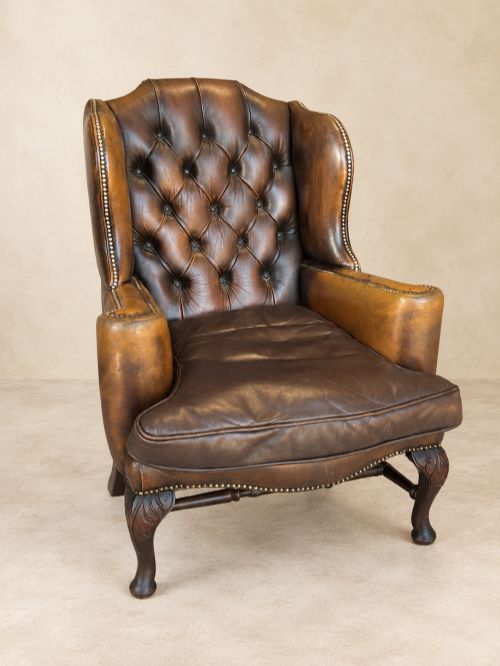
A vintage leather club chair offers deep comfort and enduring character, bringing substantial seating from the nineteenth century onward into the room.
Vintage Leather Club Chair
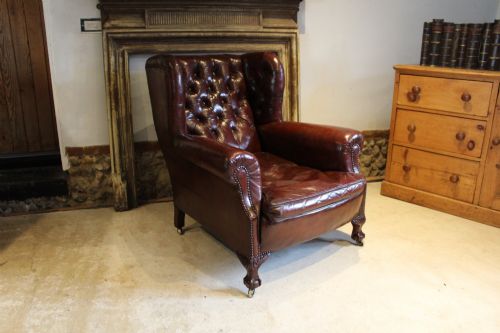
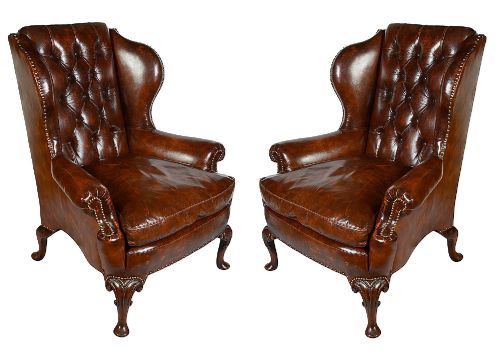
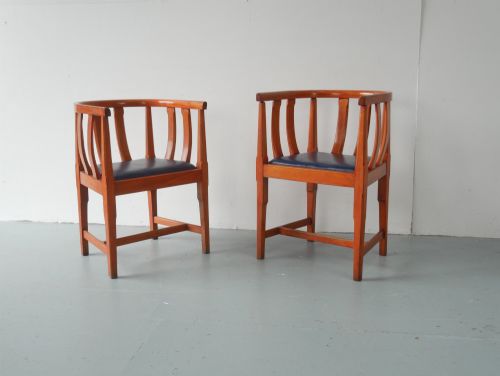
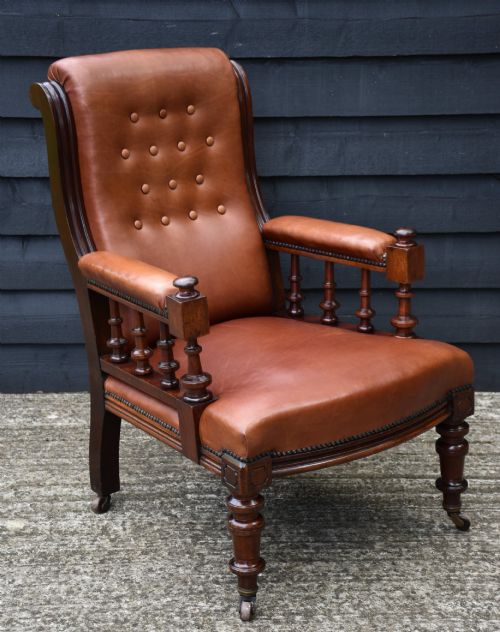
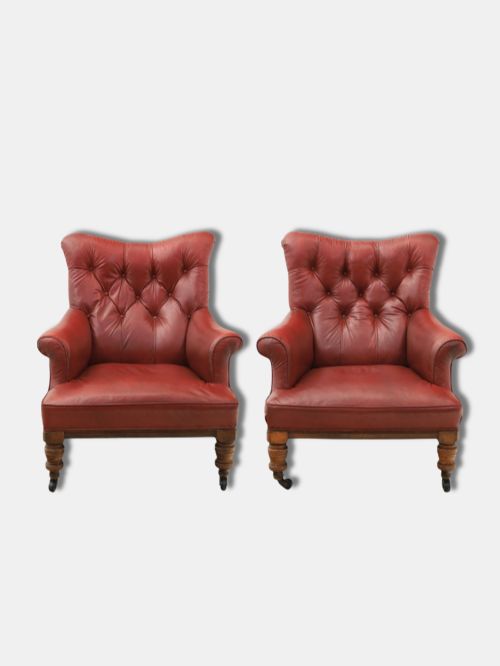
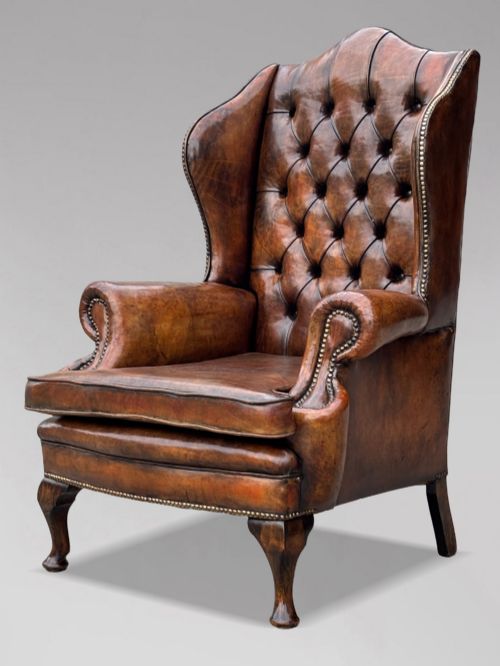
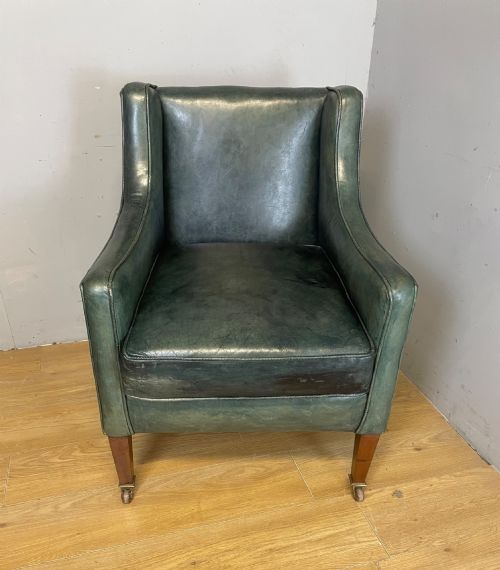
A vintage leather club chair represents a heavy upholstered armchair designed for long sitting, appearing in forms such as wingbacks, library chairs, and deep-seated loungers. Buyers seeking this phrase encounter sturdy frames originating from Victorian, Edwardian, and Art Deco periods, alongside robust twentieth-century designs.
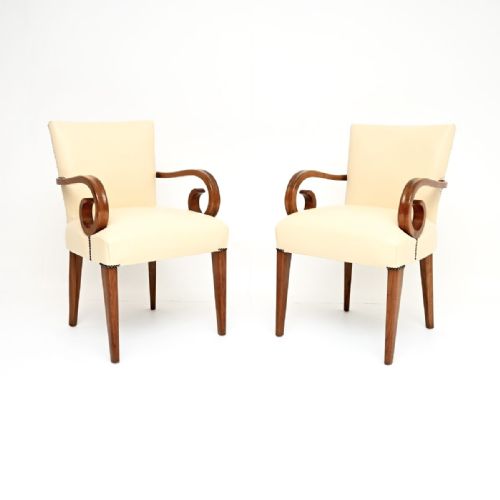
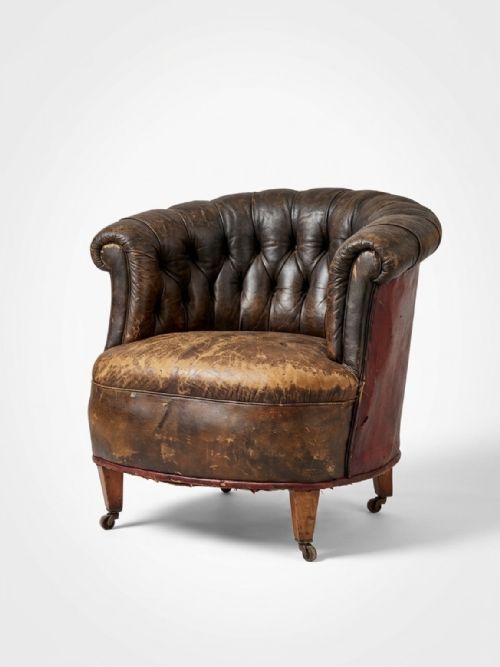
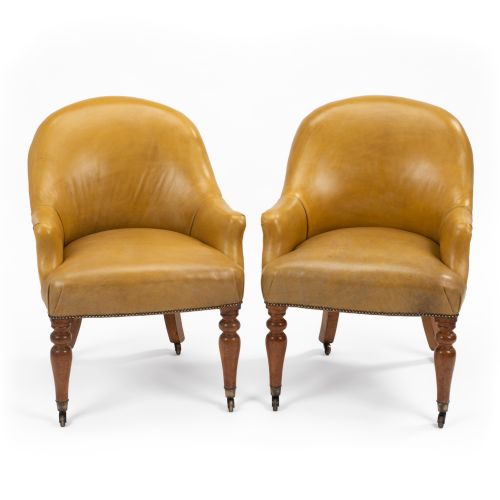
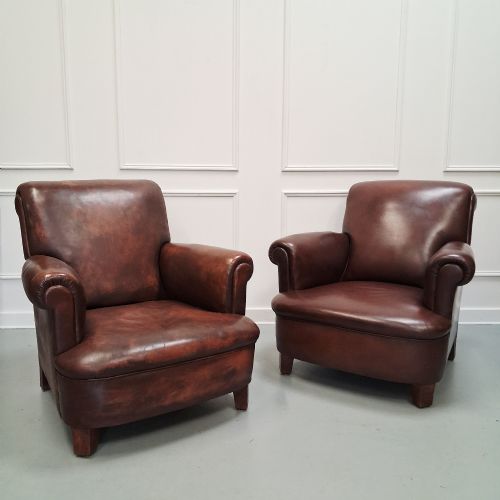
The selection ranges from tall nineteenth-century buttoned library models to low-slung nineteen-thirties French club chairs and streamlined satin birch frames. Many examples survive in pairs, combining traditional English Chesterfield proportions with continental influences.
Materials and construction methods
Makers built these armchairs using dense timber frameworks of mahogany, oak, walnut, or standard hardwood, providing a rigid internal structure for daily use. Upholstery relied on supportive stuffing secured beneath durable hides, occasionally accented with brass details or cane panels.
Outer coverings utilised heavy leather, oxblood rexine, or velvet, sometimes paired with decorative woodwork in satin birch or exposed mahogany frames. Construction techniques focused on durability, employing deep buttoning and firm springing to maintain shape over decades of service.
Vintage Leather Club Chair Retail Price Guide 2026
Typical asking prices for vintage leather club chair among the pieces listed under this phrase on Sellingantiques today, from the lower quarter to the upper quarter. They describe what is for sale here now, not the wider market.
Children also needed proper lounge seating in the nineteen thirties, as evidenced by miniature Art Deco club chairs built in matching oxblood red.
Judging quality and proportion
Quality rests in the integrity of the wooden frame and the depth of the timber, separating solid mahogany or walnut structures from lighter built pieces. Superior examples maintain balanced proportions and secure joints that support the weight of heavy upholstery without shifting.
The finish of the leather and the execution of buttoning or stitching define the tier of craftsmanship. Better pieces show careful selection of hides that age with a rich patina, alongside refined carving on exposed arms and legs.
Howard and Sons·Harry and Lou Epstein·Hille
The Vintage Leather Club Chair Glossary
- Club chair
- A low, deep-seated upholstered armchair designed for relaxation. These seats typically feature padded arms and a supportive backrest.
- Chesterfield
- A deep-buttoned upholstered seating style traditionally finished in leather. The arms and back usually stand at the same height.
- Rexine
- A leathercloth material made from fabric coated with nitrocellulose. It served as a durable, wipeable alternative to natural hide.
- Satin birch
- A pale, highly figured timber used for decorative furniture frames. It gained popularity during the Art Deco period for its shimmering grain.
Vintage Leather Club Chair: Frequently Asked Questions
How do I identify a nineteen thirties club chair?
Nineteen thirties models often feature smoother lines, lower profiles, and rounded Art Deco shapes upholstered in supple tan or dark leather. Frames occasionally incorporate contrasting woods like satin birch or walnut.
Such chairs prioritize simplified comfort over ornate Victorian carving, resulting in a distinctively chunky silhouette that suits modern interiors.
What is the difference between a club chair and a wing chair?
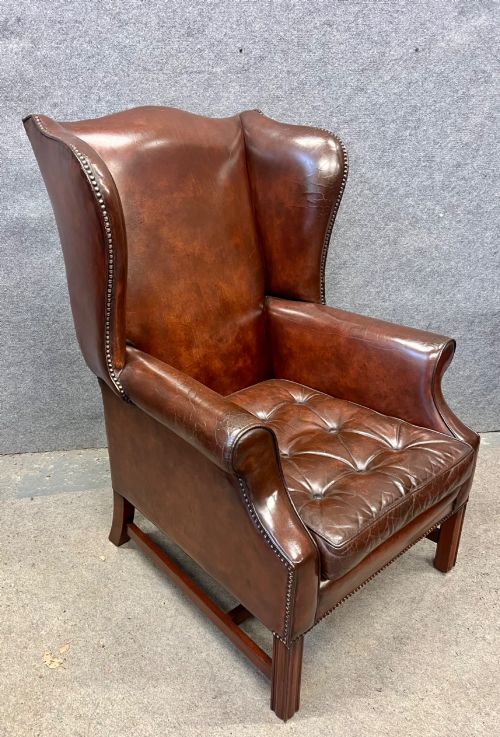
A club chair focuses on low, deep lounging with padded arms and a simple backrest designed for relaxed posture. A wing chair adds protective side panels intended to shield the sitter from draughts.
Wing variants from the nineteenth and early twentieth centuries also tend to feature higher backs and more formal upright postures than standard club seats.
Where were these armchairs typically placed?
Historically, these heavy armchairs stood in libraries, studies, and smoking rooms where occupants required durable seating for reading and conversation. Their robust wooden frames and thick leather upholstery suited high-use domestic spaces.
Over time, buyers moved them into living rooms and reception spaces to anchor seating arrangements with traditional character.
How should I care for vintage leather upholstery?
Maintain vintage leather by keeping it away from direct sunlight and heat sources that dry out the hide. Regular dusting and occasional conditioning help preserve the suppleness of the material.
Avoid harsh chemical cleaners, relying instead on mild soap solutions or specialist balms recommended for antique leather.