
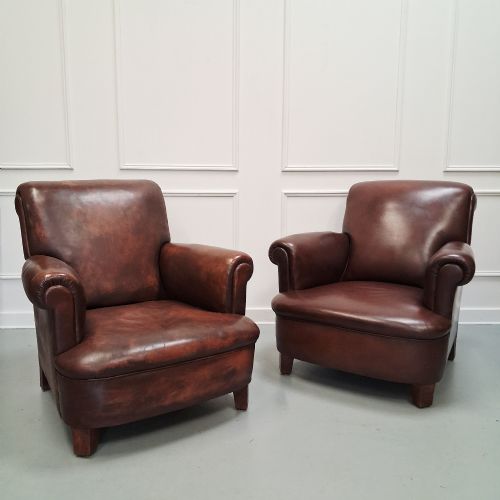
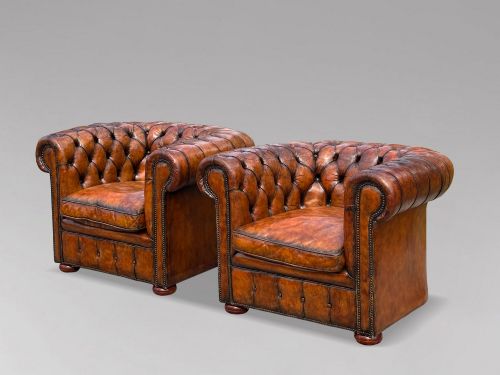
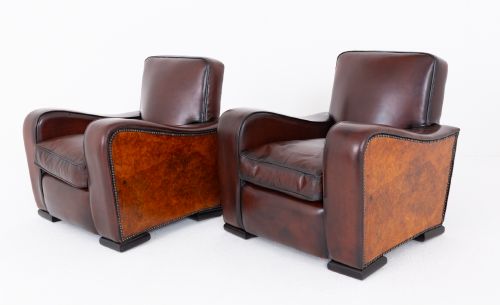

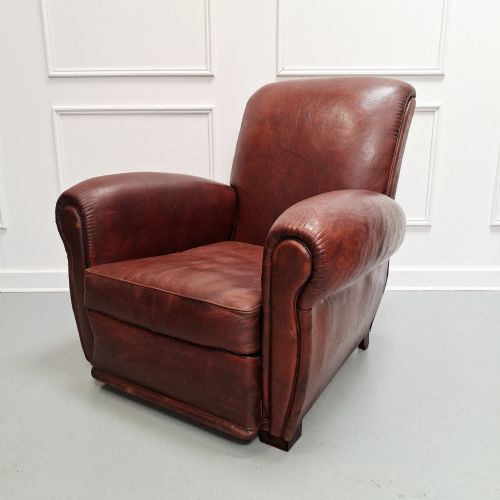



Chestnut Leather Armchair
A chestnut leather armchair is a robust seat built for long reading and writing, bringing rich hide and warm timber into a study or library.
Chestnut Leather Armchair
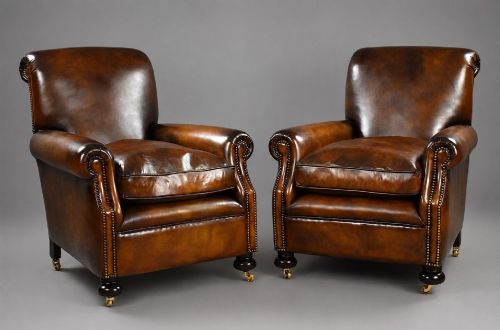
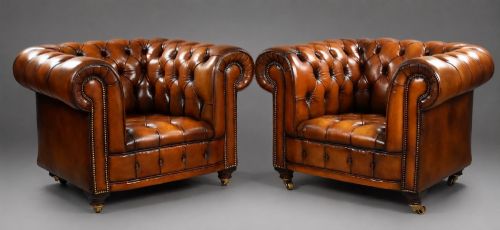
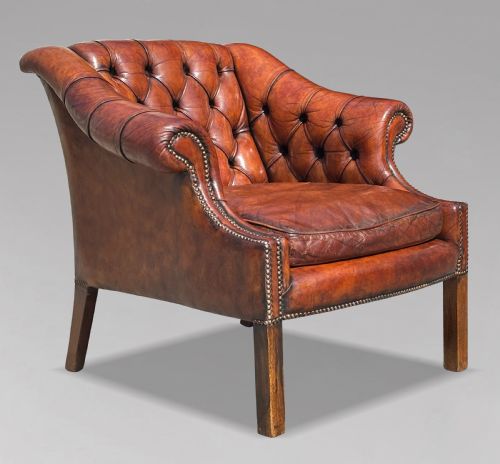
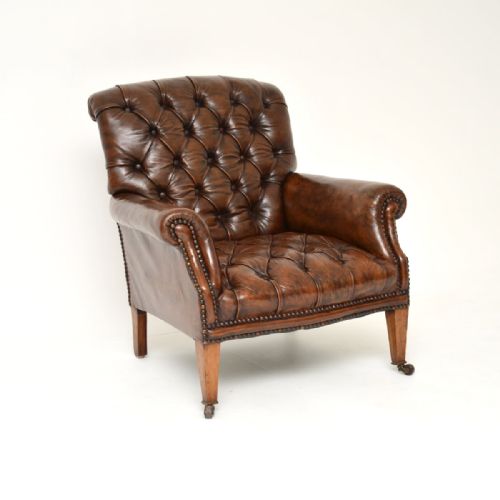
A chestnut leather armchair combines deep-buttoned or smooth hide with solid timber frames, ranging from early nineteenth century library chairs to nineteen-thirties club seats. The evidence shows these pieces appearing across Georgian, Victorian, Edwardian and Art Deco periods, encompassing wingbacks, desk chairs and club chairs.
The version most commonly met on this page is the Victorian or Edwardian club chair or library armchair, often framed in mahogany, oak or walnut. These span functional office seats to deep-seated lounge chairs designed for comfort and extended sitting.
Makers such as Heal and Son Ltd appear in past archives alongside traditional period pieces, demonstrating that these armchairs served both commercial retailers and bespoke commissions. Buyers find everything from revolving desk chairs to reclining library seats.
What varies in quality
The distinction between standard examples and top-tier pieces rests on the weight of the timber and the depth of the leather patination. Superior items utilise solid mahogany, rosewood or burr walnut frames with substantial carved details, rather than simpler construction.
The integrity of the interior stuffing and the suppleness of the chestnut leather determine the seating comfort and visual depth. Pieces retaining their original brass castors and uncompromised buttoning represent the highest grade of craftsmanship.
Chestnut Leather Armchair Retail Price Guide 2026
Typical asking prices for chestnut leather armchair among the pieces listed under this phrase on Sellingantiques today, from the lower quarter to the upper quarter. They describe what is for sale here now, not the wider market.
Tortoiseshell surfaces occasionally make an unexpected appearance alongside standard timber frames.
Heal and Son Ltd
The Chestnut Leather Armchair Glossary
- Club chair
- A deep, low-seated armchair upholstered in leather, designed for lounging in comfort. These originated in nineteenth-century French and English clubs.
- Wingback
- An armchair with high sides and projecting panels, or wings, designed to shield the sitter from draughts. They frequently appear in Victorian and Edwardian examples.
- Button back
- An upholstery technique where depressions are formed in the leather by pulling ties through to the frame. This secures the padding and creates a patterned grid.
- Gainsborough armchair
- A wide, open-armed seat with a padded back and seat, typically standing on square or cabriole legs. These date back to the Georgian period.
- Patina
- The surface sheen and softening of colour developed on leather and wood through age and use. It indicates natural wear rather than artificial distress.
Chestnut Leather Armchair: Frequently Asked Questions
How do I identify a Victorian library chair?
Victorian library chairs typically feature sturdy mahogany or oak frames combined with buttoned leather upholstery and turned legs. Many include heavy brass castors for movement across study floors.
They prioritise functional comfort, often appearing as desk chairs or reclining seats designed for long hours of reading.
Are club chairs comfortable for daily sitting?
Club chairs offer deep seats and supportive upholstered arms built for relaxation. Their internal spring and stuffing construction provides a softer sit than formal dining furniture.
Over decades of use, the chestnut leather conforms to the sitter while retaining structural support.
What timber frames are most common?
Mahogany and oak appear most frequently across the listed pieces, providing dense structural support for the leather upholstery. Walnut, burr walnut and rosewood also feature in finer decorative examples.
The choice of wood usually reflects the period of manufacture, from early Georgian mahogany to later Edwardian walnut.
How do I care for chestnut leather?
Leather upholstery benefits from regular dusting and occasional conditioning to prevent the hide from drying out. Keeping antique chairs away from direct heat sources preserves the natural oils in the leather.
Gentle cleaning maintains the surface patina without stripping the historic finish.