


Brown Leather Wingback
Brown leather wingback chairs bring traditional seating and deep comfort into a room, offering classic style and durable materials.
What brown leather wingback chairs are
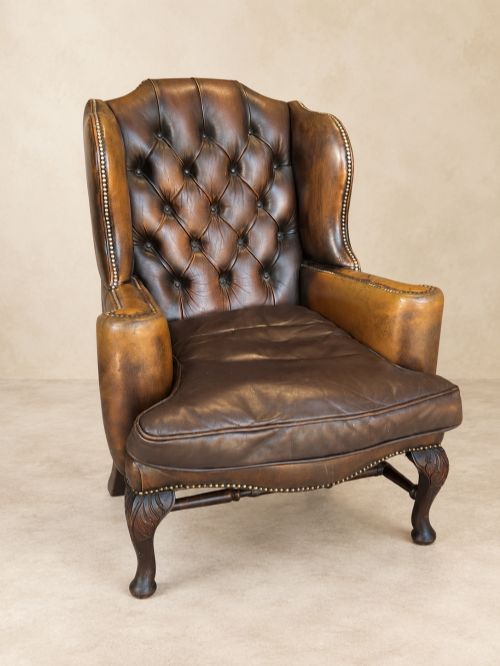
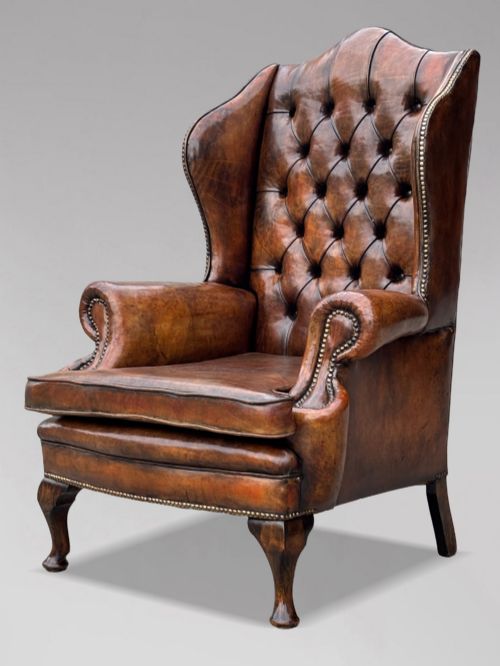
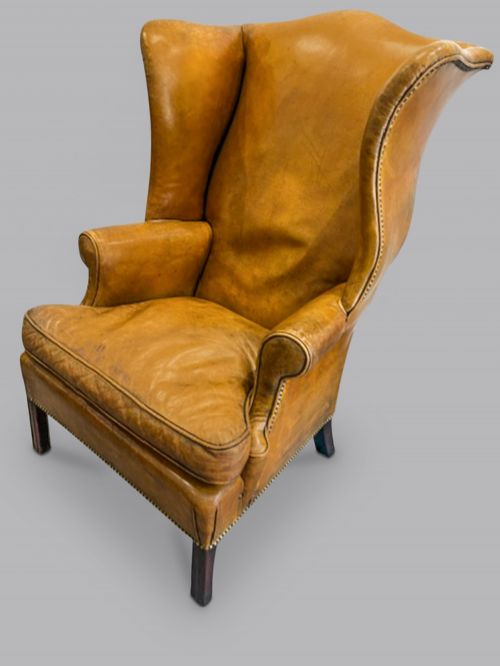
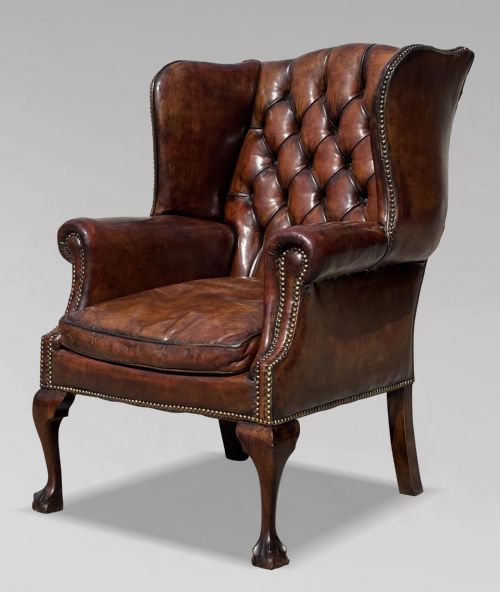
A brown leather wingback is a high-backed armchair featuring side panels designed originally to shield the sitter from drafts. These seats combine substantial upholstery with exposed woodwork, creating a commanding silhouette in any study or drawing room.
The pieces appearing here span genuine Georgian origins alongside later revivals from the nineteen-twenties and nineteen-thirties, as well as Georgian style interpretations. Buyers frequently encounter nineteenth and twentieth-century revival pieces modelled on earlier forms alongside genuine eighteenth-century examples.
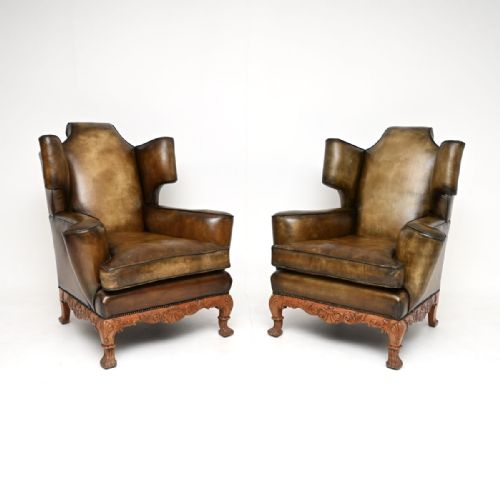
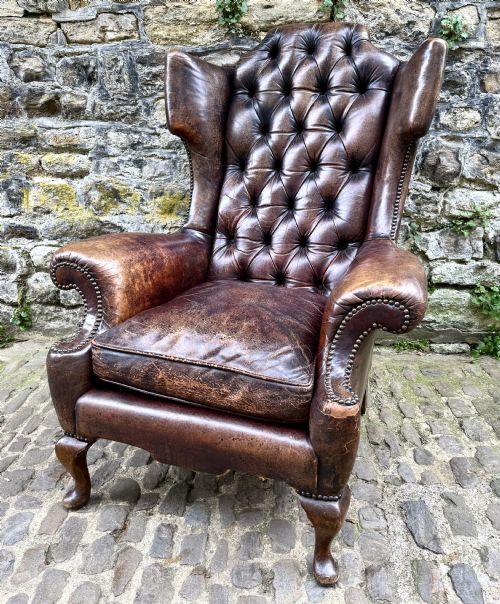
Armchairs dominate this category, often appearing as single pieces or occasionally as pairs. Their forms range from early George II and George III proportions to later Chesterfield-influenced iterations with deep buttoning and hand-dyed finishes.
How they were made
Upholstery involves durable leather fixed securely to the frame, frequently finished with brass studding along the borders. Wood elements like mahogany appear in the legs and stretcher supports, sometimes shaped in period styles.
Retail Price Guide 2026
Typical UK retail prices for brown leather wingback, calculated from the Sellingantiques database of over a million retail prices indexed since 2003. This retail price guide relies exclusively on Sellingantiques data; no external sources or auction records are used, so the figures do not describe the wider market.
The wings originally trapped heat from the hearth, serving as an early form of personal central heating.
What varies in quality
Quality differentiates through the integrity of the timber frame and the character of the leather hide. Period pieces from the Georgian era demonstrate precise hand-carving in the mahogany woodwork compared to simpler revival frames.
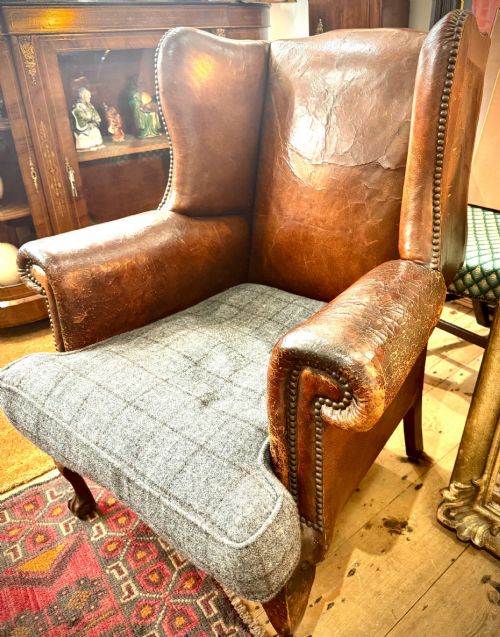
The ageing and treatment of the leather establish the visual depth of the armchair. Hand-dyed finishes and patination develop over decades, separating deeply worn surfaces with rich tone from flat modern applications.
The Brown Leather Wingback Glossary
- Wingback
- An armchair featuring protective side panels attached to the arms and framing the headrest. This design historically kept the sitter warm by blocking side drafts.
- George II
- An English design period spanning the mid-eighteenth century characterised by robust proportions and carved mahogany woodwork. Pieces from this era form a benchmark for later revival styles.
- Georgian Revival
- A twentieth-century design movement recreating eighteenth-century forms. These pieces utilise older construction methods and traditional materials to emulate earlier aesthetics.
- Chesterfield
- A traditional upholstered seating style typically featuring deep buttoning and rolled arms. In this category, it describes armchairs sharing those heavy padded characteristics.
- Patina
- The surface sheen and colour variation developed through age, handling, and use. It indicates the natural wear on leather and wood over many decades.
Frequently Asked Questions
Are these chairs comfortable for daily sitting?
These armchairs provide substantial back support and deep cushioning, making them practical for regular use in a living room or study.
The high back and upholstered wings offer a sheltered seating position suited to reading or relaxing for extended periods.
How do I spot a Georgian piece?
Genuine Georgian chairs display eighteenth-century construction methods, older timber framing, and period-specific mahogany details.
Expert examination of the internal webbing, frame joints, and wood ageing helps separate eighteenth-century originals from twentieth-century revivals.
Where should I place a wingback chair?
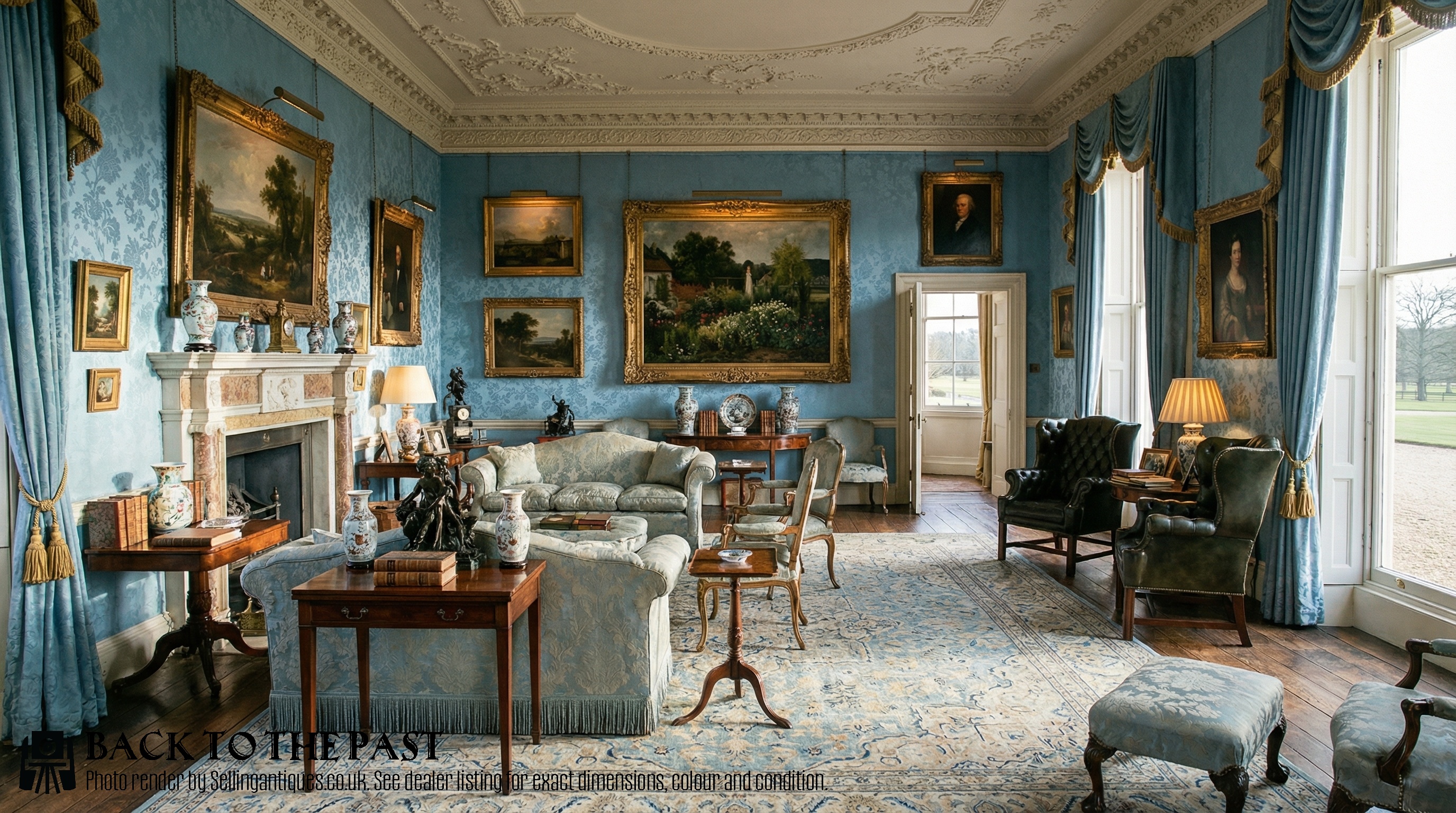
These large armchairs suit studies, libraries, or living rooms where their scale anchors the surrounding furniture arrangement.
Their enclosed design makes them effective as reading seats near a fireplace or in the corner of a spacious room.
What maintenance does the leather need?
Leather upholstery benefits from regular dusting and occasional conditioning to maintain suppleness and prevent drying.
Keeping these chairs away from direct sunlight and excessive heat sources preserves the natural tone and condition of the hide.