




George II Armchair
A george ii armchair brings mid-eighteenth-century craftsmanship into a room with solid proportions and tactile materials.
Identifying the george ii armchair
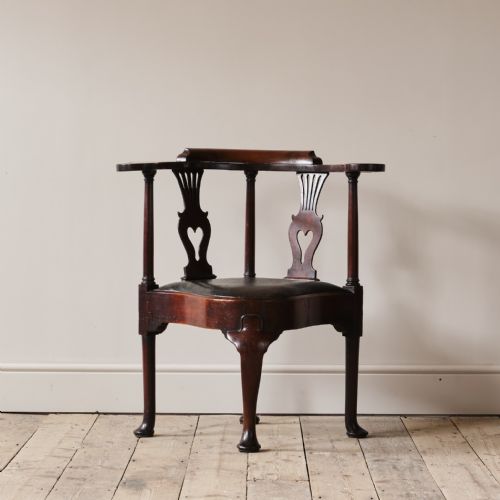
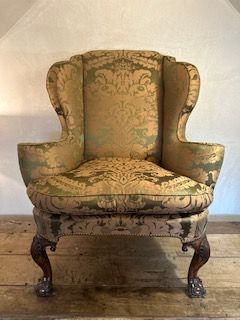
A george ii armchair is a substantial seating form originating in the eighteenth century, defined by sturdy frames in mahogany and walnut. These pieces span formal open armchairs and enclosed wingback designs intended for domestic comfort.
The variants found here include period pieces alongside later nineteenth-century revival interpretations built in the george ii style. Makers worked within established Georgian idioms, incorporating carved details or simpler country frameworks.
Materials extend beyond timber to include structural brass and traditional upholstery such as damask, tapestry, and leather. Buyers encounter both deep-seated wing armchairs and open frame models designed for writing desks or parlours.
Construction methods and materials
Joinery relied on dense hardwoods, principally mahogany and walnut, selected for their structural strength and capacity to hold carved mouldings. Workshops utilised traditional mortise and tenon joints to secure the primary framework of each chair.
Upholstery techniques incorporated durable fillings held by webbing, covered in textiles such as damask or leather, and occasionally secured with brass tacks. Secondary timbers provided internal framing support hidden beneath the exterior show wood.
Retail Price Guide 2026
Typical UK retail prices for george ii armchair, calculated from the Sellingantiques database of over a million retail prices indexed since 2003. This retail price guide relies exclusively on Sellingantiques data; no external sources or auction records are used, so the figures do not describe the wider market.
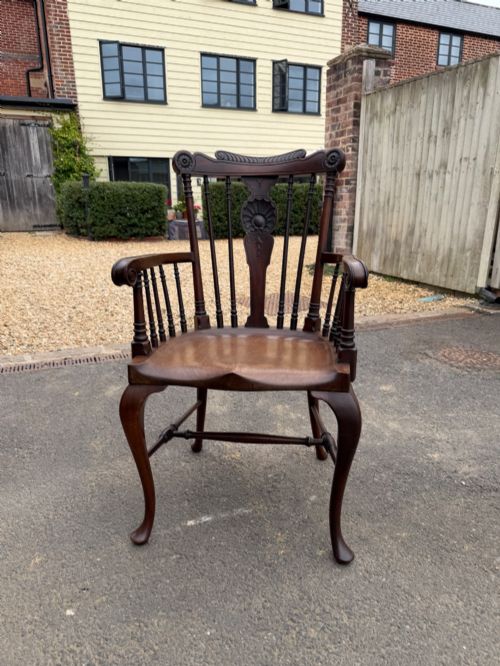
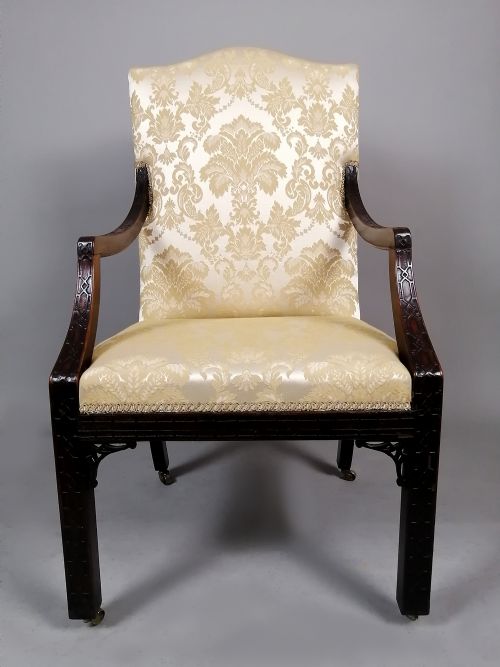
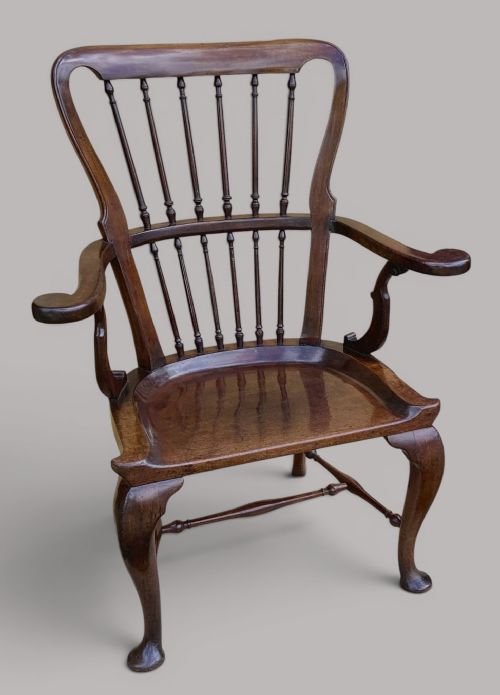
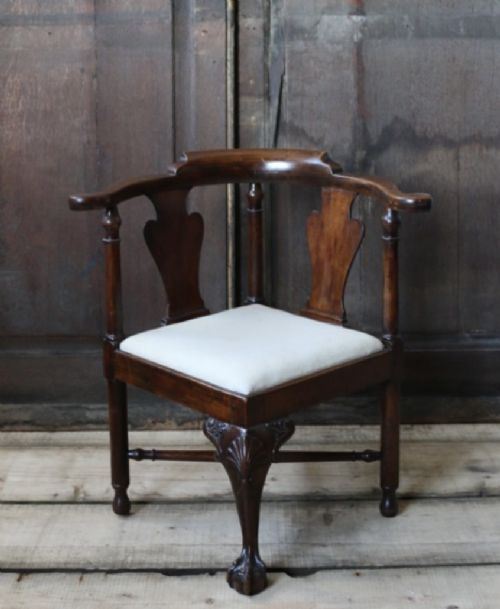
The inventory encompasses wing armchairs, open Gainsborough armchairs, Windsor forms, and low-slung country elbow chairs.
Distinctions in execution
The upper tier of work displays crispness in carved wooden details, where botanical or geometric motifs retain sharp relief without blurring. Lower grades show softer profiling and less disciplined handling of the primary hardwood.
Proportional harmony dictates the distinction between standard production and superior examples, particularly in the sweep of the armrests and the rake of the back legs. Structural integrity relies upon the original soundness of the timber rather than subsequent interventions.
The George II Armchair Glossary
- Wing armchair
- A high-backed upholstered seating form featuring protective side panels designed to shield the occupant from draughts. These pieces often stand on cabriole legs.
- Gainsborough armchair
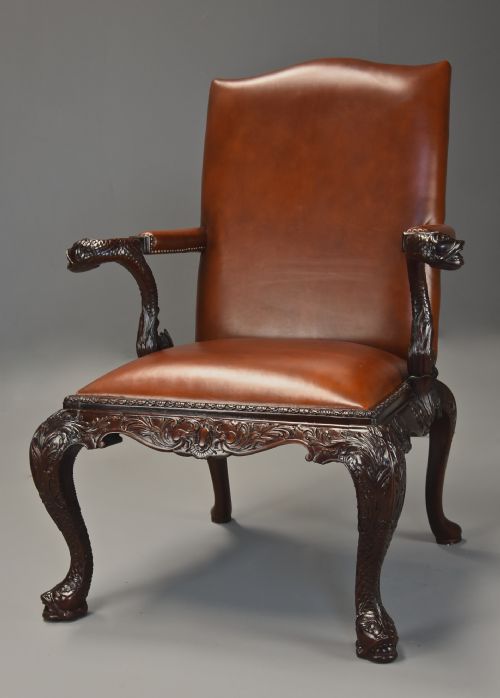
- An open-framed seat with padded armrests and a square upholstered back, typically positioned before a desk or table. The form emerged during the mid-eighteenth century.
- Cabriole leg
- A furniture support curving outward at the knee and tapering inward toward the foot, frequently terminating in a pad or claw and ball motif. This profile defines much Georgian seating.
- Windsor armchair
- A wooden seating form constructed with turned spindles inserted into a solid shaped seat and a bentwood back rail. Country workshops produced these sturdy variants in local timbers.
- Damask
- A reversible figured fabric woven on a jacquard loom, frequently utilised for period upholstery. The pattern appears through contrasting matte and lustrous weave surfaces.
Frequently Asked Questions
How do I identify a george ii armchair?
Examination of the timber species, joinery methods, and carved ornament provides the primary clues for dating a piece. Eighteenth-century examples utilise dense hardwoods like mahogany and walnut with construction hallmarks distinct from later revival work.
Proportions and upholstery framing also reveal the period. Comparing the structural anatomy against documented examples helps separate genuine eighteenth-century pieces from nineteenth-century george ii style interpretations.
What timber was used for these chairs?
Mahogany and walnut form the primary structural woods for formal seating of this era. Workshops also employed regional timbers such as oak, ash, and elm for country variants.
Secondary woods hidden within the internal frame often included pine or beech. The selection of timber generally corresponds to the intended function and formality of the armchair.
Where should I place a wing armchair?
Wing armchairs suit living spaces, libraries, and studies where their high backs and protective side panels create a defined seating area. Their substantial proportions require adequate floor space to sit comfortably within a room layout.
Positioning them away from direct heat sources protects the timber frame and leather or textile upholstery from drying out. Pairing them with low tables creates a functional reading or conversation nook.
Can I use these chairs daily?
Period armchairs serve domestic use provided the internal webbing, joints, and upholstery have been properly maintained or restored. Solid hardwood frames tolerate regular sitting when the structural integrity remains sound.
Care should be taken with antique textiles and leathers to prevent excessive wear. Periodic inspection of the leg joints ensures the chair remains stable under normal weight.