


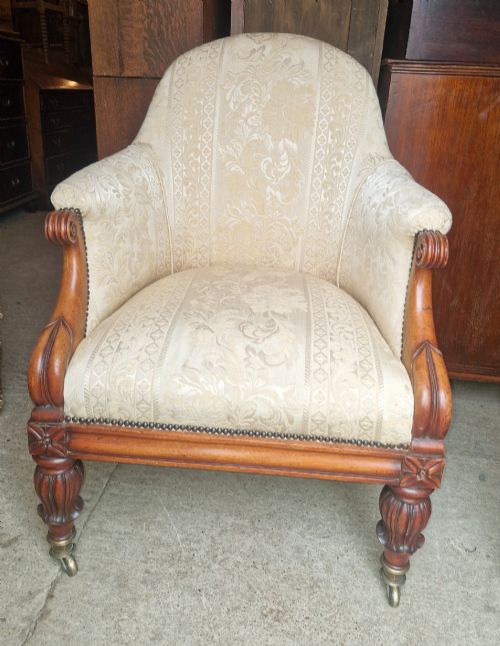
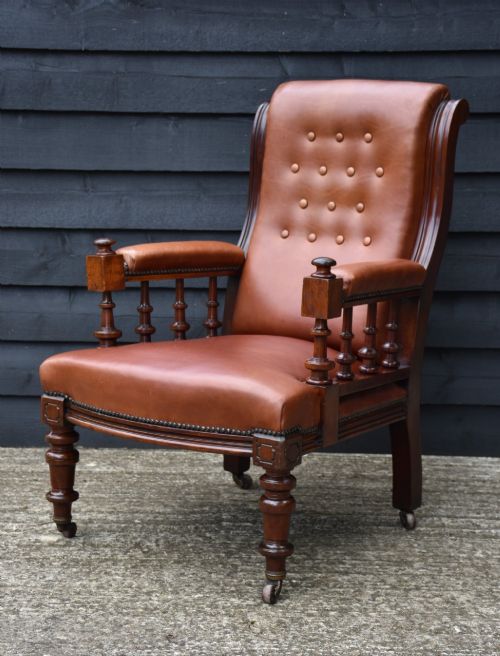
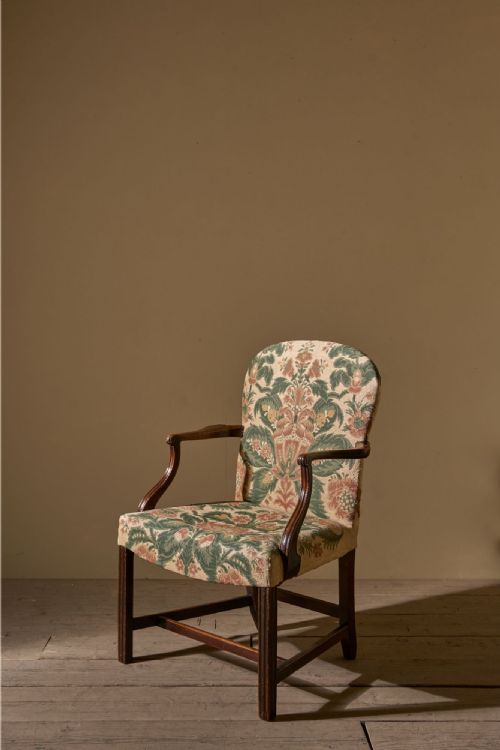
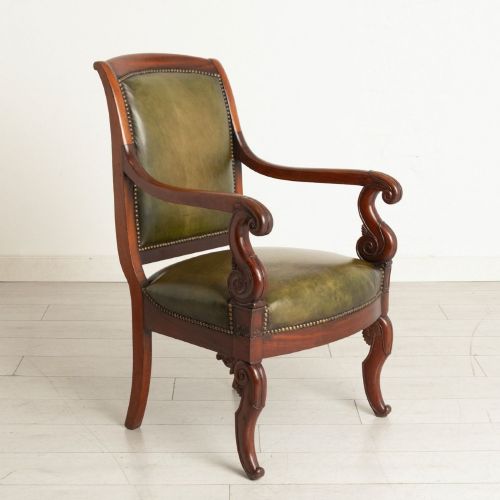
Upholstered Library Armchair
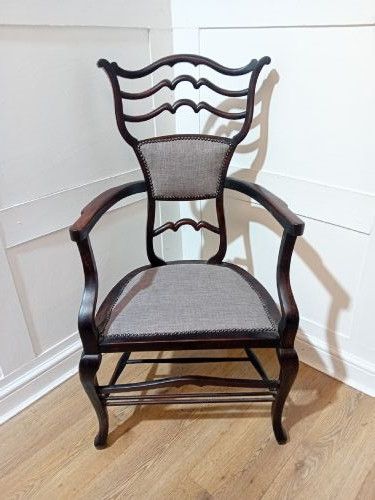
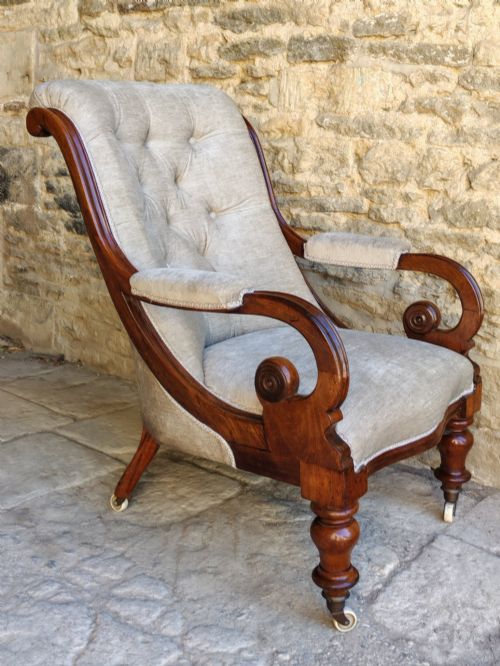
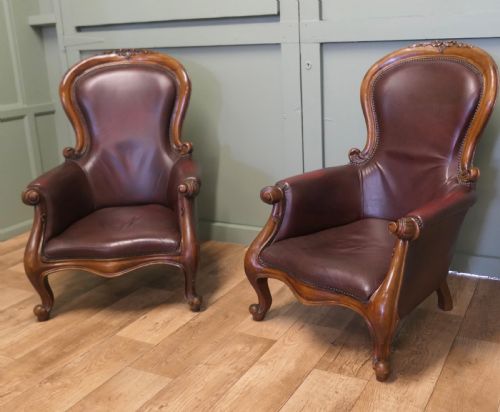
An upholstered library armchair provides deep-seated comfort for a study or drawing room, combining sturdy timber frames with traditional leather or fabric coverings.
How they were made
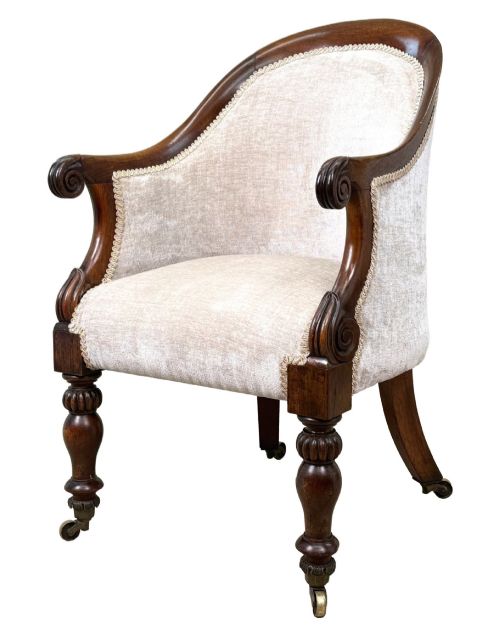
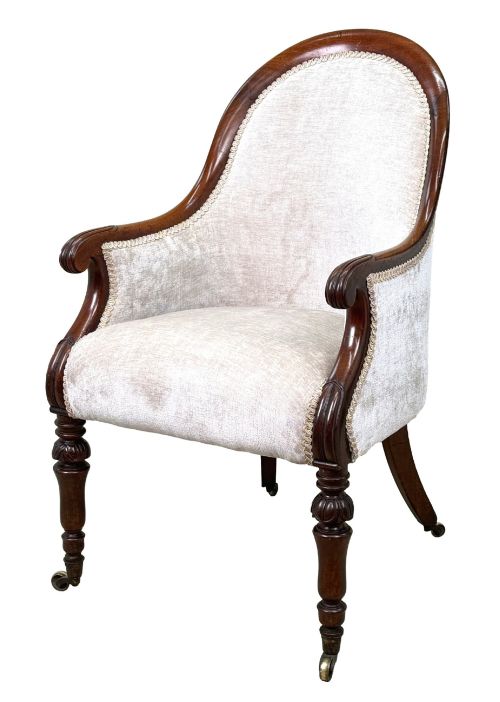
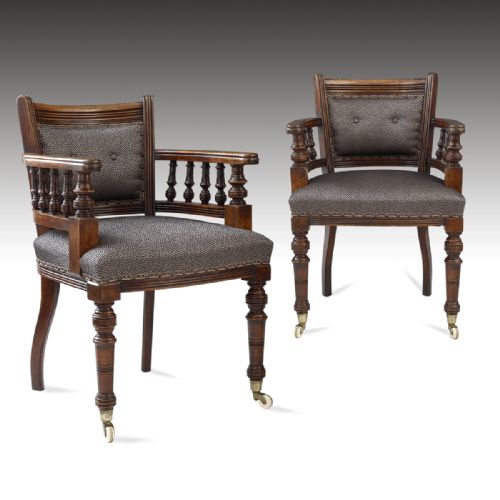
Makers constructed the supportive frames of these armchairs using dense hardwoods such as mahogany, walnut, and oak, joined with traditional cabinet-making methods to withstand heavy daily use. Turnings, reeding, and carved details were frequently worked directly into the timber frame before assembly.
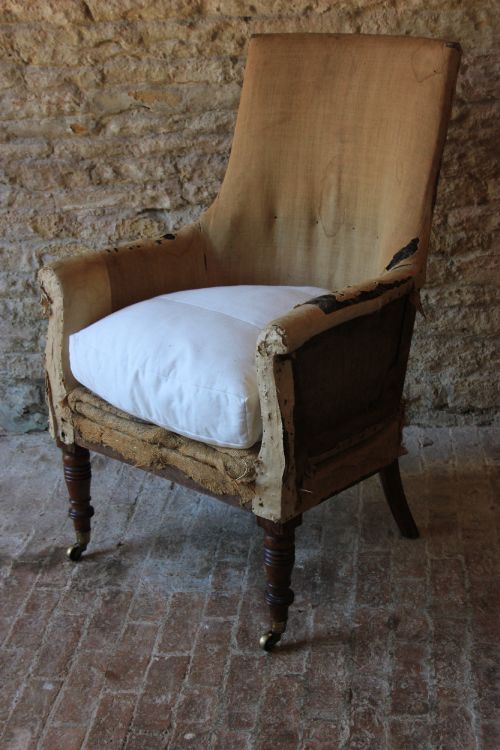
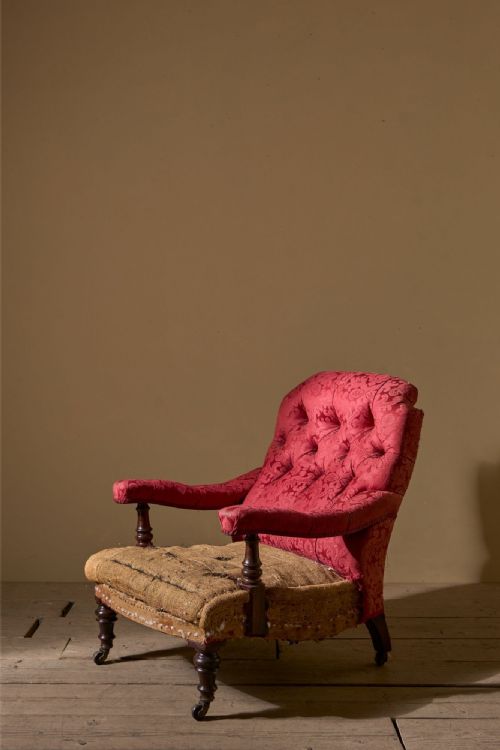
Upholstery techniques combined sturdy internal webbing and hessian foundations with traditional stuffing materials, secured beneath top layers of leather, velvet, tapestry fabric, or heavy linen. Brass castors were often fitted to the feet to allow movement across heavy carpets.
What varies in quality
The distinction between ordinary and exceptional examples rests upon the grace of the timber frame's proportions, the crispness of any carved or reeded detail, and the integrity of the original construction. Maker-marked pieces by notable firms command greater interest due to superior joinery and refined cabinet-work.
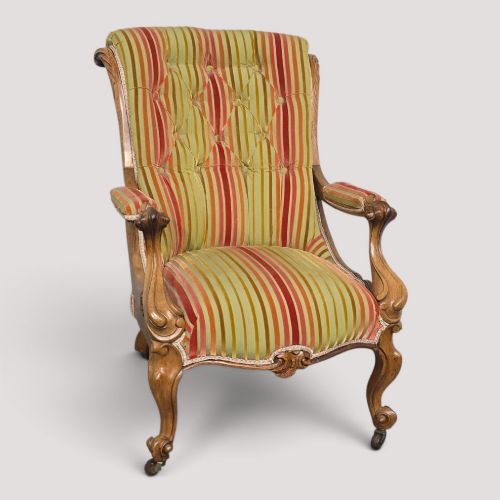
The choice and execution of the covering material also define the grade of the piece, with hand-stitched leather, needlepoint tapestry, or buttoned velvet reflecting higher standards of workshop production.
Upholstered Library Armchair Retail Price Guide 2026
Typical asking prices for upholstered library armchair among the pieces listed under this phrase on Sellingantiques today, from the lower quarter to the upper quarter. They describe what is for sale here now, not the wider market.
Some nineteenth-century readers required a dedicated wooden reading stand bolted straight to their armchair.
Gillows·Howard and Sons·Cope and Collinson·J and T Scott·C Hindley and Sons
The Upholstered Library Armchair Glossary
- Gainsborough
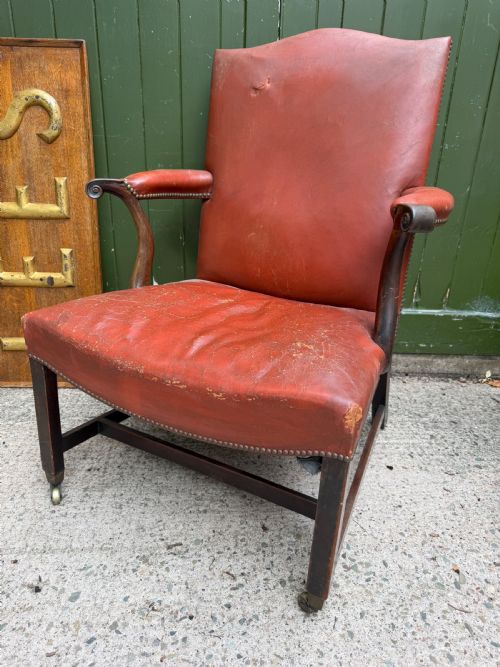
- A wide-seated, open-armed eighteenth-century armchair designed for writing or desk use. These chairs typically feature padded armrests and straight mahogany legs.
- Tub armchair
- A comfortable chair featuring a continuous curved back and arms that enclose the sitter. They appear frequently in nineteenth-century library settings.
- Fauteuil
- An open-armed wooden armchair of French origin, often featuring carved walnut or beech frames. They were frequently adopted in British interiors during the nineteenth century.
- Reeding
- A decorative series of parallel convex mouldings carved into the wooden legs or arms of a chair. It is commonly found on Regency and Victorian seating.
- Hessian
- A coarse woven fabric utilised as a foundational support layer beneath the outer upholstery. It holds the internal stuffing securely within the frame.
Upholstered Library Armchair: Frequently Asked Questions
What defines a library armchair?
A library armchair is built for prolonged sitting, featuring a sturdy wooden frame, supportive upholstered back and armrests, and frequently a wider seat to accommodate comfort while reading.
Many examples incorporate leather coverings or durable fabrics designed to withstand daily use in a study or library environment.
How do I identify a Georgian library chair?
Georgian library chairs usually display solid mahogany frames with restrained carving, straight or cabriole legs, and open upholstered arms. Pieces from this era often follow the Gainsborough or Chinese Chippendale style.
Construction details typically reveal hand-cut joinery and dense, heavy timber characteristic of the eighteenth century.
Were these chairs used at desks?
Many library armchairs served double duty as desk or writing chairs, particularly lower tub forms and compact mahogany models fitted with castors. Their open arms allowed the sitter to draw close to a library table or writing desk.
Some specialised variants even included integrated reading stands attached directly to the frame.
How should I care for leather upholstery?
Leather-upholstered library chairs benefit from gentle cleaning and occasional conditioning to maintain the suppleness of the hide. Keeping them away from direct heat sources prevents the leather from drying out or cracking over time.
Original leather surfaces often show natural patination that adds to the character of nineteenth-century pieces.