
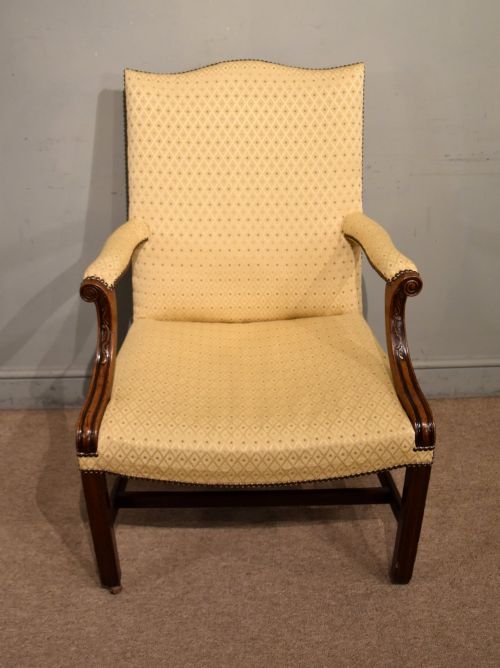
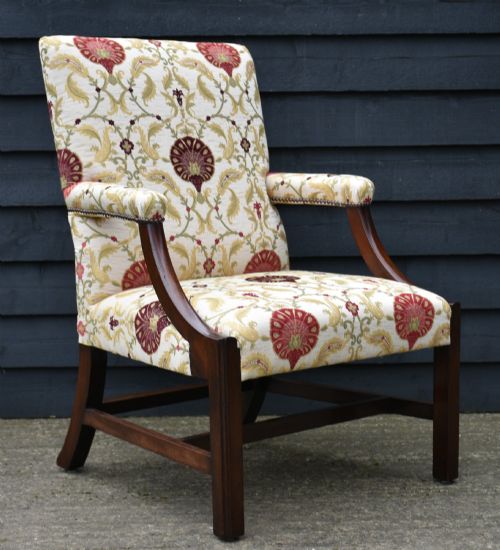
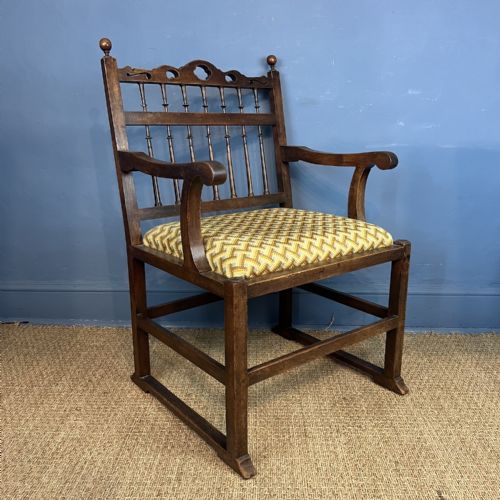


Antique Wide Armchair
These antique wide armchairs offer generous proportions and solid timber frames, providing both comfort and presence in a room.
Antique Wide Armchair
When you search for an antique wide armchair, you encounter substantial seating options designed for comfort and library use. The most common forms on this page include mahogany and walnut frames dating from the Georgian and Victorian periods.
The selection ranges from classic Gainsborough library chairs with upholstered arms to larger Victorian desk chairs and carved hardwood throne chairs. These pieces originate from British and colonial workshops, reflecting diverse stylistic influences from George II designs to Anglo-Indian carving.
Earlier examples typically feature mahogany timber with open arms, whilst later nineteenth-century items introduce walnut, ash, and elm in varied desk and reading configurations. Each piece provides the expanded proportions characteristic of domestic seating built for ease.
Materials and construction
Cabinetmakers constructed these frames using dense hardwoods such as mahogany, walnut, oak, ash, and elm, often reinforced with brass hardware and metal studs. Timber selection dictated the structural integrity of the wide seat and the crispness of any carved ornament.
Upholstery techniques varied from traditional webbing and stuffing beneath fabric, velvet, or leather to solid timber planking on Windsor reading chairs. Joinery relied on mortise and tenon methods to support the generous dimensions demanded by wide seating.
Distinctions in quality
Quality rests upon the proportion of the timber frame, the fidelity of period carving, and the integrity of the underlying joinery. Superior examples maintain balanced arm supports and tight joints without excessive timber replacement.
The sophistication of the surface finish and the retention of original upholstery foundations distinguish finer library and Gainsborough models from standard utility seating.
The Antique Wide Armchair Glossary
- Gainsborough armchair
- A wide, upholstered armchair with open padded arms and a low seat, popular during the eighteenth century for reading and writing. This form typically stands on four legs with stretchers.
- Drunkards chair
- A specialised eighteenth-century armchair featuring a particularly wide seat and low sides designed to accommodate bulky garments or relaxed postures. These chairs often employ mahogany construction.
- Windsor chair
- A wooden seating form characterised by a solid sculpted seat into which the legs and back spindles are wedged directly. Oak, ash, and elm frequently appear in these regional English pieces.
- Anglo-Indian
- Descriptive of furniture manufactured in India by local craftsmen utilising indigenous hardwoods such as Burmese teak or heavy tropical timbers to European design standards. Carved details often feature deep relief work.
- Elbow chair
- A traditional term for any armchair with lower arm supports, frequently used in studies and dining settings. The designation often implies a slightly wider frame than standard side chairs.
Antique Wide Armchair: Frequently Asked Questions
What is a Gainsborough armchair?
A Gainsborough armchair is a wide, open-armed seat designed in the eighteenth century primarily for libraries and writing desks.
Its proportions allow for comfortable seating while maintaining a formal aesthetic suitable for period interiors.
How do I date an armchair?
Dating relies on identifying timber species, joinery techniques, and stylistic markers such as cabriole legs or turned supports.
Comparing structural details with documented examples from Georgian and Victorian periods clarifies the likely decade of manufacture.
Are these chairs comfortable for daily use?
Many of these pieces were built for long hours of reading or desk work, offering generous seat widths and supportive backs.
Modern comfort depends on the condition of the internal upholstery webbing and padding beneath the fabric or leather.
What woods were commonly used?
Mahogany and walnut predominate in high-status library and salon seating throughout the eighteenth and nineteenth centuries.
Country reading chairs and Windsor variants frequently utilise domestic timbers like oak, ash, and elm for their resilience.