
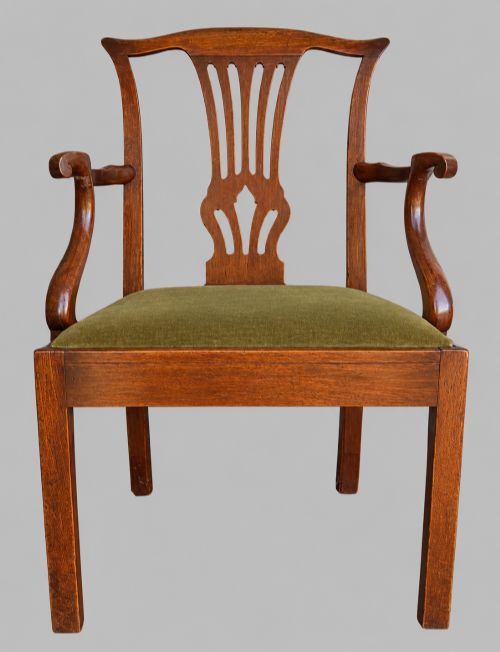
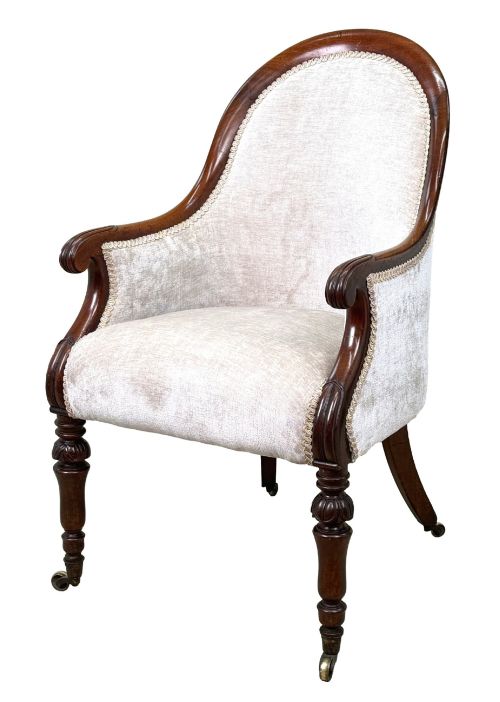
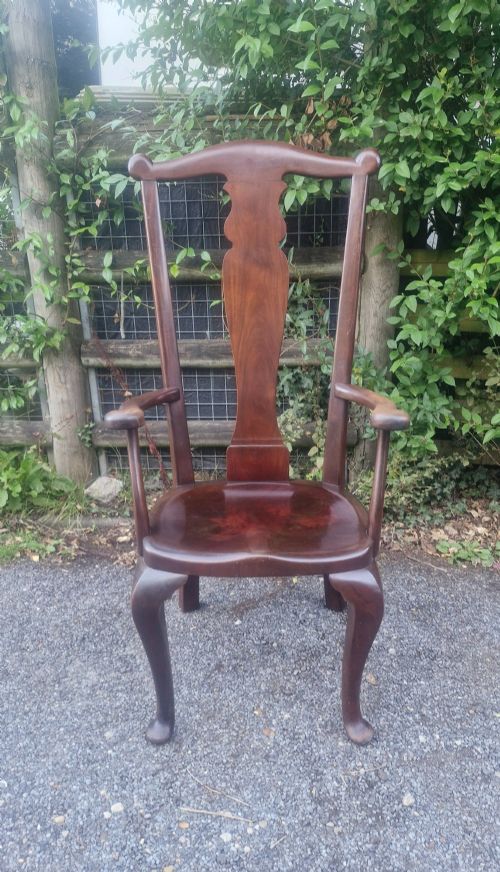
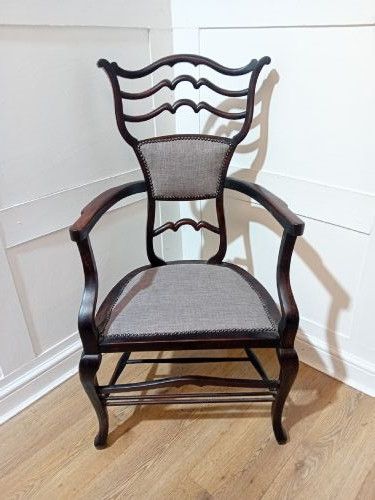

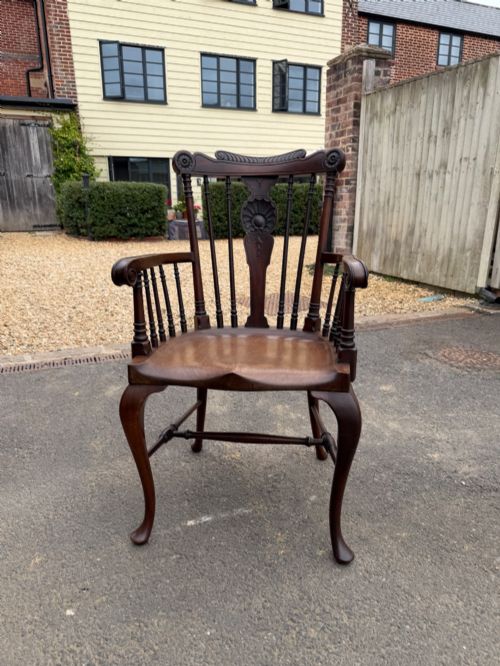
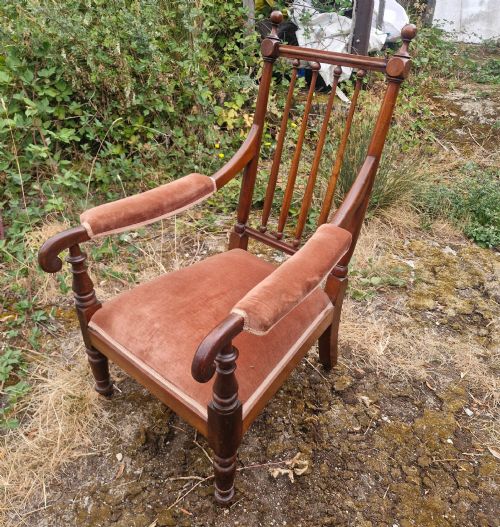
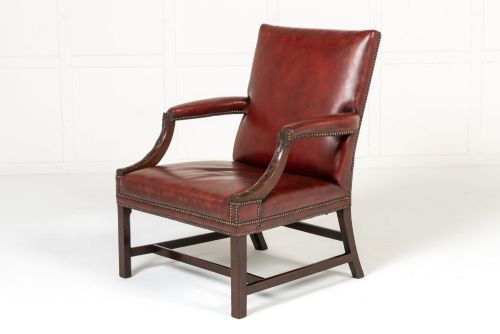
Carved Mahogany Library Armchair
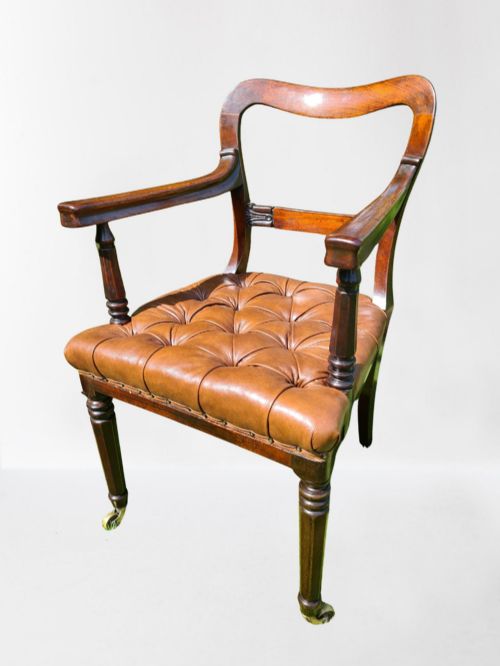
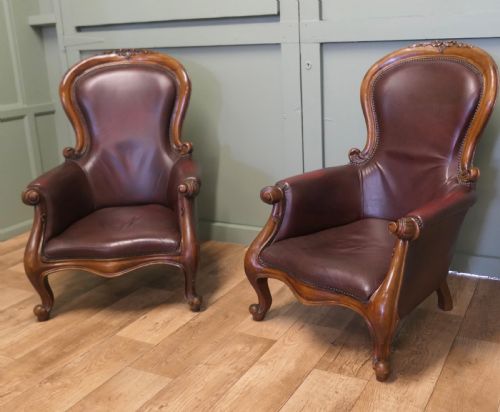
A carved mahogany library armchair brings sturdy timber and deep-seated comfort straight to a study, offering a robust perch for long hours among books.
Carved Mahogany Library Armchair
Buyers encountering this search phrase find pieces ranging from eighteenth-century George II and George III examples to nineteenth-century Victorian interpretations and later revivals. The overarching category prioritises wide seats, supportive armrests, and durable frames built to withstand daily use in domestic settings.
Materials and construction methods
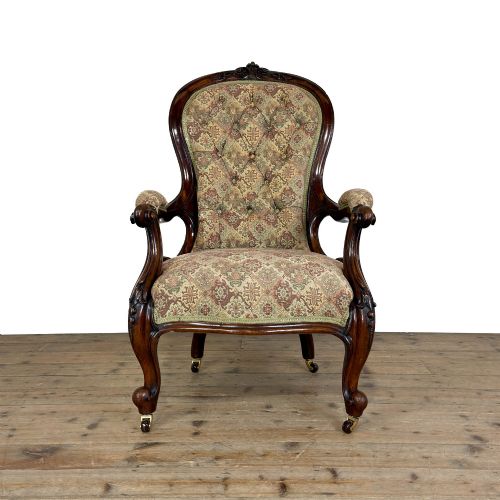
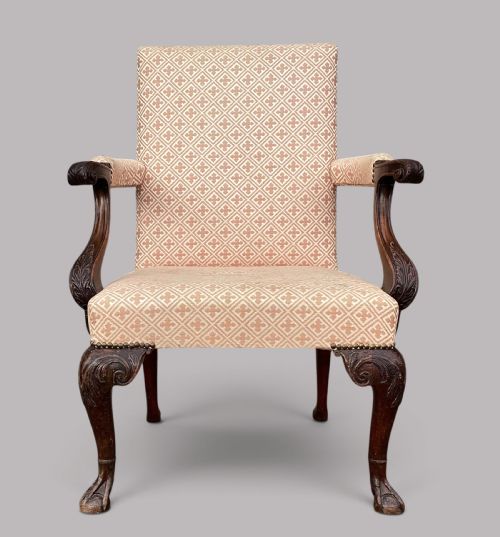
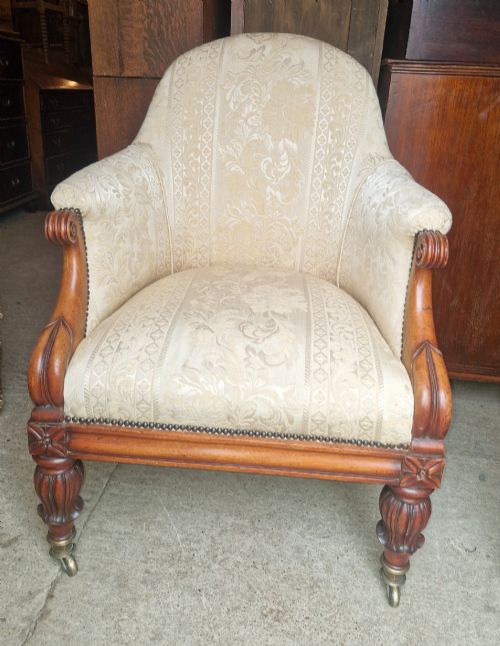
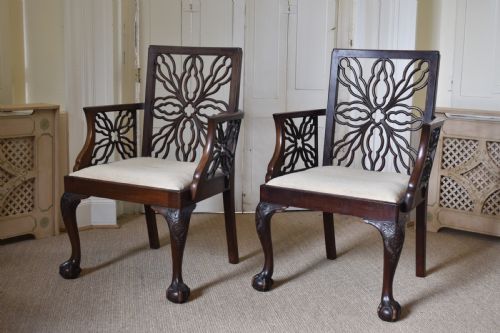
Makers utilised solid mahogany for its strength and rich grain, shaping structural frames with mortise and tenon joints while employing brass castors on legs for mobility. Carving was applied directly to the timber on arm supports, rails, and knees, showing crisp execution in blind frets or scrolling foliage.
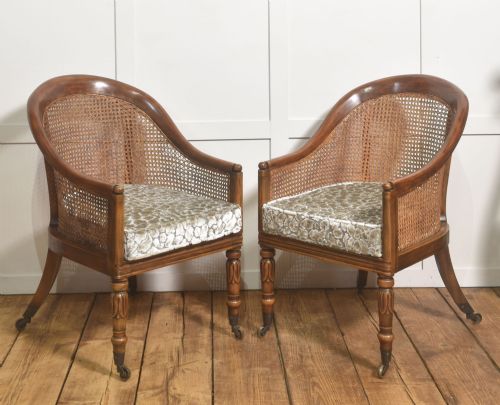
Upholstery elements integrate leather, horsehair stuffing, fabric, velvet, and cane panels secured with brass tacks or piping. Secondary woods often form internal frame components, whilst specialised designs incorporate steam-bent members for curved tub backs.
Occasional eighteenth-century examples emerge described as drunkards' chairs, built with an unusually shaped seat designed for relaxed reclining.
Distinctions in craftsmanship and design
Quality reveals itself in the depth and sharpness of the hand-carving on the mahogany framework, where crisp lines distinguish master carvers from routine workshops. Proportions also govern value, with balanced rake angles on backrests and well-turned arm supports marking superior pieces.
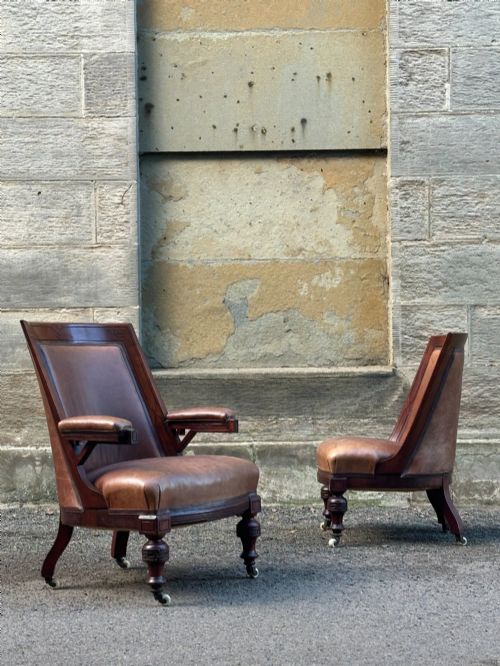
The choice of covering materials - ranging from hand-dyed English hide leather to fine damask and cane work - dictates the refinement of the finished seat. Original structural integrity, minimal timber replacement, and harmonious scale separate standard commercial seating from exceptional library examples.
Gillows
The Carved Mahogany Library Armchair Glossary
- Gainsborough chair
- An upholstered armchair with an open-padded back and arms, standing on four legs, which originated in the mid-eighteenth century for writing desks and libraries.
- Bergère
- An enclosed armchair with stuffed or caned sides and back, typically featuring a loose seat cushion and a mahogany frame.
- Chippendale style
- A decorative design mode inspired by Thomas Chippendale's mid-eighteenth-century pattern books, characterised by carved mahogany, ribbon backs, and blind fretwork.
- Tub chair
- A seating form featuring a continuous curved back and armrest rail that wraps around the occupant in a single circular sweep.
- Blind fret
- Carved low-relief geometric or interlaced ornamentation applied flat to the surface of stiles or rails without piercing the wood.
Carved Mahogany Library Armchair: Frequently Asked Questions
How do I spot a Victorian copy?
Victorian interpretations and revivals often exhibit heavier proportions, darker factory finishes, and machine-cut secondary timbers compared to eighteenth-century originals. Carving work on later pieces can appear shallower and less defined.
Examining the underside and interior framing reveals tool marks and construction methods consistent with nineteenth-century manufacturing techniques.
Were these chairs used at desks?
Many examples listed as library armchairs double as desk chairs due to their supportive back heights and open arms that fit beneath writing surfaces. The addition of brass castors on certain models allowed easy movement across study floors.
Their sturdy mahogany construction made them practical working furniture rather than purely decorative parlour seats.
How should I care for leather upholstery?
Leather upholstery on these armchairs benefits from regular dusting with a soft, dry cloth and occasional treatment with appropriate leather balms to prevent drying. Avoiding direct sunlight and intense heat sources preserves the natural hide.
Gentle maintenance protects the original surface patination accumulated over decades of domestic use.