
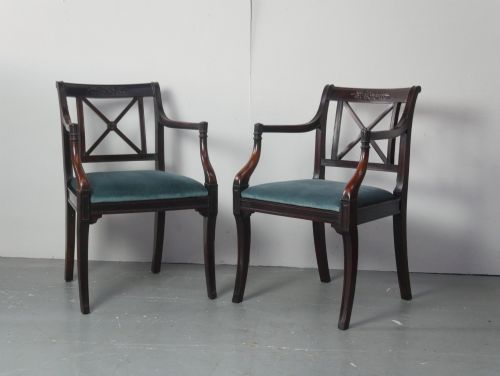
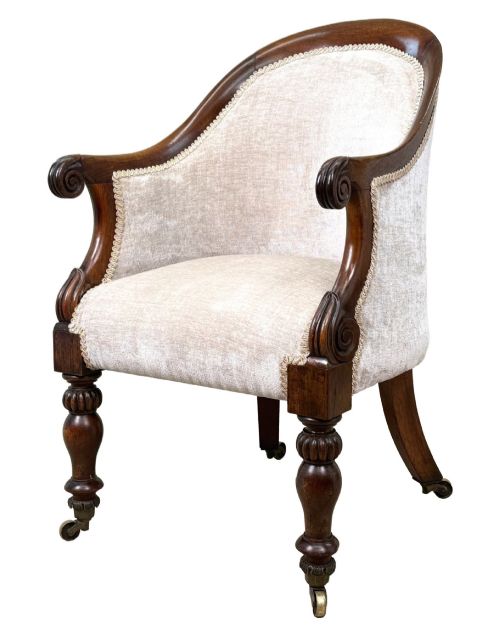
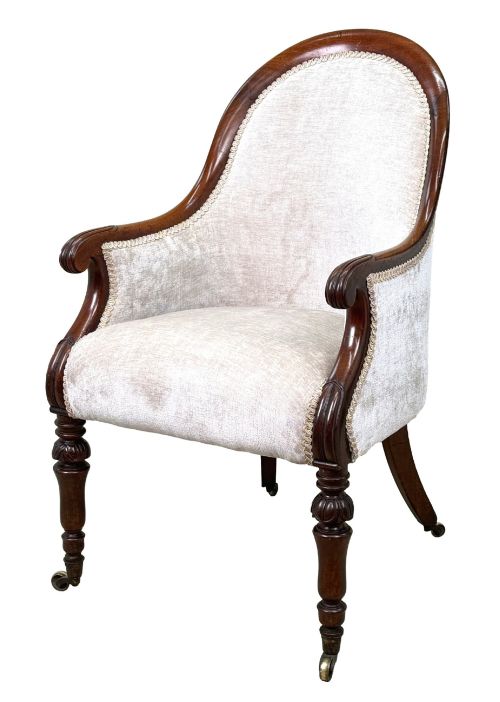
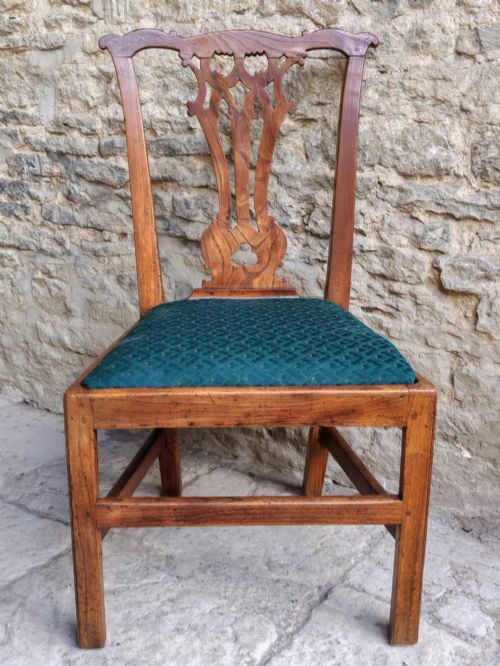


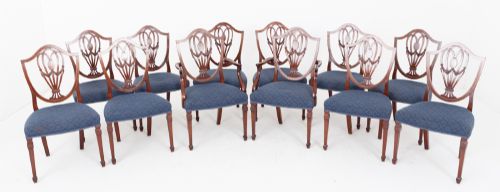
Georgian Upholstered Chair
A georgian upholstered chair brings architectural proportion and deep-sprung comfort to a room through centuries of refined timber framing.
Georgian Upholstered Chair
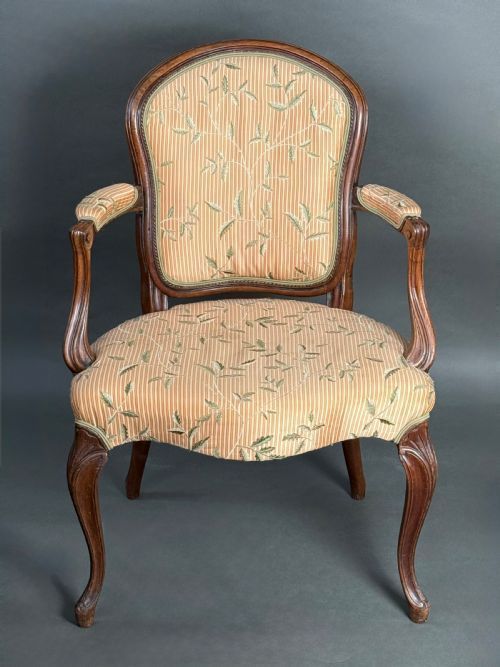
The georgian upholstered chair encompasses seating forms produced across the eighteenth century and subsequent revival periods, spanning formal library armchairs, generous wingbacks, and matched dining sets. These pieces combine substantial timber frames in mahogany, walnut, or fruitwood with padded seats, backs, and armrests covered in leather, silk, or tapestry.
The category also embraces low slipper chairs, corner seats, and expansive settees reflecting shifting domestic habits from formal parlor display to private study and fireside relaxation.
Materials and construction
Makers built the structural frames of a georgian upholstered chair using dense hardwoods, predominantly mahogany, alongside walnut, oak, and regional fruitwoods such as elm. Timber selection dictated the carved detail, allowing crisp foliage, fluted legs, and delicate ribbon backs to survive centuries of structural strain.
Upholstery methods evolved from horsehair stuffing secured with webbing and linen to complex internal springing by the nineteenth century. Textiles varied from utilitarian woollen damask and heavy tapestry to imported silks and hand-tooled leather fixed with brass-headed nails.
Georgian Upholstered Chair Retail Price Guide 2026
Typical asking prices for georgian upholstered chair among the pieces listed under this phrase on Sellingantiques today, from the lower quarter to the upper quarter. They describe what is for sale here now, not the wider market.
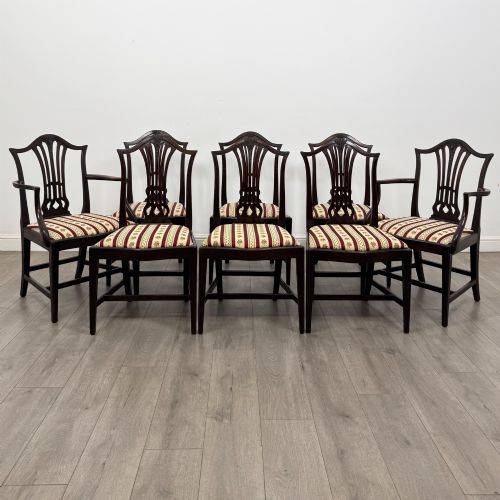
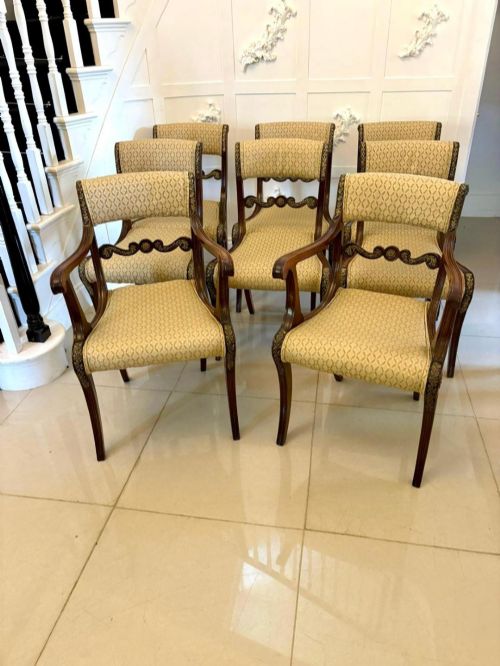
Listings feature extensive sets of dining chairs alongside single library armchairs in mahogany, rosewood, and walnut across the eighteenth and nineteenth centuries.
Assessing quality and proportion
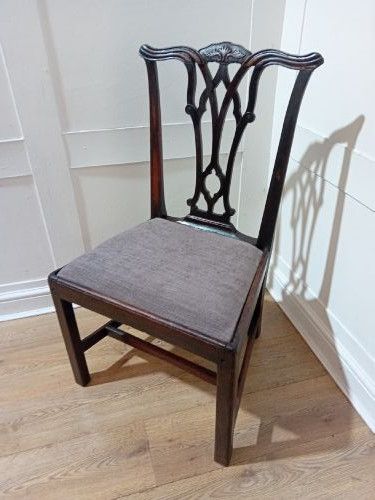
Quality in a georgian upholstered chair rests upon the integrity of the timber frame and the harmony of its underlying proportions. Superior examples display restrained carving executed directly into the solid wood rather than applied composition ornaments, maintaining crisp lines along the arm scrolls and crest rails.
The relationship between the upholstered envelope and the exposed wood determines visual success. Finer pieces maintain balanced tension in the stuffing, ensuring the silhouette reads clearly without excessive bulk, while lesser iterations suffer from clumsy scaling or heavy-handed structural replacements.
Gillows
The Georgian Upholstered Chair Glossary
- Carver armchair
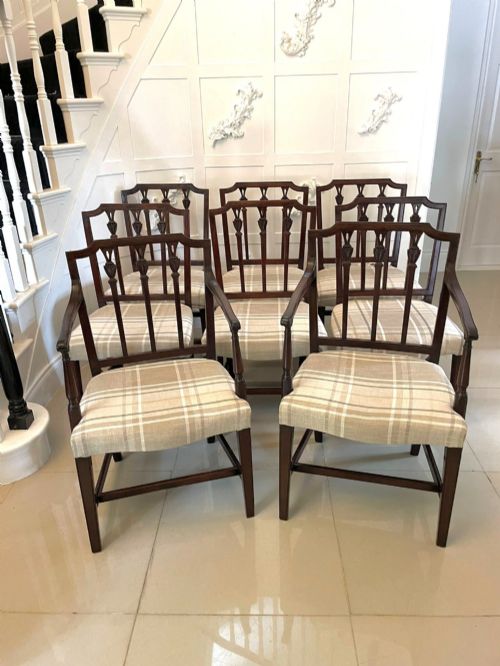
- A dining chair fitted with open arms, traditionally placed at the head of a table for the host. These paired with matching side chairs to complete large dining sets.
- Gainsborough chair
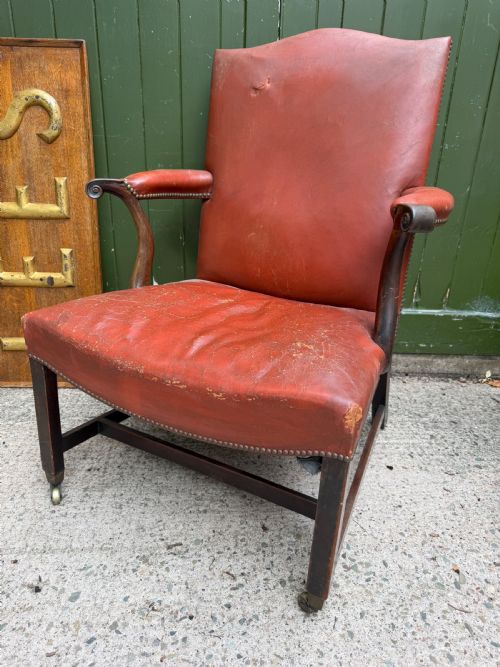
- A wide, open-framed library armchair with padded armrests, a square back, and short cabriole or straight legs. The form accommodates voluminous eighteenth-century dress.
- Shield-back
- A dining chair back shaped like a heraldic shield, popularized by late eighteenth-century designers. This openwork style often incorporates carved drapery or feathered motifs.
- Bar back
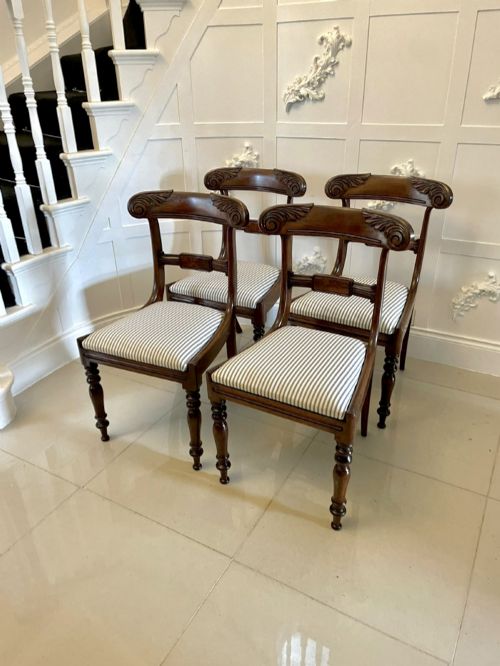
- A horizontal curved top rail resembling a flattened bar, characteristic of Regency and William IV dining chairs. This element frequently joins vertical splats above the seat.
- Tub armchair
- A seating form featuring a continuous curved back and armrest rail enclosing the sitter. Examples frequently appear in rosewood or mahogany for library use.
Georgian Upholstered Chair: Frequently Asked Questions
How do I identify a genuine period piece?
Examine the timber underneath the upholstery line for tool marks, dry grain, and construction methods consistent with eighteenth or early nineteenth-century cabinetmaking. Original framing shows hand-cut joints and consistent ageing across all exposed surfaces.
Compare the carving style and wood density against documented examples from the same era. Subsequent revivals often utilise machine-cut elements or secondary woods atypical of the primary period.
Were these chairs used at dining tables?
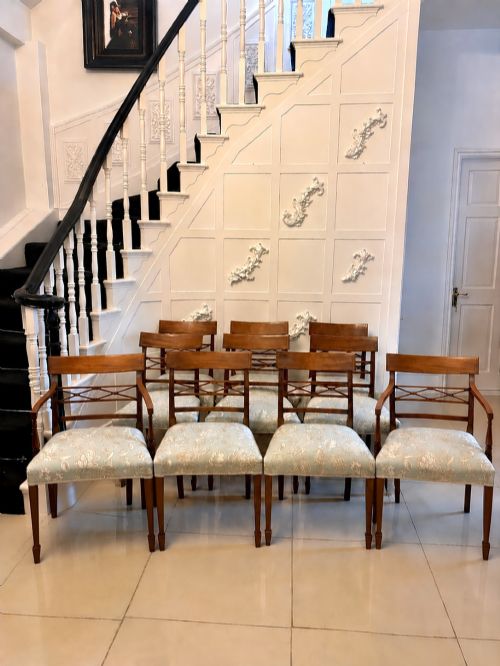
Large sets of dining chairs formed an essential part of formal domestic life, combining carver armchairs for the heads with numerous side chairs. These pieces remained relatively light for ease of movement around the room.
Dining seating from the Georgian and Regency periods prioritized upright posture, featuring supportive upholstered backs and firm slip seats covered in durable leather or horsehair fabric.
How should I care for leather upholstery?
Historic leather requires regular dusting with a dry cloth and occasional treatment with specialist conservation waxes to prevent cracking. Avoid placing antique seating near direct heat sources or strong sunlight.
Maintain stable humidity levels in the room to protect both the animal hide and the underlying timber frame from shrinking or warping over time.
What is the difference between Georgian and Regency styles?
Georgian design spans the reigns of the Georges, moving from early walnut cabriole forms to the classical restraint of the Adam style and Chippendale carving. Proportions remain grounded in Palladian architecture and solid mahogany construction.
Regency design reflects a later, more archaeological influence drawing on Greek and Roman models, often incorporating brass inlay, sabre legs, and rosewood veneers alongside library armchairs.