


Upholstered Fireside Chair
When you select an upholstered fireside chair, you bring home a seat shaped by centuries of comfort and craft.
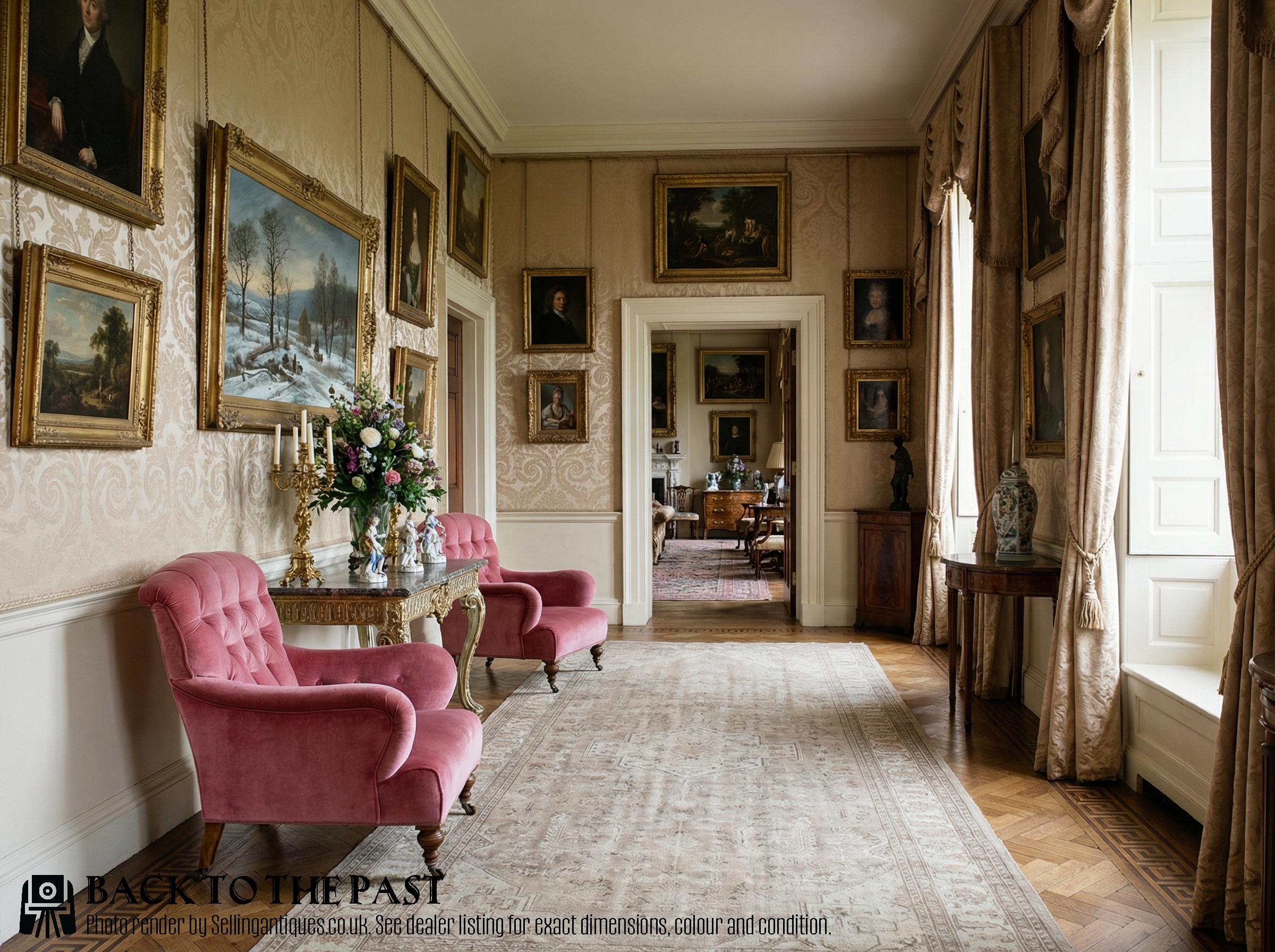
Upholstered Fireside Chair
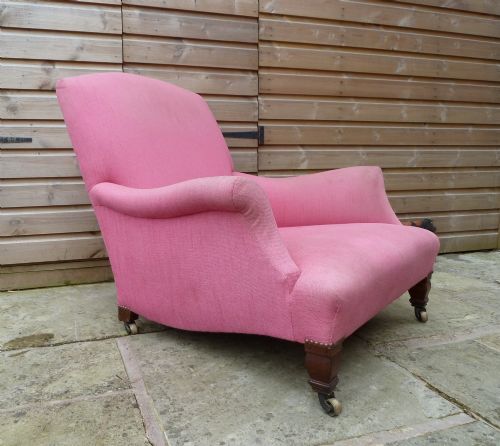
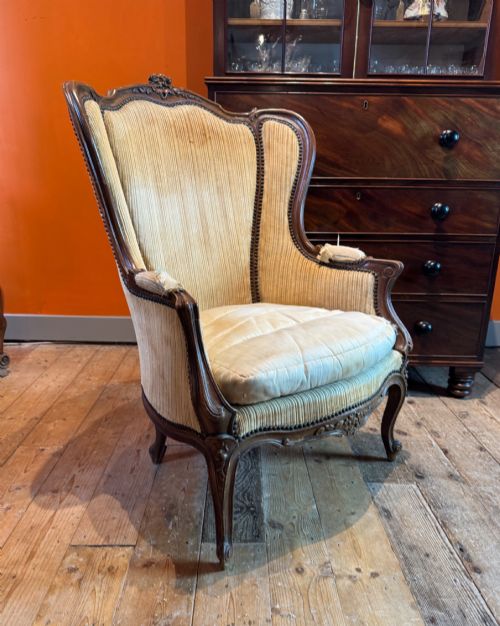
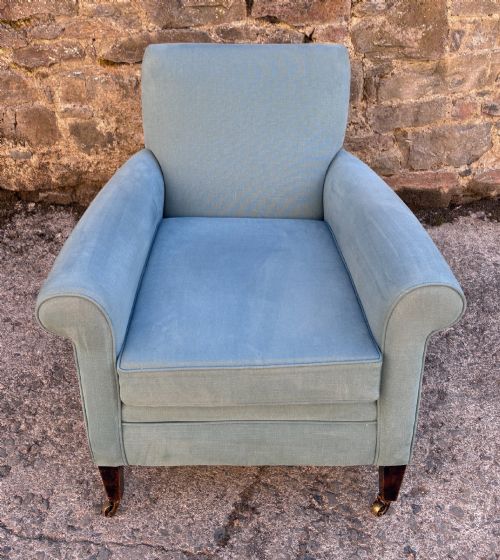
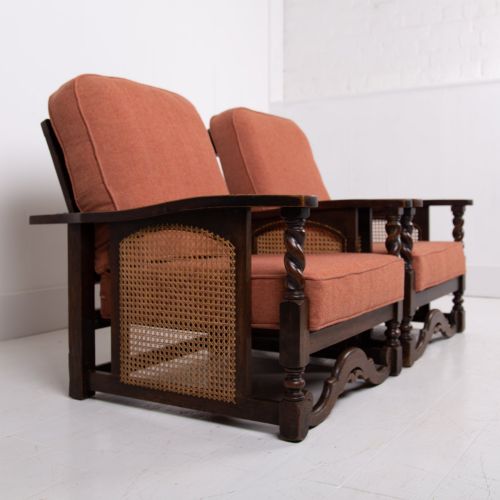
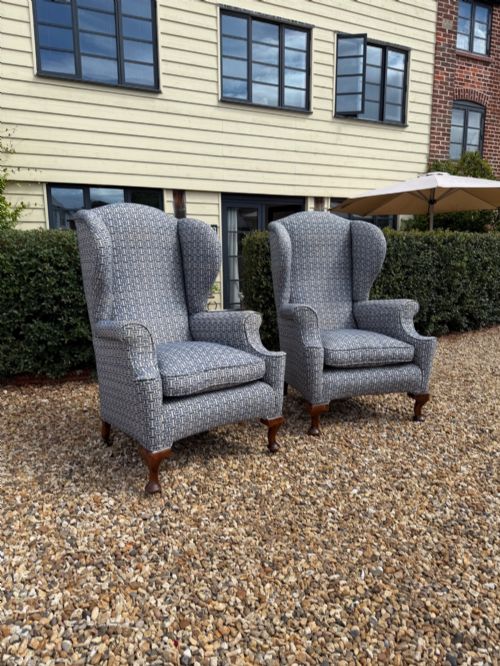
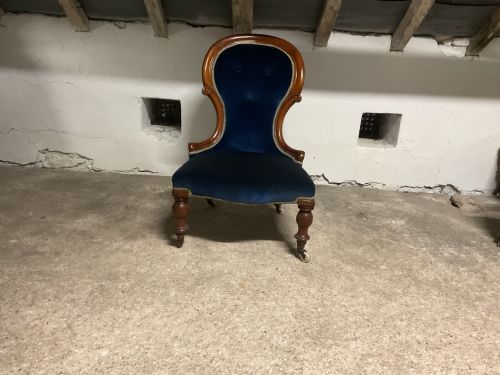
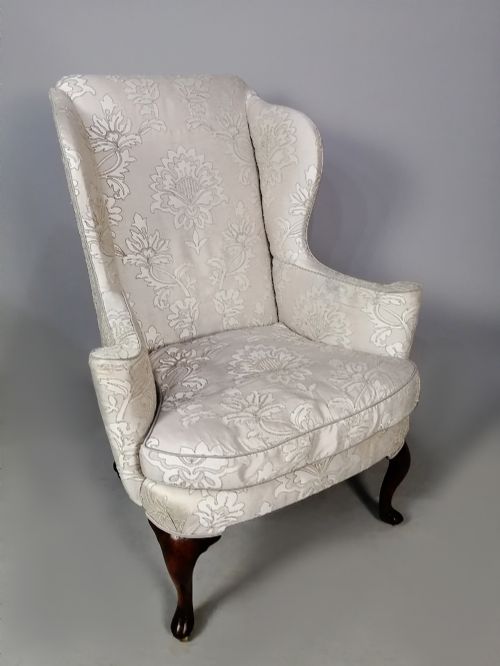
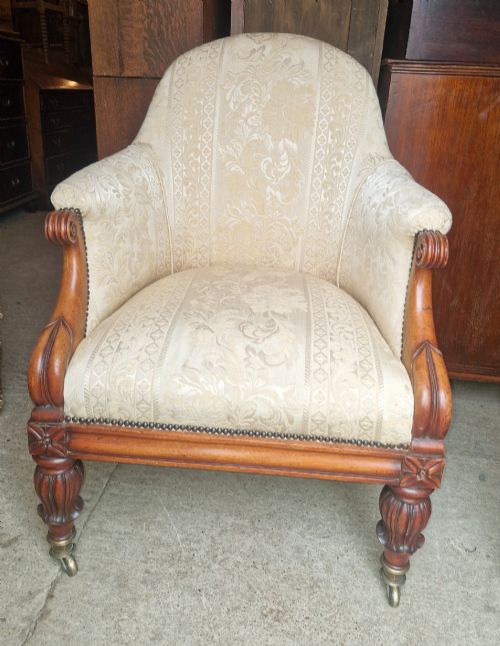
An upholstered fireside chair offers deep seating designed for warmth and rest near a hearth. These pieces range from substantial 18th-century wingbacks to late Victorian button-back designs and Edwardian tub shapes.
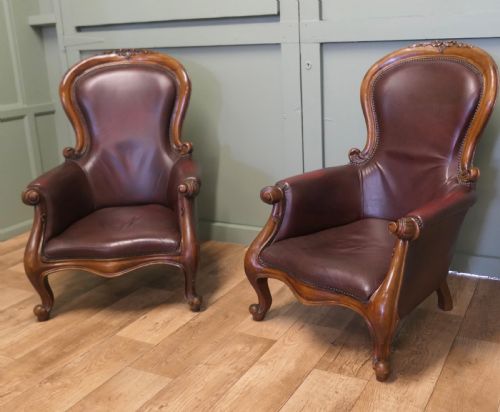
The most common examples on this page date from the Victorian and Edwardian eras, often featuring mahogany or walnut frames with generous padding. They combine robust timber construction with soft textile coverings suited to daily sitting.
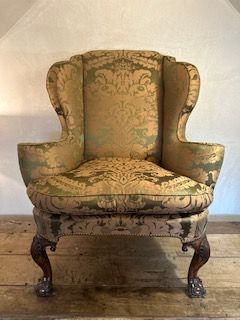
Originating in English country houses and town mansions, these armchairs include styles inspired by Queen Anne, George II, and George III periods. Makers utilised rich fabrics like velvet and leather alongside simpler calico foundations.
Materials and Construction
The structural frames rely on hardwoods such as mahogany, oak, and walnut, joined with traditional woodworking techniques to ensure longevity. Turnings, cabriole legs, and visible show-wood borders define the exterior wooden elements.
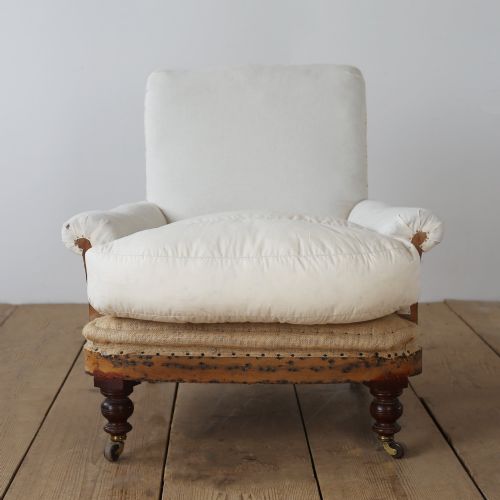
Interior padding traditionally incorporates natural stuffings supported by webbing and coil springs, providing resilience to the seat and back. Outer surfaces are finished with tailored upholstery in leather, tweed, velvet, or plain calico.
Upholstered Fireside Chair Retail Price Guide 2026
Typical asking prices for upholstered fireside chair among the pieces listed under this phrase on Sellingantiques today, from the lower quarter to the upper quarter. They describe what is for sale here now, not the wider market.
Eisteddfod wainscot library reading chairs provide a remarkably grand place to sit while pondering local poetry.
Distinctions in Quality
Excellence in an upholstered fireside chair rests upon the integrity of the hardwood frame and the sophistication of the joinery. Superior examples maintain firm proportions and balanced carving without structural compromise.
The refinement of the upholstery work, from hand-stitched buttoning to precise fabric alignment, separates standard production from workshop masterpieces. Original show-wood timber surfaces retaining their natural patina command particular regard.
Howard and Sons·Gillows·SF Cullen·Shoolbred
The Upholstered Fireside Chair Glossary
- Wingback
- A style featuring side panels designed to shield the sitter from drafts near a fireplace. These extensions transitioned from functional protection to decorative hallmarks of Georgian and Victorian seating.
- Calico
- A plain-woven cotton fabric frequently utilised as a tight foundational upholstery layer. It often serves as the under-cover awaiting a final decorative textile.
- Button back
- An upholstery technique where depressions are formed in the padding by stitches pulled tight and secured with buttons. This method creates a patterned tufted surface that holds stuffing firmly in place.
- Show-wood
- Exposed wooden framing around the back or arms of an upholstered chair. This display highlights the grain and carved details of mahogany, walnut, or rosewood.
Upholstered Fireside Chair: Frequently Asked Questions
What defines a fireside chair?
A fireside chair is built for comfortable seating in domestic reception rooms, typically featuring supportive armrests and a high back. These seats often incorporate wings or deep cushioning to retain heat and offer ergonomic support.
Historically placed close to the hearth, they prioritise relaxation over formal posture. Their design evolved across the 18th, 19th, and early 20th centuries to match changing interior aesthetics.
How do I identify Victorian models?
Victorian models frequently display dark timbers like mahogany or rosewood, paired with button-back upholstery and turned legs fitted with castors. Their profiles range from spoon backs to massive wingback armchairs.
Look for heavier proportions and rich textiles such as velvet or leather. These characteristics reflect the Victorian preference for substantial, comfortable domestic furniture.
Are Edwardian chairs different?
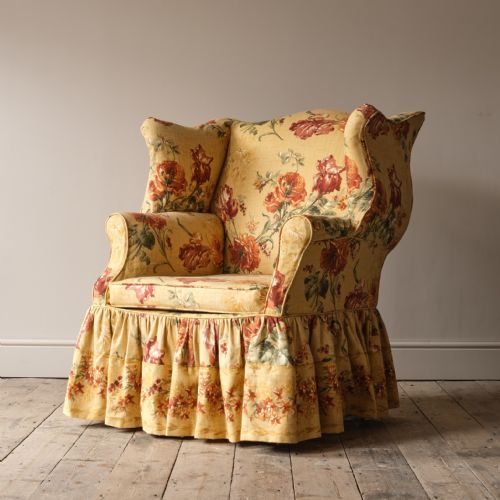
Edwardian chairs generally present lighter proportions, often constructed in walnut or inlaid mahogany. Tub chairs and occasional fireside seats become prevalent during this period.
The upholstery frequently utilises tweed, lighter fabrics, or decorative printed materials. This reflects a shift towards brighter, less congested drawing room layouts.
How should I care for leather upholstery?
Leather upholstery requires regular dusting and occasional conditioning to maintain suppleness and prevent drying. Avoid placing antique leather chairs in direct sunlight or near intense heat sources.
Gentle cleaning with appropriate leather balms preserves the natural grain and historic patina. Proper maintenance ensures the material remains durable for continuous use.