
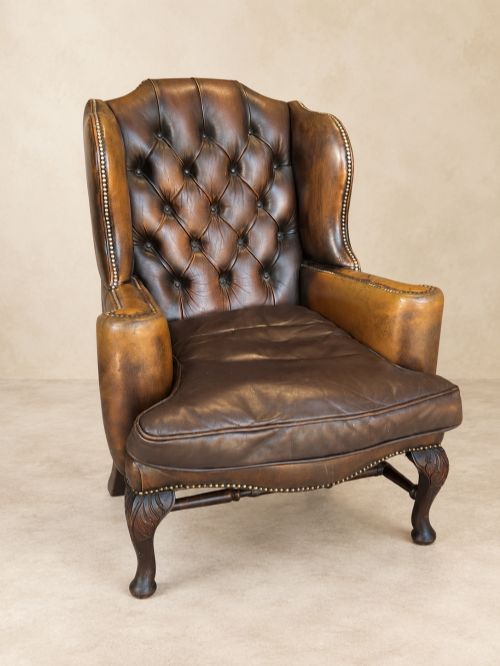
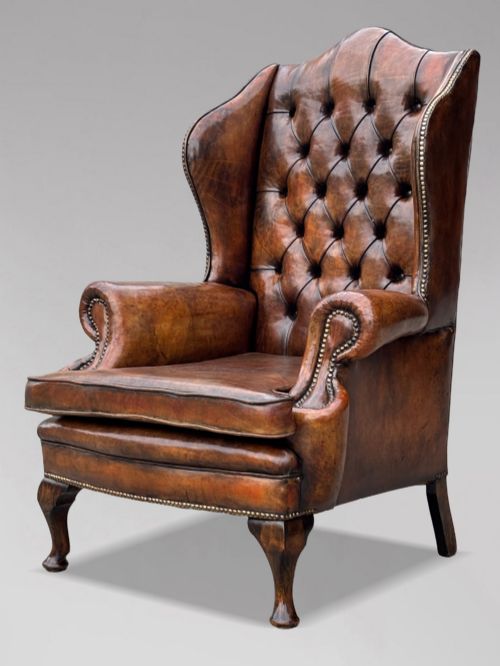
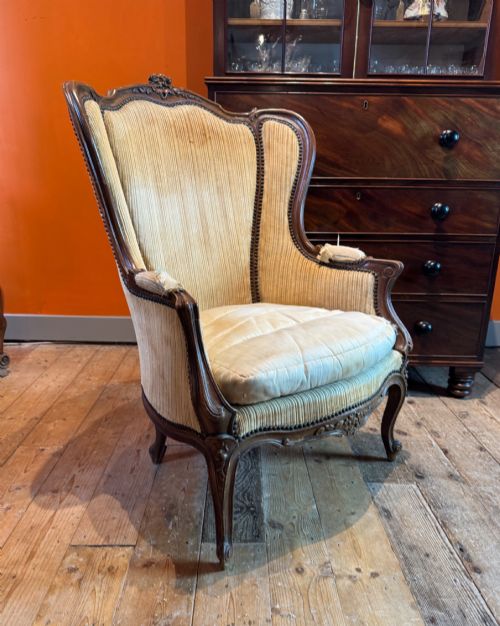
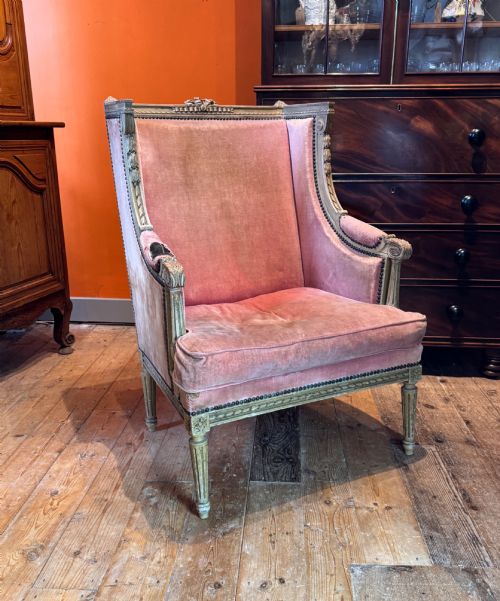
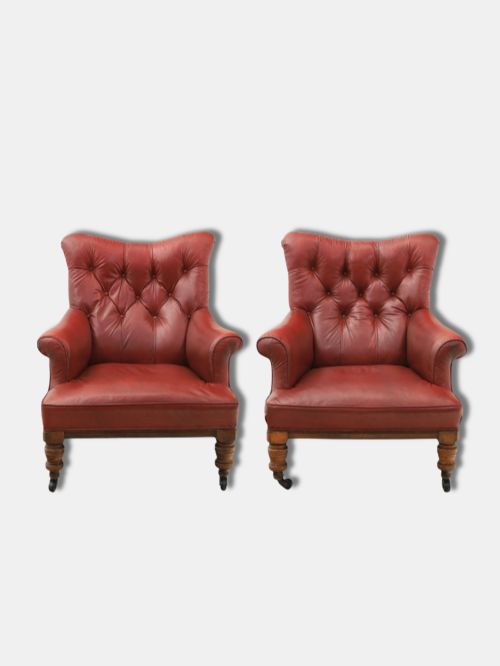
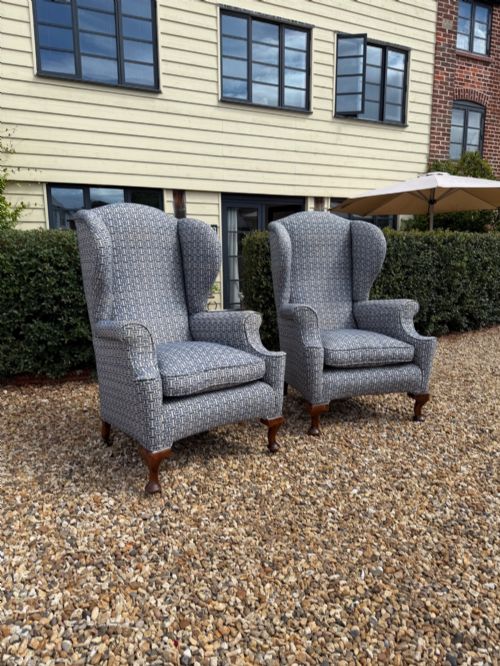
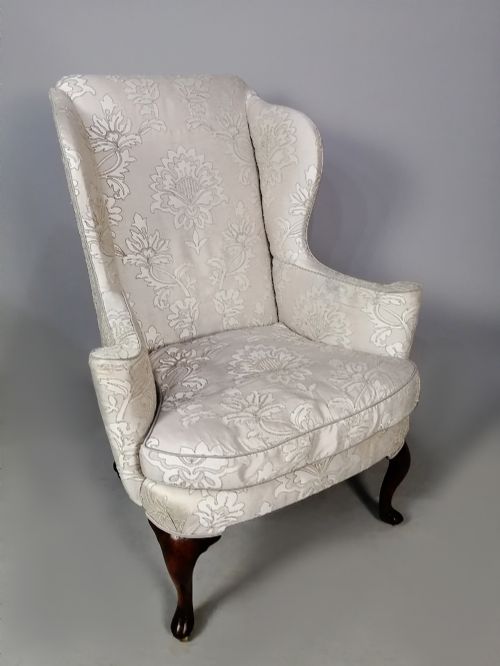
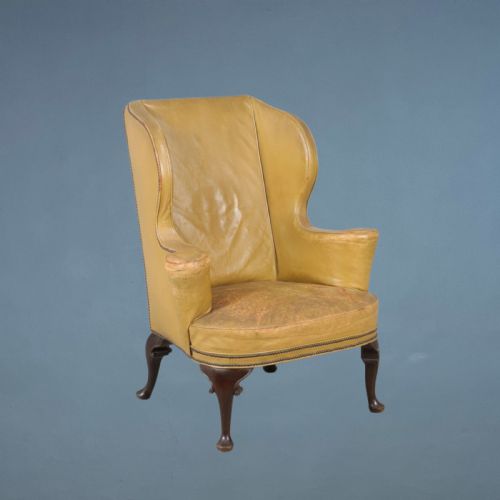
Wingback Armchair
A wingback armchair offers deep comfort and draught-excluding wings, bridging centuries of domestic seating design.
Defining the Wingback Armchair
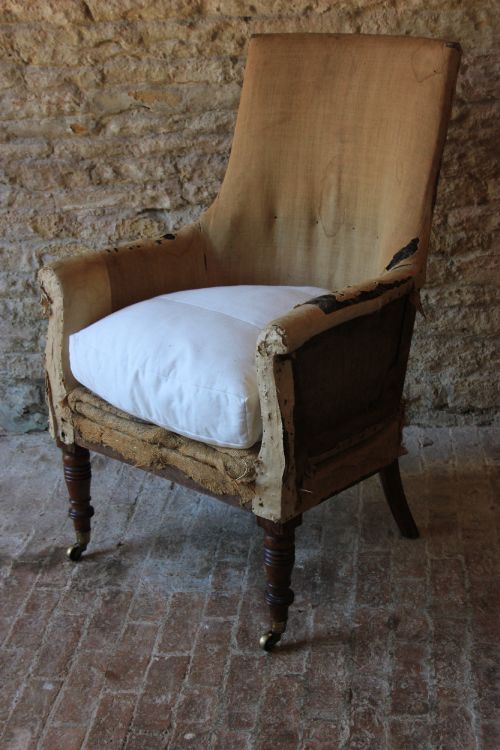
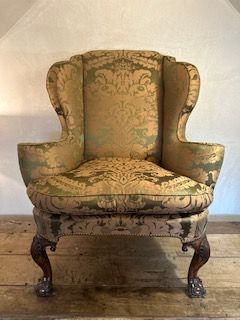
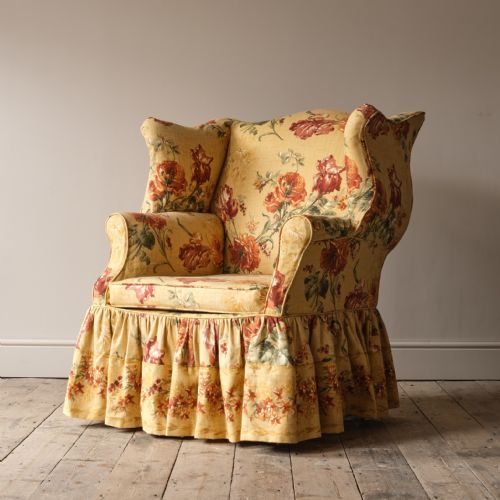
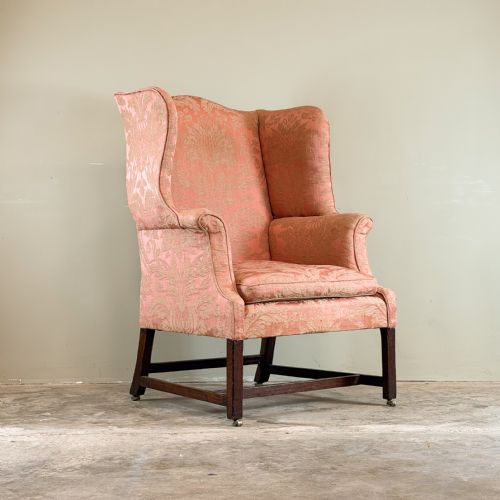
A wingback armchair provides an enclosed seating experience designed to shield the occupant from draughts while keeping the warmth of a fire contained. These pieces appear across the 18th, 19th and early 20th centuries, spanning Georgian, Victorian and revival styles.
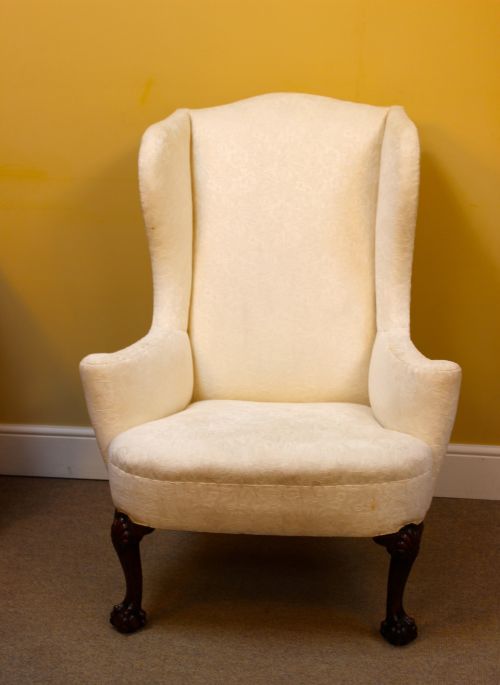
The most common examples on this page date from the 19th century and the 1900s, often drawing heavily on Georgian and George III proportions. Walnut and mahogany frame these upholstered forms, frequently carrying distinct period stylistic revivals.
Makers shaped these chairs to suit formal parlours and relaxed country houses alike, varying the depth of the wings and the height of the back. Some examples arrive in pairs, while others stand as solitary library pieces.
Markers of Distinction
Superior examples demonstrate confident proportions in the rake of the back and the precise curve of the wings. The quality of the timber frame dictates the longevity and stance of the armchair.
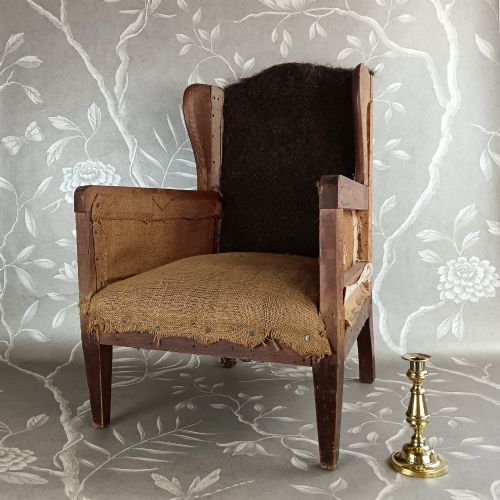
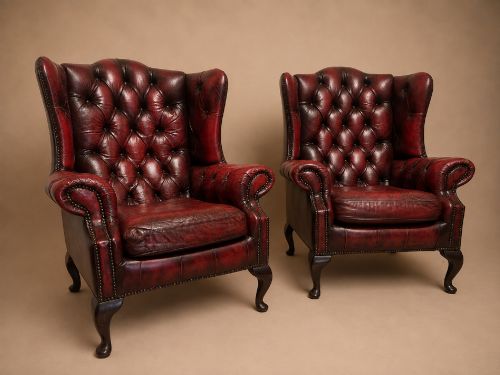
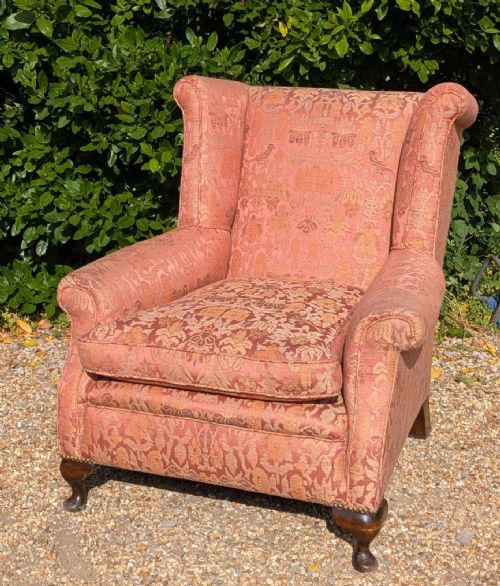
Upholstery choices reveal the original ambition of the piece, moving from simple calico underpinnings to fine leather or patterned damask. Maker attribution, where present, elevates the standing of an individual chair within the archive.
Retail Price Guide 2026
Typical UK retail prices for wingback armchair, calculated from the Sellingantiques database of over a million retail prices indexed since 2003. This retail price guide relies exclusively on Sellingantiques data; no external sources or auction records are used, so the figures do not describe the wider market.
Some pairs wait patiently as royal siblings, appearing as historic his and hers fireside companions.
Howard and Sons
The Wingback Armchair Glossary
- Wing
- The protective lateral flap attached to the back of the armchair. This feature originally served to block cold air from reaching the sitter's head and neck.
- Bergère
- An enclosed upholstered armchair with wooden framing exposed around the sides and back. This French-inspired form often includes woven cane panels.
- Os De Mouton
- A decorative scroll-shaped furniture leg resembling sheep bone. Craftsmen carved this distinctive profile during specific historic revival periods.
- Giltwood
- Timber coated with a thin layer of gold leaf. This lavish finish appears on more decorative revival frames.
- Ticking
- A tightly woven cotton or linen fabric featuring a striped pattern. It historically served as a durable mattress or upholstery lining.
Frequently Asked Questions
How do I date a wingback armchair?
Examine the timber species, the profile of the legs and the construction methods used beneath the upholstery. Eighteenth-century versions often display distinct regional joinery, whereas 19th-century and Edwardian pieces incorporate later revival cues.
Compare the secondary woods and the styling of the wings against known historical examples in the archive. Subtle shifts in proportion help separate genuine Georgian pieces from later Georgian style interpretations.
Were wingback armchairs used in bedrooms?
These seats primarily occupied reception rooms, libraries and drawing rooms where fireside warmth mattered most. Their enclosed shape suited drafty spaces rather than private sleeping quarters.
Country houses often positioned them near hearths to maximise comfort. Later periods occasionally placed them in larger bedrooms, though the living room remained their traditional home.
What is the difference between George III and Georgian style?
Original George III pieces were built during the actual reign of that monarch, reflecting authentic 18th-century cabinetmaking standards. Georgian style refers to later revival pieces made in imitation of those earlier forms.
Revival examples often date to the Victorian era or the early 20th century. They utilise period design vocabulary while employing the workshop practices of their own actual manufacturing era.
How should I care for leather upholstery?
Maintain antique leather by keeping it away from direct heat sources and strong sunlight that can dry the hide. Apply appropriate leather conservators sparingly to preserve flexibility.
Avoid modern chemical cleaners that might strip the historic finish. Regular dusting with a soft, dry cloth keeps the surface secure without risking moisture damage.