
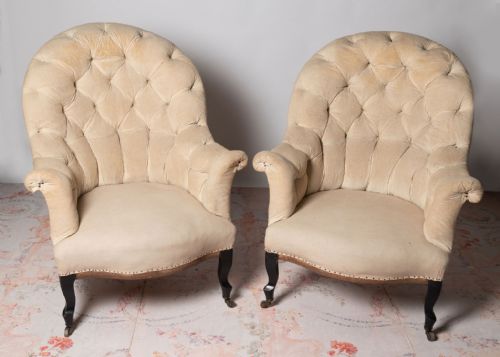


Tufted Velvet Armchair
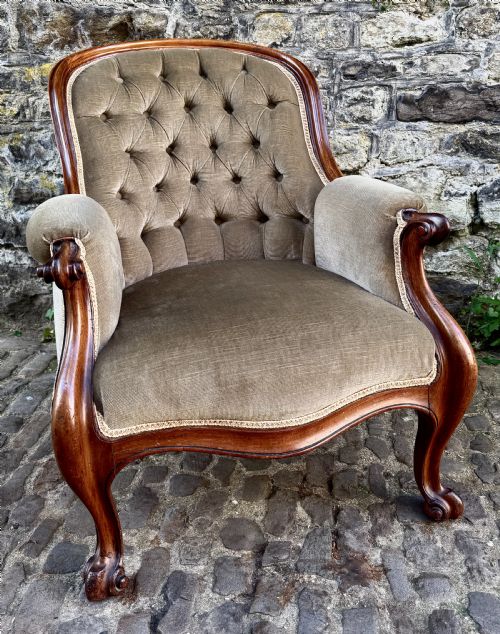
A tufted velvet armchair brings deep upholstery and tactile comfort into a room, drawing the eye with its gathered folds and rich pile.
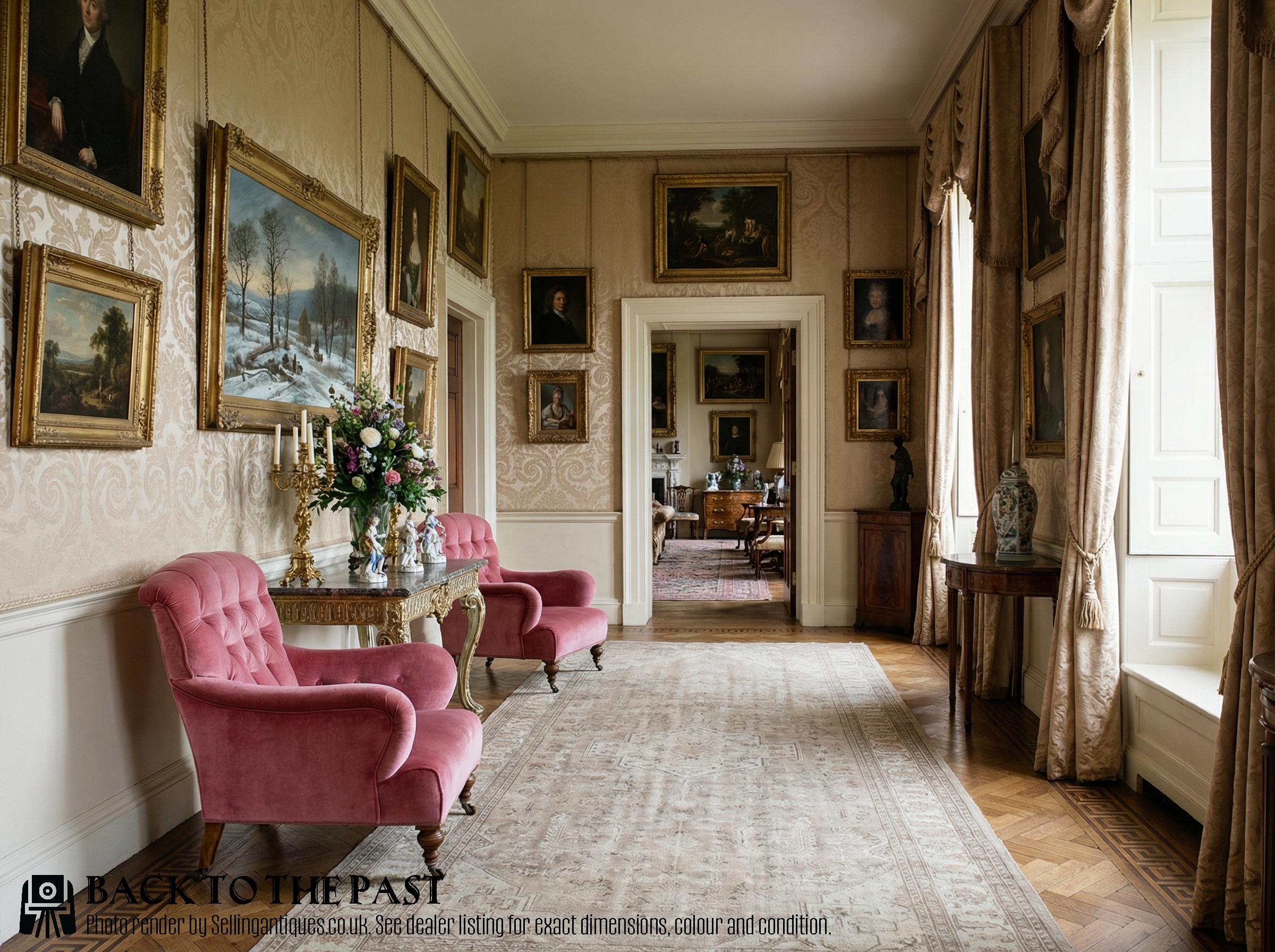
Tufted Velvet Armchair
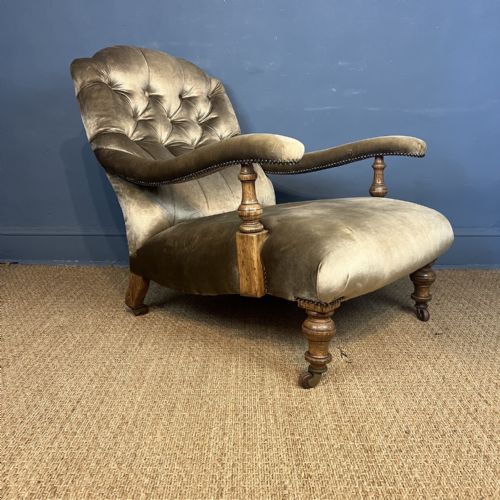
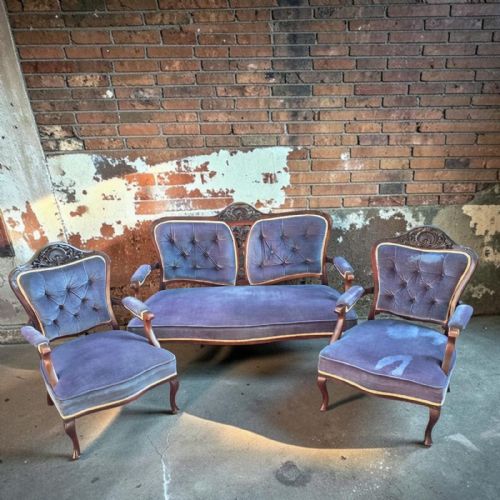
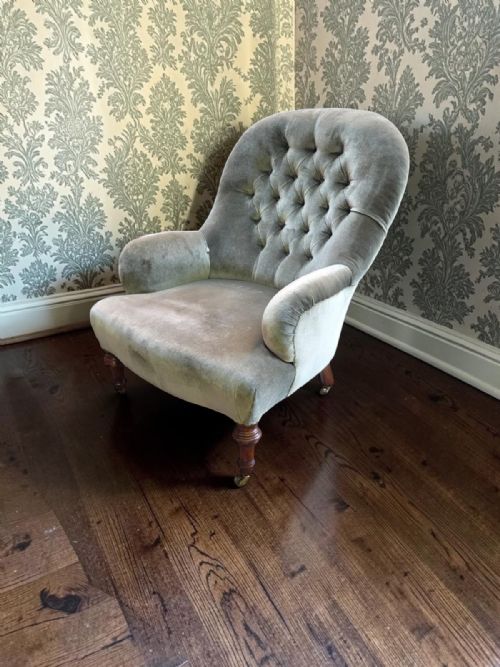
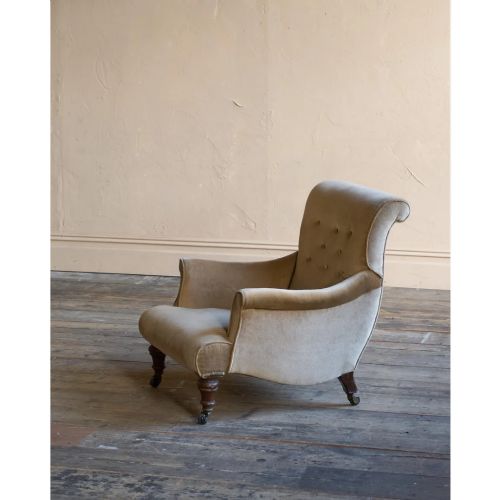
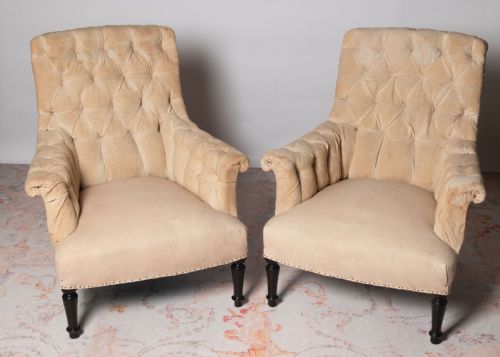
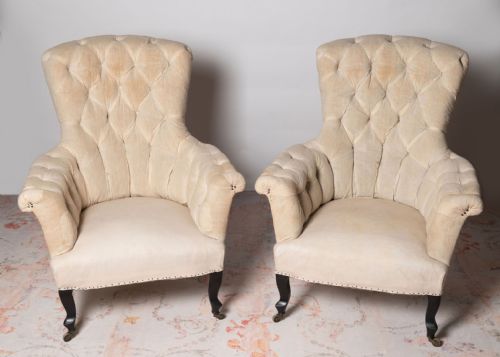
A tufted velvet armchair takes many historical shapes, from Victorian button back designs and Edwardian barrel backs to low slipper chairs and library seats. The pieces on this page span the nineteenth and early twentieth centuries, offering a range of deep-sprung seating rooted in English and French cabinet-making traditions.
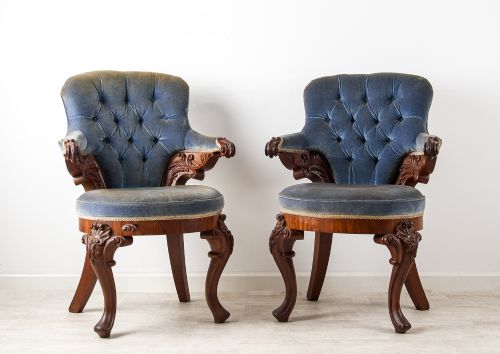
Victorian and Edwardian examples dominate the selection, often featuring curved backs, carved mahogany or walnut frames, and expressive upholstery details. Buyers encounter styles ranging from plain salon seating to substantial library armchairs and French-influenced revival pieces.
Materials and Construction
Makers built the structural frames of these armchairs using hardwoods such as mahogany, walnut, oak, rosewood, and ebonised wood, often supported by brass castors on the feet. The woodwork frequently shows carved details, moulded rails, and exposed grain that contrast with the softness of the fabric.
Upholstery relies on traditional techniques of deep buttoning, or tufting, to secure the padding and create a rhythmic pattern of folds across the velvet. This dense cushioning relies on internal springing and webbing to maintain its form and resilience.
Tufted Velvet Armchair Retail Price Guide 2026
Typical asking prices for tufted velvet armchair among the pieces listed under this phrase on Sellingantiques today, from the lower quarter to the upper quarter. They describe what is for sale here now, not the wider market.
Listings feature frames in mahogany, walnut, and oak, alongside styles spanning Victorian, Edwardian, Regency, and French revival periods.
Evaluating Craft and Condition
Quality rests upon the integrity of the timber frame and the precision of the joinery beneath the fabric. Finer examples display crisp carving in the walnut or mahogany, balanced proportions, and robust structural framing that supports heavy daily use.
The standard of the upholstery work defines the finish, seen in the regularity of the tufting and the hand-pleated folds of the velvet. Original castors, well-chosen secondary woods, and maker stamps or attributions elevate the standing of a piece.
Holland and Sons·C Hindley and Sons
The Tufted Velvet Armchair Glossary
- Button back
- A style of upholstery where recessed buttons pull the fabric tight into the padding, creating a grid of diamond shapes and tufted folds. This method secures the internal stuffing while adding rich texture to the chair back.
- Barrel back
- An armchair design featuring a semicircular curved backrest that wraps around the sitter in a continuous embrace. Edwardian makers favoured this enclosed form for domestic comfort.
- Spoonback
- A chair back shaped in the concave silhouette of an upturned spoon, popular during the Victorian period. It provides ergonomic support that mirrors the curve of the human spine.
- Fauteuil
- An open-armed French armchair with an exposed wooden frame and upholstered seat and back. These decorative seats often display gilt finishes and carved revival details.
- Castor
- A small wheel attached to the legs of heavier armchairs to ease movement across carpets and flooring. They are frequently cast in brass and mounted on wooden cups.
Tufted Velvet Armchair: Frequently Asked Questions
What is a tufted velvet armchair?
A tufted velvet armchair is a piece of upholstered seating characterised by deep pile fabric pulled into geometric patterns using buttons or tufts. These chairs often feature wooden frames from the nineteenth and early twentieth centuries.
They combine decorative presence with tactile comfort, making them enduring choices for studies, drawing rooms, and bedrooms.
How do I identify a Victorian armchair?
Victorian armchairs typically display robust wooden frames in mahogany, walnut, or ebonised timber, paired with sprung upholstery and buttoned backs. They often incorporate carved ornament, spoonback silhouettes, or turned legs.
Later Victorian and Edwardian examples lean towards barrel backs and lighter proportions while retaining the signature tufted upholstery.
Where were these armchairs placed originally?
In period homes, these armchairs served varied functions across the domestic interior, from fireside seating in living spaces to reading chairs in libraries. Smaller occasional chairs and salon suites were positioned in receiving rooms for guests.
Today, their adaptable forms suit modern living rooms, bedrooms, and reading corners as statement accent pieces.
What distinguishes French styles here?
French-influenced armchairs on this page, including Napoleon III and Louis XV revival pieces, emphasise exposed gilt frames, curved cabriole legs, and decorative carved details. They often utilise brighter velvet tones such as coral and feature open arms.
These designs contrast with the heavier, more enclosed proportions of traditional English library and club chairs.