
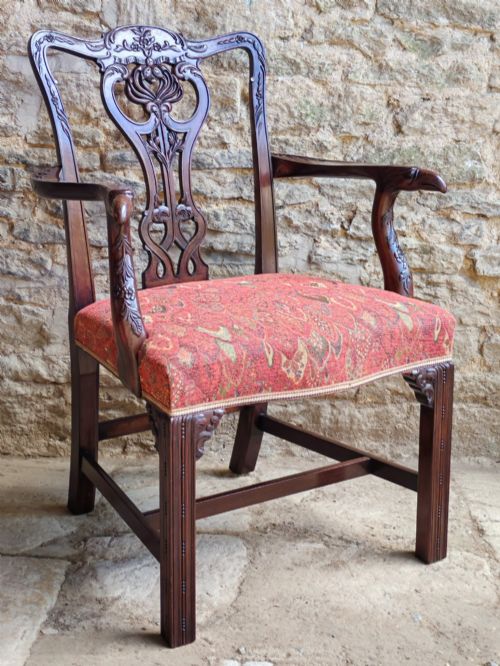


Upholstered Mahogany Chairs
Upholstered mahogany chairs bring enduring dining room structure and seating comfort through dense timber frames and covered seats.
What They Are
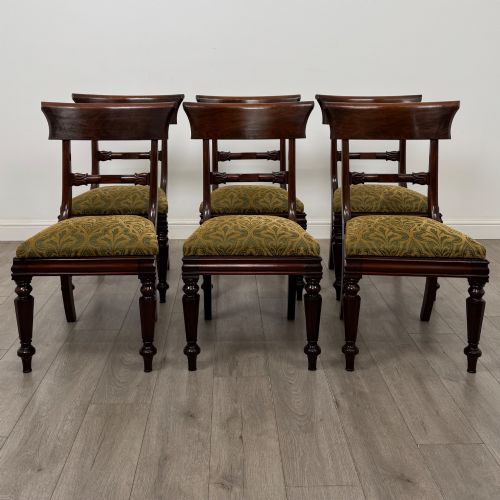
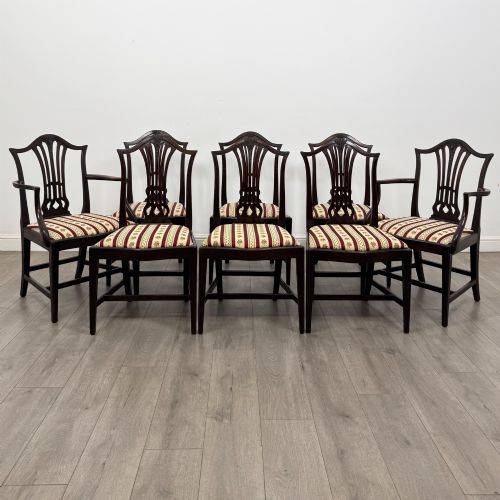
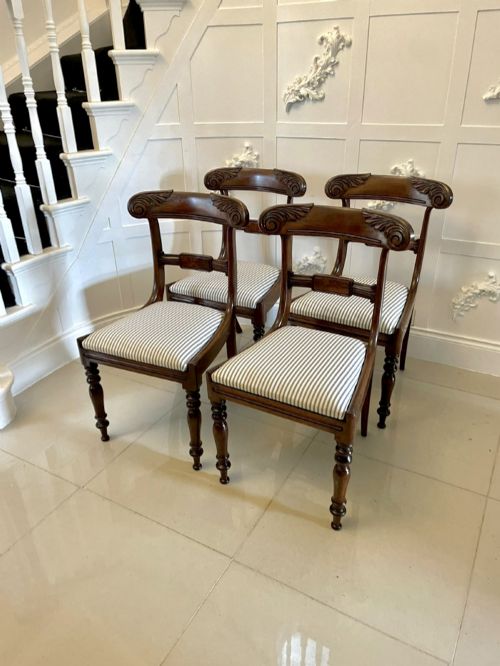
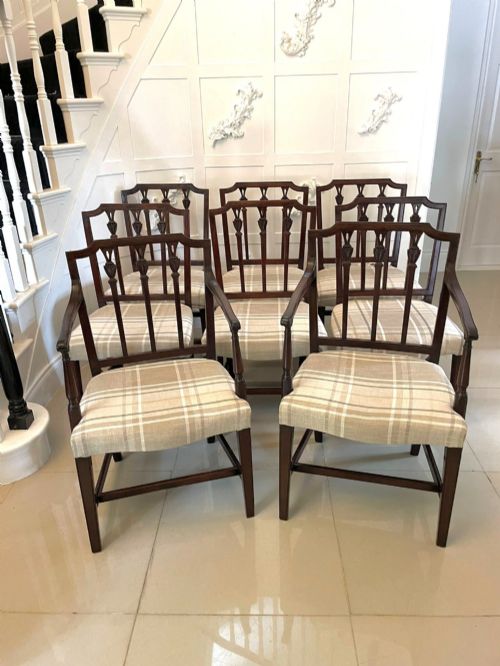
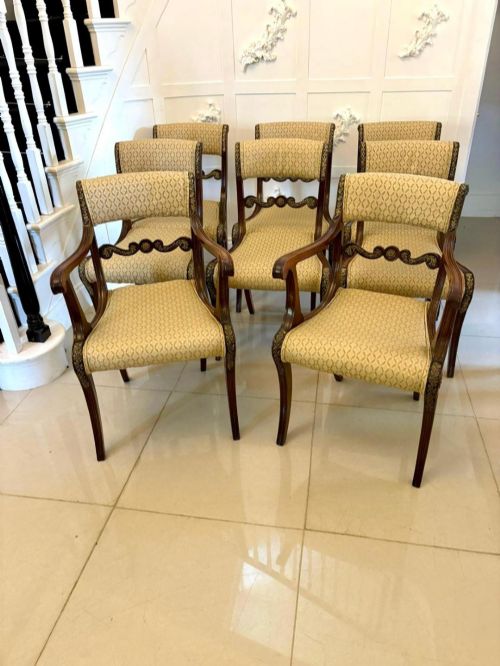
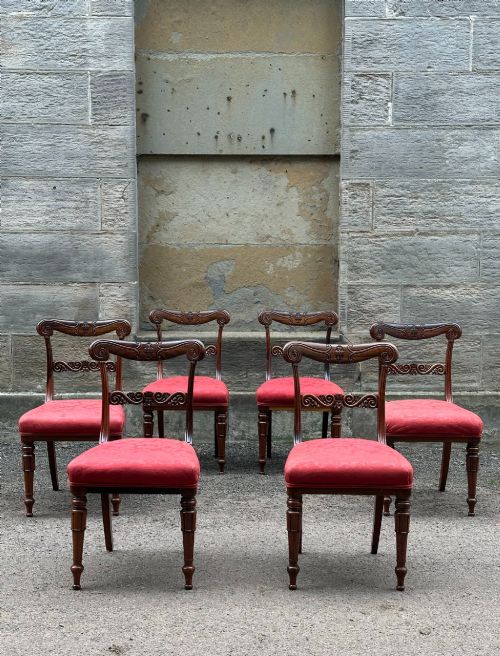
Upholstered mahogany chairs primarily take the form of dining chairs offered in sets, ranging from modest groups of four up to extensive sets of eighteen. These pieces emerge across Georgian, Victorian, and Edwardian periods, alongside later revivals spanning from the nineteenth century into the 1920s.
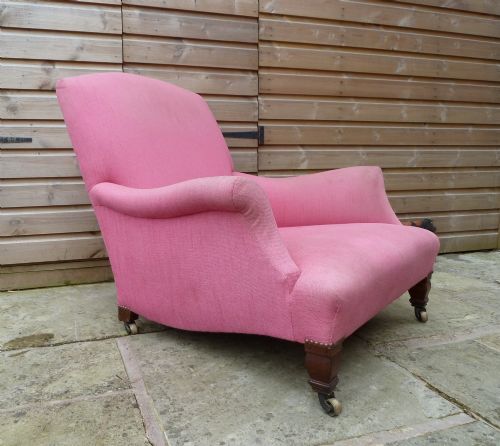
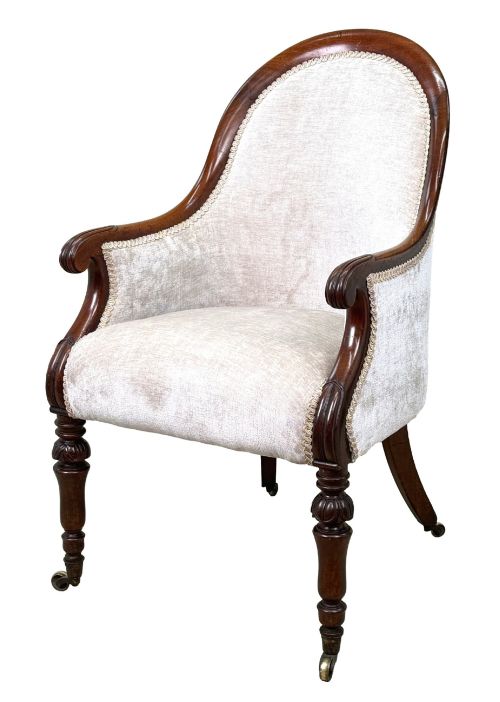
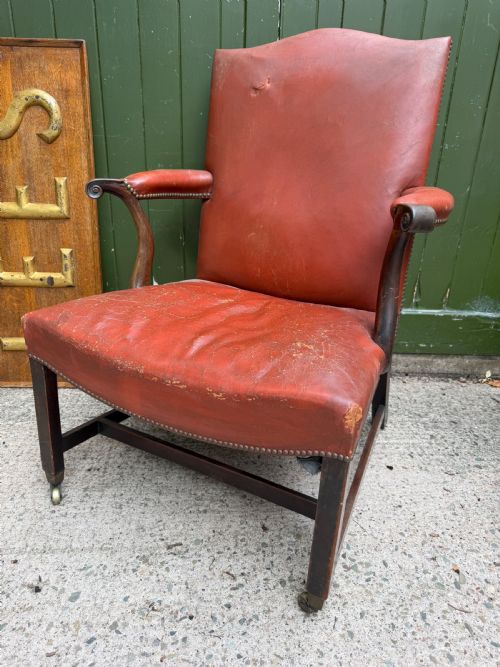
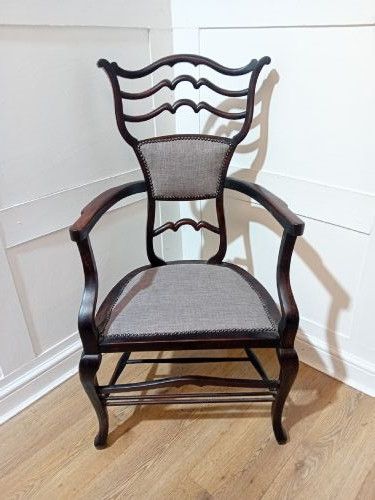
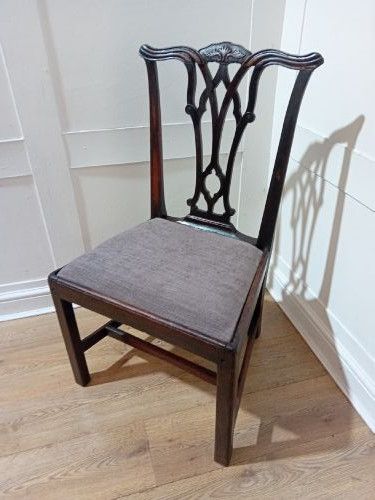
Beyond formal dining seating, the category encompasses armchairs, library chairs, hall chairs, and salon suites. Buyers encounter period iterations featuring bar backs, balloon backs, ribbon backs, and spoon backs alongside specific stylistic revivals.
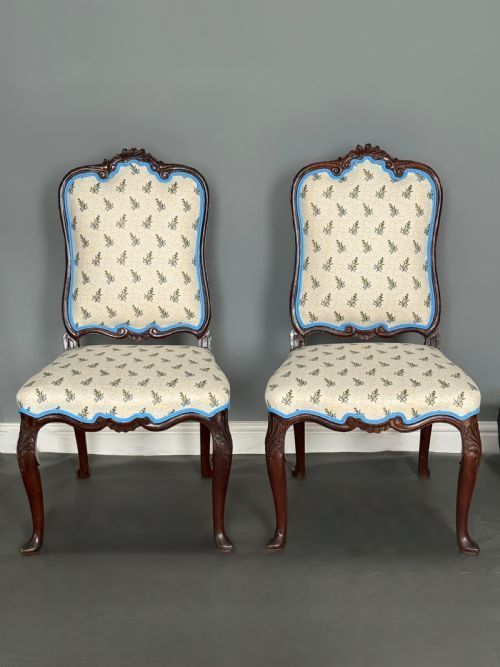
The material foundation rests on solid mahogany timber frames paired with textile, fabric, leather, silk, horsehair, or damask upholstery. Many examples incorporate carver chairs alongside larger dining sets to accommodate head-of-table seating arrangements.
How They Were Made
Cabinet makers built the primary structural frames using dense mahogany timber, frequently shaping the wood into curved backrests, reeded legs, or carved stylistic motifs. Joinery relied on traditional framing techniques to support daily weight around dining tables and sitting rooms.
Upholstery techniques combined internal stuffing with durable outer coverings including leather, horsehair, damask, silk, and woven textiles. Workshops secured these materials to seats, backs, and armrests using tacks, buttons, and decorative trims.
Retail Price Guide 2026
Typical UK retail prices for upholstered mahogany chairs, calculated from the Sellingantiques database of over a million retail prices indexed since 2003. This retail price guide relies exclusively on Sellingantiques data; no external sources or auction records are used, so the figures do not describe the wider market.
Some dining sets arrive with more elbows than guests, offering extra carver chairs just in case the conversation runs long.
What Varies in Quality
The distinction between standard examples and superior craftsmanship lies in the depth of timber carving and the architectural integrity of the frame. Leading pieces display crisp joinery, balanced proportions, and substantial mahogany stock that withstands generations of use.
Upholstery execution and textile selection further differentiate the inventory, where traditional stuffing methods and high-grade materials reflect workshop execution. Original period coverings and documented maker attribution elevate individual pieces above standard production chairs.
Gillows·J.B.
The Upholstered Mahogany Chairs Glossary
- Carver chair
- An armchair designed to match a set of single dining chairs, traditionally placed at the head of a dining table.
- Bar back
- A horizontal cross-rail forming the upper section of a chair back, frequently seen on Regency and Victorian dining seats.
- Balloon back
- An oval or rounded wooden chair back resembling a balloon shape, popular during the Victorian era.
- Ribbon back
- An intricate carved chair back design mimicking looped ribbon motifs, associated with Chippendale style seating.
- Horsehair
- A durable weaving material utilised for traditional upholstery stuffing and seat covers in antique chairs.
Frequently Asked Questions
How do I date an upholstered mahogany chair?
Dating relies on matching the framing style, backrest shape, and leg design to known historical periods such as the Georgian era or Victorian times. Construction methods and secondary timbers inside the frame also point toward specific decades.
Changes in stylistic revivals during the early twentieth century often mimic earlier Georgian or Chippendale forms. Examining the upholstery technique helps confirm whether the piece retains period materials or later reupholstery.
Are these chairs suitable for daily dining use?
Period mahogany frames offer exceptional structural strength built for regular seating around the dining table. Solid timber construction ensures these pieces withstand daily movement and weight.
Selecting sturdy frames with sound joinery guarantees practical longevity in modern homes. Periodic maintenance of the upholstery keeps the seating comfortable and supportive.
How should I care for antique mahogany and upholstery?
Protect the mahogany frame by keeping it away from direct sunlight and sudden temperature changes that dry out the timber. Regular dusting with a soft cloth maintains the natural finish without heavy polishing.
Upholstery requires gentle vacuuming or professional cleaning depending on the textile type, whether leather, horsehair, or woven fabric. Preserving the existing fabric or undertaking traditional reupholstery protects the integrity of the piece.