
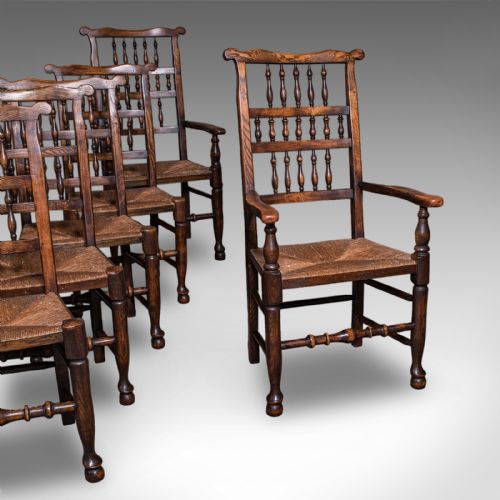
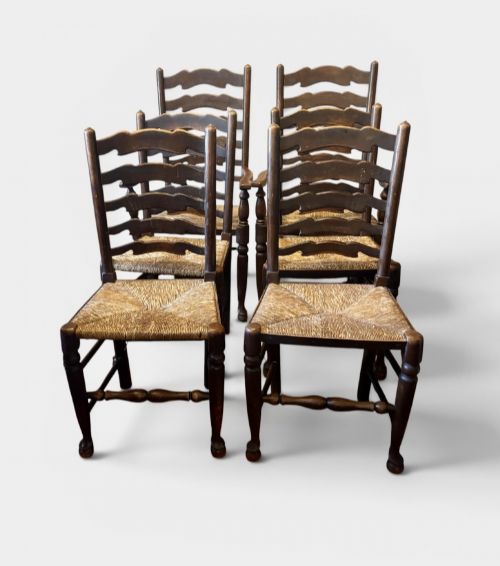


Ladderback Dining Chairs
Ladderback dining chairs bring honest timber construction and vernacular charm to a room, offering both robust daily utility and enduring style.
What ladderback dining chairs are
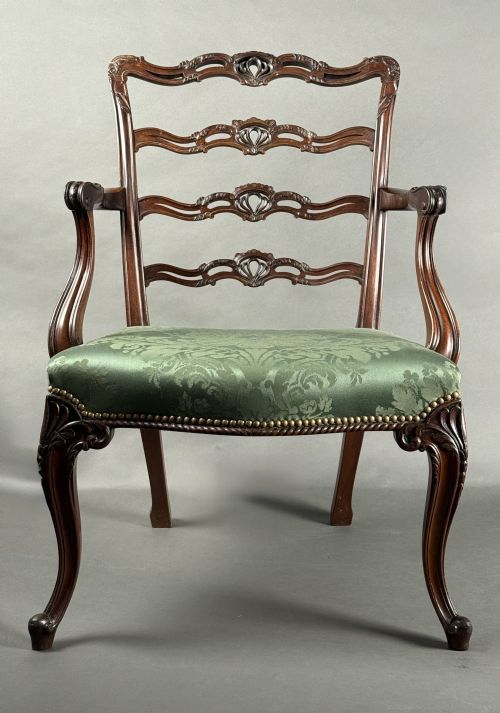
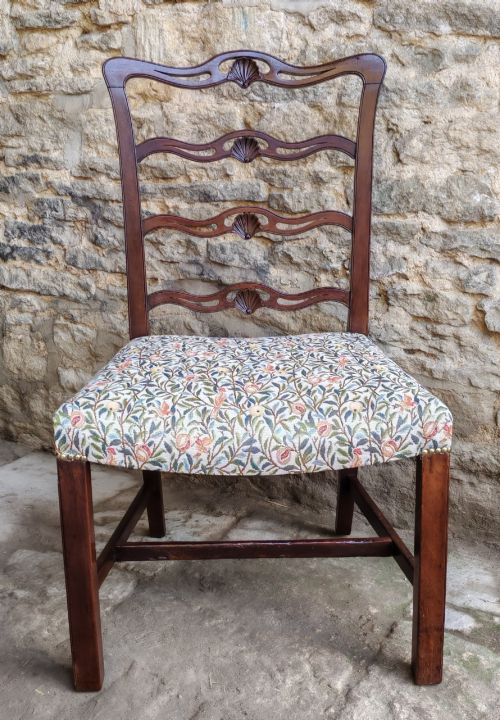
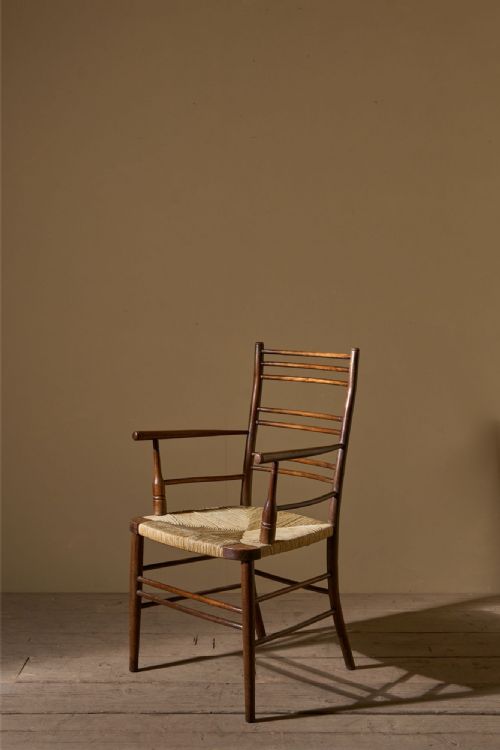
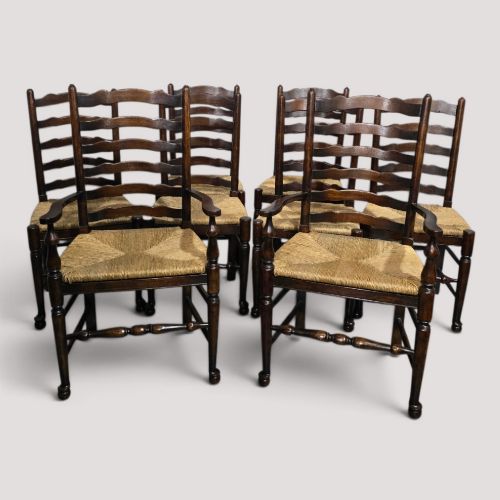
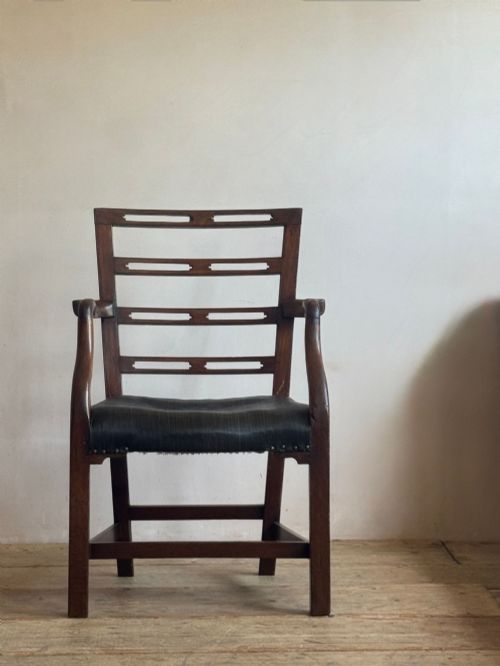
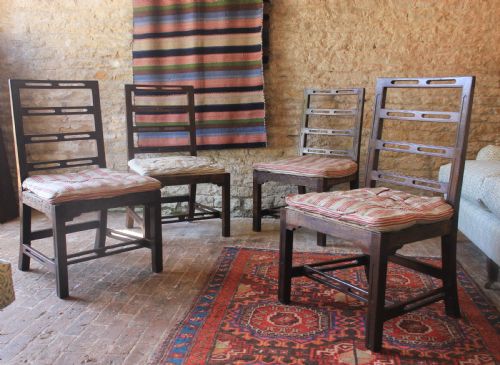
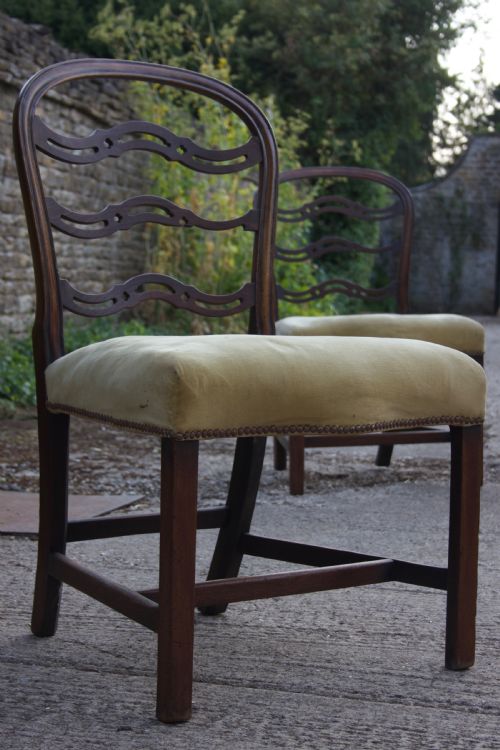
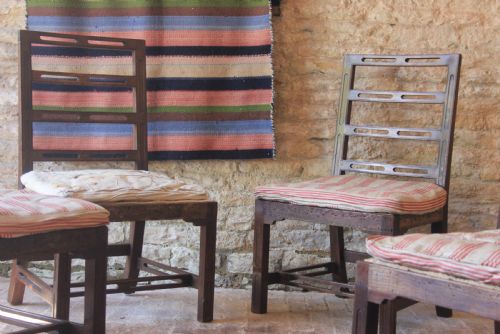
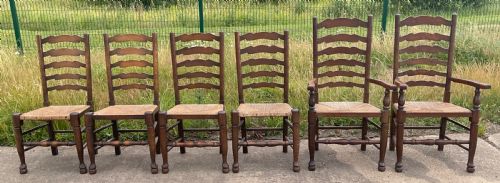
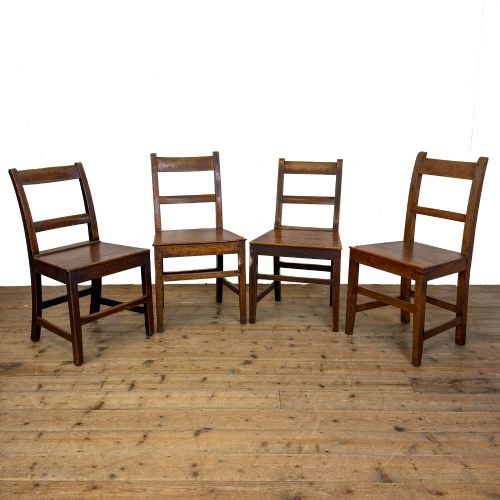
Ladderback dining chairs represent a traditional form defined by horizontal slats set between upright posts, designed primarily for practical seating around a table. When searching for ladderback dining chairs, buyers encounter sets originating from country workshops, provincial kitchens, and formal urban settings alike.
The evidence shows these dining chairs appearing across multiple periods, including the Georgian era, the nineteenth century, and the nineteen-thirties. Woods such as oak, elm, mahogany, and beech recur frequently, often paired with rush, leather, or fabric seats.
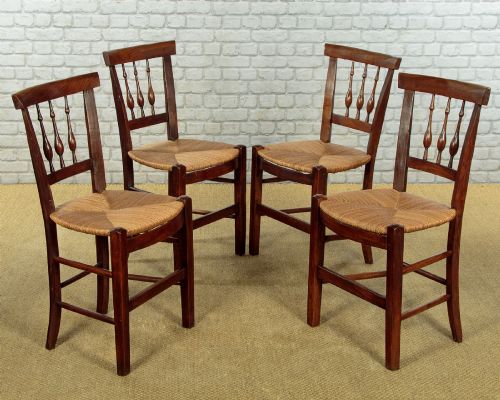
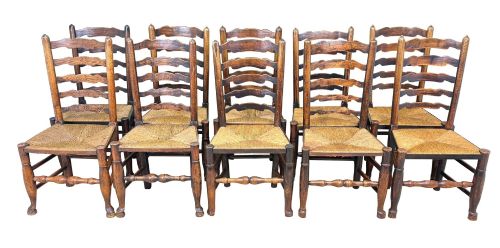
Regional styles span English country, Welsh country, rustic farmhouse, French provincial, and Chippendale revival. Sets vary considerably in scale, ranging from pairs and small quartets to large collections numbering ten or eighteen pieces.
How ladderback dining chairs were made
Cabinetmakers and country joiners shaped these dining chairs from domestic hardwoods, notably oak, elm, beech, and mahogany, sometimes combining timbers within a single frame. Turning lathes formed the upright posts and stretcher supports, while hand tools shaped the curved horizontal slats characteristic of the form.
Seats utilised woven rush, stretched leather, or upholstered fabric inserted into the wooden framework. Certain regional examples incorporated double stretchers for added stability, reflecting the demands of heavy daily use in kitchens and dining rooms.
Retail Price Guide 2026
Typical UK retail prices for ladderback dining chairs, calculated from the Sellingantiques database of over a million retail prices indexed since 2003. This retail price guide relies exclusively on Sellingantiques data; no external sources or auction records are used, so the figures do not describe the wider market.
Listings feature dining chairs spanning from the eighteenth century through the Georgian and Victorian eras up to nineteen-thirty.
What varies in quality
Quality in these dining chairs depends on the integrity of the timber framing and the precision of the joinery connecting the rails to the posts. Substantial sections of oak or elm and well-tensioned rush or leather seating elevate the standard of a set.
Consistency across a group distinguishes larger gatherings of dining chairs, where matching slat profiles and uniform wear denote a matched set rather than a harlequin collection assembled later.
Heals
The Ladderback Dining Chairs Glossary
- Ladderback
- A chair style featuring a backrest composed of multiple horizontal wooden slats or rails set between two vertical uprights. This traditional form has endured across centuries of furniture making.
- Rush
- A seating material woven from dried marsh plants to form a durable, textured surface. It appears frequently on country dining chairs.
- Harlequin set
- A collection of dining chairs that match in general style and period but vary slightly in detail, having been gathered together over time. These sets offer a traditional, collected aesthetic.
- Carver
- An armchair, often incorporating elbow rests, designed to sit at the head of a dining table. Pairs of these frequently accompanied larger sets of side chairs.
- St stretcher
- A horizontal wooden brace connecting the legs of a chair to provide structural rigidity. Double stretchers offer additional reinforcement.
Frequently Asked Questions
What is a harlequin set of dining chairs?
A harlequin set is a collection of chairs that share a common period and style but were not originally manufactured together as a single group. They offer a gathered, authentic appearance around a dining table.
These collections often arise when larger dining settings are assembled over time from individual pieces or smaller pairs originating from the same region.
How do I care for rush seat chairs?
Rush seats require a dry environment and gentle cleaning to maintain the natural fibres over decades of use. Avoiding excessive moisture prevents the woven material from becoming brittle.
Periodic dusting with a soft brush helps preserve the texture of the rush without damaging the traditional weave.
How can I tell the period of a chair?
Dating relies on observing the timber species, turning methods, and specific regional design traits such as wavy line slats or double stretchers. Eighteenth-century examples often display deep patination on oak or mahogany.
Nineteenth and twentieth-century interpretations frequently reflect revival styles or simpler country vernacular forms found in provincial workshops.