


Country House Dining Chairs
Country house dining chairs bring together solid regional timbers and honest joinery, offering both dependable daily seating and centuries of domestic character.
Identifying Country House Dining Chairs
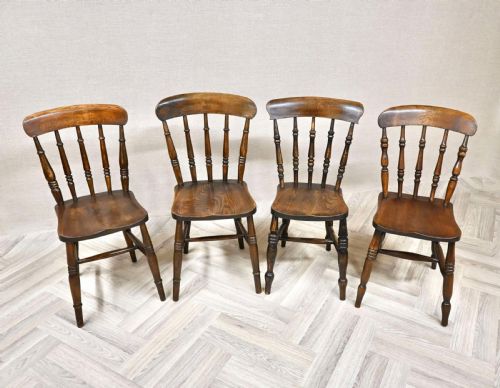
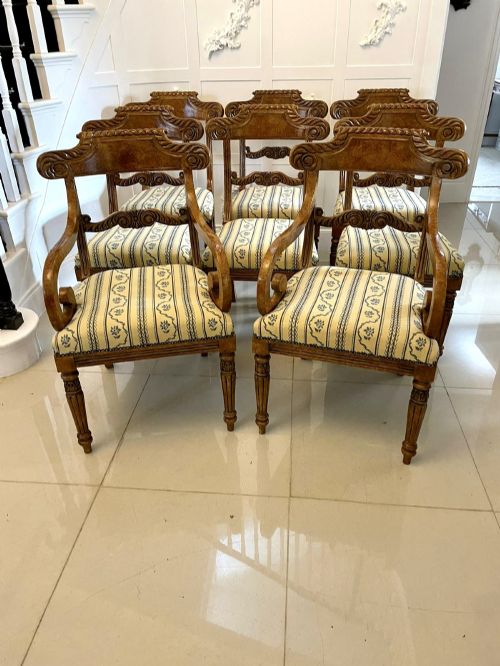
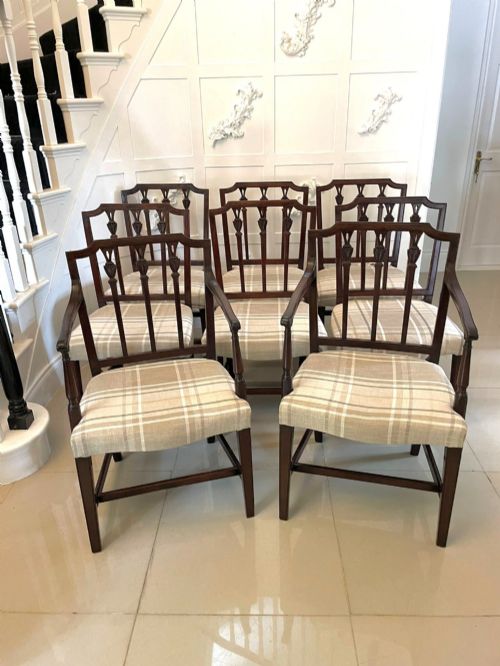
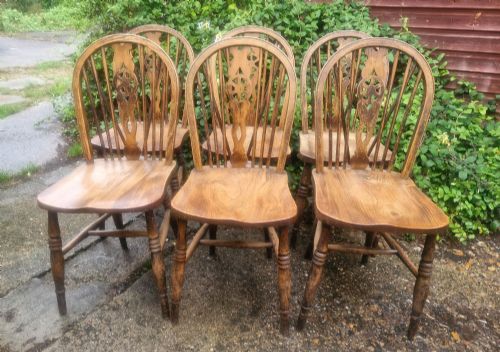
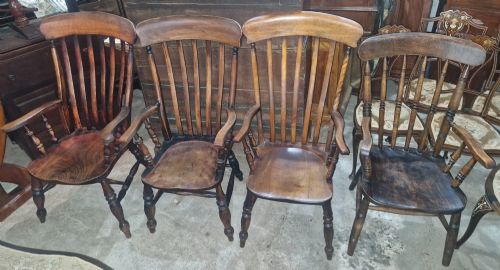
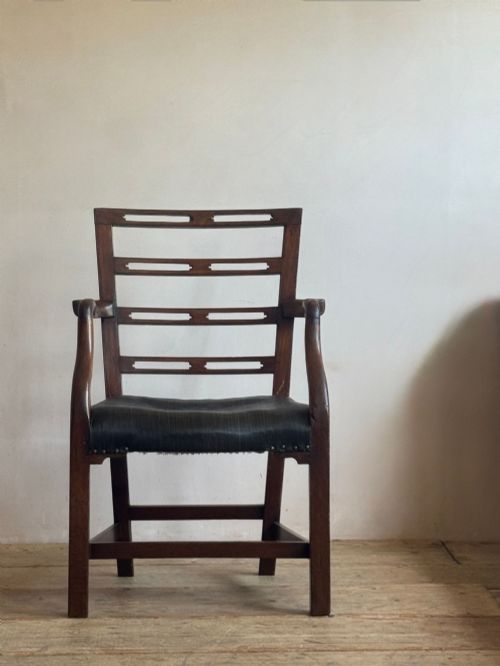
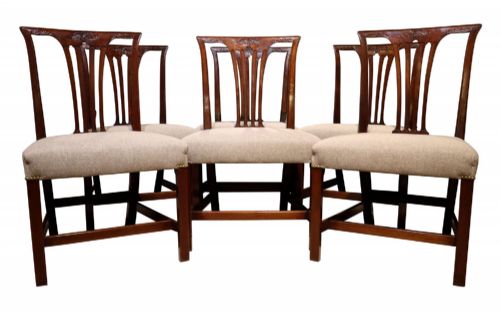
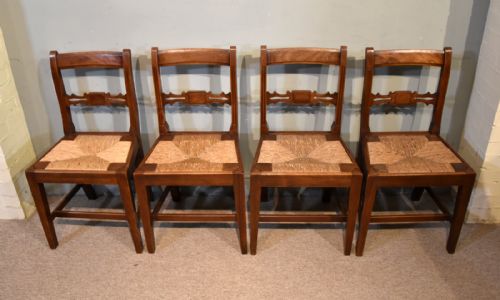
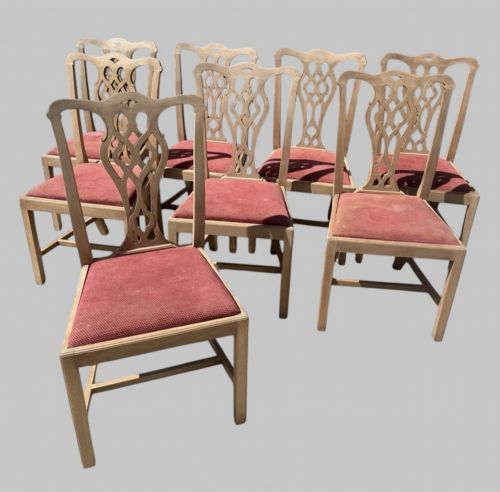
Country house dining chairs span the eighteenth, nineteenth, and early twentieth centuries, drawing on regional vernacular designs rather than strict urban fashions. These pieces encompass sturdy ladderbacks, spindlebacks, Windsor forms, and simpler Georgian or Chippendale derived styles.
The versions most commonly found here rely on robust timbers like elm, ash, and oak, often gathered in sets that suit larger dining tables. Many examples originate from provincial workshops, showing the hand of local makers who favoured utility and comfort over courtly ornament.
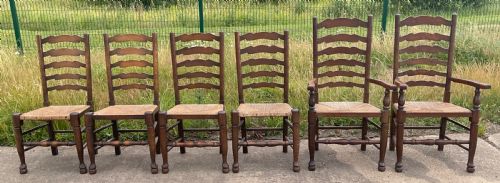
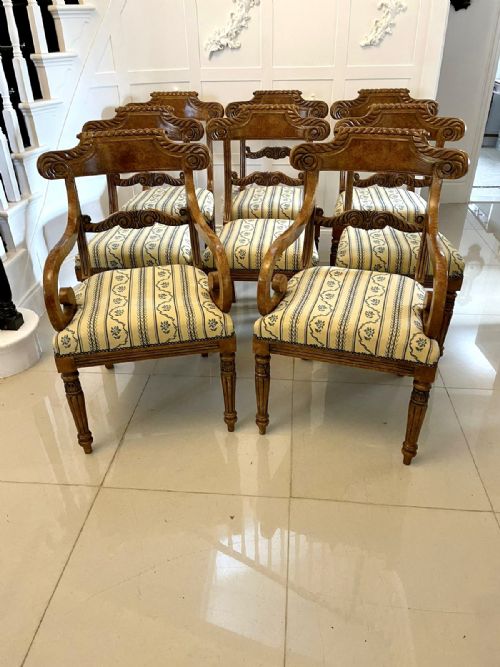
A significant portion of these dining chairs display local variations in turning and slat construction, separating Lancashire and Welsh traditions from broader English country styles. Buyers encounter everything from single carvers to expansive sets numbering up to sixteen matching pieces.
Materials and Construction
Makers utilised a combination of hardwoods and fruitwoods, frequently pairing elm seats with ash or beech spindles, oak frames, and fruitwood legs. Rush seating also appears alongside traditional wood panels and upholstered pads covered in leather or fabric.
Construction techniques rely heavily on pegged mortise and tenon joints, steam-bent rails for ladderbacks, and turned components shaped on local lathes. These methods ensured the framework remained rigid under heavy daily use in farmhouse kitchens and dining rooms.
Retail Price Guide 2026
Typical UK retail prices for country house dining chairs, calculated from the Sellingantiques database of over a million retail prices indexed since 2003. This retail price guide relies exclusively on Sellingantiques data; no external sources or auction records are used, so the figures do not describe the wider market.
Harlequin sets bring together chairs that were once scattered across different farmhouses, uniting mismatched relatives around a single dinner table.
Factors Determining Quality
The standard of a set rests upon the integrity of the timber selection and the matching consistency across larger groups of chairs. Sets that retain their original surfaces and uniform colour without extensive timber replacement command greater attention.
Refinement in the turning of spindles, the subtle sculpting of solid elm seats, and the tightness of the joinery mark the division between standard provincial utility pieces and superior vernacular craftsmanship.
James Winter and Sons
The Country House Dining Chairs Glossary
- Ladderback
- A chair back featuring horizontal arched slats between two upright posts. This traditional form was widely produced across rural English workshops.
- Spindleback
- A style incorporating multiple thin turned vertical wooden rods supporting the backrest. These members are typically pegged directly into the seat and top rail.
- Windsor
- A chair constructed with a solid wooden saddle seat into which the legs and back spindles are wedged. This design provides exceptional structural stability.
- Carver
- An armchair designed to match a set of smaller single dining chairs, traditionally positioned at the head of the table.
- Rush seat
- A seating surface woven from dried marsh grasses twisted into cords. It offers a resilient and pliable support common in vernacular regional chairs.
Frequently Asked Questions
How do I match mismatched chairs?
Gathering pieces with shared timber varieties, such as elm and ash, helps unify a disparate group around a table. Similar back styles, like ladderbacks or spindlebacks, also bridge small design gaps.
Matching heights and seat depths ensures uniform comfort for diners even when the decorative turning or specific regional origin differs slightly between chairs.
Are these chairs suitable for daily use?
Solid timber construction and pegged joints give these regional seats the durability required for everyday dining. Elm and oak frames withstand regular weight and movement without losing stability.
Checking that the joinery remains tight prevents loosening over time, allowing these historical pieces to function as practical household seating.
What timber is most common?
Elm appears frequently, particularly for shaped seats because its interlocking grain resists splitting under pressure. Ash, oak, and beech are also prevalent in the turned uprights and spindles.
Fruitwood and walnut occasionally feature in formal stylistic variants inspired by urban Georgian cabinet makers.
How can I tell the period?
Early nineteenth and eighteenth century examples often display hand-turned components and heavier patination developed through generations of domestic handling. Later nineteenth century pieces introduce machine turning and standardised parts.
Stylistic cues, such as the shift from heavy spindlebacks to balloon backs or painted finishes, provide reliable chronological markers.